 The Institute of Fiscal Studies (IFS) has just published its annual ‘Green Budget‘. This is, in effect, a pre-Budget report (or a substitute for a government ‘Green Paper’) and is published ahead of the government’s actual Budget.
The Green Budget examines the state of the UK economy, likely economic developments and the implications for macroeconomic policy. This latest Green Budget is written in the context of Brexit and the growing likelihood of a hard Brexit (i.e. a no-deal Brexit). It argues that the outlook for the public finances has deteriorated substantially and that the economy is facing recession if the UK leaves the EU without a deal.
It predicts that:
Government borrowing is set to be over £50 billion next year (2.3% of national income), more than double what the OBR forecast in March. This results mainly from a combination of spending increases, a (welcome) change in the accounting treatment of student loans, a correction to corporation tax revenues and a weakening economy. Borrowing of this level would breach the 2% of national income ceiling imposed by the government’s own fiscal mandate, with which the Chancellor has said he is complying.
A no-deal Brexit would worsen this scenario. The IFS predicts that annual government borrowing would approach £100 billion or 4% of GDP. National debt (public-sector debt) would rise to around 90% of GDP, the highest for over 50 years. This would leave very little scope for the use of fiscal policy to combat the likely recession.
The Chancellor, Sajid Javid, pledged to increase public spending by £13.4bn for 2020/21 in September’s Spending Review. This was to meet the Prime Minister’s pledges on increased spending on police and schools. This should go some way to offset the dampening effect on aggregate demand of a no-deal Brexit. The government has also stated that it wishes to cut various taxes, such as increasing the threshold at which people start paying the 40% rate of income tax from £50 000 to £80 000. But even with a ‘substantial’ fiscal boost, the IFS expects little or no growth for the two years following Brexit.
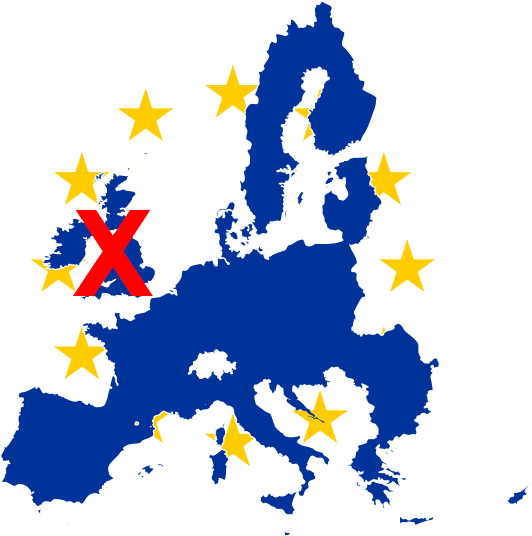 But can fiscal policy be used over the longer term to offset the downward shock of Brexit, and especially a no-deal Brexit? The problem is that, if the government wishes to prevent government borrowing from soaring, it would then have to start reining in public spending again. Another period of austerity would be likely.
There are many uncertainties in the IFS predictions. The nature of Brexit is the obvious one: deal, no deal, a referendum and a remain outcome – these are all possibilities. But other major uncertainties include business and consumer sentiment. They also include the state of the global economy, which may see a decline in growth if trade wars increase or if monetary easing is ineffective (see the blog: Is looser monetary policy enough to stave off global recession?).
Articles
IFS Report
Data
Questions
- Why would a hard Brexit reduce UK economic growth?
- To what extent can expansionary fiscal policy stave off the effects of a hard Brexit?
- Does it matter if national debt (public-sector debt) rises to 90% or even 100% of GDP? Explain.
- Find out the levels of national debt as a percentage of GDP of the G7 countries. How has Japan managed to sustain such a high national debt as a percentage of GDP?
- How can an expansionary monetary policy make it easier to finance the public-sector debt?
- How has investment in the UK been affected by the Brexit vote in 2016? Explain.
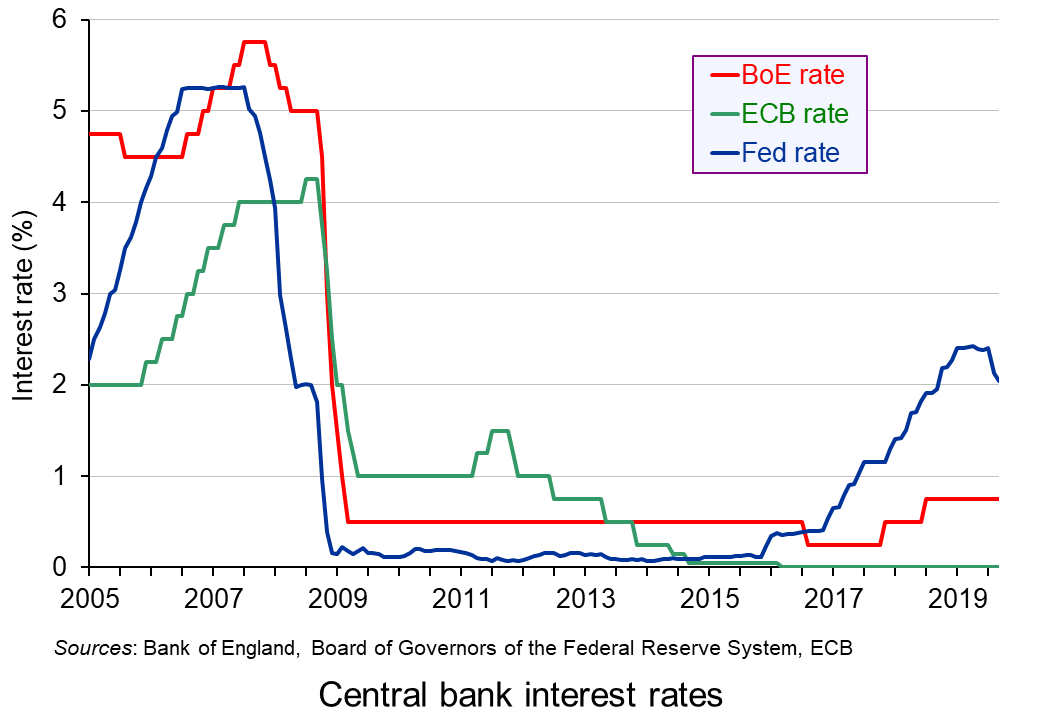
 With the prospects of weaker global economic growth and continuing worries about trade wars, central banks have been loosening monetary policy. The US central bank, the Federal Reserve, lowered its target Federal Funds rate in both July and September. Each time it reduced the rate by a quarter of a percentage point, so that it now stands at between 1.75% and 2%.
The ECB has also cut rates. In September it reduced the overnight deposit rate for banks from –0.4% to –0.5%, leaving the main rate at 0%. It also introduced a further round of quantitative easing, with asset purchases of €20 billion per month from 1 November and lasting until the ECB starts raising interest rates.
The Australian Reserve Bank has cut its ‘cash rate‘ three times this year and it now stands at an historically low level of 0.75%. Analysts are predicting that it may be forced to introduce quantitative easing if lower interest rates fail to stimulate growth.
Japan continues with its programme of quantitative easing (QE) and other central banks are considering lowering interest rates and/or (further) QE.
 But there are two key issues with looser monetary policy.
The first is whether it will be sufficient to provide the desired stimulus. With interest rates already at or near historic lows (although slightly above in the case of the USA), there is little scope for further reductions. QE may help, but without a rise in confidence, the main effect of the extra money may simply be a rise in the price of assets, such as property and shares. It may result in very little extra spending on consumption and investment – in other words, very little extra aggregate demand.
The second is the effect on inequality. By inflating asset prices, QE rewards asset owners. The wealthier people are, the more they will gain.
Many economists and commentators are thus calling for the looser monetary policy to be backed up by expansionary fiscal policy. The boost to aggregate demand, they argue, should come from higher public spending, with governments able to borrow at very low interest rates because of the loose monetary policy. Targeted spending on infrastructure would have a supply-side benefit as well as a demand-side one.
Articles
- European Central Bank cuts its deposit rate, launches new bond-buying program
CNBC, Elliot Smith (12/9/19)
- Can monetary policies help prevent a global recession?
Investment Week, Martin Gilbert (7/10/19)
- Draghi’s Utmost Is Still Not Enough
Bloomberg, John Authers (13/9/19)
- Draghi puts heat on politicians to boost fiscal stimulus with his ECB swan song
MarketWatch, William Watts (12/9/19)
- To infinity and beyond: ECB’s quantitative easing
EJ Insight, Raphael Olszyna-Marzys (2/10/19)
- The dangers of negative interest rates
Money Week, Merryn Somerset Webb (7/10/19)
- Schwarzman: Europe could enter Japan-style stagnation if governments don’t start spending
CNBC, Elliot Smith (7/10/19)
- US Fed cuts interest rates for second time since 2008
BBC News, Andrew Walker (18/9/19)
- Current Federal Reserve Interest Rates and Why They Change
The Balance, Kimberly Amadeo (19/9/19)
- Federal Reserve Interest Rate Cuts Alone Can’t Prevent a Recession
Barron’s, Al Root (4/10/19)
- Why is the Fed pumping money into the banking system?
BBC News, Natalie Sherman (19/9/19)
- Top of Lagarde’s ECB to-do list: stop QE and democratise monetary policy
Social Europe, Jens van’t Klooster (25/9/19)
- Economists warn Reserve Bank could be forced to print money if rate cuts fail to deliver
The Guardian, Martin Farrer (2/10/19)
- A very large gamble: evidence on Quantitative Easing in the US and UK
Institute for Policy Research. Policy Brief, Chris Martin and Costas Milas
- The verdict on 10 years of quantitative easing
The Guardian, Richard Partington (8/3/19)
ECB Press Conference
Questions
- Explain what is meant by quantitative easing.
- What determines the effectiveness of quantitative easing?
- Why is President Trump keen for the Federal Reserve to pursue more aggressive interest rate cuts?
- What is the Bank of England’s current attitude towards changing interest rates and/or further quantitative easing?
- What are the current advantages and disadvantages of governments pursuing a more expansionary fiscal policy?
- Compare the relative merits of quantitative easing through asset purchases and the use of ‘helicopter money’.
 There is increasing recognition that the world is facing a climate emergency. Concerns are growing about the damaging effects of global warming on weather patterns, with increasing droughts, forest fires, floods and hurricanes. Ice sheets are melting and glaciers retreating, with consequent rising sea levels. Habitats and livelihoods are being destroyed. And many of the effects seem to be occurring more rapidly than had previously been expected.
Extinction Rebellion has staged protests in many countries; the period from 20 to 27 September saw a worldwide climate strike (see also), with millions of people marching and children leaving school to protest; a Climate Action Summit took place at the United Nations, with a rousing speech by Greta Thunberg, the 16 year-old Swedish activist; the UN’s Intergovernmental Panel on Climate Change (IPCC) has just released a report with evidence showing that the melting of ice sheets and rising sea levels is more rapid than previously thought; at its annual party conference in Brighton, the Labour Party pledged that, in government, it would bring forward the UK’s target for zero net carbon emissions from 2050 to 2030.
Increasingly attention is focusing on what can be done. At first sight, it might seem as if the answer lies solely with climate scientists, environmentalists, technologists, politicians and industry. When the matter is discussed in the media, it is often the environment correspondent, the science correspondent, the political correspondent or the business correspondent who reports on developments in policy. But economics has an absolutely central role to play in both the analysis of the problem and in examining the effectiveness of alternative solutions.
One of the key things that economists do is to examine incentives and how they impact on human behaviour. Indeed, understanding the design and effectiveness of incentives is one of the 15 Threshold Concepts we identify in the Sloman books.
One of the most influential studies of the impact of climate change and means of addressing it was the study back in 2006, The Economics of Climate Change: The Stern Review, led by the economist Sir Nicholas Stern. The Review reflected economists’ arguments that climate change represents a massive failure of markets and of governments too. Firms and individuals can emit greenhouse gases into the atmosphere at no charge to themselves, even though it imposes costs on others. These external costs are possible because the atmosphere is a public good, which is free to exploit.
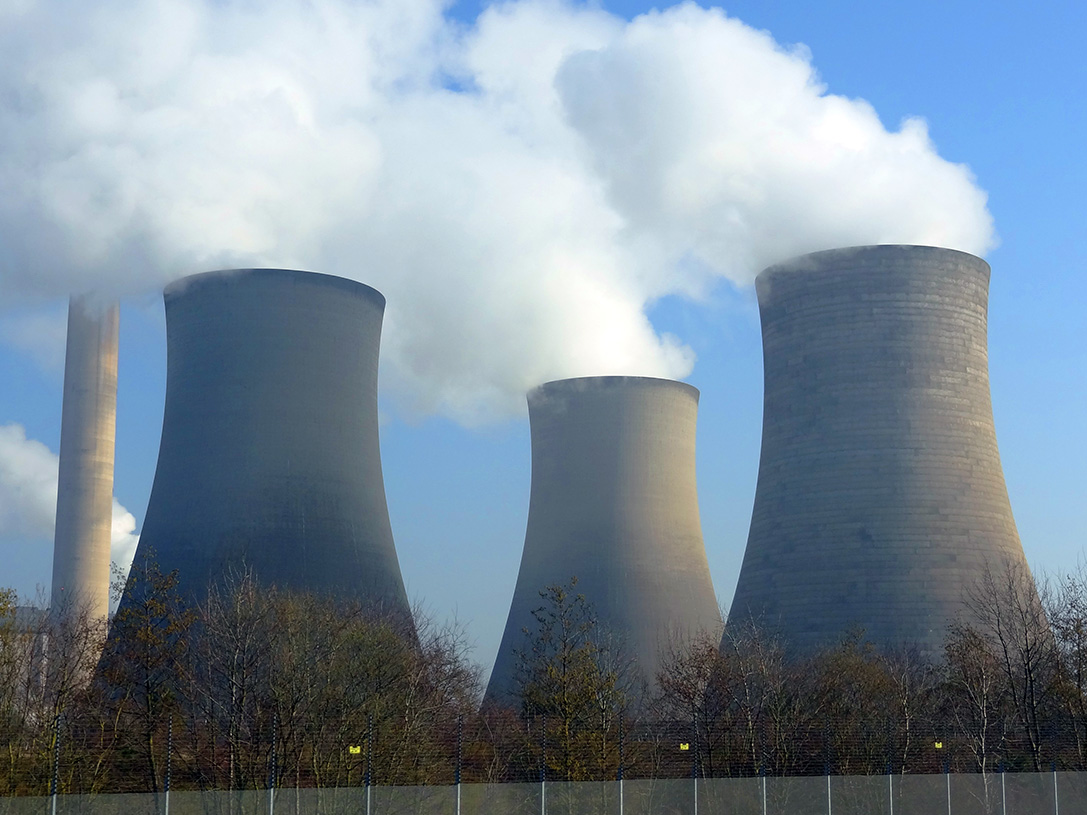 Part of the solution is to ‘internalise’ these externalities by imposing charges on people and firms for their emissions, such as imposing higher taxes on cars with high exhaust emissions or on coal-fired power stations. This can be done through the tax system, with ‘green’ taxes and charges. Economists study the effectiveness of these and how much they are likely to change people’s behaviour.
Another part of the solution is to subsidise green alternatives, such as solar and wind power, that provide positive environmental externalities. But again, just how responsive will demand be? This again is something that economists study.
Of course, changing human behaviour is not just about raising the prices of activities that create negative environmental externalities and lowering the prices of those that create positive ones. Part of the solution lies in education to make people aware of the environmental impacts of their activities and what can be done about it. The problem here is that there is a lack of information – a classic market failure. Making people aware of the consequences of their actions can play a key part in the economic decisions they make. Economists study the extent that imperfect information distorts decision making and how informed decision making can improve outcomes.
Another part of the solution may be direct government investment in green technologies or the use of legislation to prevent or restrict activities that contribute to global warming. But in each case, economists are well placed to examine the efficacy and the costs and benefits of alternative policies. Economists have the tools to make cost–benefit appraisals.
Economists also study the motivations of people and how they affect their decisions, including decisions about whether or not to take part in activities with high emissions, such air travel, and decisions on ‘green’ activities, such as eating less meat and more vegetables.
If you are starting out on an economics degree, you will soon see that economists are at the centre of the analysis of some of the biggest issues of the day, such as climate change and the environment generally, inequality and poverty, working conditions, the work–life balance, the price of accommodation, the effects of populism and the retreat from global responsibility and, in the UK especially, the effects of Brexit, of whatever form.
Articles
Report
Questions
- Explain what is meant by environmental externalities.
- Compare the relative merits of carbon taxes and legislation as means of reducing carbon emissions.
- If there is a climate emergency, why are most governments unwilling to take the necessary measures to make their countries net carbon neutral within the next few years?
- In what ways would you suggest incentivising (a) individuals and (b) firms to reduce carbon emissions? Explain your reasoning.
- For what reasons are the burdens of climate changed shared unequally between people across the globe?
 With university fees for home students in England of £9250 per year and with many students receiving maintenance loans of around £9000 per year, many students are graduating with debts in excess of £50 000. Loans are repaid at a marginal rate of 9% on incomes over £25 716.
Many students also study for a masters degree. The average fee for a taught, classroom-based masters (MA) is £7392 and for a laboratory-based masters (MSc) is £8167 but can be considerably higher at some prestigious universities where demand is high. Government loans of up to £10 906 are available to contribute towards fees and maintenance. These are paid back at a marginal rate of 6% for people earning over £21 000, giving a combined marginal rate of 15% for first and masters degrees.
For high earners on the 40% income tax rate, the combined marginal rate of payment out of income is 40% tax, plus 2% national insurance, plus 15% for those with undergraduate and masters loans. This gives a combined marginal rate of 57%.
 Average student debt in England is higher even than in the USA, where the average is $37 000. US university courses are more expensive than in the UK, costing an average of $34 000 per year in tuition alone. But undergraduates can borrow less. They can borrow between $5500 and $12 500 per year in federal loans towards both fees and maintenance, and some private loans are also available. Most students do some paid work during their studies to make up the difference or rely on parents contributing. Parental contributions mean that students from poor families end up owing more. According to a Guardian article:
Race is a huge factor. Black students owe an average of $7400 more than white students when they graduate, the Brookings Institution found. After graduation, the debt gap continues to widen. Four years after graduation, black graduates owe an average of nearly $53 000 – nearly double that of white graduates.
Student debt looks to become one of the key issues in the 2020 US presidential election.
Pressure to cancel student fees and debt in the USA
Most of the Democratic candidates are promising to address student fees and debt. Student debt, they claim, places an unfair burden on the younger generation and makes it hard for people to buy a house, or car or other major consumer durables. This also has a dampening effect on aggregate demand.
The most radical proposal comes from Bernie Sanders. He has vowed, if elected, to abolish student fees and to cancel all undergraduate and graduate debt of all Americans. Other candidates are promising to cut fees and/or debt.
Although most politicians and commentators agree that the USA has a serious problem of student debt, there is little agreement on what, if anything, to do about it. There are already a number of ways in which student debt can be written off or reduced. For example, if you work in the public sector for more than 10 years, remaining debt will be cancelled. However, none of the existing schemes is as radical as that being proposed by many Democrats.
 Criticisms of the Democrats’ plans are mainly of two types.
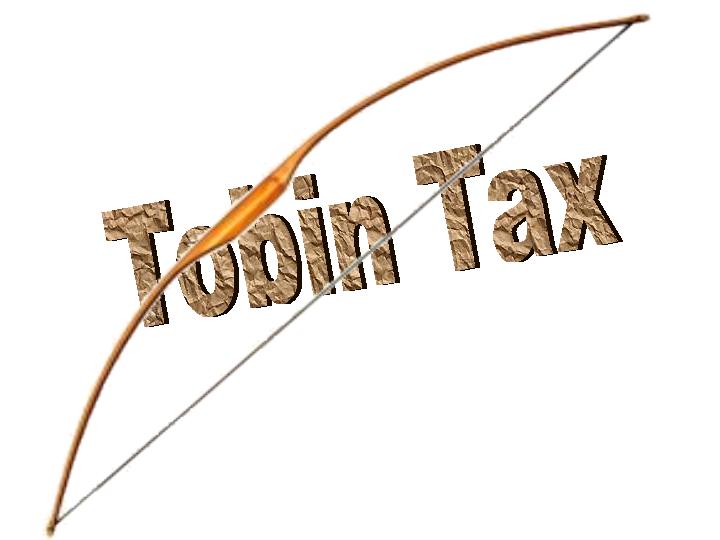
The first is the sheer cost. Overall debt is around $1.6tn. What is more, making student tuition free would place a huge ongoing burden on government finances. Bernie Sanders proposes introducing a financial transactions tax on stock trading. This would be similar to a Tobin tax (sometimes dubbed a ‘Robin Hood tax’) and would include a 0.5% tax on stock transactions, a 0.1% tax on bond trades and a 0.005% tax on transactions in derivatives. He argues that the public bailed out the financial sector in 2008 and that it is now the turn of the financial sector to come to the aid of students and graduates.
The other type of criticism concerns the incentive effects of the proposal. The core of the criticism is that loan forgiveness involves moral hazard.
The moral hazard of loan forgiveness
The argument is that cancelling debt, or the promise to do so, encourages people to take on more debt. Generally, moral hazard occurs when people are protected from the consequences of their actions and are thus encouraged to make riskier decisions. For example, if you are ensured against theft, you may be less careful with your belongings. As the Orange County Register article linked below states:
If the taxpayers pay the debts of everyone with outstanding student loans, how will that affect the decisions made by current students thinking about their choices for financing higher education? What’s the message? Borrow as much as you can and wait for the debt to be canceled during the next presidential primary campaign?
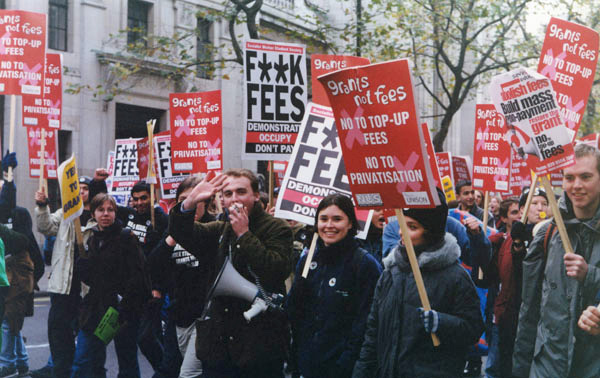 Not only would more students be encouraged to go to college, but they would be encouraged to apply for more costly courses if they were free.
Universities would be encouraged to exaggerate their costs to warrant higher fees charged to the government. The government (federal, state or local) would have to be very careful in auditing courses to ensure costs were genuine. Universities could end up being squeezed for finance as government may try to cut payments by claiming that courses were overpriced.
Even if fees were not abolished, cancelling debts would encourage students to take on larger debt, if that was to be cleared at some point in the future. What is more, students (or their parents) who could afford to pay, would choose to borrow the money instead.
But many countries do have free or highly subsidised higher education. Universities are given grants which are designed to reflect fair costs.
Articles
Videos
Questions
- Assess the arguments for abolishing or substantially reducing student fees.
- Assess the arguments against abolishing or substantially reducing student fees.
- Assess the arguments for writing off or substantially reducing student debt.
- Assess the arguments against writing off or substantially reducing student debt.
- If it were decided to cancel student debt, would it be fair to pay students back for any debt they had already paid off?
- Does tackling the problem of student debt necessarily lead to a redistribution of wealth/income?
- Give some other examples of moral hazard.
- If student fees were abolished, would there be any problem of adverse selection? If so, how could this be overcome?
- Find out what the main UK parties are advocating about student fees and debt in the nations of the UK for home and non-home students. Provide a critique of each of their policies.
There have been many analyses of the economic effects of Brexit, both before the referendum and at various times since, including analyses of the effects of the deal negotiated by Theresa May’s government and the EU. But with the prospect of a no-deal Brexit on 31 October under the new Boris Johnson government, attention has turned to the effects of leaving the EU without a deal.
There have been two major analyses recently of the likely effects of a no-deal Brexit – one by the International Monetary Fund (IMF) and one by the Office for Budget Responsibility (OBR).
IMF analysis
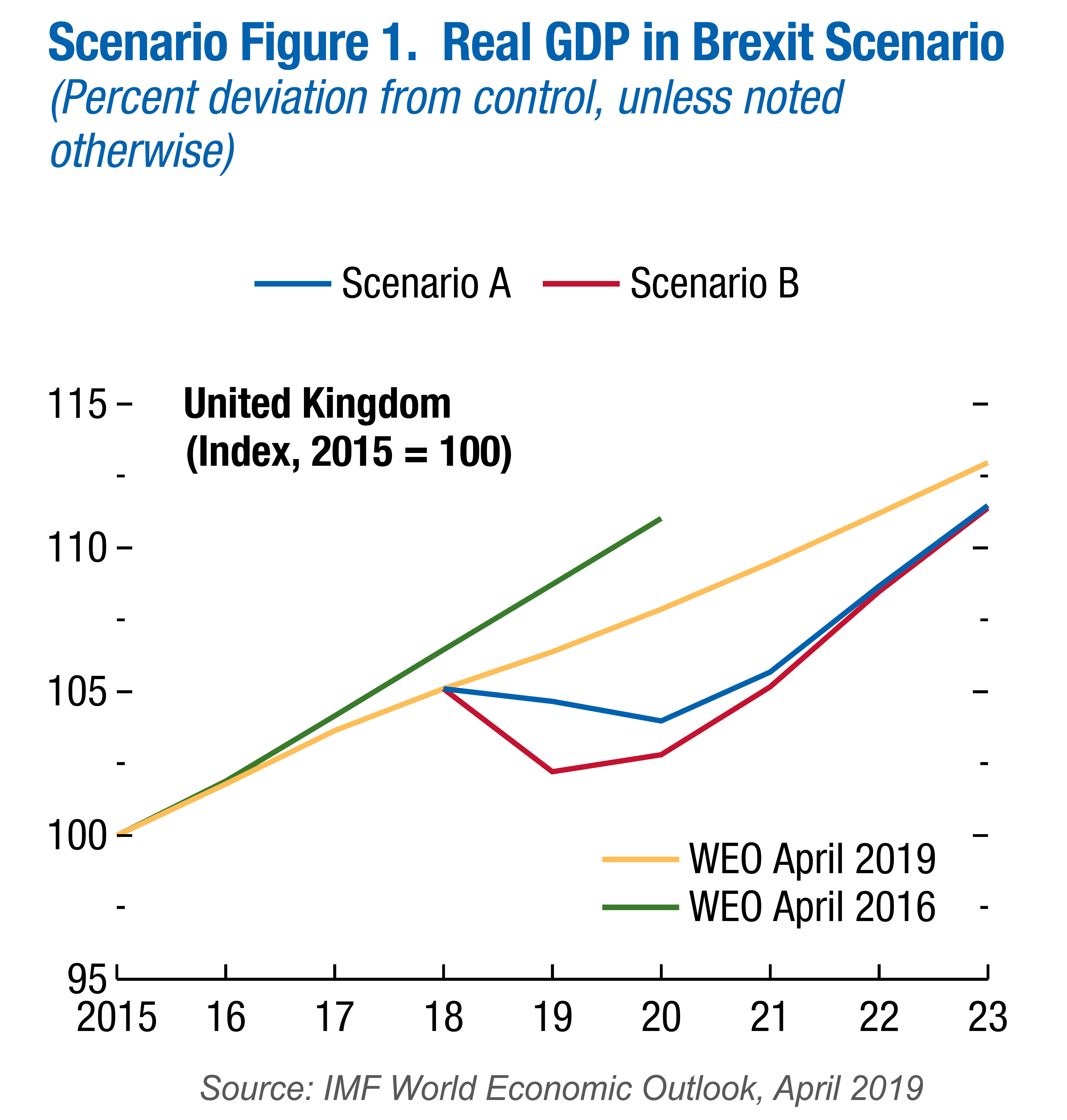
The first was in April by the IMF as part of its 6-monthly World Economic Outlook. In Scenario Box 1.1. ‘A No-Deal Brexit’ on page 28 of Chapter 1, the IMF looked at two possible scenarios.
Scenario A assumes no border disruptions and a relatively small increase in UK sovereign and corporate spreads. Scenario B incorporates significant border disruptions that increase import costs for UK firms and households (and to a lesser extent for the European Union) and a more severe tightening in financial conditions.
 Under both scenarios, UK exports to the EU and UK imports from the EU revert to WTO rules. As a result, tariffs are imposed by mid-2020 or earlier. Non-tariff barriers rise at first but are gradually reduced over time. Most free-trade arrangements between the EU and other countries are initially unavailable to the UK (see the blog EU strikes major trade deals) but both scenarios assume that ‘new trade agreements are secured after two years, and on terms similar to those currently in place.’
Both scenarios also assume a reduction in net immigration from the EU of 25 000 per year until 2030. Both assume a rise in corporate and government bond rates, reflecting greater uncertainty, with the effect being greater in Scenario B. Both assume a relaxing of monetary and fiscal policy in response to downward pressures on the economy.
The IMF analysis shows a negative impact on UK GDP, with the economy falling into recession in late 2019 and in 2020. This is the result of higher trade costs and reduced business investment caused by a poorer economic outlook and increased uncertainty. By 2021, even under Scenario A, GDP is approximately 3.5% lower than it would have been if the UK had left the EU with the negotiated deal. For the rest of the EU, GDP is around 0.5% lower, although the effect varies considerably from country to country.
The IMF analysis makes optimistic assumptions, such as the UK being able to negotiate new trade deals with non-EU countries to replace those lost by leaving. More pessimistic assumptions would lead to greater costs.
OBR analysis
Building on the analysis of the IMF, the Office for Budget Responsibility considered the effect of a no-deal Brexit on the public finances in its biennial Fiscal risks report, published on 17 July 2019. This argues that, under the relatively benign Scenario A assumptions of the IMF, the lower GDP would result in annual public-sector net borrowing (PSNB) rising. By 2021/22, if the UK had left with the deal negotiated with the EU, PSNB would have been around £18bn. A no-deal Brexit would push this up to around £51bn.
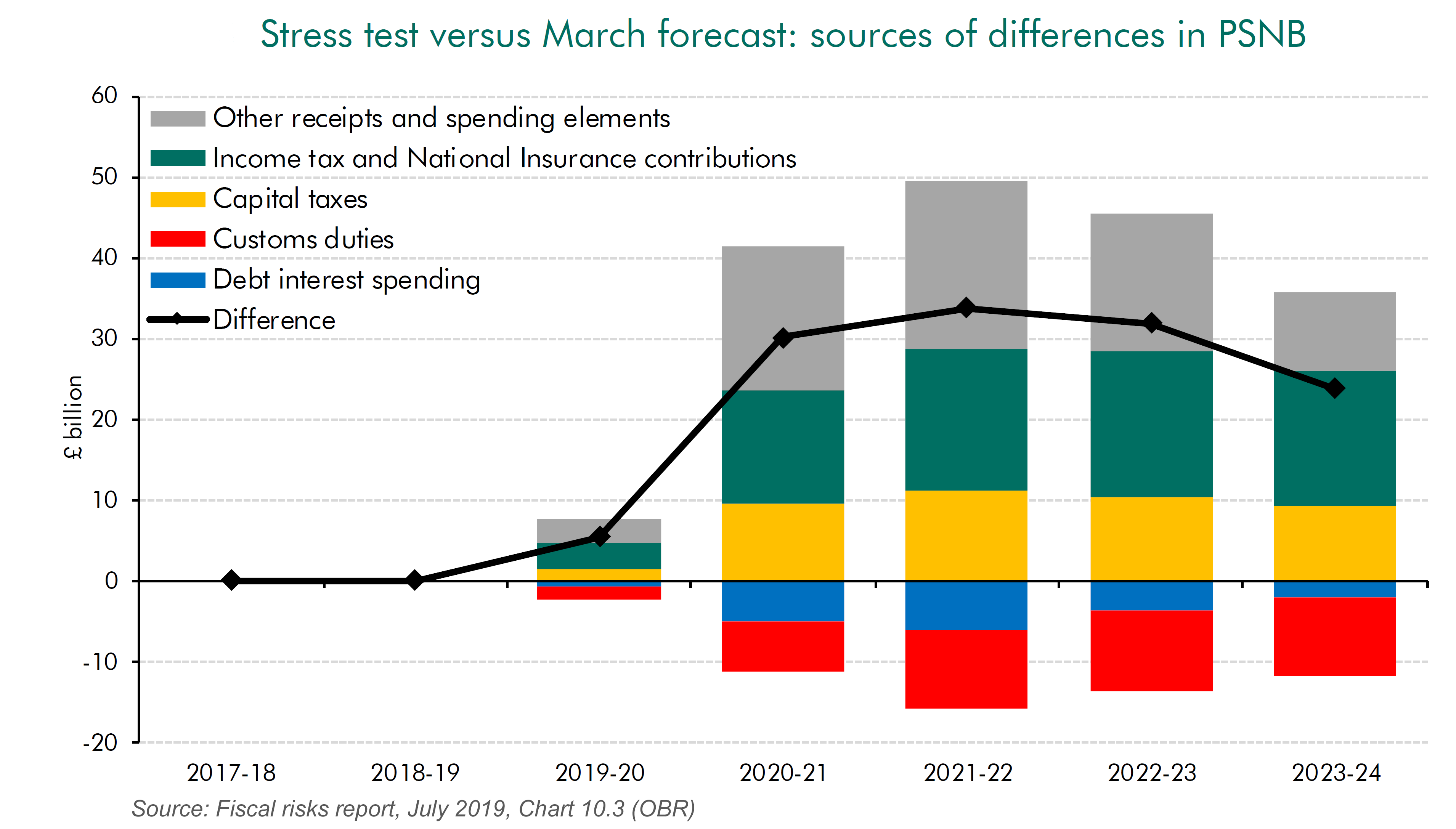
According to the OBR, the contributors to this rise in public-sector net borrowing of around £33bn are:
- A fall in income tax and national insurance receipts of around £16.5bn per year because of lower incomes.
- A fall in corporation tax and expenditure taxes, such as VAT, excise duties and stamp duty of around £22.5bn per year because of lower expenditure.
- A fall in capital taxes, such as inheritance tax and capital gains tax of around £10bn per year because of a fall in asset prices.
- These are offset to a small degree by a rise in customs duties (around £10bn) because of the imposition of tariffs and by lower debt repayments (of around £6bn) because of the Bank of England having to reduce interest rates.
The rise in PSNB would constrain the government’s ability to use fiscal policy to boost the economy and to engage in the large-scale capital projects advocated by Boris Johnson while making the substantial tax cuts he is proposing. A less optimistic set of assumptions would, of course, lead to a bigger rise in PSNB, which would further constrain fiscal policy.
Articles
Video
Reports
Questions
- What are the assumptions of the IMF World Economic Outlook forecasts for the effects of a no-deal Brexit? Do you agree with these assumptions? Explain.
- What are the assumptions of the analysis of a no-deal Brexit on the public finances in the OBR’s Fiscal risks report? Do you agree with these assumptions? Explain.
- What is the difference between forecasts and analyses of outcomes?
- For what reasons might growth over the next few years be higher than in the IMF forecasts under either scenario?
- For what reasons might growth over the next few years be lower than in the IMF forecasts under either scenario?
- For what reasons might public-sector net borrowing (PSNB) over the next few years be lower than in the OBR forecast?
- For what reasons might PSNB over the next few years be higher than in the OBR forecast?
