 Many people are attracted to work in the private sector, with expectations of greater opportunities for promotion, more variation in work and higher salaries. However, according to the Office for National Statistics, it may be that the oft-talked-of pay differential is actually in the opposite direction. Data from the ONS suggests that public sector workers are paid 14.5% more on average than those working in the private sector.
As is the case with the price of a good, the price of labour (that is, the wage rate) is determined by the forces of demand and supply. Many factors influence the wages that individuals are paid and traditional theory leads us to expect higher wages in sectors where there are many firms competing for labour. With the government acting as a monopsony employer, it has the power to force down wages below what we would expect to see in a perfectly competitive labour market. However, the ONS data suggests the opposite. What factors can explain this wage differential?
Jobs in the public sector, on average, require a higher degree of skills. There tend to be entry qualifications, such as possessing a university degree. While this is the case for many private-sector jobs as well, on average it is a greater requirement in the public sector. The skills required therefore help to push up the wages that public-sector workers can demand. Another explanation could be the size of public-sector employers, which allows them to offer higher wages. When the skills, location, job specifications etc. were taken into account, the 14.5% average hourly earnings differential declined to between just 2.2% and 3.1%, still in favour of public-sector workers. It then reversed to give private-sector workers the pay edge, once the size of the employer was taken out.
Further analysis of the data also showed that, while it may pay to be in the public sector when you’re starting out on your career, it pays to be in the private sector as you move up the career ladder. Workers in the bottom 5% of earners will do better in the public sector, while those in the top 5% of earners benefit from private-sector employment. The ONS said:
Looking at the top 5%, in the public sector earnings are greater than £31.49 per hour, while in the private sector, the top 5% earn more than £33.63 per hour… The top 1% of earners in the private sector, at more than £60.21 per hour, earns considerably more than the top 1% of earners in the public sector, at more than £49.65 per hour.
The data from the ONS thus suggest a reversal in the trend of average public-sector pay being higher than private sector pay, once all the relevant factors are taken into account.
This will naturally add to debates about living standards, which are likely to take on a stronger political slant as the next election approaches. It is obviously partly down to the public-sector pay freeze that we saw in 2010 and also to a reversal, at least in part, of the previous trend from 2008, where public-sector pay 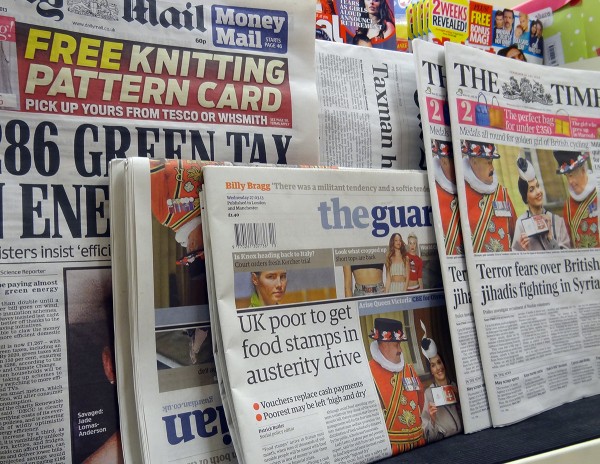 had been growing faster than private-sector pay. However, depending on the paper you read or the person you listen to, they will offer very different views as to who gets paid more. All you need to do in this case is look at the titles of the newspaper articles written by the Independent and The Telegraph! Whatever the explanation, these new data provide a wealth of information about relative prospects for pay for everyone.
Data
Public and Private Sector Earnings Office for National Statistics (March 2014)
Annual Survey of Hours and Earnings, 2013 Provisional Results Office for National Statistics (December 2013)
Articles
Austerity bites as private sector pay rises above the public sector for the first time since 2010 Independent, Ben Chu (10/3/14)
Public sector workers still better paid despite the cuts The Telegraph, John Bingham (10/3/14)
Public sector hourly pay outstrips private sector pay BBC News (10/3/14)
Public sector workers are biggest losers in UK’s post-recession earnings squeeze The Guardian, Larry Elliott (11/3/14)
New figures go against right-wing claims that public sector workers are grossly overpaid Independent, Ben Chu (10/3/14)
Public sector pay sees biggest shrink on 2010, figures suggest LocalGov, Thomas Bridge (11/3/14)
Public sector staff £2.12 an hour better off The Scotsman, David Maddox (11/3/14)
Questions
- Illustrate the way in which wages are determined in a perfectly competitive labour market.
- Why does monopsony power tend to push wages down?
- Why does working for a large company suggest that you will earn a higher wage on average?
- Using the concept of marginal revenue product of labour, explain the way in which higher skills help to push up wages.
- How significant are public-sector pay freezes in explaining the differential between public- and private-sector pay?
- Why is there a difference between the bottom and top 5% of earners? How does this impact on whether it is more profitable to work in the public or private sector?
 Facebook has announced that it’s purchasing the messaging company WhatsApp. It is paying $19 billion in cash and shares, a sum that dwarfs other acquisitions of start-up companies in the app market. But what are the reasons for the acquisition and how will it affect users?
WhatsApp was founded less than five years ago and has seen massive growth and now has some 450 million active users, 70% of whom use it daily. This compares with Twitter’s 240 million users. An average of one million new users are signing up to WhatsApp each day. As the Wall Street Journal article, linked below, states:
Even by the get-big-fast standards of Silicon Valley, WhatsApp’s story is remarkable. The company, founded in 2009 by Ukrainian Jan Koum and American Brian Acton, reached 450 million users faster than any company in history, wrote Jim Goetz, a partner at investor Sequoia Capital.
Facebook had fewer than 150 million users after its fourth year, one third that of WhatsApp in the same time period.
Yet, despite its large user base, WhatsApp has just 55 employees, including 32 engineers.
For the user, WhatsApp offers a cheap service (free for the first year and just a 99¢ annual fee thereafter).  There are no charges for sending or receiving text, pictures and videos. It operates on all mobile systems and carries no ads. It also offers privacy – once sent, messages are deleted from the company’s servers and are thus not available to government and other agencies trying to track people.
With 450 million current active users, this means that revenue next year will not be much in excess of $450 million. Thus it would seem that unless Facebook changes WhatsApp’s charging system or allows advertising (which it says it won’t) or sees massive further growth, there must have been reasons other than simple extra revenue for the acquisition.
Other possible reasons are investigated in the videos and articles below. One is to restrict competition which threatens Facebook’s own share of the messaging market: competition that has seen young people move away from Facebook, which they see is becoming more of a social media platform for families and all generations, not just for the young.
Videos and podcasts
 Facebook pays billions for WhatsApp Messenger smartphone service Deutsche Welle, Manuel Özcerkes (19/2/14)
Facebook’s WhatsApp buy no bargain Reuters, Peter Thal Larsen (20/2/14)
Facebook Agrees To Buy WhatsApp For $19bn Sky News, Greg Milam (20/2/14)
Facebook Eliminates Competitor With WhatsApp Bloomberg TV, Om Malik, David Kirkpatrick and Paul Kedrosky (20/2/14)
Why WhatsApp Makes Perfect Sense for Facebook Bloomberg TV, Om Malik, David Kirkpatrick and Paul Kedrosky (20/2/14)
Facebook buying WhatsApp for $19bn BBC News, Mike Butcher (20/2/14)
Is Facebook’s acquisition of WhatsApp a desperate move? CNBC News, Rob Enderle (19/2/14)
Facebook’s $19bn WhatsApp deal ‘unjustifiable’ BBC Today Programme, Larry Magid (20/2/14)
Articles
Facebook to buy WhatsApp for $19 billion in deal shocker ReutersGerry Shih and Sarah McBride (20/2/14)
Facebook to Pay $19 Billion for WhatsApp Wall Street Journal, Reed Albergotti, Douglas MacMillan and Evelyn M. Rusli (19/2/14)
Facebook to buy WhatsApp for $19bn The Telegraph, Katherine Rushton (19/2/14)
Facebook buys WhatsApp: Mark Zuckerberg explains why The Telegraph (19/2/14)
WhatsApp deal: for Mark Zuckerberg $19bn is cheap to nullify the threat posed by messaging application The Telegraph, Katherine Rushton (20/2/14)
Why did Facebook buy WhatsApp? TechRadar, Matt Swider (20/2/14)
What is WhatsApp? What has Facebook got for $19bn? The Guardian, Alex Hern (20/2/14)
Facebook to buy messaging app WhatsApp for $19bn BBC News (20/2/14)
WhatsApp – is it worth it? BBC News, Rory Cellan-Jones (20/2/14)
Facebook buys WhatsApp: what the analysts say The Telegraph (19/2/14)
Facebook ‘dead and buried’ as teenagers switch to WhatsApp and Snapchat – because they don’t want mum and dad to see their embarrassing pictures Mail Online (27/12/13)
Facebook and WhatsApp: Getting the messages The Economist (22/2/14)
Questions
- Are Facebook and WhatsApp substitutes or complements, or neither?
- What does Facebook stand to gain from the acquisition of WhatsApp? Is the deal a largely defensive one for Facebook?
- Has Facebook paid too much for WhatsApp? What information would help you answer this question?
- Would it be a good idea for Facebook to build in the WhatsApp functionality into the main Facebook platform or would it be better to keep the two products separate by keeping WhatsApp as a self contained company?
- What effects will the acquisition have on competition in the social media and messaging market? Is this good for the user?
- Will the deal attract the attention of Federal competition regulators in the USA? If so, why; if not, why not?
- What are the implications for Google and Twitter?
- Find out and explain what happened to the Facebook share price after the acquisition was announced.
 Getting around London is pretty easy to do. Transport, though often criticized, is very effective in and around London – at least when the Underground is running uninterrupted. However, since 9pm on Tuesday 4th February until the morning of 7th February, the underground will be operating well below full capacity, as strike action affects many workers.
Transport for London has plans to cut many jobs, in particular through the closure of ticket office at all stations. Modernisation to the network is said to be essential, not just to improve the existing system, but also as it is predicted to save £50 million per year. Data suggests that only 3% of transactions involve people using ticket offices and thus the argument is that having offices manned is a waste of money and these workers would be better allocated to manning stations. David Cameron said:
I unreservedly condemn this strike. There is absolutely no justification for a strike. We need a modernised tube line working for the millions of Londoners who use it every day.
Workers on London Underground are naturally concerned about the impact this will have, in particular on their jobs, despite assurances that there will be no compulsory redundancies.
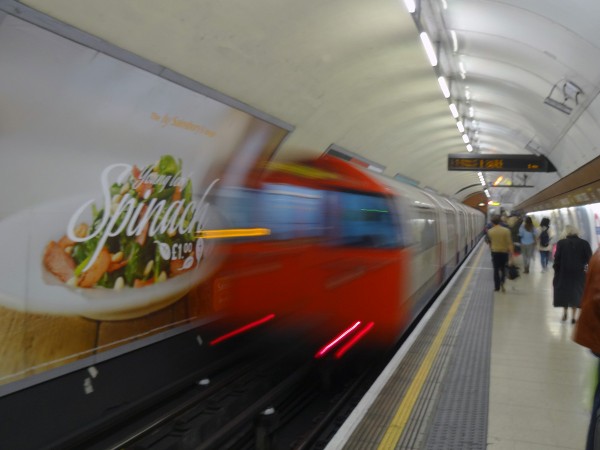 The impact of these strikes on workers in London is clearly evident by any pictures you look at. Buses were over-crowded, despite more than 100 extra being provided, pavements were packed with pedestrians and the roads were full of cyclists. At least the strike action has led to a little more exercise for many people! The disruption to business in London is likely to be relatively large and the loss in revenue due to the action will also be high, estimated by Business leaders to be tens of millions of pounds. It is perhaps for this reason that there is discussion as to whether the underground should be declared an ‘essential service’ as a means of minimising future disruptions.
Discussions have been ongoing between both sides to try to prevent this action and talks are likely to continue in the future. Boris Johnson has declared the strikes as ‘completely pointless’ and both sides have argued that the other has been unwilling to negotiate and discuss the ticket office closures. Boris Johnson said:
A deal is there to be done. I am more than happy to talk to Bob Crow if he calls off the pointless and unnecessary strike.
 The impact on London and the economy will only be fully known after the strike action is over, but there are plans for further strikes next week. The greater the disruption the bigger the calls for further strikes on key services, such as the tube, to be prevented. In particular, this may mean new powers to curtail the rights of unions in these types of areas, which will require a minimum service to be provided. The following articles consider the strike action on the London Underground.
Articles
Questions
- If there is strike action in a labour market, what can we conclude about the market in question in terms of how competitive it is?
- If only 3% of transactions take place via ticket offices, is it an efficient use of resources to maintain the presence of ticket offices at every station?
- Is industrial action ‘completely pointless’?
- What other solutions are there besides strike action to problems of industrial dispute?
- What is the role of ACAS in negotiations?
- What is the economic impact of the strike on the London Underground? Think about the impact on businesses, revenues, sales and both micro and macro consequences.
- Should the tube be seen as an essential service such that strike action by its workers would be restricted?
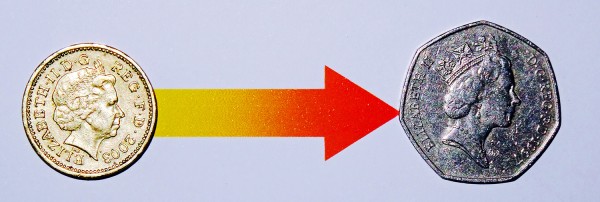 The UK Shadow Chancellor, Ed Balls, has announced that, if Labour is returned to power in the next election, it will bring back the 50% top rate of income tax (see also). This will apply to incomes over £150,000.
But will this raise more tax revenue? The question here concerns incentive effects. Will the higher rate of income tax discourage work by those earning £150,000 or encourage tax avoidance or tax evasion, so that the total tax take is reduced? The Conservatives say the answer is yes. The Labour party says no, claiming that there will still be an increase in tax revenue.
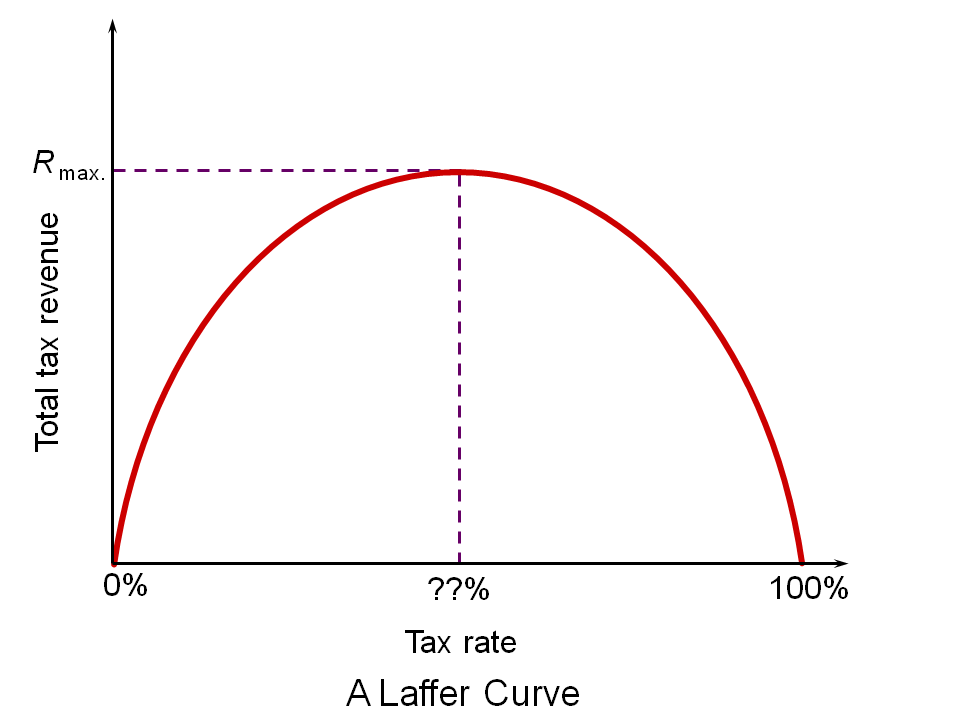 The possible effects are summed up in the Laffer curve (see The 50p income tax rate and the Laffer curve). As the previous post stated:
These arguments were put forward in the 1980s by Art Laffer, an adviser to President Reagan. His famous ‘Laffer curve’ (see Economics (8th edition) Box 10.3) illustrated that tax revenues are maximised at a particular tax rate. The idea behind the Laffer curve is very simple. At a tax rate of 0%, tax revenue will be zero – but so too at a rate of 100%, since no-one would work if they had to pay all their income in taxes. As the tax rate rises from 0%, so tax revenue would rise. And so too, as the tax rate falls from 100%, the tax rate would rise. It follows that there will be some tax rate between 0% and 100% that maximises tax revenue.
As Labour is claiming that re-introducing the 50% top rate of income tax will increase tax revenue, the implication is that the economy is to the left of the top of the Laffer curve: that, at current level of income, the curve is still rising.
Work by HMRC, and published in the document The Exchequer effect of the 50 per cent additional rate of income tax, suggested that the previous cut in the top rate from 50% to 45% would cut revenue by around £3.5 billion if there were no incentive effect, but with the extra work that would be generated, the cut would be a mere £100 million. This implies, other things being equal, that a rise in the rate from 45% to 50% would raise only a tiny bit of extra taxes.
However, the HMRC analysis has been criticised and especially its assumptions about the incentive effects on work. Then there is the question of whether a rise in the rate from 45% to 50% would have exactly the reverse effect of a cut from 50% to 45%. And then there is the question of how much HMRC could reduce tax evasion and avoidance.
The following article from the Institute for Fiscal Studies examines the effects. However, the authors conclude that:
… at the moment, the best evidence we have still suggests that raising the top rate of tax would raise little revenue and make, at best, a marginal contribution to reducing the budget deficit an incoming government would face after the next election.
But there is also the question of equity. Putting aside the question of how much revenue would be raised, is it fair to raise the top rate of tax for those on high incomes? Would it make an important contribution to reducing inequality? This normative question lies at the heart of the different views of the world between left and right and is not a question that can be answered by economic analysis.
Article
50p tax – strolling across the summit of the Laffer curve? Institute for Fiscal Studies, Paul Johnson and David Phillips (Jan 2014)
Questions
- Distinguish between tax evasion and tax avoidance.
- How would it be possible for a rise in tax rates to generated less tax revenue?
- Could policies shift the Laffer curve as opposed to merely resulting in a move along the curve?
- What is meant by ‘taxable income elasticity (TIE)’? What are its determinants?
- Is the taxable income elasticity at the top of the Laffer curve equal to, above or below zero? Explain.
- Why did the Office for Budget Responsibility chairman, Robert Chote, conclude that, whatever the precise answer, we were ‘strolling across the summit of the Laffer curve’?
- Explain why ‘there is little additional evidence to suggest that a 50p rate would raise more than was estimated by HMRC back in 2012’.
- What contribution can economists make to the debate on the desirability of reducing inequality?
 GDP is still the most frequently used indicator of a country’s development. When governments target economic growth as a key goal, it is growth in GDP to which they are referring. And they often make the assumption that growth in GDP is a proxy for growth in well-being. But is it time to leave GDP behind as the main indicator of national economic success? This is the question posed in the first of the linked articles below, from the prestigious science journal Nature.
As the article states:
Robert F. Kennedy once said that a country’s gross domestic product (GDP) measures “everything except that which makes life worthwhile”. The metric was developed in the 1930s and 1940s amid the upheaval of the Great Depression and global war. Even before the United Nations began requiring countries to collect data to report national GDP, Simon Kuznets, the metric’s chief architect, had warned against equating its growth with well-being.
GDP measures mainly market transactions. It ignores social costs, environmental impacts and income inequality. If a business used GDP-style accounting, it would aim to maximize gross revenue — even at the expense of profitability, efficiency, sustainability or flexibility. That is hardly smart or sustainable (think Enron). Yet since the end of the Second World War, promoting GDP growth has remained the primary national policy goal in almost every country
So what could replace GDP, or be considered alongside GDP? Should we try to measure happiness? After all, behavioural scientists are getting much better at  understanding and measuring the psychology of human well-being (see the blog posts Money can’t buy me love and Happiness economics).
Or should we focus primarily on long-term issues of the sustainability of development? Or should we focus more on the distribution of income or well-being in a world that is becoming increasingly unequal?
Or should measures of well-being involve weighted composite indices involving things such as life-expectancy, education, housing, democratic engagement, leisure time, social mobility, etc. And, if so, how should the weightings of the different indicators be determined? The United Nations Development Programme (UNDP) produces annual Human Development Reports, where countries are ranked according to a Human Development Index. As the UNDP site states:
The breakthrough for the HDI was the creation of a single statistic which was to serve as a frame of reference for both social and economic development. The HDI sets a minimum and a maximum for each dimension, called goalposts, and then shows where each country stands in relation to these goalposts, expressed as a value between 0 and 1.
HDI is a composite of three sets of indicators: education, life expectancy and income (see). The UNDP since 2010 has also produced an Inequality-adjusted HDI (IHDI).
The IHDI will be equal to the HDI value when there is no inequality, but falls below the HDI value as inequality rises. The difference between the HDI and the IHDI represents the ‘loss’ in potential human development due to inequality and can be expressed as a percentage.
You can now build your own HDI for each country on the UNDP site by selecting from the following indicators: health, education, income, inequality, poverty and gender.
The Nature article considers a number of measures of progress and considers their relative merits. The other articles also look at measuring national progress and well-being and at the relationship between income per head and happiness. It is clear that focusing on GDP alone provides too simplistic an approach to measuring development.
Development: Time to leave GDP behind Nature, Robert Costanza, Ida Kubiszewski, Enrico Giovannini, Hunter Lovins, Jacqueline McGlade, Kate E. Pickett, Kristín Vala Ragnarsdóttir, Debra Roberts, Roberto De Vogli and Richard Wilkinson (15/1/14)
The happiness agenda makes for miserable policy The Conversation, Daniel Sage (9/1/14)
Economic view: No matter what the politicians say, GDP is a distorted guide to economic performance and a bad way to measure prosperity Independent, Guy Hands (28/1/14)
Buy buy love The Economist (22/6/13)
Experts confirm that money does buy happiness – but only up to £22,100 Independent, Jamie Merrill (28/11/13)
Can Money Buy Happiness? Scientific American, Sonja Lyubomirsky (10/8/10)
Money can buy happiness The Economist (2/5/13)
Money can buy happiness Hacker News, pyduan (13/1/14)
Can ‘happiness economics’ provide a new framework for development? The Guardian, Christian Kroll (3/9/13)
The 10 Things Economics Can Tell Us About Happiness The Atlantic, Derek Thompson (31/5/12)
Financial crisis hits happiness levels BBC News (3/11/13)
Happiness study finds that UK is passing point of peak life satisfaction The Guardian, Larry Elliott (27/11/13)
How GDP became the figure everyone wanted to watch BBC News, Peter Day (16/4/14)
Economic development can only buy happiness up to a ‘sweet spot’ of $36,000 GDP per person Science Daily (27/11/13)
Questions
- What does GDP measure?
- How suitable a measure of economic progress is growth in GDP?
- How can GDP be adjusted to make it a more suitable measure of economic progress?
- What are the advantages of using composite indicators of well-being?
- What difficulties are there in measuring well-being using composite indicators?
- Assuming there were no measurement problems, what indicators would you include in devising the optimum composite indicator of well-being?
- Can money buy happiness?
- Why do life satisfaction levels peak at around $36,000 (adjusted for Purchasing Power Parity (PPP))?
 Many people are attracted to work in the private sector, with expectations of greater opportunities for promotion, more variation in work and higher salaries. However, according to the Office for National Statistics, it may be that the oft-talked-of pay differential is actually in the opposite direction. Data from the ONS suggests that public sector workers are paid 14.5% more on average than those working in the private sector.
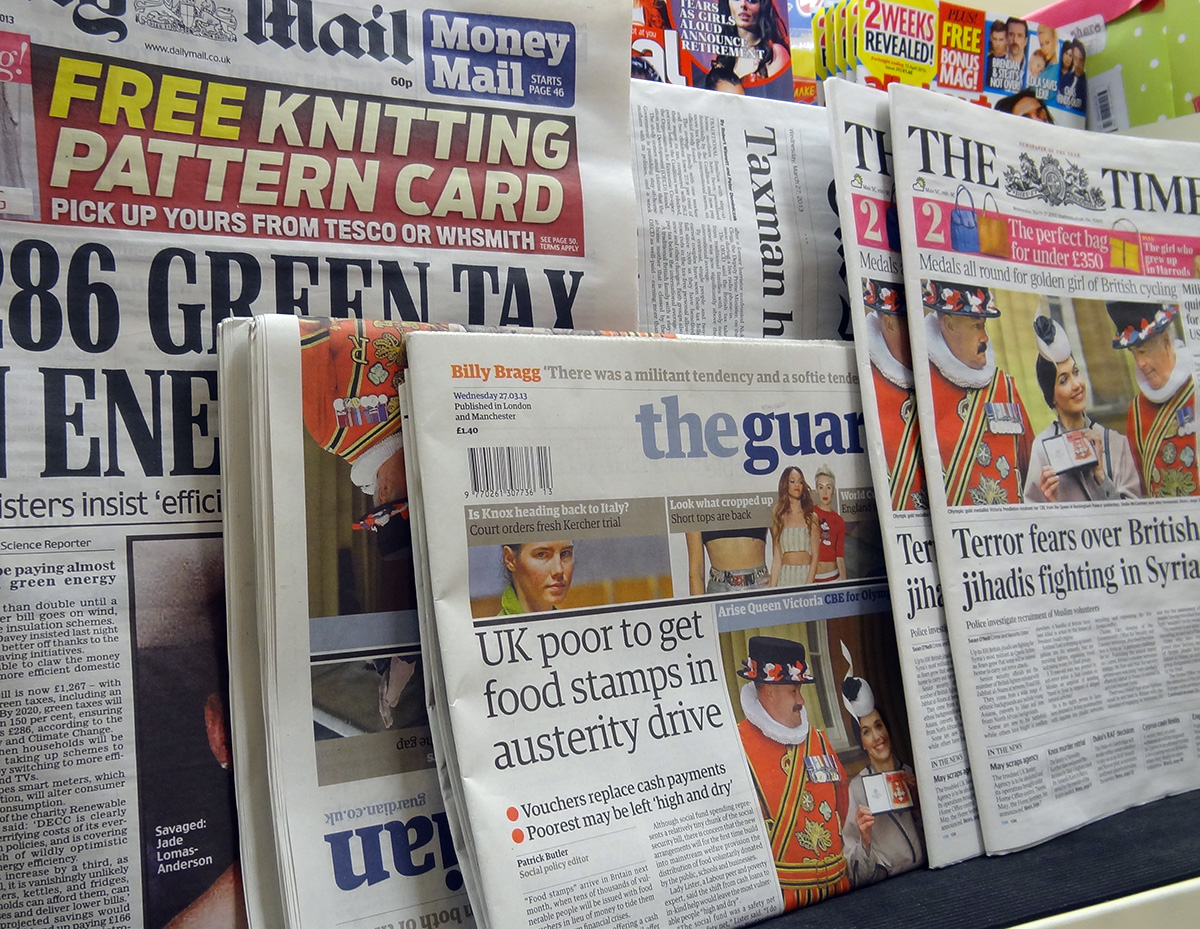 had been growing faster than private-sector pay. However, depending on the paper you read or the person you listen to, they will offer very different views as to who gets paid more. All you need to do in this case is look at the titles of the newspaper articles written by the Independent and The Telegraph! Whatever the explanation, these new data provide a wealth of information about relative prospects for pay for everyone.