 We’ve considered Keynesian economics and policy in several blogs. For example, a year ago in the post, What would Keynes say?, we looked at two articles arguing for Keynesian expansionary polices. More recently, in the blogs, End of the era of liquidity traps? and A risky dose of Keynesianism at the heart of Trumponomics, we looked at whether Donald Trump’s proposed policies are more Keynesian than his predecessor’s and at the opportunities and risks of such policies.
The article below, Larry Elliott updates the story by asking what Keynes would recommend today if he were alive. It also links to two other articles which add to the story.
Elliott asks his imaginary Keynes, for his analysis of the financial crisis of 2008 and of what has happened since. Keynes, he argues, would explain the crisis in terms of excessive borrowing, both private and public, and asset price bubbles. The bubbles then burst and people cut back on spending to claw down their debts.
 Keynes, says Elliott, would approve of the initial response to the crisis: expansionary monetary policy (both lower interest rates and then quantitative easing) backed up by expansionary fiscal policy in 2009. But expansionary fiscal policies were short lived. Instead, austerity fiscal policies were adopted in an attempt to reduce public-sector deficits and, ultimately, public-sector debt. This slowed down the recovery and meant that much of the monetary expansion went into inflating the prices of assets, such as housing and shares, rather than in financing higher investment.
He also asks his imaginary Keynes what he’d recommend as the way forward today. Keynes outlines three alternatives to the current austerity policies, each involving expansionary fiscal policy:
|
|
| • |
Trump’s policies of tax cuts combined with some increase in infrastructure spending. The problems with this are that there would be too little of the public infrastructure spending that the US economy needs and that the stimulus would be poorly focused. |
| • |
Government taking advantage of exceptionally low interest rates to borrow to invest in infrastructure. “Governments could do this without alarming the markets, Keynes says, if they followed his teachings and borrowed solely to invest.” |
| • |
Use money created through quantitative easing to finance public-sector investment in infrastructure and housing. “Building homes with QE makes sense; inflating house prices with QE does not.” (See the blogs, A flawed model of monetary policy and Global warning). |
Increased government spending on infrastructure has been recommended by international organisations, such as the OECD and the IMF (see OECD goes public and The world economic outlook – as seen by the IMF). With the rise in populism and worries about low economic growth throughout much of the developed world, perhaps Keynesian fiscal policy will become more popular with governments.
Article
Keynesian economics: is it time for the theory to rise from the dead?, The Guardian, Larry Elliott (11/12/16)
Questions
- What are the main factors determining a country’s long-term rate of economic growth?
- What are the benefits and limitations of using fiscal policy to raise global economic growth?
- What are the benefits and limitations of using new money created by the central bank to fund infrastructure spending?
- Draw an AD/AS diagram to illustrate the effect of a successful programme of public-sector infrastructure projects on GDP and prices.
- Draw a Keynesian 45° line diagram to illustrate the effect of a successful programme of public-sector infrastructure projects on actual and potential GDP.
- Why might an individual country benefit more from a co-ordinated expansionary fiscal policy of all countries rather than being the only country to pursue such a policy?
- Compare the relative effectiveness of increased government investment in infrastructure and tax cuts as alterative forms of expansionary fiscal policy.
- What determines the size of the multiplier effect of such policies?
- What supply-side policies could the government adopt to back up monetary and fiscal policy? Are the there lessons here from the Japanese government’s ‘three arrows’?

The first article below, from The Economist, examines likely macroeconomic policy under Donald Trump. He has stated that he plans to cut taxes, including reducing the top rates of income tax and reducing taxes on corporate income and capital gains. At the same time he has pledged to increase infrastructure spending.
This expansionary fiscal policy is unlikely to be accompanied by accommodating monetary policy. Interest rates would therefore rise to tackle the inflationary pressures from the fiscal policy. One effect of this would be to drive up the dollar and therein lies significant risks.
The first is that the value of dollar-denominated debt would rise in foreign currency terms, thereby making it difficult for countries with high levels of dollar debt to service those debts, possibly leading to default and resulting international instability. At the same time, a rising dollar may encourage capital 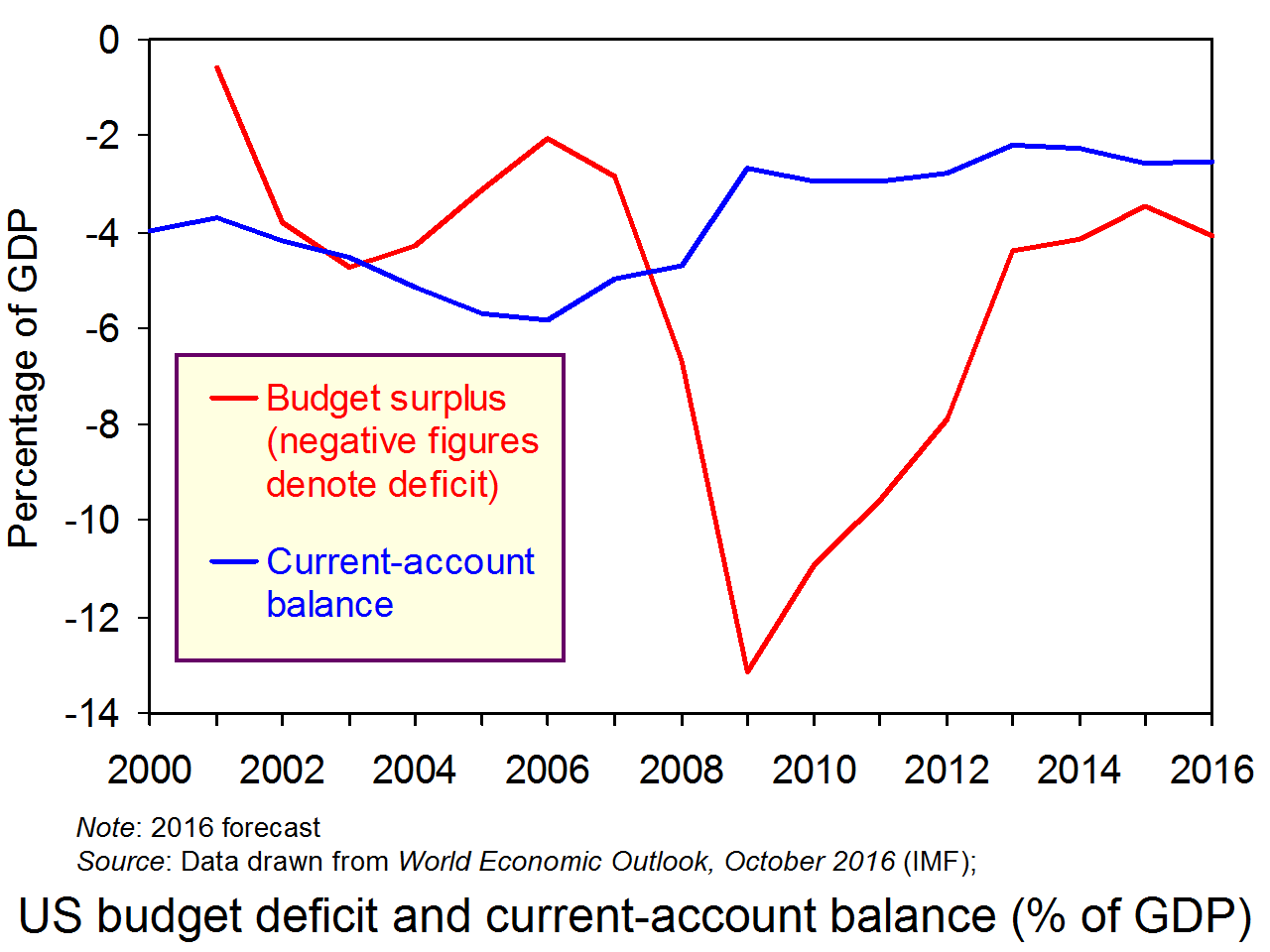 flight from weaker countries to the US (see The Economist article, ‘Emerging markets: Reversal of fortune’).
The second risk is that a rising dollar would worsen the US balance of trade account as US exports became less competitive and imports became more so. This may encourage Donald Trump to impose tariffs on various imports – something alluded to in campaign speeches. But, as we saw in the blog, Trump and Trade, “With complex modern supply chains, many products use components and services, such as design and logistics, from many different countries. Imposing restrictions on imports may lead to damage to products which are seen as US products”.
The third risk is that the main beneficiaries of Trump’s likely fiscal measures will be the rich, who would end up paying significantly less tax. With all the concerns from poor Americans, including people who voted for Trump, about growing inequality, measures that increase this inequality are unlikely to prove popular.
Articles
That Eighties show The Economist, Free Exchange (19/11/16)
The unbearable lightness of a stronger dollar Financial Times (18/11/16)
Questions
- What should the Fed’s response be to an expansionary fiscal policy?
- Which is likely to have the larger multiplier effect: (a) tax revenue reductions from cuts in the top rates of income; (b) increased government spending on infrastructure projects? Explain your answer.
- Could Donald Trump’s proposed fiscal policy lead to crowding out? Explain.
- What would protectionist policies do to (a) the US current account and (b) dollar exchange rates?
- Why might trying to protect US industries from imports prove difficult?
- Why might Trump’s proposed fiscal policy lead to capital flight from certain developing countries? Which types of country are most likely to lose from this process?
- Go though each of the three risks referred to in The Economist article and identify things that the US administration could do to mitigate these risks.
- Why may the rise in the US currency since the election be reversed?
 The article below looks at the economy of Brazil. The statistics do not look good. Real output fell last year by 3.8% and this year it is expected to fall by another 3.3%. Inflation this year is expected to be 9.0% and unemployment 11.2%, with the government deficit expected to be 10.4% of GDP.
The article considers Keynesian economics in the light of the case of Brazil, which is suffering from declining potential supply, but excess demand. It compares Brazil with the case of most developed countries in the aftermath of the financial crisis. Here countries have suffered from a lack of demand, made worse by austerity policies, and only helped by expansionary monetary policy. But the effect of the monetary policy has generally been weak, as much of the extra money has been  used to purchase assets rather than funding a growth in aggregate demand.
Different policy prescriptions are proposed in the article. For developed countries struggling to grow, the solution would seem to be expansionary fiscal policy, made easy to fund by lower interest rates. For Brazil, by contrast, the solution proposed is one of austerity. Fiscal policy should be tightened. As the article states:
Spending restraint might well prove painful for some members of Brazilian society. But hyperinflation and default are hardly a walk in the park for those struggling to get by. Generally speaking, austerity has been a misguided policy approach in recent years. But Brazil is a special case. For now, anyway.
The tight fiscal policies could be accompanied by supply-side policies aimed at reducing bureaucracy and inefficiency.
Article
Brazil and the new old normal: There is more than one kind of economic mess to be in The Economist, Free Exchange Economics (12/10/16)
Questions
- Explain what is meant by ‘crowding out’.
- What is meant by the ‘liquidity trap’? Why are many countries in the developed world currently in a liquidity trap?
- Why have central banks in the developed world found it difficult to stimulate growth with policies of quantitative easing?
- Under what circumstances would austerity policies be valuable in the developed world?
- Why is crowding out of fiscal policy unlikely to occur to any great extent in Europe, but is highly likely to occur in Brazil?
- What has happened to potential GDP in Brazil in the past couple of years?
- What is meant by the ‘terms of trade’? Why have Brazil’s terms of trade deteriorated?
- What sort of policies could the Brazilian government pursue to raise growth rates? Are these demand-side or supply-side policies?
- Should Brazil pursue austerity policies and, if so, what form should they take?
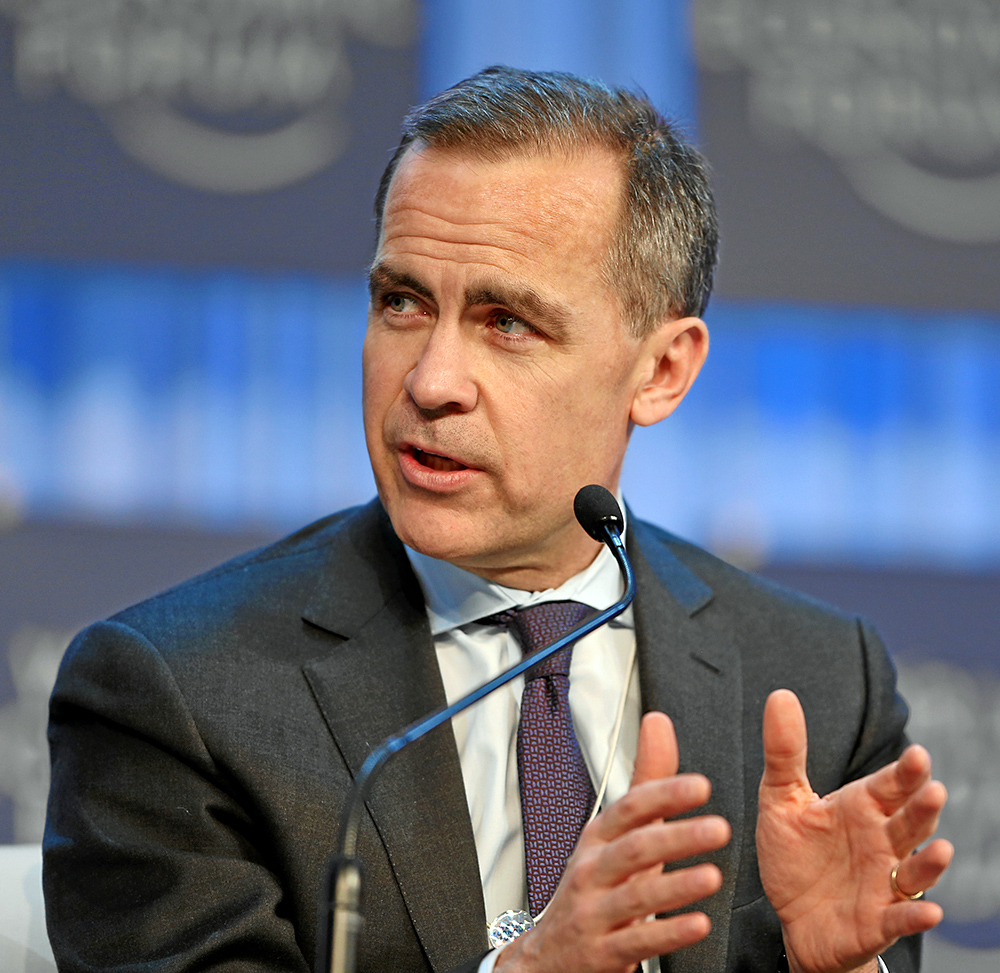
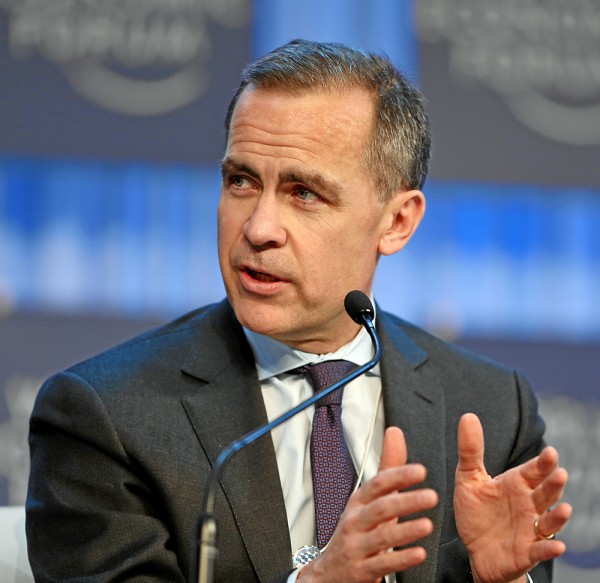
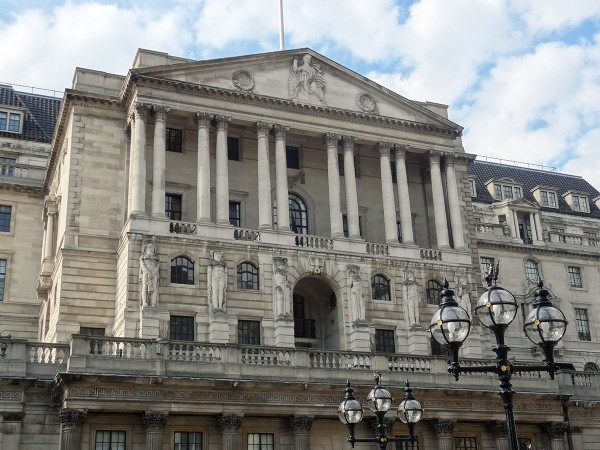 The Bank of England’s monetary policy is aimed at achieving an inflation rate of 2% CPI inflation ‘within a reasonable time period’, typically within 24 months. But speaking in Nottingham in one of the ‘Future Forum‘ events on 14 October, the Bank’s Governor, Mark Carney, said that the Bank would be willing to accept inflation above the target in order to protect growth in the economy.
“We’re willing to tolerate a bit of an overshoot in inflation over the course of the next few years in order to avoid rising unemployment, to cushion the blow and make sure the economy can adjust as well as possible.”
But why should the Bank be willing to relax its target – a target set by the government? In practice, a temporary rise above 2% can still be consistent with the target if inflation is predicted to return to 2% within ‘a reasonable time period’.
 But if even if the forecast rate of inflation were above 2% in two years’ time, there would still be some logic in the Bank not tightening monetary policy – by raising Bank Rate or ending, or even reversing, quantitative easing. This would be the case when there was, or forecast to be, stagflation, whether actual or as a result of monetary policy.
The aim of an inflation target of 2% is to help create a growth in aggregate demand consistent with the economy operating with a zero output gap: i.e. with no excess or deficient demand. But when inflation is caused by rising costs, such as that caused by a depreciation in the exchange rate, inflation could still rise even though the output gap were negative.
A rise in interest rates in these circumstances could cause the negative output gap to widen. The economy could slip into stagflation: rising prices and falling output. Hopefully, if the exchange rate stopped falling, inflation would fall back once the effects of the lower exchange rate had fed through. But that might take longer than 24 months or a ‘reasonable period of time’.
 So even if not raising interest rates in a situation of stagflation where the inflation rate is forecast to be above 2% in 24 months’ time is not in the ‘letter’ of the policy, it is within the ‘spirit’.
But what of exchange rates? Mark Carney also said that “Our job is not to target the exchange rate, our job is to target inflation. But that doesn’t mean we’re indifferent to the level of sterling. It does matter, ultimately, for inflation and over the course of two to three years out. So it matters to the conduct of monetary policy.”
But not tightening monetary policy if inflation is forecast to go above 2% could cause the exchange rate to fall further. It seems as if trying to arrest the fall in sterling and prevent a fall into recession are conflicting aims when the policy instrument for both is the rate of interest.
Articles
BoE’s Carney says not indifferent to sterling level, boosts pound Reuters, Andy Bruce and Peter Hobson (14/10/16)
Bank governor Mark Carney says inflation will rise BBC News, Kamal Ahmed (14/10/16)
Stagflation Risk May Mean Carney Has Little Love for Marmite Bloomberg, Simon Kennedy (14/10/16)
Bank can ‘let inflation go a bit’ to protect economy from Brexit, says Carney – but sterling will be a factor for interest rates This is Money, Adrian Lowery (14/10/16)
UK gilt yields soar on ‘hard Brexit’ and inflation fears Financial Times, Michael Mackenzie and Mehreen Khan (14/10/16)
Brexit latest: Life will ‘get difficult’ for the poor due to inflation says Mark Carney Independent, Ben Chu (14/10/16)
Prices to continue rising, warns Bank of England governor The Guardian, Katie Allen (14/10/16)
Bank of England
Monetary Policy Bank of England
Monetary Policy Framework Bank of England
How does monetary policy work? Bank of England
Future Forum 2016 Bank of England
Questions
- Explain the difference between cost-push and demand-pull inflation.
- If inflation rises as a result of rising costs, what can we say about the rate of increase in these costs? Is it likely that cost-push inflation would persist beyond the effects of a supply-side shock working through the economy?
- Can interest rates be used to control both inflation and the exchange rate? Explain why or why not.
- What is the possible role of fiscal policy in the current situation of a falling exchange rate and rising inflation?
- Why does the Bank of England target the rate of inflation in 24 months’ time and not the rate today? (After all, the Governor has to write a letter to the Chancellor explaining why inflation in any month is more than 1 percentage point above or below the target of 2%.)
- What is meant by a zero output gap? Is this the same as a situation of (a) full employment, (b) operating at full capacity? Explain.
- Why have UK gilt yields soared in the light of a possible ‘hard Brexit’, a falling exchange rate and rising inflation?
 During the 1970s, commentators often referred to the ‘political business cycle’. As William Nordhaus stated in a 1989 paper. “The theory of the political business cycle, which analyzes the interaction of political and economic systems, arose from the obvious facts of life that voters care about the economy while politicians care about power.”
In the past, politicians would use fiscal, and sometimes monetary, policies to manipulate aggregate demand so that the economy was growing strongly at the time of the next election. This often meant doing unpopular things in the first couple of years of office to allow for popular things, such as tax cuts and increased government transfers, as the next election approached. This tended to align the business cycle with the election cycle. The economy would slow in the early years of a parliament and expand rapidly towards the end.
To some extent, this has been the approach since 2010 of first the Coalition and now the Conservative governments. Cuts to government expenditure were made ‘in order to clear up the mess left by the previous government’. At the time it was hoped that, by the next election, the economy would be growing strongly again.
 But in adopting a fiscal mandate, the current government could be doing the reverse of previous governments. George Osborne has set the target of a budget surplus by the final year of this parliament (2019–20) and has staked his reputation on achieving it.
The problem, as we saw in the blog, Hitting – or missing – the government’s self-imposed fiscal targets is that growth in the economy has slowed and this makes it more difficult to achieve the target of a budget surplus by 2019–20. Given that achieving this target is seen to be more important for his reputation for ‘sound management’ of the public finances than that the economy should be rapidly growing, it is likely that the Chancellor will be dampening aggregate demand in the run-up to the next election. Indeed, in the latest Budget, he announced that specific measures would be taken in 2019–20 to meet the target, including a further £3.5 billion of savings from departmental spending in 2019–20. In the meantime, however, taxes would be cut (such as increasing personal allowances and cutting business rates) and government spending in certain areas would be increased. As the OBR states:
Despite a weaker outlook for the economy and tax revenues, the Chancellor has announced a net tax cut and new spending commitments. But he remains on course for a £10 billion surplus in 2019–20, by rescheduling capital investment, promising other cuts in public services spending and shifting a one-off boost to corporation tax receipts into that year.
But many commentators have doubted that this will be enough to bring a surplus. Indeed Paul Johnson, Director of the Institute for Fiscal Studies, stated on BBC Radio 4’s Today Programme said that “there’s only about a 50:50 shot that he’s going to get there. If things change again, if the OBR downgrades its forecasts again, I don’t think he will be able to get away with anything like this. I think he will be forced to put some proper tax increases in or possibly find yet further proper spending cuts”.
If that is the case, he will be further dampening the economy as the next election approaches. In other words, the government may be doing the reverse of what governments did in the past. Instead of boosting the economy to increase growth at election time, the government may feel forced to make further cuts in government expenditure and/or to raise taxes to meet the fiscal target of a budget surplus.
Articles
Budget 2016: George Osborne hits back at deficit critics BBC News (17/3/16)
George Osborne will have to break his own rules to win the next election Business Insider, Ben Moshinsky (17/3/16)
Osborne Accused of Accounting Tricks to Meet Budget Surplus Goal Bloomberg, Svenja O’Donnell and Robert Hutton (16/3/16)
George Osborne warns more cuts may be needed to hit surplus target Financial Times, Jim Pickard (17/3/16)
6 charts that explain why George Osborne is about to make austerity even worse Independent, Hazel Sheffield (16/3/16)
Budget 2016: Osborne ‘has only 50-50 chance’ of hitting surplus target The Guardian, Heather Stewart and Larry Elliott (17/3/16)
How will Chancellor George Osborne reach his surplus? BBC News, Howard Mustoe (16/3/16)
Osborne’s fiscal illusion exposed as a house of credit cards The Guardian, Larry Elliott (17/3/16)
The Budget’s bottom line: taxes will rise and rise again The Telegraph, Allister Heath (17/3/16)
Reports, analysis and documents
Economic and fiscal outlook – March 2016 Office for Budget Responsibility (16/3/16)
Budget 2016: documents HM Treasury (16/3/16)
Budget 2016 Institute for Fiscal Studies (17/3/16)
Questions
- Explain the fiscal mandate of the Conservative government.
- Does sticking to targets for public-sector deficits and debt necessarily involve dampening aggregate demand as an election approaches? Explain.
- For what reasons may the Chancellor not hit his target of a public-sector surplus by 2019–20?
- Compare the advantages and disadvantages of a rules-based fiscal policy and one based on discretion.
 Keynes, says Elliott, would approve of the initial response to the crisis: expansionary monetary policy (both lower interest rates and then quantitative easing) backed up by expansionary fiscal policy in 2009. But expansionary fiscal policies were short lived. Instead, austerity fiscal policies were adopted in an attempt to reduce public-sector deficits and, ultimately, public-sector debt. This slowed down the recovery and meant that much of the monetary expansion went into inflating the prices of assets, such as housing and shares, rather than in financing higher investment.