 The world has suffered from a number of adverse supply shocks in recent years. First there was the credit supply shock of 2007–9 that led to a default on mortgages, a collapse in confidence in the banking system, the drying up of the inter-bank market, the freezing of lending and a global economic contraction. Then there was the COVID-19 pandemic. This shock to the the global economy led to a a fall in output and breaks in supply chains. As recovery took place, supply-side difficulties led to a surge in inflation.
Then there was the Russian invasion of Ukraine. This shock to energy and grain supplies led to rises in fuel and food prices: a cost-push inflationary shock. More recently, the closing of the Strait of Hormuz has cut off an important supply route and again sent fuel and other other prices rising.
These supply-side shocks create a dilemma for central banks. They push up inflation, but push output and employment down – a situation of ‘stagflation’.
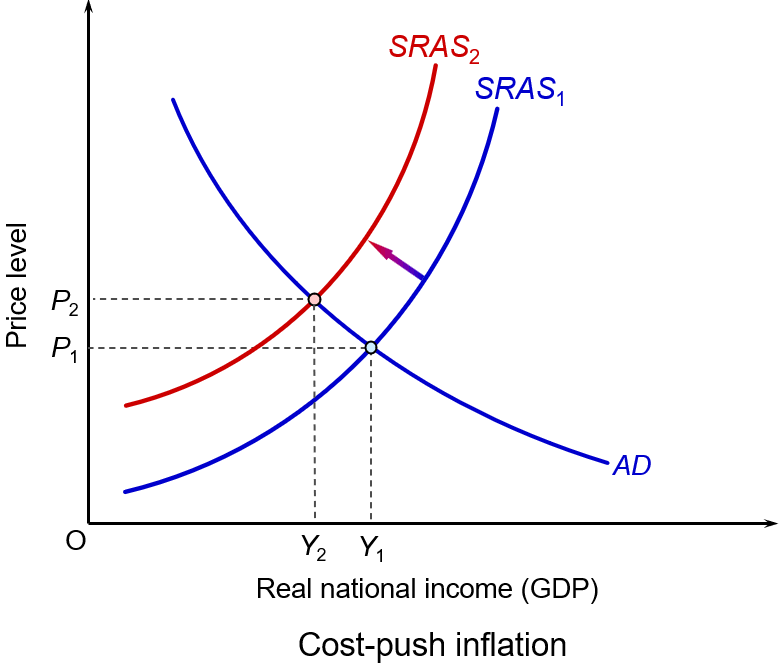 This can be illustrated with a simple aggregate demand and supply diagram. The shock shifts the aggregate supply curve upwards to the left, illustrated by the move from SRAS1 to SRAS2. The price level rises to P2 and GDP falls to Y2.
But central bank policy is designed to affect aggregate demand, not aggregate supply. If it raises interest rates, aggregate demand will shift to the left. The price level will fall (or at least the rate of inflation will fall), but output will fall further. If it cuts interest rates, aggregate demand will shift to the right. This will help to curtail, or even reverse, the fall in GDP, but will lead to even higher prices.
For countries where their central bank has a simple inflation mandate (e.g. keeping inflation close to 2%), sticking to this target in the short term would result in higher interest rates, lower economic growth and higher unemployment – and possibly even a recession. In such cases, central banks tend to project forward beyond the short-term shock and set interest rates to target inflation in a few months’ time. Indeed, many central banks do explicitly target inflation in the medium term (1 or 2 years) rather than the short term.
 Central banks, such as the US Federal Reserve Bank, which have a dual mandate of targeting inflation but also maximising employment, the trade-off between these two objectives can be stark. Getting the inflation down requires a higher rate of interest; maximising employment in the face of an adverse supply shock requires a lower rate of interest.
The short-term economic costs, let alone the human costs if the shock involves a war, can be great. People may suffer extreme hardship. The cost to the US Treasury of the first six weeks of the Iran war were estimated by the Pentagon to be some $29bn1 – which translates into higher taxes for US residents, lower government spending on non-war related items, higher government borrowing or some combination of the three. Other estimates put the cost to the US taxpayer as much higher – up to $1 trillion over the longer term.2 Then there are the costs to consumers of higher fuel and other prices, estimated at around $410 per month.3
The costs to Iranian citizens will be much higher in terms of war damage and loss of livelihood, let alone the suffering and loss of life. Then there are the costs to the rest of the world from higher prices of fuel, fertilisers and various industrial materials that are normally shipped through the Strait of Hormuz.
Long-term economic gain?
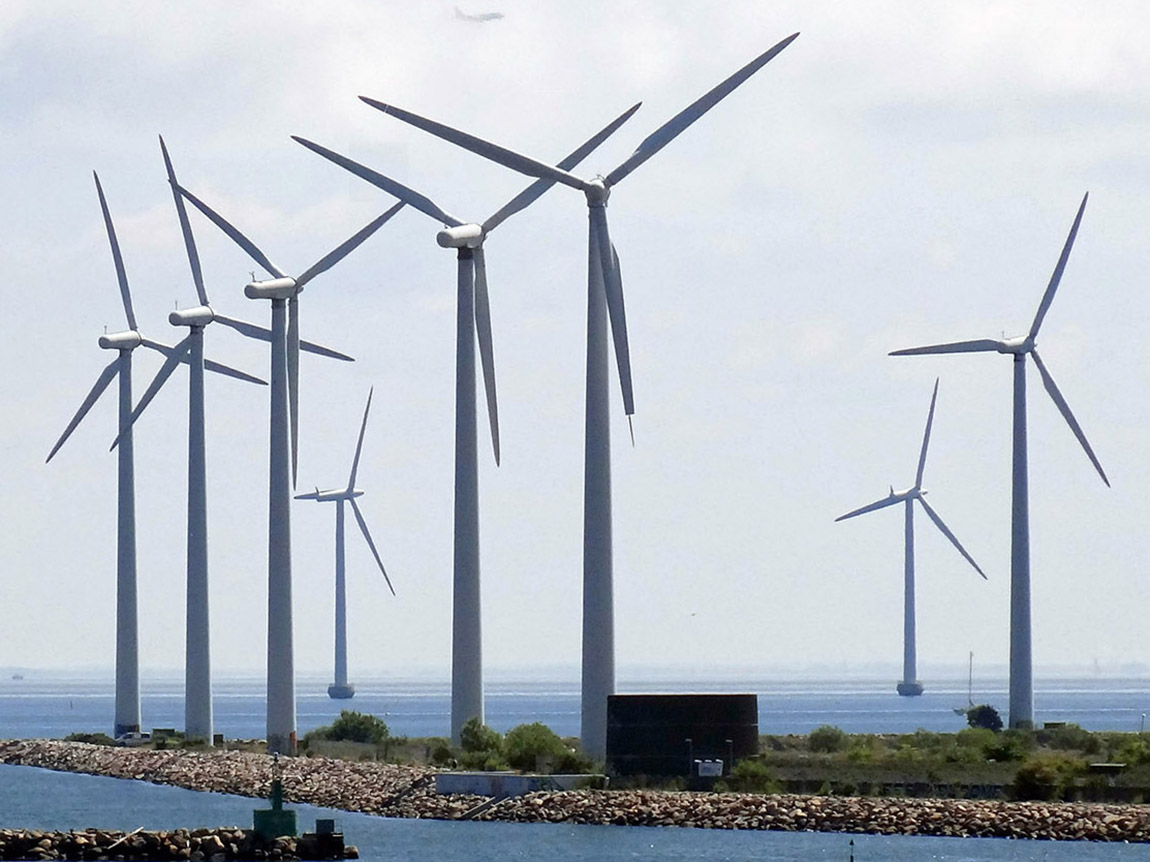 Supply shocks often expose economic vulnerabilities that can later be addressed, making supply chains more diverse and more resilient. They can give a boost to alternative technologies, such as a switch from fossil-fuels to green energy.
After the 2007–9 financial crisis, banking systems were made more robust under the Basel III system. Capital and liquidity requirements were increased and bank leverage was decreased. Many countries, such as the UK, introduced ‘ringfencing’ to separate retail banking from the riskier investment banking. This increased confidence in the banking system.
The COVID-19 pandemic gave a boost to working remotely and the establishment of more flexible work patterns. What was a necessity during lockdowns, was seen as an effective model by many companies. Fully remote or hybrid working became commonplace for many jobs that were previously done in the office. Time has allowed employers to find the best balance of in-office and remote working, with the optimum balance often varying by type of job being performed.
The rising price of oil and gas following the Russian invasion of Ukraine in February 2022, saw many countries that had been reliant on imports from Russia, accelerating their efforts to switch to renewable energy. Supply chains were re-examined and there was a move towards ‘re-shoring’, ‘near-shoring’, or ‘friend-shoring’: that is, obtaining supplies from countries that are nearer and/or more reliable as trading partners.
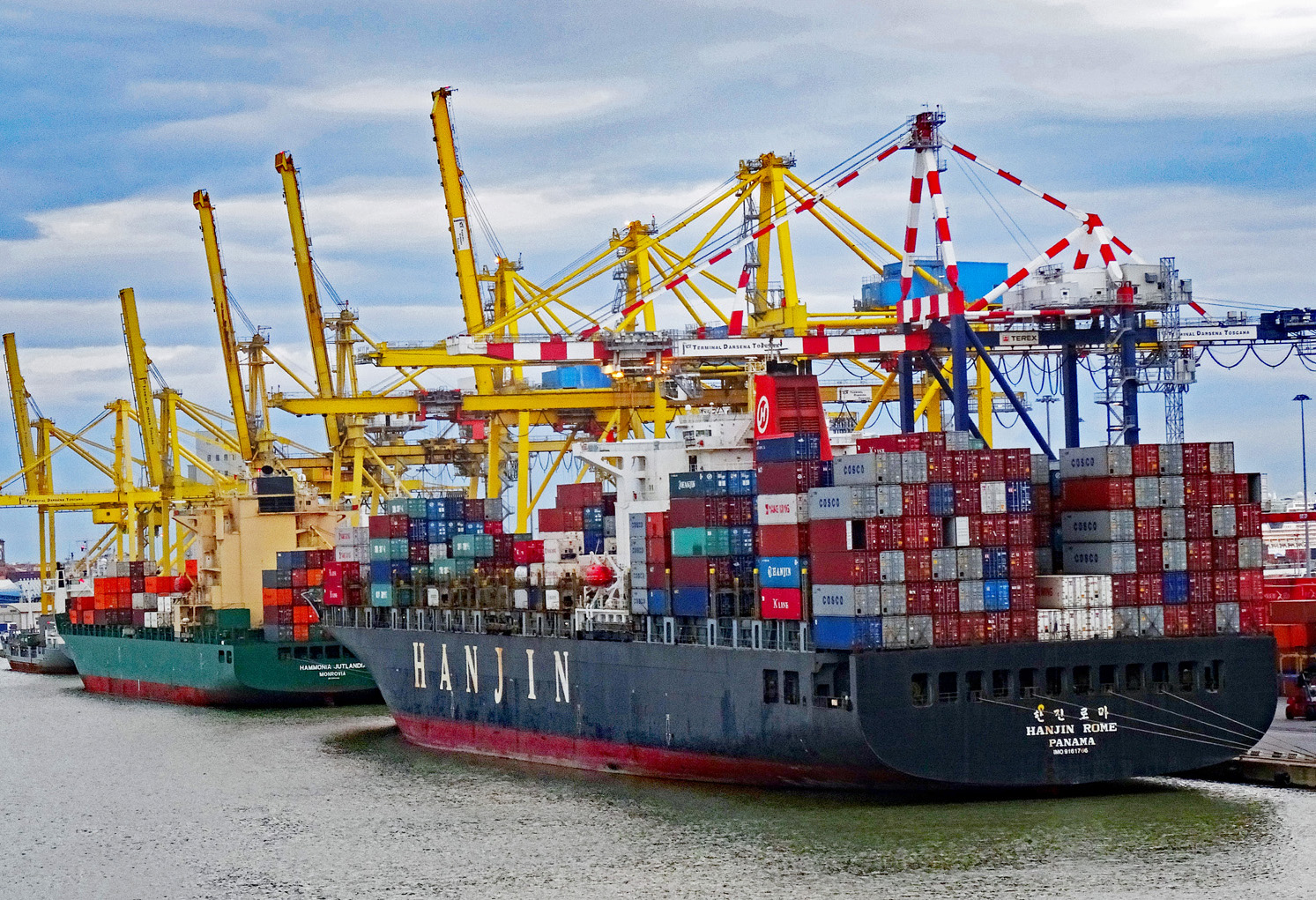 This approach was further boosted by the extensive tariffs imposed by the Trump second administration. One of the responses to the higher tariffs was to seek markets, both for exports and imports, away from the USA. To the extent that there is ‘re-shoring’ (substituting exports and imports for production and consumption within the country), then this amounts to deglobalisation. If this represents a move from low-cost to high-cost production and is contrary to the law of comparative advantage, then there will be a net economic loss. If, however, the reduction in risk of disruption and the boost to domestic industries allows a reduction in costs, there could be a net gain.
The most recent example of the Iran war has led many countries to reconsider sources of supply and to make their supply chains more robust and less risky. Gulf countries are considering expanding their pipeline network to avoid the Strait of Hormuz. For other countries, it is providing a further boost to green energy. Increased investment in the renewable sector will help to bring down costs and make countries less vulnerable to future conflicts involving oil-producing countries or sea passages.
To summarise: if initially adverse supply-side shocks cause a diversification and strengthening of supply chains, a diversification of energy sources, accelerated technological innovation and the adoption of new more efficient techniques, the long-term supply-side effects could be positive. Pain today for gain tomorrow?
But the short run comes before the long run and today’s costs are real and mounting. A shock may stimulate a positive response, but the current shock is persisting, and forecasts are getting more dire by the day. And even when the Iran war is over, there may be more shocks around the corner – ‘unknown unknowns’. As Keynes said: ‘In the long run we’re all dead’.
References
- Pentagon’s estimate for Iran war grows to $29B
Politico, Mark Sweney (12/5/26)
- World Politics The Iran war could cost the American taxpayer $1 trillion, says Harvard academic
CNBC, Joseph Wilkins (14/4/26)
- The Economic Costs of the Iran War
American Enterprise Institute, Roger Pielke Jr. (2/4/26)
Articles
Questions
- What policies have central banks pursued during the Iran war?
- Paint an optimistic scenario for the global economy five years hence.
- Paint a pessimistic scenario for the global economy five years hence.
- Compare the sources of supply of oil and gas for Europe directly prior to the Iran war with those directly prior to the Russian invasion of Ukraine.
- Compare the relative merits of globalisation and deglobalisation. Does this depend on the nature of globalisation and deglobalisation?
With relentless bombing of Iran by Israel and the USA, and with Iranian counterattacks on Gulf states, the costs of the war are mounting. The most obvious are in terms of human lives, injuries and suffering. But there are significant economic costs too. Some of these are immediate, such as the rising price of oil and hence the costs of fuel, or the fall in stock market prices. Some will be longer term, depending on how the war develops. For example, prices could rise more generally as supply chains are disrupted.
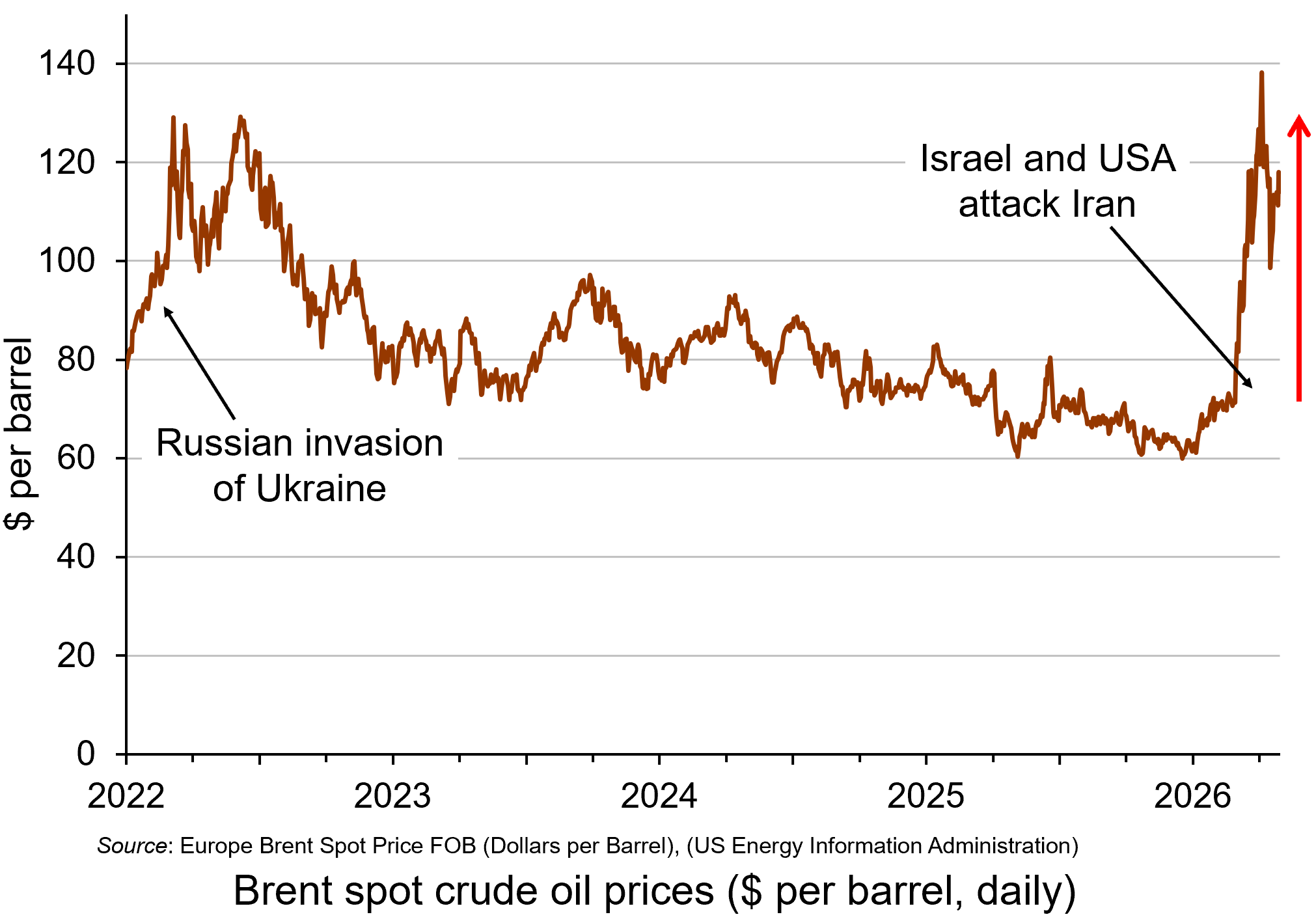 The impacts will vary across the world and across markets. The most obvious markets to be affected are those where significant supply comes from the Persian Gulf. Approximately 20% of total global oil consumption passes through the Strait of Hormuz, which connects the Persian Gulf with the Arabian Sea and the Indian Ocean.
Oil prices rose considerably in the days following the start of the war on 28 February, with Brent crude, a key measure of international oil prices, rising from $71.3 on 27 February to a peak of $119.4 per barrel by the morning of 9 March – a rise of 67%. It was possible that they would rise even further in the short term. However, prices fell back substantially later on 9 March after G7 finance ministers declared that the group ‘stands ready’ to release oil from strategic reserves if needed. By late in the day, the price had fallen to below $85. (Click here for a PowerPoint of the chart.)
However, despite the announcement on 11 March that 32 countries had agreed to release 400m barrels of oil reserves, oil prices began rising again and reached $100 on 12 March after three tankers had been struck in the Gulf, two of them close to the Strait of Hormuz. With Iran pledging to keep the Strait closed, there were worries that the release of oil reserves would provide only temporary relief. Just over 20m barrels of oil normally pass through the Strait of Hormuz. The 400m barrels released from storage is the equivalent, therefore, of only 20 days’ worth of lost oil from the Gulf.
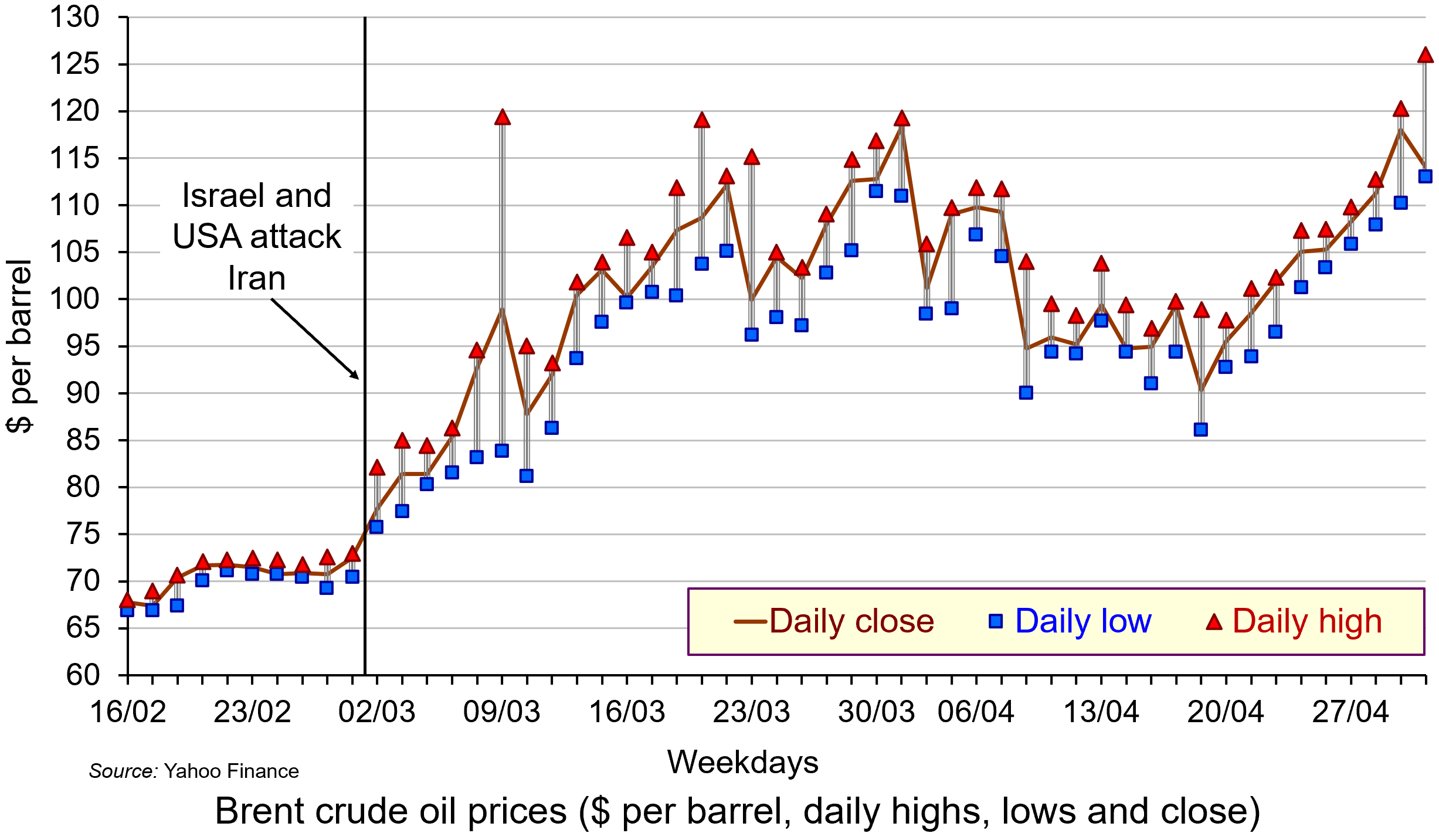
Not only did oil prices rise, but the price became much more volatile as markets reacted to the news on a continuous basis. Intra-day fluctuations in oil prices of several percentage points became typical, reflecting shifting expectations. The second chart shows daily fluctuations, with the highest and lowest prices for each day shown, along with the closing price. (Click here for a PowerPoint.)
The biggest fluctuation had been on 9 March when fears of the closing of the Strait of Hormuz saw the price of Brent crude rising to nearly $120 but falling to around $84 later in the day (a fall of around 30%) after the G7 announcement about releasing reserves.
There was another big fluctuation on 23 March. The previous day (Sunday), President Trump threatened to bomb Iran’s power plants if Iran did not allow free passage of ships through the Strait of Hormuz. Iran threatened to retaliate by striking Gulf countries’ energy and water systems. In early trading on Monday 23rd, Brent crude rose to over $115 per barrel. But later that day, Trump said that there had been constructive talks between the USA and Iran. The oil price immediately dropped to around $96 – a fall of 17% – before settling at around $100.
 Rising oil prices will drive up inflation. For those countries with a heavy dependence on Gulf oil, particularly countries in Asia, there could be significant supply problems. For oil exporters in the Persian Gulf, with tankers unable to traverse the Strait of Hormuz, the economic impact is huge. Oil exporters outside the Gulf, such as Russia, Norway and Canada, however, will gain from the higher prices. Clearly the size of these effects will depend on how long the conflict continues and how long the Strait of Hormuz remains closed.
And it is not just oil that is affected. Other products, such as liquified natural gas (LNG), petrochemicals, industrial materials, fertilizers for food production, medicines, helium for microchip production, metals and minerals are transported through the Strait of Hormuz. Gulf countries import much of their food through the Strait. On 18 March, Israel struck Iran’s huge South Pars gas field off the Gulf coast. This is the largest gas field in the world and is a major source of export revenue for Iran. Iran responded by striking the Qatari gas hub in Ras Laffan. Donald Trump responded by threatening to ‘blow up’ the entire Iranian South Pars gas field if Iran made further strikes on Qatar. The effect of this escalation was to drive oil and gas prices up further. By the week ending 20 March, the oil price closed at just over $112 per barrel.
Cuts in supplies of oil and other products represent an adverse supply shock. Such shocks push up prices (cost-push inflation), while adversely affecting aggregate output. This can lead to stagflation – a combination of higher inflation and stagnation or even falling output. Central banks with a simple mandate to keep inflation to a target are likely to raise interest rates, or at least delay in reducing them. In the USA, with a dual mandate of controlling inflation but also maximising employment, the response may be less deflationary, depending on the judgement of the Federal Reserve.
Uncertainty
 There is great uncertainty about how long the conflict will last. There is also a lack of clarity and consistency from the US administration about its war aims. This uncertainty has affected financial markets, which have seen considerable volatility. Stock markets have seen widespread falls, with airline, travel and AI-heavy stocks being particularly vulnerable.
If the war is concluded relatively swiftly, the economic effects could be relatively small. If the war continues, and especially if the Gulf countries are drawn further into the conflict and if the conflict spreads to other countries, the economic effects could be much more substantial. A prolonged conflict could see oil prices remaining above $100 per barrel, potentially increasing global inflation by 1 percentage point or more. This would slow or halt the move by central banks to cut rates and thereby reduce global economic growth – potentially, as we have seen, leading to stagflation.
The uncertainty was reflected in the decision of the Fed to keep interest rates unchanged at its meeting on 17/18 March. The Fed has the twin targets of keeping inflation close to 2% and maximising employment. Fed Chair, Jay Powell, acknowledged the current tension between the two goals: ‘upward risks for inflation and downward risks for employment, and that puts us in a difficult situation’. He also recognised that the future for inflation and the economy was highly uncertain as the war developed. This made interest rate setting difficult.
Then there is the issue of a potential new international refugee crisis. If the economic and political system in Iran deteriorates rapidly, this could trigger a wave of migration to neighbouring countries, such as Turkey, already hosting large numbers of refugees. Many could seek sanctuary further afield in Europe, with several countries already facing a backlash against immigration. The political and economic effects of this on host countries could be significant – but as yet, highly uncertain.
Articles
- Assessing the global economic impact of the Middle East war
ING, Carsten Brzeski, Warren Patterson, James Knightley and Deepali Bhargava (5/3/26)
- How the Hormuz closure could affect food, medicines and smartphones
BBC News Verify, Ben Chu (27/3/26)
- How will the Iran war affect the global economy?
Chatham House, Neil Shearing (6/3/26)
- ‘The stakes are enormous’: how a prolonged Iran war could shock the global economy
The Guardian, Richard Partington (22/3/26)
- Iran war is latest threat to a global economy rattled by Trump
Aljazeera, John Power (7/3/26)
- Why an Iran war inflation shock could wreck global economic recovery
The Guardian, Phillip Inman and Kalyeena Makortoff (8/3/26)
- Why has the Iran war sparked fears of stagflation for the global economy?
The Guardian, Luca Ittimani (9/2/26)
- Why the price of oil matters more than you might think
BBC News, Natalie Sherman and Mitchell Labiak (10/3/26)
- Strait of Hormuz: Factsheet
IEA (February 2026)
- Could this energy crisis be worse for the global economy than COVID?
The Conversation, Adi Imsirovic (26/3/26)
- Faisal Islam: Oil price spiral may be slowed but not stopped by G7 emergency move
BBC News, Faisal Islam (9/3/26)
- What on earth is going on with the oil price?
BBC News, Jemma Crew (12/3/26)
- Asia scrambles to confront energy crisis unleashed by Iran war – with no end in sight
The Guardian, Callum Jones (12/3/26)
- The grim choice facing the Trump administration: Economic or naval collapse?
CNN, Phil Mattingly and Zachary Cohen (9/3/26)
- Israel strikes Iran’s South Pars gasfield hours after forces kill intelligence minister
The Guardian, Lorenzo Tondo and William Christou (18/3/26)
- What Fed Chair Jerome Powell said — and didn’t say — about the oil crisis
Yahoo Finance, Jake Conley (19/3/26)
- What strikes on the world’s largest natural gas sites could do to the global economy
CNN, Hanna Ziady (19/3/26)
- How the Iran Conflict May Fuel a New International Refugee Crisis
Forbes, Andy J Semotiuk (5/3/26)
- Iran’s neighbours brace for fallout as war threatens new refugee crisis
Aljazeera, Abid Hussain (17/3/26)
- Two months into the Iran war, almost everybody is a loser
CNN, Ivana Kottasová (2/5/26)
Data
Report
Questions
- Who are the biggest gainers and losers from disruption to oil supplies from the Persian Gulf?
- Illustrate the effect of the current oil price shock on an aggregate demand and supply diagram (either static or dynamic).
- Why is the Iranian war likely to be less damaging to the European economy than the Ukrainian war has been?
- Why have AI-related stock prices been vulnerable to the uncertainty caused by the Iranian war?
- How have the Bank of England and the Federal Reserve Bank responded to higher oil prices and the broader economic effects of the war? Why might their responses be different in the coming months?
- What is the likely impact of the Iranian war on global economic recovery?
- How might the Iranian war affect global economic alliances?
- How is the current oil price shock likely to affect the eurozone? Will it be different from the oil price shock that followed the Russian invasion of Ukraine?
- What are the likely economic effects of large-scale migration caused by the war?
 Unemployment in the UK reached its highest level in nearly five years at the close of 2025, according to new data from the Office for National Statistics. Figures show the unemployment rate rising to 5.2% in the three months to December, up slightly from 5.1% in the preceding quarter.
This marks the highest unemployment level since the pandemic, coinciding with a slowdown in wage growth and increasing speculation that interest rates may soon be lowered.
Youth unemployment
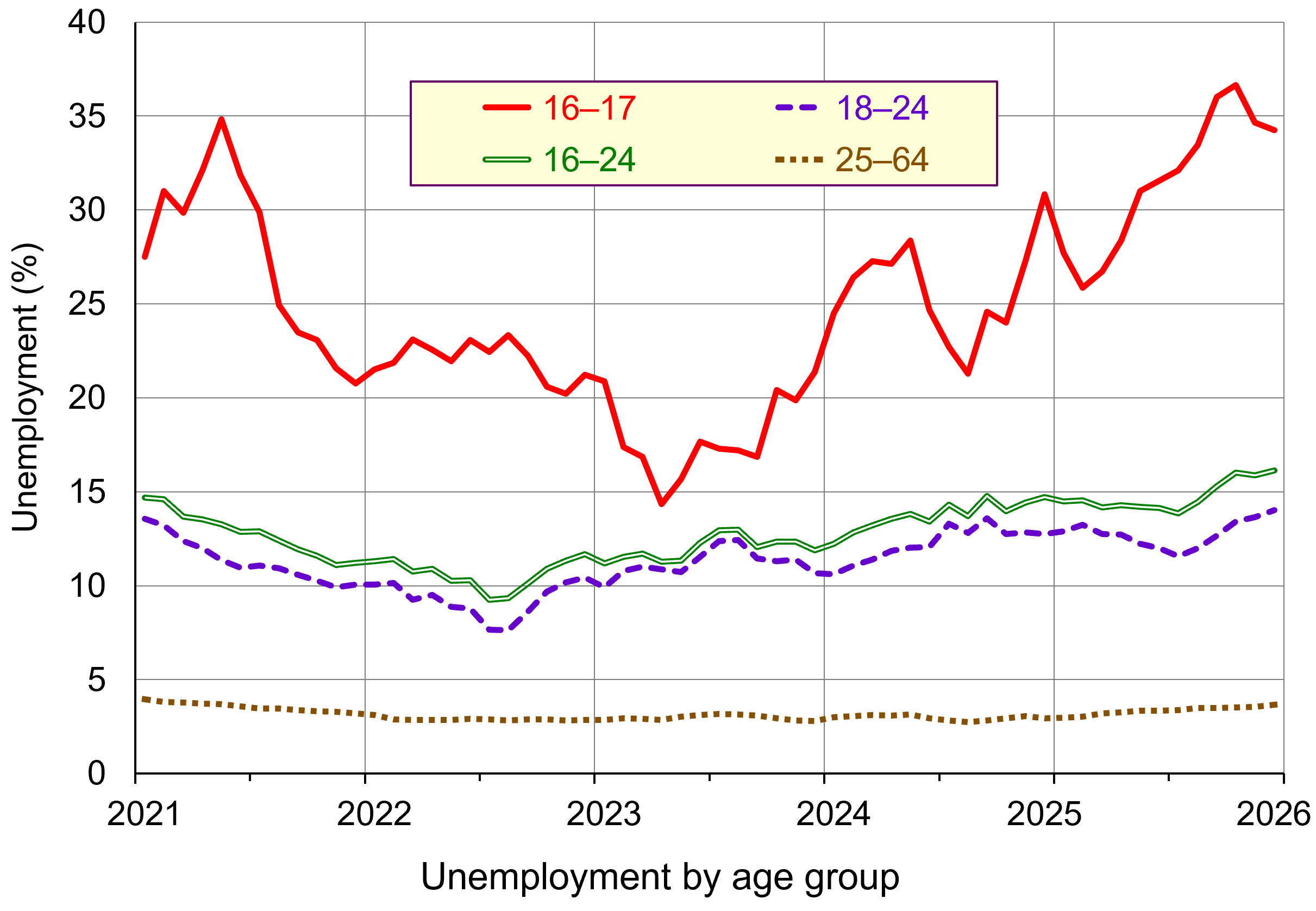 However, young people are taking the heaviest hit, with unemployment climbing to 16.1% among those aged 16 to 24. (Click here for a PowerPoint of the chart.) This is the highest level in more than a decade, including the spike seen during the pandemic. Economists largely attribute this trend to rising payroll costs, which they say are discouraging employers from offering entry level roles. Long-term youth unemployment is also worsening, with recent data showing that a growing share of unemployed young people have been out of work for over 12 months, highlighting deeper and more persistent barriers to re entry.
At the same time, although wages for those in work continue to grow faster than prices, the pace of wage growth is steadily slowing, adding further pressure on young people already facing the most challenging labour market conditions in years. According to ONS data, the annual growth in average weekly wages, excluding bonuses, slowed to 4.2% in the last three months of 2025. Private-sector wage growth eased to 3.4%, bringing it closer to the 3.25% rate that the Bank of England believes is consistent with its 2% inflation target.
The impact on interest rates
 The Bank of England is watching the slowdown in the UK jobs market closely as it gauges when next to lower its interest rates. In February 2026, the Monetary Policy Committee voted to hold the base rate (Bank Rate) at 3.75%. However, the committee voted with a majority of 5-4, with four members voting to reduce the rate to 3.5%.
The Bank of England uses interest rates as a policy tool to control inflation, the rate at which general prices rise in the economy. The current rate of inflation of 3.4% is above the Bank of England’s target of 2%.
In addition to the split vote, some economists believe that the easing in pay growth makes it likely that Bank Rate will be cut at the next meeting on 19th March. Paul Dales, chief UK economist at Capital Economics, said the fall in wage growth ‘supports the idea that the Bank of England has at least a couple more interest rate cuts in its locker’. A decrease in interest rates will be welcomed by investors.
What is behind the increase in youth unemployment?
Young people always tend to be the most impacted by a downturn in hiring. But economists warned that the rise in youth unemployment was a sign that employers are being more cautious about hiring younger workers. Openings for low-skilled entry-level roles and for new graduates have dropped steeply. Many businesses have slowed hiring due to an increase in costs because of measures in Chancellor Rachel Reeves’s last two Budgets. Businesses claim that the combination of increases in employer National Insurance contributions and a rise in the minimum wage mean they are facing higher payroll costs.
Peter Dixon at the National Institute for Economic and Social Research said, ‘there are indications that younger workers in particular are being priced out of the market’, supporting the explanation that raising the minimum wage might also be disincentivising the hiring of young people.
The ONS reported that the retail and wholesale sector saw the biggest fall in the number of workers on company payrolls, with 65,000 jobs lost in the sector since January last year. Meanwhile, health and social work saw the biggest rise in payrolled workers of any sector, adding 39,000 jobs in the year to January. Financial analyst at AJ Bell, Danni Hewson, suggested that those leaving the retail sector were now entering healthcare, with both sectors employing large numbers of women. However, she also warned that a recent surge in investment in artificial intelligence could hit young people the hardest as it could result ‘in a scarcity of entry level posts’ (see the blog Will AI make the world less equal?.
Job vacancies
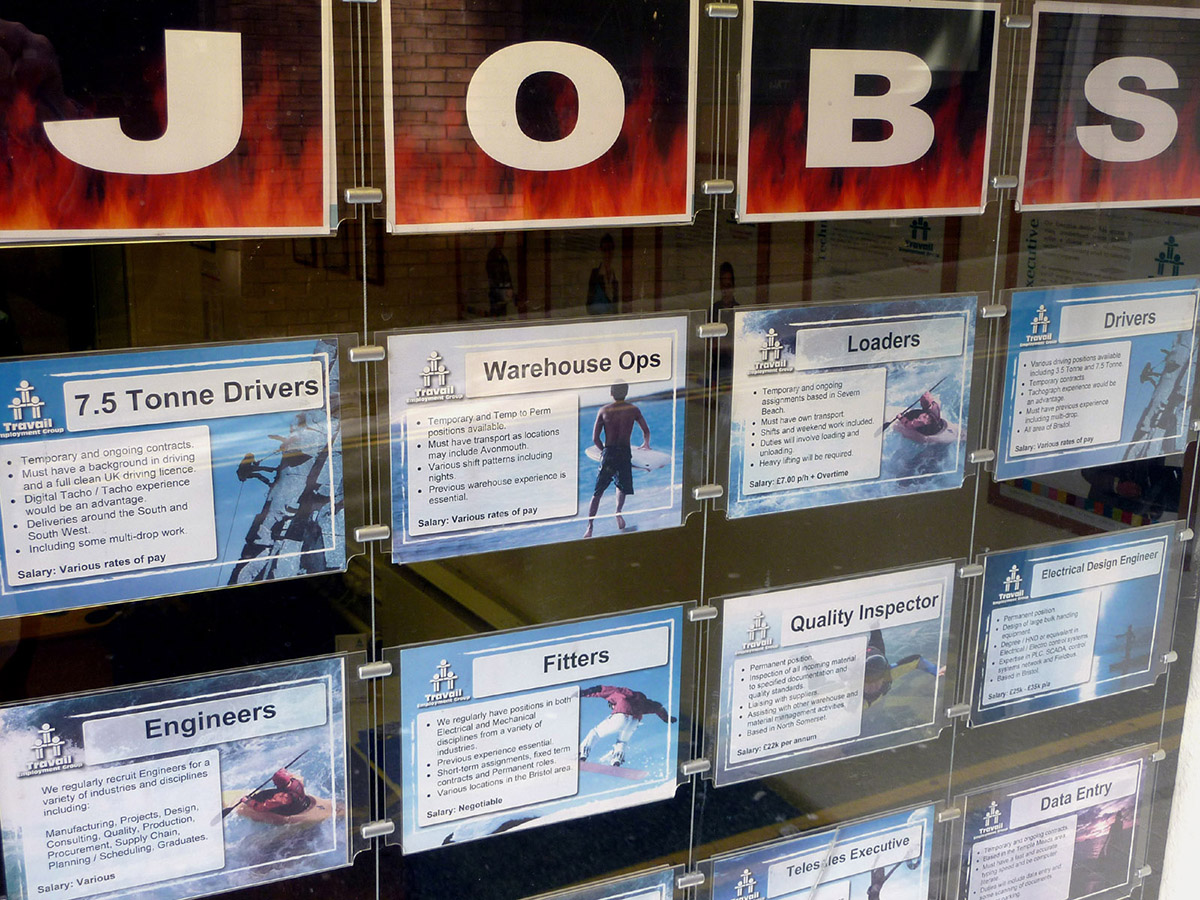 Job vacancy data across the UK indicates a significant cooling in labour demand. According to the latest ONS figures, vacancies fell from 736,000 in the three months to December to 726,000 in January, signalling continued weakening in hiring activity. According to the job search site, Adzuna, the number of vacant positions has dropped to its lowest level in five years, with job listings sliding 3% in January to 695,000, marking the first time vacancies have dipped below 700,000 since early 2021. Notably, graduate opportunities have fallen below 10,000 for the first time since Adzuna started tracking in 2016, underscoring the deepening challenges for new entrants to the workforce.
This downward trend in job openings extends patterns seen throughout late 2025, with vacancies down 16% from the previous January and nearly 20% lower than six months earlier. This coincides with a rise in unemployment to 5.2%, slower wage growth, and a growing concern that young people are disproportionately affected as hiring slows. As opportunities shrink, competition has intensified: there are now 2.4 jobseekers per vacancy, up from 2.27 in December, with the most sought-after roles including warehouse staff, healthcare support workers, lorry drivers, labourers and kitchen assistants.
How can the situation be improved?
Pat McFadden, Secretary for Work and Pensions, has commissioned the former Health Secretary Alan Milburn to lead a review into the causes of rising youth inactivity. There will be a particular focus on mental health issues that are pushing young people out of education and employment. This initiative responds to the growing number of young people not in education, employment, or training (NEETs), many of whom are now classified as inactive rather than unemployed. Some receive health-related benefits and are therefore not required to look for work, while others fall outside the benefits system entirely, making them harder to identify and support.
However, Pat McFadden said there was ‘more to do to get people into jobs’, and that tackling youth unemployment is a key government priority. He added that Labour was working to make it easier for young people to find and secure an apprenticeship, supported by a wider package of reforms. The reforms announced by McFadden include creating 50,000 additional apprenticeships. The government will also expand support for 350,000 people to move into work or training in sectors such as care and construction, with the risk of losing benefits if they refuse. They also include the provision of 55,000 state-funded, six-month work placements for the long-term unemployed.
While these measures are widely seen as necessary, campaign groups argue the government should go further by extending its ‘Youth Guarantee’ to cover all young people up to age 24, rather than ending at 22.
 However, as Alice Martin, head of research at Lancaster University’s Work Foundation, notes, initiatives designed to help people return to the labour market have limited impact ‘if the jobs aren’t out there.’ Even graduates are finding that opportunities are scarce, and for those leaving education with few qualifications, the situation is even more challenging. Sectors such as retail, once a reliable source of first jobs, have been in long-term structural decline, a trend that is now accelerating and further narrowing the pathways available to young people entering the workforce.
The situation has prompted government discussions about postponing the planned rise in the minimum wage for 18- to 20-year-olds to address employers’ concerns and encourage more youth employment. However, on Wednesday, Keir Starmer stressed that Labour remains committed to its manifesto pledge to align the pay of younger workers with that of older employees. The Prime Minister confirmed that the promise to ‘remove the discriminatory age bands’ in the minimum wage system still stands, and that the increase scheduled for April will proceed as planned.
Starmer said ‘We’ve made commitments to young people in our manifesto, and we will keep to those commitments, including the commitment that we would make sure that the living wage and minimum wage will go up this April, which we can absolutely confirm to you will happen.’
Unemployment outlook
Multiple economic forecasts predict that unemployment will to continue to rise in 2026. The most frequently cited projection places the 2026 unemployment rate around 5.2%–5.5%. However, some economists expect businesses to regain confidence and begin hiring again later in the year, supporting a gradual stabilisation in job markets.
Yet risks remain significant: if that recovery fails to materialise, unemployment could edge toward 6% by the end of the year, with forecasts from JP Morgan suggesting unemployment may reach 2 million in the first half as firms delay recruitment following the recent rise in the employers’ National Insurance rate. This environment is proving especially challenging for young people, with early career opportunities among the first to disappear and delayed entry into work potentially limiting long-term earnings and progression.
As hiring becomes more cautious and entry-level roles tighten, the path into the labour market risks becoming narrower, underscoring the need for policies and conditions that support both employer confidence and opportunities for new entrants.
Articles
FT Articles (subscribers only)
Data
Questions
- Explain why youth unemployment has risen more sharply than overall unemployment at the end of 2025.
- What are the costs to the individual of being unemployed?
- What are the wider non-monetary costs to society?
- Explain the main financial costs to the wider economy of a rising unemployment rate.
- Assess the likely impact of slowing wage growth on the Bank of England’s decision about whether or not to cut interest rates in early 2026.
- Discuss how falling job vacancies, particularly graduate and entry‑level opportunities, might affect long‑term labour market outcomes for young people.
- Evaluate the effectiveness of government policies such as expanding apprenticeships, increasing work placements, and reviewing youth inactivity in reducing youth unemployment.
 With businesses increasing their use of AI, this is likely to have significant effects on employment. But how will this affect the distribution of income, both within countries and between countries?
In some ways, AI is likely to increase inequality within countries as it displaces low-skilled workers and enhances the productivity of higher-skilled workers. In other ways, it could reduce inequality by allowing lower-skilled workers to increase their productivity, while displacing some higher-skilled workers and managers through the increased adoption of automated processes.
The effect of AI on the distribution of income between countries will depend crucially on its accessibility. If it is widely available to low-income countries, it could significantly enhance the productivity of small businesses and workers in such countries and help to reduce the income gap with the richer world. If the gains in such countries, however, are largely experienced by multinational companies, whether in mines and plantations, or in labour-intensive industries, such as garment production, few of the gains may accrue to workers and global inequality may increase.
Redistribution within a country
 The deployment of AI may result in labour displacement. AI is likely to replace both manual and white-collar jobs that involve straightforward and repetitive tasks. These include: routine clerical work, such as data entry, filing and scheduling; paralegal work, contract drafting and legal research; consulting, business research and market analysis; accounting and bookkeeping; financial trading; proofreading, copy mark-up and translation; graphic design; machine operation; warehouse work, where AI-enabled warehouse robots do many receiving, sorting, stacking, retrieval, carrying and loading tasks (e.g. Amazon’s Sequoia robotic system); basic coding or document sifting; market research and advertising design; call-centre work, such as enquiry handling, sales, telemarketing and customer service; hospitality reception; sales cashiers in supermarkets and stores; analysis of health data and diagnosis. Such jobs can all be performed by AI assistants, AI assisted robots or chat bots.
Women are likely to be disproportionately affected because they perform a higher share of the administrative and service roles most exposed to AI.
Workers displaced by AI may find that they can find employment only in lower-paid jobs. Examples include direct customer-facing roles, such as bar staff, shop assistants, hairdressers and nail and beauty consultants.
Such job displacement by AI is likely to redistribute income from relatively low-skilled labour to capital: a redistribution from wages to profits. This will tend to lead to greater inequality.
AI is also likely to lead to a redistribution of income towards certain types of high-skilled labour that are difficult to replace with AI but which could be enhanced by it. Take the case of skilled traders, such as plumbers, electricians and carpenters. They might be able to use AI in their work to enhance their productivity, through diagnosis, planning, problem-solving, measurement, etc. but the AI would not displace them. Instead, it could increase their incomes by allowing them to do their work more efficiently or effectively and thus increase their output per hour and enhance their hourly reward. Another example is architecture, where AI can automate repetitive tasks and open up new design possibilities, allowing architects to focus on creativity, flexibility, aesthetics, empathy with clients and ethical decision-making.
An important distinction is between disembodied and embodied AI investment. Disembodied AI investment could include AI ‘assistants’, such as ChatGPT and other software that can be used in existing jobs to enhance productivity. Such investment can usually be rolled out relatively quickly. Although the extra productivity may allow some reduction in the number of workers, disembodied AI investment is likely to be less disruptive than embodied AI investment. The latter includes robotics and automation, where workers are replaced by machines. This would require more investment and may be slower to be adopted.
Then there are jobs that will be created by AI. These include prompt engineers, who develop questions and prompt techniques to optimise AI output; health tech experts, who help organisations implement new medical AI products; AI educators, who train people in the uses of AI in the workplace; ethics advisors, who help companies ensure that their uses of AI are aligned with their values, responsibilities and goals; and cybersecurity experts who put systems in place to prevent AI stealing sensitive information. Such jobs may be relatively highly paid.
 In other cases, the gains from AI in employment are likely to accrue mainly to the consumer, with probably little change in the incomes of the workers themselves. This is particularly the case in parts of the public sector where wages/salaries are only very loosely related to productivity and where a large part of the work involves providing a personal service. For example, health professionals’ productivity could be enhanced by AI, which could allow faster and more accurate diagnosis, more efficient monitoring and greater accuracy in surgery. The main gainers would be the patients, with probably little change in the incomes of the health professionals themselves. Teachers’ productivity could be improved by allowing more rapid and efficient marking, preparation of materials and record keeping, allowing more time to be spent with students. Again, the main gainers would be the students, with little change in teachers’ incomes. Other jobs in this category include social workers, therapists, solicitors and barristers, HR specialists, senior managers and musicians.
Thus there is likely to be a distribution away from lower-skilled workers to both capital and higher-skilled workers who can use AI, to people who work in new jobs created by AI and to the consumers of certain services.
AI will accelerate productivity growth and, with it, GDP growth, but will probably displace workers faster than new roles emerge. This is likely to increase inequality and be a major challenge for society. Can the labour market adapt? Could the effects be modified if people moved to a four- or three-day week? Will governments introduce statutory limits to weekly working hours? Will training and education adapt to the new demands of employers?
Redistribution between countries
 AI threatens to widen the global rich–poor divide. It will give wealthier nations a productivity and innovation edge, which could displace low-skilled jobs in low-income nations. Labour-intensive production could be replaced by automated production, with the capital owned by the multinational companies of just a few countries, such as the USA and China, which between them account for 40% of global corporate AI R&D spending. For some companies, it would make sense to relocate production to rich countries, or certain wealthier developing countries, with better digital infrastructure, advanced data systems and more reliable power supply.
For other companies, however, production might still be based in low-income countries to take advantage of low-cost local materials. But there would still be a redistribution from wages in such countries to the profits of multinationals.
But it is not just in manufacturing where low-income countries are vulnerable to the integration of AI. Several countries, such as India, the Philippines, Mexico and Egypt have seen considerable investment in call centres and IT services for business process outsourcing and customer services. AI now poses a threat to employment in this industry as it has the potential to replace large numbers of workers.
AI-related job losses could exacerbate unemployment and deepen poverty in poorer countries, which, with limited resources, limited training and underdeveloped social protection systems, are less equipped to absorb economic and social shocks. This will further widen the global divide. In the case of embodied AI investment, it may only be possible in low-income countries through multinational investment and could displace many traditional jobs, with much of the benefit going in additional multinational profit.
But it is not all bad news for low-income countries. AI-driven innovations in healthcare, education, and agriculture, if adopted in poor countries, can make a significant contribution to raising living standards and can slow, or even reverse, the widening gap between rich and poor nations. Some of the greatest potential is in small-scale agriculture. Smallholders can boost crop yields though precision farming powered by AI; AI tools can help farmers buy seeds, fertilisers and animals and sell their produce at optimum times and prices; AI-enabled education tools can help farmers learn new techniques.
Articles
- New Skills and AI Are Reshaping the Future of Work
IMF Blog, Kristalina Georgieva (14/1/26)
- Generative AI: degenerative for jobs?
Bank Underground, Bank of England blog, Edward Egan (22/1/26)
- Artificial intelligence (AI) and employment
UK Parliament Research Briefing Lydia Harriss and Sam Money-Kyrle (23/12/25)
- Is Your Job AI-Proof? What to Know About AI Taking Over Jobs
Built In, Matthew Urwin (27/8/25)
- AI likely to displace jobs, says Bank of England governor
BBC News, Michael Race (19/12/25)
- These Jobs Will Fall First as AI Takes Over the Workplace
Forbes, Jack Kelly (30/4/25)
- Disrupted or displaced? How AI is shaking up jobs
exec-appointments.com, Anjli Raval (9/7/25)
- Navigate the economic risks and challenges of generative AI
EY-Parthenon, Lydia Boussour (25/6/24)
- AI Isn’t Increasing Inequality; It’s Revealing the Gaps We Haven’t Wanted to See
HR News, Mark Abbott (18/12/25)
- AI promises efficiency, but it’s also amplifying labour inequality
The Conversation, Mehnaz Rafi (3/12/25)
- 10 Jobs AI Will Replace in 2025
Live Career, Marta Bongilaj (29/12/25)
- From steam to Silicon: Why inequality persists
Aik News HD (Pakistan), Ahmed Fawad Farooq (27/12/25)
- Rethinking AI’s role in income inequality
PwC: The Leadership Agenda (4/9/25)
- How Europe Can Capture the AI Growth Dividend
IMF Blog, Florian Misch, Ben Park, Carlo Pizzinelli and Galen Sher (20/11/25)
- The Next Great Divergence
UNDP: Asia and the Pacific (2/12/25)
- AI risks sparking a new era of divergence as development gaps between countries widen, UNDP report finds
UNDP Press Release (2/12/25)
- AI threatens to widen inequality among states: UN
Aljazeera (2/12/25)
- AI risks deepening inequality, says head of world’s largest SWF
Financial Times, James Fontanella-Khan and Sun Yu (23/11/25)
- Three Reasons Why AI May Widen Global Inequality
Center for Global Development, Philip Schellekens and David Skilling (17/10/24)
- AI Will Transform the Global Economy. Let’s Make Sure It Benefits Humanity
IMF Blog, Kristalina Georgieva (14/1/24)
- AI’s $4.8 trillion future: UN Trade and Development alerts on divides, urges action
UNCTAD Press Release (7/4/25)
- AI could affect 40% of jobs and widen inequality between nations, UN warns
CNBC, Dylan Butts (4/4/25)
Questions
- What types of job are most vulnerable to AI?
- How will AI change the comparative advantage of low-income countries and what effect will it be likely to have on the pattern of global trade?
- Assess alternative policies that governments in high-income countries can adopt to offset the growth in inequality caused by the increasing use of AI.
- What policies can governments in low-income countries or aid agencies adopt to offset the growth in inequality within low-income countries and between high- and low-income countries?
- How might the growth of AI affect your own approach to career development?
- Is AI likely to increase or decrease economic power? Explain.
 In the first of a series of updated blogs focusing on the importance of the distinction between nominal and real values we look at the issue of earnings. Here we update the blog Getting Real with Pay written back in February 2019. Then, we noted how the macroeconomic environment since the financial crisis of the late 2000s had continued to affect people’s pay. Specifically, we observed that there had been no growth in real or inflation-adjusted pay. In other words, people were no better off in 2019 than in 2008.
In this updated blog, we consider to what extent the picture has changed five years down the line. While we do not consider the distributional impact on pay, the aggregate picture nonetheless continues to paint a very stark picture, with consequences for living standards and financial wellbeing.
While the distinction between nominal and real values is perhaps best known in relation to GDP and economic growth, the distinction is also applied frequently to analyse the movement of one price relative to prices in general. One example is that of movements in pay (earnings) relative to consumer prices.
Pay reflects the price of labour. The value of our actual pay is our nominal pay. If our pay rises more quickly than consumer prices, then our real pay increases. This means that our purchasing power rises and so the volume of goods and services we can afford increases. On the other hand, if our actual pay rises less quickly than consumer prices then our real pay falls. When real pay falls, purchasing power falls and the volume of goods and services we can afford falls.
Figures from the Office for National Statistics show that in January 2000 regular weekly pay (excluding bonuses and before taxes and other deductions from pay) was £293. By April 2024 this had risen to £640. This is an increase of 118 per cent. Over the same period, the consumer prices index known as the CPIH, which, unlike the better-known CPI, includes owner-occupied housing costs and council tax, rose by 82 per cent. Therefore, the figures are consistent with a rise both in nominal and real pay between January 2000 to April 2024. However, this masks a rather different picture that has emerged since the global financial crisis of the late 2000s.
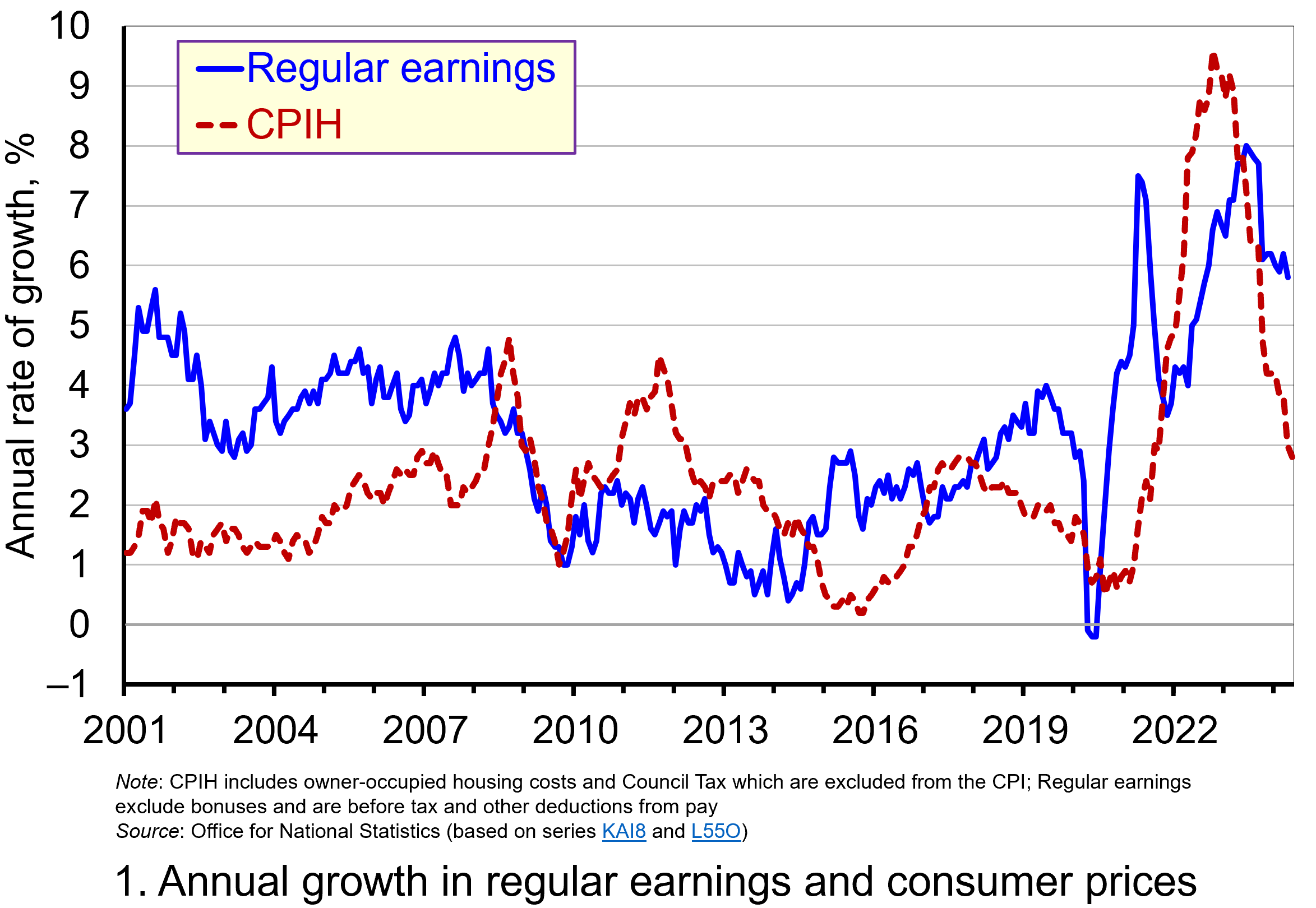 Chart 1 shows the annual percentage changes in actual (nominal) regular weekly pay and the CPIH since January 2001. Each value is simply the percentage change from 12 months earlier. The period up to June 2008 saw the annual growth of weekly pay outstrip the growth of consumer prices – the blue line in the chart is above the red dashed line. Therefore, the real value of pay rose. However, from June 2008 to August 2014 pay growth consistently fell short of the rate of consumer price inflation – the blue line is below the red dashed line. The result was that average real weekly pay fell. (Click here to download a PowerPoint copy of the chart.)
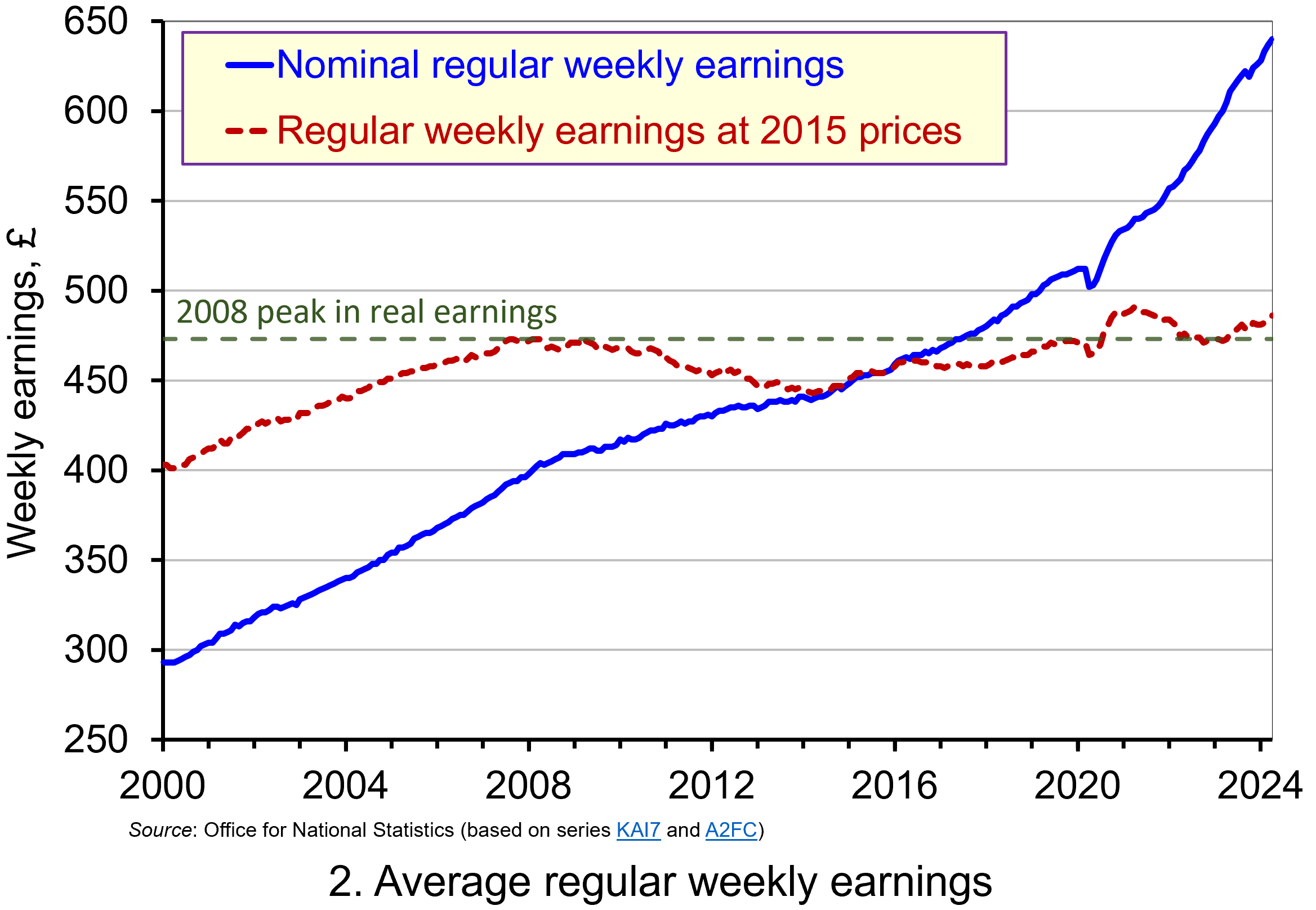 Chart 2 show the average levels of nominal and real weekly pay. The real series is adjusted for inflation. It is calculated by deflating the nominal pay values by the CPIH. Since the CPIH is a price index whose value averages 100 across 2015, the real pay values are at constant 2015 consumer prices. From the chart, we can see that the real value of weekly pay peaked in April 2008 at £473 at 2015 prices. The subsequent period saw rates of pay increases that were lower than rates of consumer price inflation. This meant that by March 2014 the real value of weekly pay had fallen by 6.3 per cent to £443 at 2015 prices. (Click here to download a PowerPoint copy of the chart.)
Although real (inflation-adjusted) pay recovered a little after 2014, 2017 again saw consumer price inflation rates greater than those of pay inflation (see Chart 1). This meant that at the start of 2018 real earnings were 3.2 per cent lower than their 2008-peak (see Chart 2). Real earnings then began to recover, buoyed by the economic rebound following the relaxation of COVID lockdown measures and increasing staffing pressures. Real earnings finally passed their 2008-peak in August 2020. By April 2021 regular weekly pay reached £491 at 2015 prices which was 3.8 per cent above the pre-global financial crisis peak.
However, the boost to real wages was to be short-lived as inflationary pressures rose markedly. While some of this was attributable to the same pressures that were driving up wages, inflationary pressures were fuelled further by the commodity price shock arising from Russia’s invasion of Ukraine and, in particular, its impact on energy prices. This saw the CPIH inflation rate rise to 9.6 per cent in October 2022 (while the CPI inflation rate peaked in the same month at 11.1 per cent). The result was that real weekly earnings fell by 2.7 per cent between January and October 2022 to stand at £471 at 2015 consumer prices. Consequently, average pay was once again below its pre-global financial crisis level.
Although inflationary pressures have recently weakened and real earnings have begun to recover, real regular weekly earnings in April 20024 (£486 at 2015 prices) were a mere 2.7 per cent higher than back in the first half of 2008. This compares to a nominal increase of around 58 per cent over the same period thereby demonstrating the importance of the distinction between nominal and real values in understanding what developments in pay mean for the purchasing power of households.
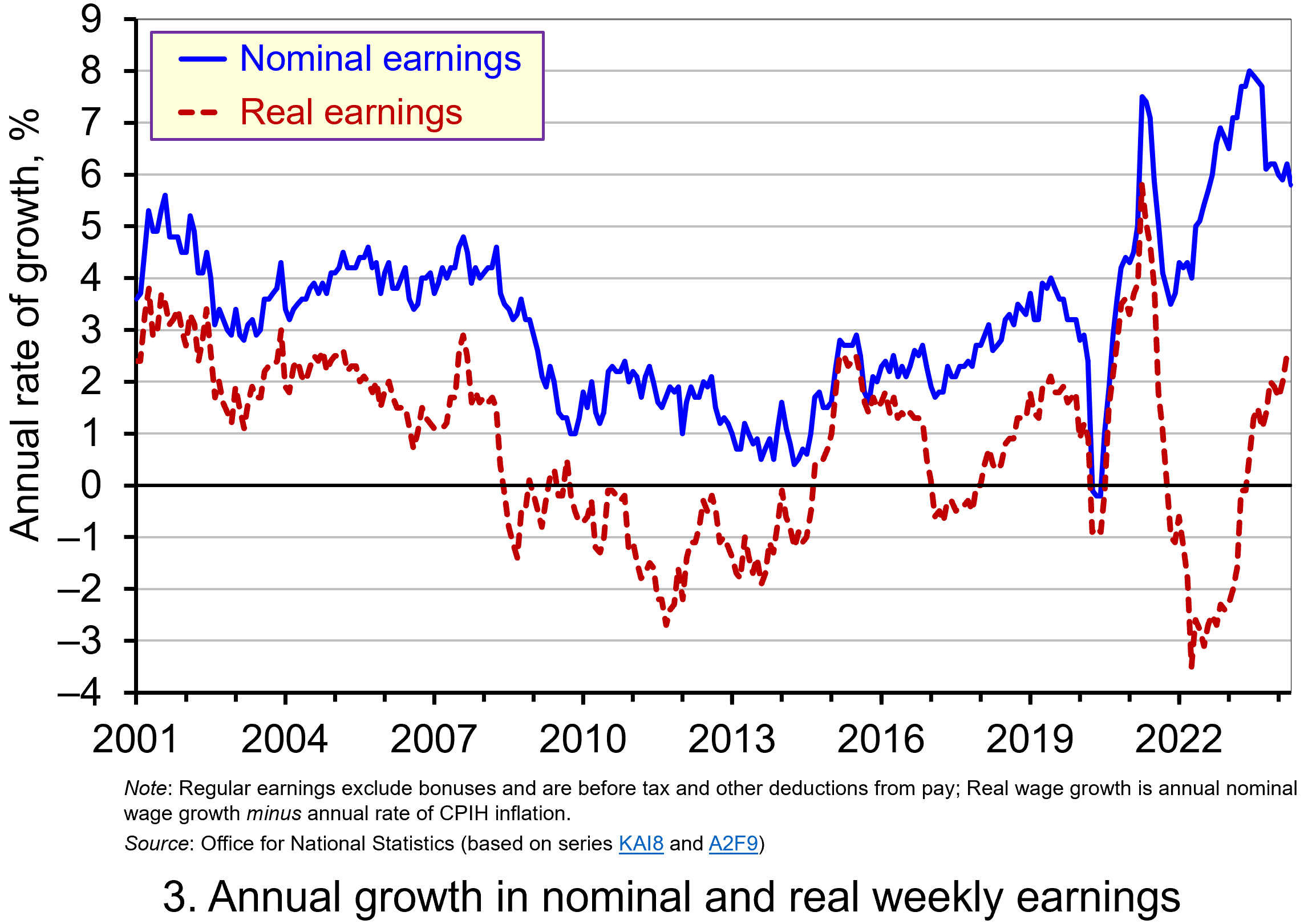 Chart 3 reinforces the importance of the nominal-real distinction. It shows nicely the sustained period of real pay deflation (negative rates of pay inflation) that followed the financial crisis, and the significant rates of real pay deflation associated with the recent inflation shock.
The result is that since June 2008 the average annual rate of growth of real regular weekly pay has been 0.1 per cent, despite nominal pay increasing at an annual rate of 2.9 per cent. In contrast, the period from January 2001 to May 2008 saw real regular weekly pay grow at an annual rate of 2.1 per cent with nominal pay growing at an annual rate of 4.0 per cent. (Click here to download a PowerPoint copy of the chart.)
If we think about the growth of nominal earnings, we can identify two important determinants.
The first is the expected rate of inflation. Workers will understandably want wage growth at least to match the growth in prices so as to maintain their purchasing power.
The second factor is the growth in labour productivity. Firms will be more willing to grant pay increases if workers are more productive, since productivity helps to offset pay increases and maintain firms’ profit margins. Consequently, since over time the actual rate of inflation will tend to mirror the expected rate, the growth of real pay is closely related to the growth of labour productivity. This is significant because, as John discusses in his blog The Productivity Puzzle (14 April 2024), labour productivity growth in the UK, as measured by national output per worker hour, has stalled since the global financial crisis.
Understanding the stagnation of real earnings therefore nicely highlights the interconnectedness of economic variables. In this case, it highlights the connections between productivity, levels of investment and people’s purchasing power. It is not surprising, therefore, that the stagnation of both real earnings and productivity growth since the global financial crisis have become two of the most keenly debated macroeconomic issues of recent times. Indeed, it is likely that their behaviour will continue to shape macroeconomic debates and broader conversations around government policy for some time.
Articles
Questions
- Using the examples of both GDP and earnings, explain how the distinction between nominal and real relates to the distinction between values and volumes.
- In what circumstances would an increase in actual pay translate into a reduction in real pay?
- In what circumstances would a decrease in actual pay translate into an increase in real pay?
- What factors might explain the reduction in real rates of pay seen in the UK following the financial crisis of 2007–8?
- Of what importance might the growth in real rates of pay be for consumption and aggregate demand?
- Why is the growth of real pay an indicator of financial well-being? What other indicators might be included in measuring financial well-being?
- Assume that you have been asked to undertake a distributional analysis of real earnings since the financial crisis. What might be the focus of your analysis? What information would you therefore need to collect?
