 In market capitalism, the stock of manufactured capital provides a flow of output. The profitability of the use of that capital depends on the cost of investing in that capital and the cost of using it, and on the flow of revenues from that capital. Discounted cash flow techniques can be used to assess the profitability of a given investment in capital; the flows of costs and revenues are discounted at a market discount rate to give a net present value (NPV). If the NPV is positive (discounted revenues exceed discounted costs), the investment is profitable; if it is negative, the investment is unprofitable. (See Economics, 8th edition, section 9.3.)
There may be market imperfections in the allocation of investment, in terms of distorted prices and interest rates. These may be the result of market power, asymmetry of information, etc., but in many cases the market allows capital investment to be allocated relatively efficiently.
Natural capital
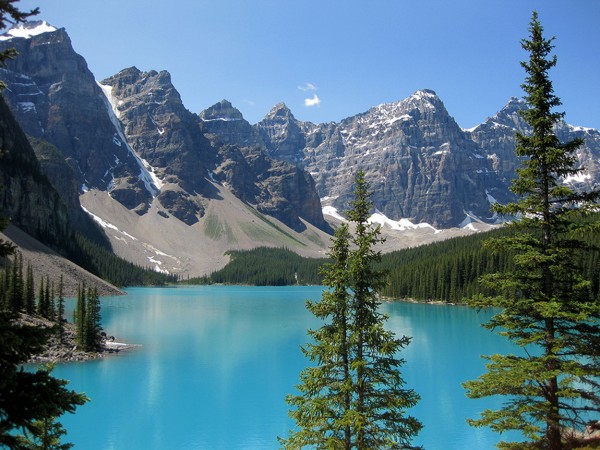
This is not the case with ‘natural capital’. Natural capital (see also) is the stock of natural resources and ecosystems that, like manufactured capital, yields a flow of goods and services into the future. 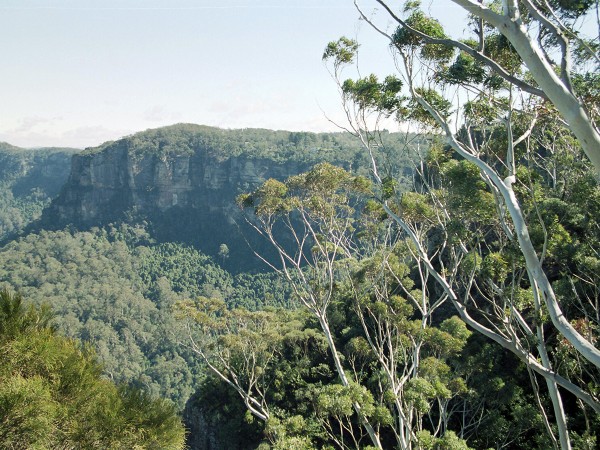 Natural capital, whilst it can be improved or degraded by human action, is available without investment. Thus the natural capital of the oceans yields fish, the natural capital of the skies yields rain and the natural capital of forests reduces atmospheric CO2.
Even though some natural capital is owned (e.g. private land), much is a common resource. As such, it is free to use and tends to get overused. This is the Tragedy of the Commons – see, for example, the following news items: A modern tragedy of the commons and Is there something fishy going on?.
Natural capital accounting
But would it be possible to give a value to both the stock of natural capital and the goods and services provided by it? Would this environmental accounting enable governments to tax or subsidise firms and individuals for their use or enhancement of natural capital?
On 21 and 22 November 2013, the first World Forum on Natural Capital took place in Edinburgh. This brought together business leaders, politicians, economists, environmentalists and other scientists to discuss practical ways of taking natural capital into account in decision making. Central to the forum was a discussion of ways of valuing natural capital, or ‘natural capital accounting’. As the forum site states:
Natural capital accounting is a rapidly evolving new way of thinking about how we value the economic benefits we derive from our natural environment. The World Forum on Natural Capital will bring together world-class speakers, cutting edge case studies and senior decision makers from different sectors, in order to turn the debate into practical action.

But if natural capital is not owned, how is it to be priced? How will the costs and benefits of its use be valued? How will inter-generational effects be taken into account? Will firms price natural capital voluntarily if doing so reduces their profits? Will firms willingly extend corporate social responsibility to include corporate environmental responsibility? Will governments be prepared to introduce taxes and subsidies to internalise the costs of using natural capital, even if the effects extend beyond a country’s borders? Will natural capital accounting measure purely the effects on humans or will broader questions of maintaining and protecting environmental diversity for its own sake be taken into account? These are big questions and ones that various organisations are beginning to address.
Despite problems of measurement and incentives, sometimes there are clear economic benefits from careful evaluation and management of natural capital. Julia Marton-Lefèvre is Director General of the International Union for Conservation of Nature (IUCN). According to the first Guardian article below:
Her favourite example of natural capital working in practice comes from Vietnam, where “planting and protecting nearly 12,000 hectares of mangroves cost just more than $1m but saved annual expenditures on dyke maintenance of well over $7m. And that only accounts for coast maintenance: mangroves are also nurseries for fish, meaning livelihoods for fishing and source of nutrients … “
One organisation attempting to value natural capital is The Economics of Ecosystems and Biodiversity project (TEEB). It also looks at what organisational changes are likely to be necessary for the management of natural capital.
Based on data collected from 26 early adopter companies (60% of them with $10 Billion+ revenues each) across several industry sectors this provides real life evidence on the drivers and barriers for natural capital management.
 Pricing the environment is a highly controversial issue. Critics claim that the process can easily be manipulated to serve the short-term interests of business and governments. What is more, where tradable permits markets have been set up, such as the EU’s Emissions Trading Scheme (ETS), prices have often been a poor reflection of social costs and have been open to manipulation. As Nick Dearden, director of the World Development Movement (WDM), says:
It is deeply ironic that the same financial markets that caused the economic crisis are now seen as the solution to our environmental crisis. It’s about time we learnt that financial markets need to be reined in, not expanded. Pricing these common resources on which people depend for their survival leaves all of us more exposed to the forces of the global economy, and decisions about whether or not to protect them become a matter of accounting.
The measurement of natural capital and setting up systems to internalise the costs and benefits of using natural capital is both complex and a political minefield – as the following articles show.
Articles
Putting a value on nature: Edinburgh conference says business is ‘part of the solution’ Blue & Green Tomorrow, Nicky Stubbs (20/11/13)
Edinburgh forum says putting value on nature could save it BBC News, Claire Marshall (20/11/13)
Natural capital must be the way forward, says IUCN director general The Guardian, Tim Smedley (11/11/13)
Is ‘natural capital’ the next generation of corporate social responsibility? The Guardian, Tim Smedley (7/11/13)
Natural capital accounting: what’s all the fuss about? The Guardian, Alan McGill (27/9/13)
Put nature at the heart of economic and social policymaking The Guardian, Aniol Esteban (1/3/13)
Campaigners warn of dangers of ‘privatised nature’ The Scotsman, Ilona Amos (21/11/13)
Edinburgh conference attempts to ‘privatise nature’ World Development Movement, Miriam Ross (18/11/13)
 Valuing Nature BBC Shared Planet, Monty Don (8/7/13)
Sites concerned with natural capital
World Forum on Natural Capital
TEEB for Business Coalition
International Union for Conservation of Nature
Questions
- How would you define natural capital?
- What are ecosystem services?
- Is social efficiency the best criterion for evaluating the use of the environment? What other criteria could you use?
- How would you set about deciding what rate of discount to use when evaluating the depletion of or enhancement of natural capital?
- How can game theory provide insights into the strategies of both businesses and governments towards the environment?
- What are the arguments for and against attempting to value natural capital and to incorporate these values in decision making?
 At a cost of €1 trillion to EU states, tax evasion is undoubtedly an area in need of attention. With government finances in deficit across the world, part of the gap could be plugged by preventing tax revenues from going unpaid. Well-known companies and individuals have been accused of tax evasion (and avoidance), but part of the problem is the existence of countries that make such activities possible.
Tax havens not only offer favourable tax rates, but also have in place regulations that prevent the effective exchange of information. That is, they are able to keep the identity and income information of depositors a private affair and are not required to share that information with other governments. This means that other tax authorities are unable to demand the tax revenue from income earned, when it is held in some of these countries. This can deprive the government’s coffers of substantial amounts of money.
In 2000, the OECD produced a report naming so-called ‘uncooperative tax havens’, including Monaco, Andorra, Liechtenstein and Liberia. Since then, all nations on this list have pledged their cooperation and been removed and in a recent step, Andorra has announced a proposal to implement its first ever income tax. This move is partly in response to pressures from EU governments to tackle tax evasion. Furthermore, talks between the finance ministers of tax havens, such as Switzerland and Liechtenstein have been agreed with the aim of improving the flow of bank account information and thus combating tax evasion. The Council of the European Union said:
The decision represents an important step in the EU’s efforts to clamp down on tax evasion and tax fraud”
Countries, such as Switzerland (a non-EU member) are likely to find requests for information difficult to ignore, if they want to have access to EU financial markets. However, any concessions on information provision will come at a significant cost for a country that has long regarded its banking secrecy as an ‘honourable policy.
 Reforming policy on tax havens is essential, not only to help tackle tax evasion and thus government deficits, but also to generate investment into countries that don’t offer such favourable tax rates. Investors naturally want to invest in those countries with low tax rates and as such, could it be that countries like the UK suffer from a loss of investment and that the only way to encourage it is to offer similarly low tax rates? International agreement is certainly needed to tackle the worldwide issue of tax evasion and at the moment, it seems as though pressure is building on secretive countries. The following articles consider this controversial issue.
Clock ticks on Swiss banking secrecy BBC News, Imogen Foulkes (21/5/13)
Andorra bows to EU pressure to introduce income tax The Telegraph, Fiona Govan (2/6/13)
Andorra to introduce income tax for first time BBC News (2/6/13)
Andorra to introduce income tax for the first time Economy Watch (3/6/13)
Swiss have no choice but to bow to US ultimatum – Ackermann Reuters, Katharina Bart> (3/6/13)
Austria out front as EU zeroes in on tax evasion The Budapest Times (29/5/13)
EU to start talks with non-EU countries on tax evasion BBC News (14/5/13)
Questions
- What is tax evasion?
- Using game theory, explain why an international agreement on tax evasion might be needed?
- When an income tax is imposed in Andorra, what will be the impact on government revenues?
- How might the labour supply incentive change once an income tax is imposed?
- How do tax havens affect investment in other countries?
- Is there an argument that countries such as the UK should cut its tax rates to encourage investment?
 Six of the major tea producing countries – India, Kenya, Sri Lanka, Indonesia, Rwanda and Malawi – have formed an International Tea Producers’ Forum (ITPF). Together these countries produce slightly more than the world’s tea. The hope of the members of the new ITPF is that their cartel will allow them to increase the price of tea to the growers and to create greater price stability.
According to the Assam Tribune article below:
ITPF’s main objectives include – safeguarding the interests of the tea-producing countries, evolving collective solutions for the problems facing the producers, providing technical cooperation, sharing of technology and expertise by the member countries, undertaking market studies and research projects to address any specific issues concerning tea in general or any variety of tea, among others.
 And according to the article from Sri Lanka’s Daily News:
Chairman of the Planters’ Association of Ceylon, which represents the interests of 23 Regional Plantation Companies, Lalith Obeyesekere said this was a landmark occasion. Sri Lanka particularly looks to the forum to provide long-term sustainability to the tea industry in maintaining price stability and quality standards, among the other objectives set out in the mandate… The Planters’ Association said they were confident that Sri Lanka could use the ITPF to re-look at the industry in order that local tea producers realize their full potential.
Sri Lanka’s plantation industries minister Mahinda Samarasinghe said:
The bulk of production is in the hands of smallholders. So there’s a need to increase their incomes. Price stability is definitely important.
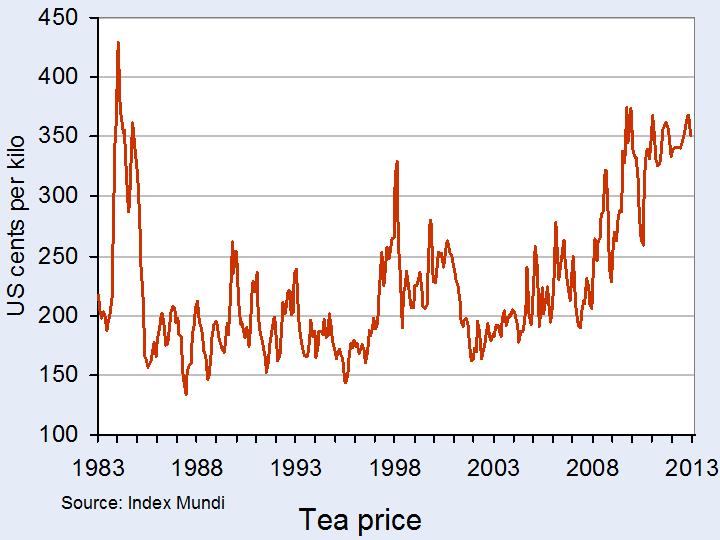 The main aim of the ITPF over the longer term is likely to be to raise tea prices. The chart shows international tea prices from 1983 to the present day. As you can see, they have fluctuated considerably. Note that these are prices in nominal terms and hence do not take inflation into account. Click here for a PowerPoint of the chart.
But if the main aim is to increase prices to tea growers, how could this be achieved? One objective of the ITPF is to stimulate demand for tea by ‘promoting tea consumption through generic promotional campaigns’. The aim would be to encourage people to switch from coffee and soft drinks.
 But to take advantage of its market power, the cartel might also want to reduce tea production, thereby pushing up the price. This, of course, would be more feasible if it had a larger than 50% share of the market.
Although production quotas are not currently part of the agreement, these are likely to be considered at future meetings, especially if the three other large producers – China, Vietnam and Iran – can be persuaded to join.
China, with some 38% of the market, is the world’s largest tea producer. Although it sent an observer to the meeting (as did Iran), it was not one of the signatories. If it could be persuaded to join the cartel, this would increase its power. Nevertheless, China specialises in different types of tea, mainly green teas, and is not the world’s biggest exporter – that is Kenya.
Articles
Tea nations join forces Radio New Zealand (25/1/13)
International Tea Producers’ Forum formed Assam Tribune, Ajit Patowary (23/1/13)
Planters’ Association upbeat on newly formed International Tea Producer’s Forum Daily News (Sri Lanka) (26/1/13)
Leaf Lobby: Sri Lanka hosts tea producer forum Lanka Business Online (24/1/13)
‘Tea cartel’ formed by biggest producing nation BBC News (23/1/13)
Tea producers brew up plan to raise prices Emirates 24/7 (23/1/13)
Data
Tea Monthly Price – US cents per Kilogram Index Mundi
Questions
- What are the stated aims of the newly formed ITPF? How realistic are they?
- What conditions are necessary for a cartel to be successful in raising prices over the long term?
- With reference to the chart, what can you say about the real price of tea over the period 1983 to 2013?
- To what extent are these conditions met by the ITPF?
- Why may a rise in tea prices in the supermarkets not result in a rise in prices to tea growers?
- How may tea growers benefit from the ITPF even if the Forum does not result directly in a rise in prices to growers?
- How can game theory help to explain the possible behaviour of members of a cartel and producers outside the cartel?
Original post
Starbucks’ UK sales in 2011 were worth £398m. Costa’s UK sales were worth £377m. But while Costa paid £15m in corporation tax in 2011/12, Starbucks paid nothing! In fact since opening its first coffee shop in the UK in 1998 it has paid just £8.6m in taxes on UK sales of £3bn.
How is this possible? Let’s look at Starbuck’s 2011 UK sales. Even though these were worth £398 million, its costs were recorded as £426.2m, giving a loss of £28.2m. Costa, by contrast, reported a taxable profit of £49.7m.
So is Starbucks a commercial failure in the UK, recording year after year of losses? Not at all. Starbucks regards the UK as a highly profitable part of its business. As the Independent article below states:
…in its briefings to stock market investors and analysts during the past 12 years, Seattle-based Starbucks has consistently stated that its UK unit is “profitable” and three years ago even promoted its UK head, Cliff Burrows, to run its vastly larger US operation.
So how can reported UK losses be reconciled with a profitable UK operation? The answer lies in transfer pricing.
 Transfer pricing refers to the prices a company charges itself when goods or services are transferred within the company but from one country to another. By varying the transfer prices, a company can choose where to make its profits. Thus if Starbucks’ US operation charges high prices to its UK operation for various services, such as royalties for the use of branding or for management services, or lends money to its UK operation at high interest rates, Starbucks’ profits will rise in the USA and fall in the UK.
Companies employ tax advisers (see for example) and ‘transfer pricing managers’ to help them move their profits from high tax countries to low tax countries. In Starbuck’s case, by charging its UK operation high prices for such things as ‘use of its logo’ it has chosen to move all its profits out of the UK and thus avoid UK corporation tax.
 Apart from denying the UK government tax revenues, the practice by Starbucks distorts competition as competing UK companies, such as Costa, AMT, Caffè Ritazza and the many small independents, do not have the same opportunity for transfer pricing and do pay UK corporation tax. As the Guardian article by Richard Murphy below states:
We do have homegrown coffee shops in the UK. A lot of them. And they have to pay their taxes in full here in the UK. They can’t make payments to offshore entities for the use of their logos or advice on how to add hot water to coffee just to avoid tax: they have to pay in full on what they earn in this country. What Starbucks is doing may be legal, but what it also shows is that business does not operate on a level playing field in the UK.
And, as some of the articles below demonstrate, it’s not just Starbucks. Amazon, Facebook and Google have also been accused of avoiding taxes in the UK by engaging in forms of transfer pricing.
Update
On 12 November senior executives from Starbucks, Google and Amazon appeared before the House of Commons Public Accounts Committee to give evidence on their non-payment of corporation tax and their apparent lack of profits in the UK. As you will see from the videos, the MPs were unimpressed by the answers they received.
At the G20 finance ministers meeting in Mexico the previous week, George Osborne, the UK Chancellor, and Wolfgang Schäuble, the German Finance Minister, called for “concerted international co-operation to strengthen international tax standards that at the minute may mean international companies can pay less tax than they would otherwise owe”.
There seems to be mounting international pressure on multinationals to cease using transfer pricing as a means of avoiding paying taxes. Whether it will be successful remains to be seen.
Further Update (June 2013)
In June 2013, After continuing criticism of its tax avoidance policies, Starbucks agreed to pay £10m in corporation tax tin 2013/14 and a further £10m in 2014/15.
Articles for original post
Starbucks UK tax bill comes under scrutiny The Telegraph, Helia Ebrahimi (15/10/12)
Good bean counters? Starbucks has paid no tax in UK since 2009 Independent, Martin Hickman (16/10/12)
Special Report: How Starbucks avoids UK taxes Reuters, Tom Bergin (15/10/12)
Business Starbucks ‘paid no UK income tax’ since 2009 Channel 4 News (16/10/12)
Starbucks ‘paid just £8.6m UK tax in 14 years’ BBC News, Vicki Young (16/10/12)
Starbucks’ tax payment is ‘unfair’ say independent cafes BBC News, Joe Lynam (16/10/12)
Starbucks ‘paid just £8.6m UK tax in 14 years’ BBC News (16/10/12)
What the Starbucks tax expose means for ordinary companies Tax Research UK, Richard Murphy (16/10/12)
Starbucks ‘pays £8.6m tax on £3bn sales’ The Guardian, Simon Neville (15/10/12)
How much tax do Starbucks, Facebook and the biggest US companies pay in the UK The Guardian Datablog (16/10/12)
Amazon: £7bn sales, no UK corporation tax The Guardian, Ian Griffiths (4/4/12)
Facebook criticised for £238,000 UK tax bill last year BBC Radio 1 Newsbeat, Dan Cairns (11/10/12)
U.S. Companies Dodge $60 Billion in Taxes With Global Odyssey Bloomberg, Jesse Drucker (13/5/10)
EBay ‘pays £1.2m in UK tax’ on sales of £800m BBC News (21/10/12)
Articles for update
Starbucks, Google and Amazon grilled over tax avoidance BBC News (12/11/12)
Companies have ‘social responsibility’ to pay tax BBC Today Programme (12/11/12)
MPs slam Starbucks, Amazon and Google on tax Reuters, Tom Bergin (12/11/12)
A highly taxing session for the men from Amazon, Google and Starbucks The Guardian, Simon Hoggart (12/11/12)
Starbucks is leeching tax revenue from UK The Telegraph, Lord Myners (12/11/12)
UK and Germany agree crackdown on tax loopholes for multinationals The Guardian, Patrick Wintour and Dan Milmo (5/11/12)
Britain, Germany target tax from multinationals Deutsche Welle (5/11/12)
HMRC unable to stop multinational tax avoidance accountancylive, Sharon Khin (6/11/12)
Starbucks ‘planning changes to tax policy’ BBC News (3/12/12)
Articles for further update
Starbucks pays UK corporation tax for first time since 2009 BBC News (22/6/13)
Starbucks pays corporation tax, promising the Exchequer £20m over two years IndependentHeather Saul (2/6/13)
Starbucks pays first tax since 2008 The Telegraph, Kamal Ahmed (22/6/13)
Report of Public Accounts Committee
Tax avoidance by multinational companies UK Parliament (3/12/12)
Questions
- Explain how a multinational company can use transfer pricing as a means of reducing its overall tax liability.
- Why may transfer pricing lead to an inefficient allocation of resources?
- What policies can governments adopt to clamp down on the use of transfer pricing to limit their tax liability in their country?
- What insights are shed by game theory in explaining why it may be very difficult to reach international agreement to clamp down on tax avoidance?
- Is it immoral for companies to seek to minimise their tax liability? What are the limits of economics as a discipline in establishing an answer to this question?
 At the start of 2013, the USA faces a ‘fiscal cliff’. By this is meant that, without agreement by Congress on new fiscal measures, the USA will be forced into tax rises and expenditure cuts of around $650 billion (over 4% of GDP). This would probably push the economy straight back into recession. This in turn would have a serious dampening effect on the global economy.
But why would fiscal policy be automatically tightened? The first reason is that tax cuts given under the George W. Bush administration during 2001–3 (largely to the rich) are due to expire. Also a temporary cut in payroll taxes and an increase in tax credits given by President Obama are also due to end. These tax increases would form the bulk of the tightening. The average US household would pay an extra $3500 in taxes, reducing after-tax income by around 6%.
The second reason is that various government expenditure programmes are scheduled to be reduced. These reductions in expenditure amount to around $110 billion.
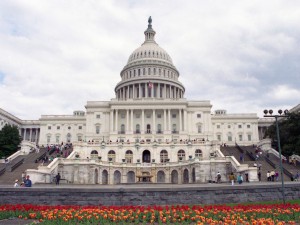 It is likely, however, that Congress will agree to delay or limit the tax increases or expenditure cuts; politicians on both sides want to avoid sending the economy back into recession. But what the agreement will be is not at all clear at this stage.
Republicans are taking a tougher line than Democrats on cutting the budget deficit; they are calling for considerably less restraint in implementing the government expenditure cuts. On the other hand, they are likely to be less willing to raise taxes.
But unless something is done, the consequences for 2013 could be dire. The fiscal cliff edge rapidly approaches.
Articles
Nearly 90 percent of Americans would see taxes rise if ‘fiscal cliff’ hits Washington Post, Lori Montgomery (1/10/12)
Fiscal cliff a serious threat, but unlikely CNN Money, Chris Isidore (1/10/12)
“Fiscal cliff” fears may impede faster job growth Chicago Tribute, Lucia Mutikani (1/10/12)
Avert Fiscal Cliff With Entitlement Cuts, Tax Increases Bloomberg (2/10/12)
‘Fiscal cliff’ to hit 90% of US families Financial Times, James Politi (1/10/12)
Investors don’t want the US to fall off the fiscal cliff The Telegraph, Tom Stevenson (22/9/12)
Gauging the fiscal cliff BBC News, Stephanie Flanders (27/9/12)
The US fiscal cliff – and the fiscal chasm BBC News, Stephanie Flanders (2/10/12)
US fiscal cliff threat fails to galvanise policymakers Guardian Economics blog, Mohamed el-Erian (1/10/12)
Multiplying Europe’s fiscal suicide (technical) The Telegraph, Ambrose Evans-Pritchard (1/10/12)
Q&A: The US fiscal cliff BBC News (7/11/12)
US election: Four more years… of what? BBC News, Stephanie Flanders (7/11/12)
Background
United States fiscal cliff Wikipedia
Questions
- Explain what is meant by the ‘fiscal cliff’ and what is its magnitude.
- What would be the multiplier implications of the USA ‘falling off the cliff’ both for the USA and for the rest of the world?
- What factors determine the size of the government expenditure and tax multipliers? What would be the problems of (a) underestimating and (b) overestimating the size of these multipliers?
- How can a fiscal stimulus be reconciled with a policy of reducing the size of the budget deficit as a proportion of GDP over the longer term?
- In what ways can the actions of Democrats and Republicans be seen as game playing? What are the possible payoffs and risks to both sides?
- Is relying on export growth to bring the world economy out of recession a zero sum game?
- Explain which is likely to be more effective in stimulating short- and medium-term economic growth in the USA: fiscal policy or monetary policy.
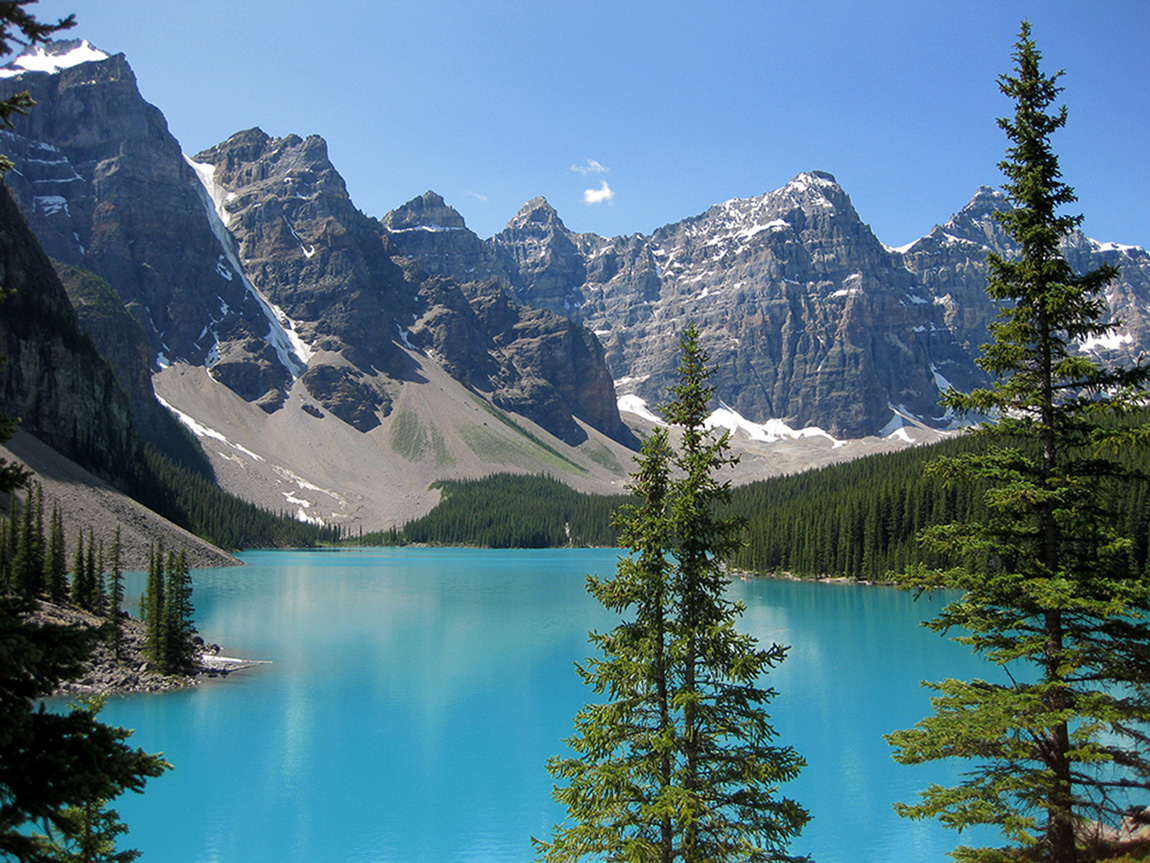 In market capitalism, the stock of manufactured capital provides a flow of output. The profitability of the use of that capital depends on the cost of investing in that capital and the cost of using it, and on the flow of revenues from that capital. Discounted cash flow techniques can be used to assess the profitability of a given investment in capital; the flows of costs and revenues are discounted at a market discount rate to give a net present value (NPV). If the NPV is positive (discounted revenues exceed discounted costs), the investment is profitable; if it is negative, the investment is unprofitable. (See Economics, 8th edition, section 9.3.)
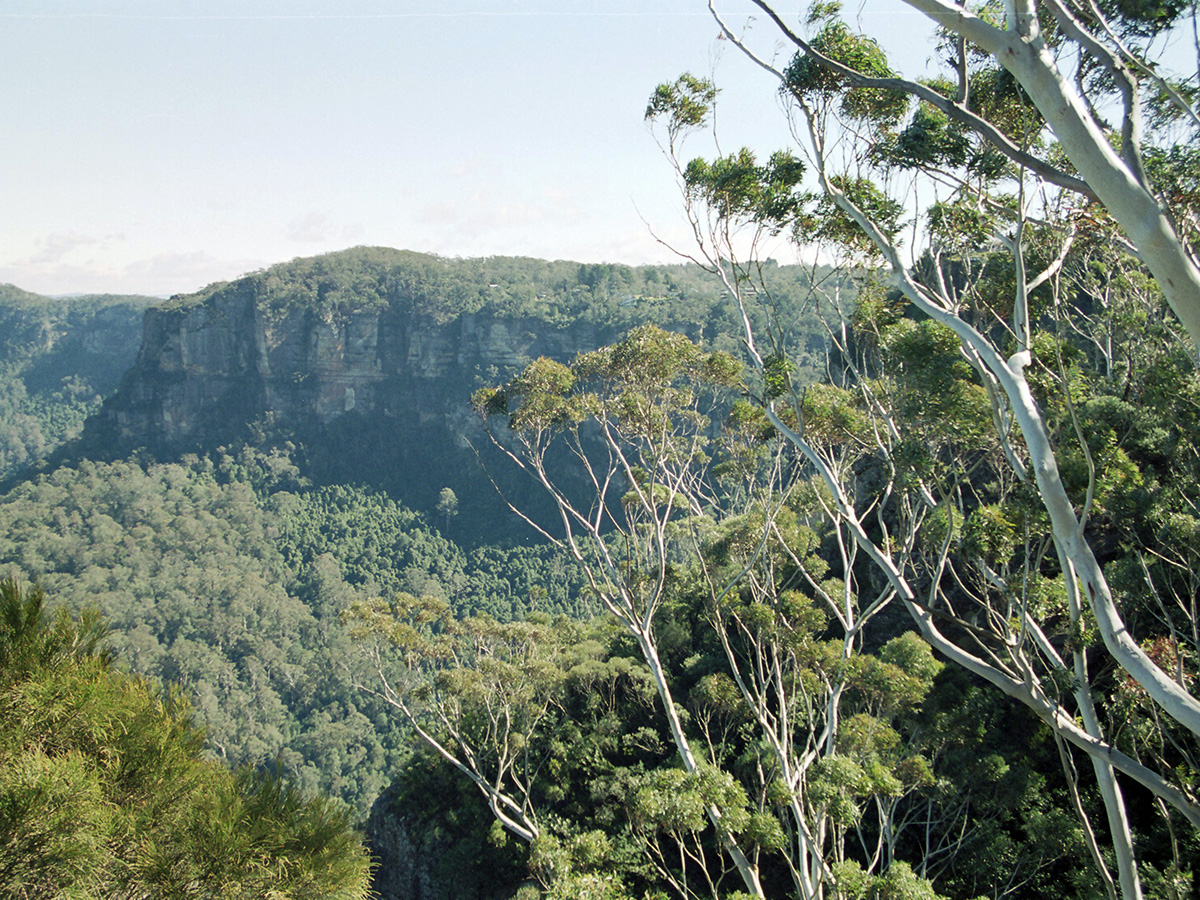 Natural capital, whilst it can be improved or degraded by human action, is available without investment. Thus the natural capital of the oceans yields fish, the natural capital of the skies yields rain and the natural capital of forests reduces atmospheric CO2.
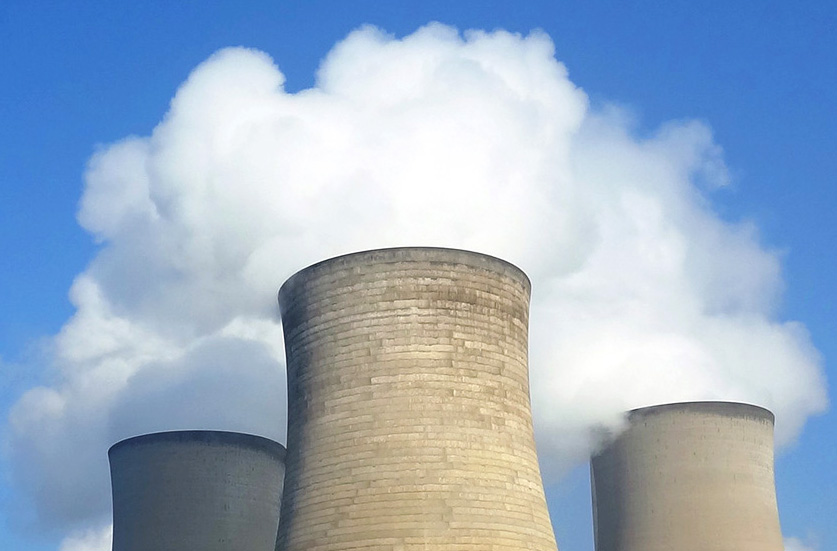 Pricing the environment is a highly controversial issue. Critics claim that the process can easily be manipulated to serve the short-term interests of business and governments. What is more, where tradable permits markets have been set up, such as the EU’s Emissions Trading Scheme (ETS), prices have often been a poor reflection of social costs and have been open to manipulation. As Nick Dearden, director of the World Development Movement (WDM), says: