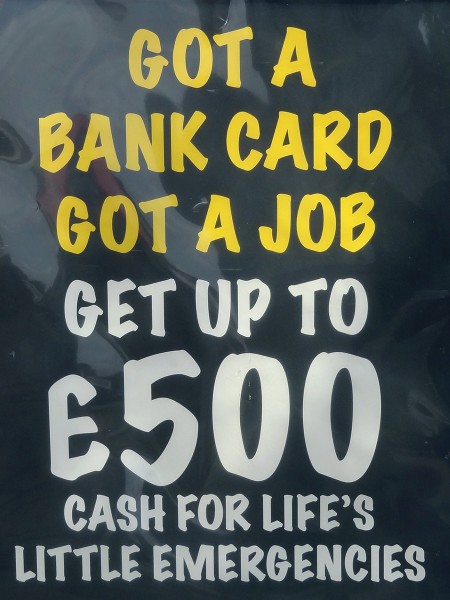
 In an apparent U-turn, the Chancellor, George Osborne, has decided to cap the interest rates and other charges on payday loans and other short-term credit. As we have seen in previous news items, the sky-high interest rates which some of the poorest people in the UK are being forced to pay on these loans have caused outrage in many quarters: see A payday enquiry and Kostas Economides and the Archbishop of Canterbury. Indeed, the payday loan industry has been referred by the OFT to the Competition Commission (CC). The CC is required to report by 26 June 2015, although it will aim to complete the investigation in a shorter period.
It was becoming increasingly clear, however, that the government would not wait until the CC reports. It has been under intense pressure to take action. But the announcement on 25 November 2013 that the government would cap the costs of payday loans took many people by surprise. In fact, the new body, the Financial Conduct Authority, which is due to start regulating the industry in April 2014, only a month ago said that capping was very intrusive, arguing that it could make it harder for many people to borrow and push them into the hands of loan sharks. According to paragraph 6.71 of its consultation paper, Detailed proposals for the FCA regime for consumer credit:
The benefits of a total cost of credit cap has been looked at by the Personal Finance Research Centre at the University of Bristol. This report highlighted that 17 EU member states have some form of price restriction. Their research was ambiguous, on the one hand suggesting possible improved lending criteria and risk assessments. On the other, prices may drift towards a cap, which could lead to prices increasing or lead to a significant reduction in lenders exercising forbearance. Neither of these latter outcomes would be beneficial for consumers. Clearly this is a very intrusive proposition and to ensure we fully understand the implications we have committed to undertake further research once we begin regulating credit firms and therefore have access to regulatory data.
The government announcement has raised questions of how imperfections in markets should be dealt with. Many on the centre right argue that price controls should not be used as they can further distort the market.  Indeed, the Chancellor has criticised the Labour Party’s proposal to freeze gas and electricity prices for 20 months if it wins the next election, arguing that the energy companies will simply get around the freeze by substantially raising their prices before and after the 20 months.
Instead, those on the centre right argue that intervention should aim to make markets more competitive. In other words, you should attempt not to replace markets, but to make them work better.
So what is the reasoning of the government in capping payday loan charges? Does it feel that, in this case, there is no other way? Or is the reasoning political? Does it feel that this is the most electorally advantageous way of answering the critics of the payday loan industry?
Webcasts and podcasts
 Payday Loans To Be Capped By Government Sky News (25/11/13)
New law to cap cost of payday loans BBC News, Robert Hall (25/11/13)
Osborne: ‘Overall cost’ of payday loans to be capped BBC Today Programme (25/11/13)
George Osborne announces cap on payday loan charges amid concerns ITV News (25/11/13)
Articles
UK to cap payday lenders’ interest charges Reuters, Steve Slater, Paul Sandle, Kate Holton and William James (25/11/13)
Capping payday loans: from light touch to strong arm Channel 4 News, Faisal Islam (25/11/13)
Payday loans: New law to cap costs BBC News (25/11/13)
Payday loan ‘risk to mortgage applications’ BBC News (26/11/13)
Q&A: Payday loans BBC News (25/11/13)
George Osborne is playing social democratic catch-up on payday loans The Guardian, Larry Elliott (25/11/13_
Payday loans cap: George Osborne caves in following intervention led by Archbishop of Canterbury Independent, Oliver Wright (25/11/13)
The principle, the practice and the politics of fixing payday loan prices: why? And why now? Conservative Home, Mark Wallace (25/11/13)
George Osborne and the risky politics of chutzpah New Statesman, Rafael Behr (26/11/13)
Chancellor too quick off the mark on payday lending cap The Telegraph, James Quinn (25/11/13)
Crap and courage of convictions: the political problem with Osborne’s payday loan plan Spectator, Isabel Hardman (26/11/13)
Payday loan calculator
Payday loan calculator: how monthly interest can spiral BBC Consumer (7/11/13)
Questions
- What types of market failing exist in the payday loan industry?
- What types of controls of the industry are being proposed by George Osborne?
- What is the experience of Australia in introducing such controls?
- What alternative forms of intervention could be used to tackle the market imperfections in the industry?
- What were the proposals of the FCA? (See paragraph 6.6 in its document, Detailed proposals for the FCA regime for consumer credit.)
- According to a representative example on Wonga’s website, a loan of £150 for 18 days would result in charges of £33.49 (interest of £27.99 and a fee of £5.50). This would equate to an annual APR of 5853%. Explain how this APR is calculated.
- The proposal is to allow a relatively large upfront fee and to cap interest rates at a relatively low level, such as 4% per month, as is the case in Australia. Explain the following comment about this in the Faisal Islam article above: “The upfront fee, in theory, should change the behavioural finance of consumers around taking the loan in the first place (there are ways around this though). So this is an intervention based not on lack of competition, but asymmetries of information in consumer finance.”
- Comment on the following statement by Mark Wallace in the Conservative Home article above: “If overpriced payday loans should be capped, why not overpriced DVDs, sandwiches or, er, energy bills?”
- Compare the relative advantages and disadvantages of George Osborne’s proposal with that of Justin Welby, the Archbishop of Canterbury (see the news item, Kostas Economides and the Archbishop of Canterbury).
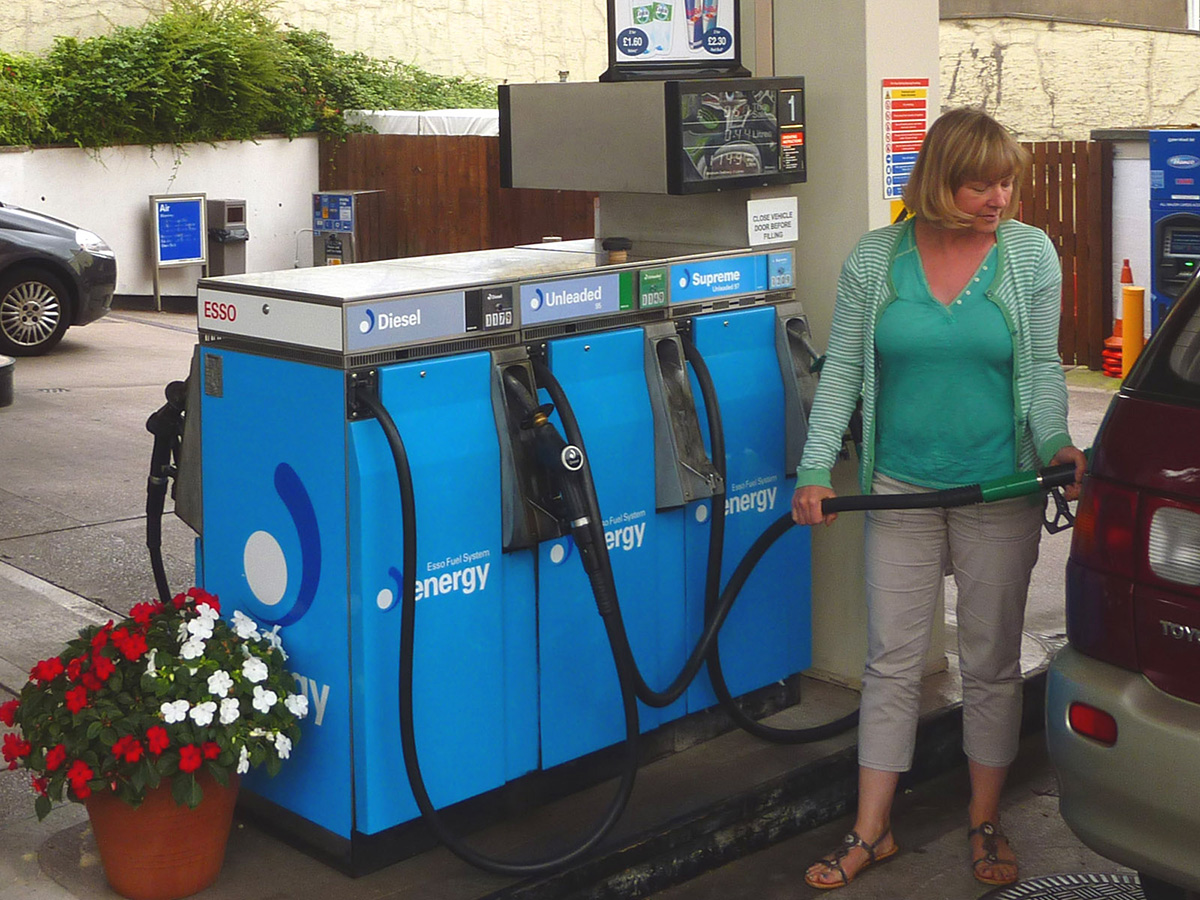
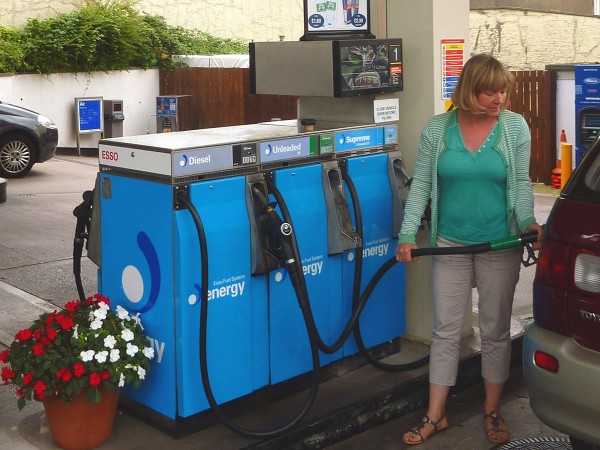 The price of road fuel is falling. Petrol and diesel prices in the UK are now at their lowest level since February 2011. The average pump price for a litre of unleaded petrol has fallen to 130.44p in November – down nearly 8p per litre since September.
According to the AA, the reduction in price equates to a fall in the average monthly expenditure on petrol of a two-car family of £14.49 – down from £252.54 to £238.05. This saving can be used for spending on other things and can thus help to boost real aggregate demand. The fall in price has also helped to reduce inflation.
But will lower fuel prices lead to a rise in fuel consumption? In other words, will some of the savings people make when filling up be used for extra journeys? If so, how much extra will people consume? This, of course depends on the price elasticity of demand.
The following articles explain why the price of road fuel has fallen and look at its consequences.
Webcast
Good news for motorists as fuel prices fall in the East ITN (22/11/13)
Articles
November fuel price update Automobile Association (22/11/13)
Finally there is good news for motorists as petrol prices hit lowest level since 2011 The Telegraph, Steve Hawkes (22/11/13)
Petrol prices fall to lowest level for almost three years as strong pound gives motorists relief on the forecourt This is Money, Lee Boyce (22/11/13)
Falling petrol prices boost motorists The Guardian (22/11/13)
Data
Weekly road fuel prices Department of Energy & Climate Change
Europe Brent Spot Price US Energy Information Administration
Spot exchange rate, US $ into Sterling Bank of England
Questions
- Why have the prices of petrol and diesel fallen?
- Illustrate the fall in price of road fuel on a demand and supply diagram.
- How does the size of the fall in price depend on the price elasticity of demand for road fuel?
- If a fall in price results in a fall in expenditure on road fuel, what does this tell us about the price elasticity of demand?
- Why may the price elasticity of demand for road fuel be more elastic in the long run than in the short run?
- If a motorist decides to spend a fixed amount of money each week on petrol, irrespective of the price, what is that person’s price elasticity of demand?
- Using the links to data above, find out what happened to the dollar price of sterling and the Brent crude oil price between September and November 2013.
- How do changes in the exchange rate of the dollar to the pound influence the price of road fuel?
- If the price of oil fell by x per cent, would you expect the price of road fuel to fall by more or less than x per cent? Explain.
- Why do petrol prices vary significantly from one location to another?
 In market capitalism, the stock of manufactured capital provides a flow of output. The profitability of the use of that capital depends on the cost of investing in that capital and the cost of using it, and on the flow of revenues from that capital. Discounted cash flow techniques can be used to assess the profitability of a given investment in capital; the flows of costs and revenues are discounted at a market discount rate to give a net present value (NPV). If the NPV is positive (discounted revenues exceed discounted costs), the investment is profitable; if it is negative, the investment is unprofitable. (See Economics, 8th edition, section 9.3.)
There may be market imperfections in the allocation of investment, in terms of distorted prices and interest rates. These may be the result of market power, asymmetry of information, etc., but in many cases the market allows capital investment to be allocated relatively efficiently.
Natural capital
This is not the case with ‘natural capital’. Natural capital (see also) is the stock of natural resources and ecosystems that, like manufactured capital, yields a flow of goods and services into the future.  Natural capital, whilst it can be improved or degraded by human action, is available without investment. Thus the natural capital of the oceans yields fish, the natural capital of the skies yields rain and the natural capital of forests reduces atmospheric CO2.
Even though some natural capital is owned (e.g. private land), much is a common resource. As such, it is free to use and tends to get overused. This is the Tragedy of the Commons – see, for example, the following news items: A modern tragedy of the commons and Is there something fishy going on?.
Natural capital accounting
But would it be possible to give a value to both the stock of natural capital and the goods and services provided by it? Would this environmental accounting enable governments to tax or subsidise firms and individuals for their use or enhancement of natural capital?
On 21 and 22 November 2013, the first World Forum on Natural Capital took place in Edinburgh. This brought together business leaders, politicians, economists, environmentalists and other scientists to discuss practical ways of taking natural capital into account in decision making. Central to the forum was a discussion of ways of valuing natural capital, or ‘natural capital accounting’. As the forum site states:
Natural capital accounting is a rapidly evolving new way of thinking about how we value the economic benefits we derive from our natural environment. The World Forum on Natural Capital will bring together world-class speakers, cutting edge case studies and senior decision makers from different sectors, in order to turn the debate into practical action.

But if natural capital is not owned, how is it to be priced? How will the costs and benefits of its use be valued? How will inter-generational effects be taken into account? Will firms price natural capital voluntarily if doing so reduces their profits? Will firms willingly extend corporate social responsibility to include corporate environmental responsibility? Will governments be prepared to introduce taxes and subsidies to internalise the costs of using natural capital, even if the effects extend beyond a country’s borders? Will natural capital accounting measure purely the effects on humans or will broader questions of maintaining and protecting environmental diversity for its own sake be taken into account? These are big questions and ones that various organisations are beginning to address.
Despite problems of measurement and incentives, sometimes there are clear economic benefits from careful evaluation and management of natural capital. Julia Marton-Lefèvre is Director General of the International Union for Conservation of Nature (IUCN). According to the first Guardian article below:
Her favourite example of natural capital working in practice comes from Vietnam, where “planting and protecting nearly 12,000 hectares of mangroves cost just more than $1m but saved annual expenditures on dyke maintenance of well over $7m. And that only accounts for coast maintenance: mangroves are also nurseries for fish, meaning livelihoods for fishing and source of nutrients … “
One organisation attempting to value natural capital is The Economics of Ecosystems and Biodiversity project (TEEB). It also looks at what organisational changes are likely to be necessary for the management of natural capital.
Based on data collected from 26 early adopter companies (60% of them with $10 Billion+ revenues each) across several industry sectors this provides real life evidence on the drivers and barriers for natural capital management.
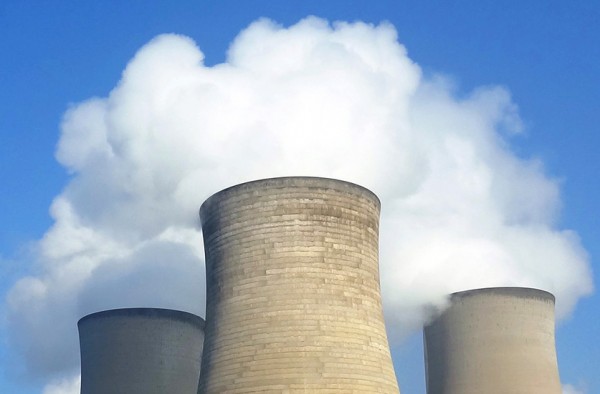 Pricing the environment is a highly controversial issue. Critics claim that the process can easily be manipulated to serve the short-term interests of business and governments. What is more, where tradable permits markets have been set up, such as the EU’s Emissions Trading Scheme (ETS), prices have often been a poor reflection of social costs and have been open to manipulation. As Nick Dearden, director of the World Development Movement (WDM), says:
It is deeply ironic that the same financial markets that caused the economic crisis are now seen as the solution to our environmental crisis. It’s about time we learnt that financial markets need to be reined in, not expanded. Pricing these common resources on which people depend for their survival leaves all of us more exposed to the forces of the global economy, and decisions about whether or not to protect them become a matter of accounting.
The measurement of natural capital and setting up systems to internalise the costs and benefits of using natural capital is both complex and a political minefield – as the following articles show.
Articles
Putting a value on nature: Edinburgh conference says business is ‘part of the solution’ Blue & Green Tomorrow, Nicky Stubbs (20/11/13)
Edinburgh forum says putting value on nature could save it BBC News, Claire Marshall (20/11/13)
Natural capital must be the way forward, says IUCN director general The Guardian, Tim Smedley (11/11/13)
Is ‘natural capital’ the next generation of corporate social responsibility? The Guardian, Tim Smedley (7/11/13)
Natural capital accounting: what’s all the fuss about? The Guardian, Alan McGill (27/9/13)
Put nature at the heart of economic and social policymaking The Guardian, Aniol Esteban (1/3/13)
Campaigners warn of dangers of ‘privatised nature’ The Scotsman, Ilona Amos (21/11/13)
Edinburgh conference attempts to ‘privatise nature’ World Development Movement, Miriam Ross (18/11/13)
Valuing Nature BBC Shared Planet, Monty Don (8/7/13)
Sites concerned with natural capital
World Forum on Natural Capital
TEEB for Business Coalition
International Union for Conservation of Nature
Questions
- How would you define natural capital?
- What are ecosystem services?
- Is social efficiency the best criterion for evaluating the use of the environment? What other criteria could you use?
- How would you set about deciding what rate of discount to use when evaluating the depletion of or enhancement of natural capital?
- How can game theory provide insights into the strategies of both businesses and governments towards the environment?
- What are the arguments for and against attempting to value natural capital and to incorporate these values in decision making?
 The Conservatives have pledged that, if they win the next election, they will hold a referendum in 2017 on whether or not the UK should remain in the EU. The Prime Minister has also said that he will renegotiate the terms of UK membership and push for reforms to the EU to cut administrative costs, reduce intervention and make the EU more competitive. We are likely to be bombarded with arguments for and against membership over the coming months.
In a contribution to the debate, the CBI has just published research showing that membership of the EU benefits the UK by up to £78 billion per year – £3000 per household. It also conducted a poll of its members which shows that the vast majority (78%, including 77% of SMEs) want to remain part of the EU, believing that membership brings net benefits to their business and the economy more generally.
However, as the Director-General of the CBI, John Cridland, said:
But the EU isn’t perfect and there is a growing unease about the creeping extension of EU authority. Europe has to become more open, competitive and outward looking if we are to grow and create opportunities and jobs for all our citizens.
The following articles and documents look at the CBI’s arguments.
Articles
Britain must stay in the European Union, says CBI Independent, Margareta Pagano (4/11/13)
Britain must stay in EU, says business lobby group The Guardian, Katie Allen (3/11/13)
EU membership: what the CBI have said The Telegraph, Rebecca Clancy (4/11/13)
CBI says staying in EU ‘overwhelmingly’ best for business BBC News (4/11/13)
CBI documents
In with reform or out with no influence – CBI chief makes case for EU membership CBI Press Release (4/11/13)
Our Global Future: Factsheets CBI
Questions
- Distinguish between a free trade area, a customs union, a common market and a monetary union. Which is the EU?
- Itemise the arguments for and against membership of the EU.
- What types of reform to the EU are being advocated by the CBI?
- What factors will determine the negotiating power of the UK government with other EU governments?
- How is greater fiscal integration in the eurozone likely to affect the case for and against EU membership for the UK?
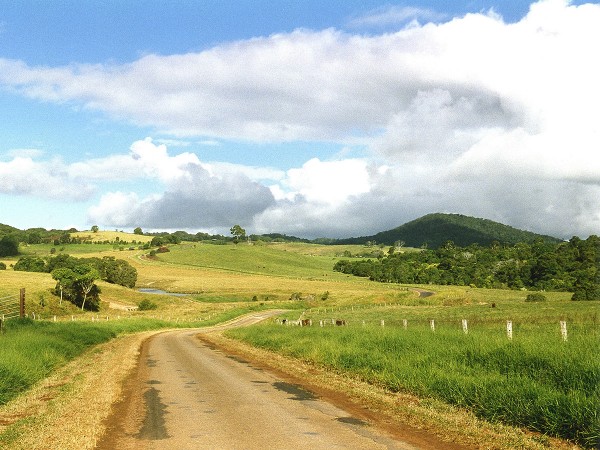 A bumper harvest should be good news for farmers – but not if it drives down prices. This is the position facing many Australian farmers. After a relatively wet summer a year ago and a mild winter this year, crop yields have soared. But the prices farmers can get in wholesale markets have been so low that many have resorted to setting up their own farm shops or selling in farmers’ markets or from the backs of ‘utes’ (utility vehicles, i.e. pickup trucks) or at roadside stalls.
And the supply problem is not just one of increased domestic supply: cheap food imports, often of inferior quality, have been flooding into Australia. Increasing food exports, 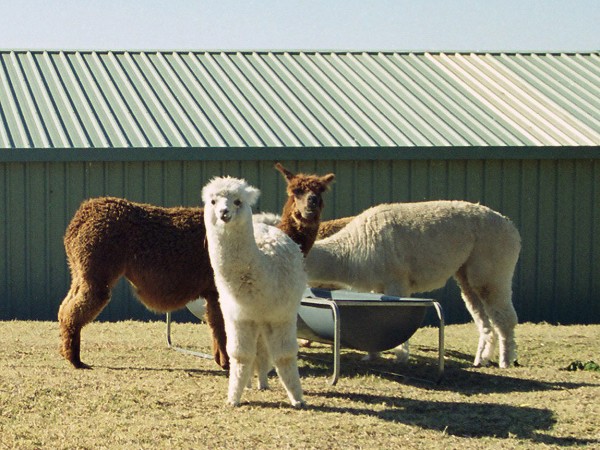 especially to Asia, would help Australian farmers, but here again there is competition in these markets from other countries.
The problem of increased Australian supply is even more serious for Australian farmers in areas where harvests have not been so good. Australia is a huge country and conditions, although generally favourable this year, have been poor in some areas. Here farmers face the double disaster of low output and low prices.
Australian dairy farmers too are facing problems of falling prices. Price deregulation and the monopsony power of supermarkets have driven down 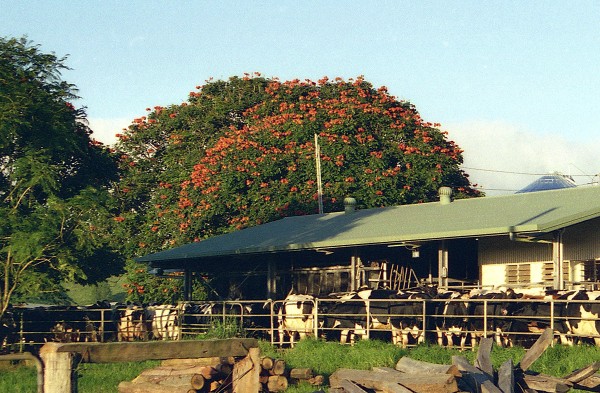 the price of milk and other dairy products. Since deregulation in 2000, the number of dairy farms has halved, as many smaller family farms go out of business and larger ‘industrial-scale’ farms grow.
So are there any solutions? The BBC article looks at things being done in Tasmania to help small farmers, but questions whether small farmers have much of a future more generally in Australia?
Articles
Australia’s small farmers struggling with low prices BBC News, Phil Mercer (31/10/13)
Commodity prices edge lower in October Sky News Australia (1/11/13)
Low prices spoil perfect season for Australian farmers ABC News, Eric Tlozek and Courtney Wilson (18/9/13)
Agri-businesses taking over the farm The Guardian (Australia) (6/11/13)
Data
Commodity prices Index Mundi
Agriculture in Australia Wikipedia
Farm inputs & costs Dairy Australia
Questions
- How does the fallacy of composition relate to the ‘problem’ of good harvests?
- How price elastic is the demand for specific crops likely to be? Why may individual farmers face an elasticity of demand close to infinity?
- Illustrate the problem for small farmers in Australia with a demand and supply diagram.
- Is there any way in which farmers, either individually or collectively, can make their demand less elastic?
- Comment on the following statement by a sugar cane farmer: “We’ve got that much money tied up (in the business) we just can’t walk away”. Under what circumstances would it make sense to ‘walk away’?
- How does the monopsony power of supermarkets influence the prices farmers receive?
- Discuss ways in which the federal government in Australia could support farmers.
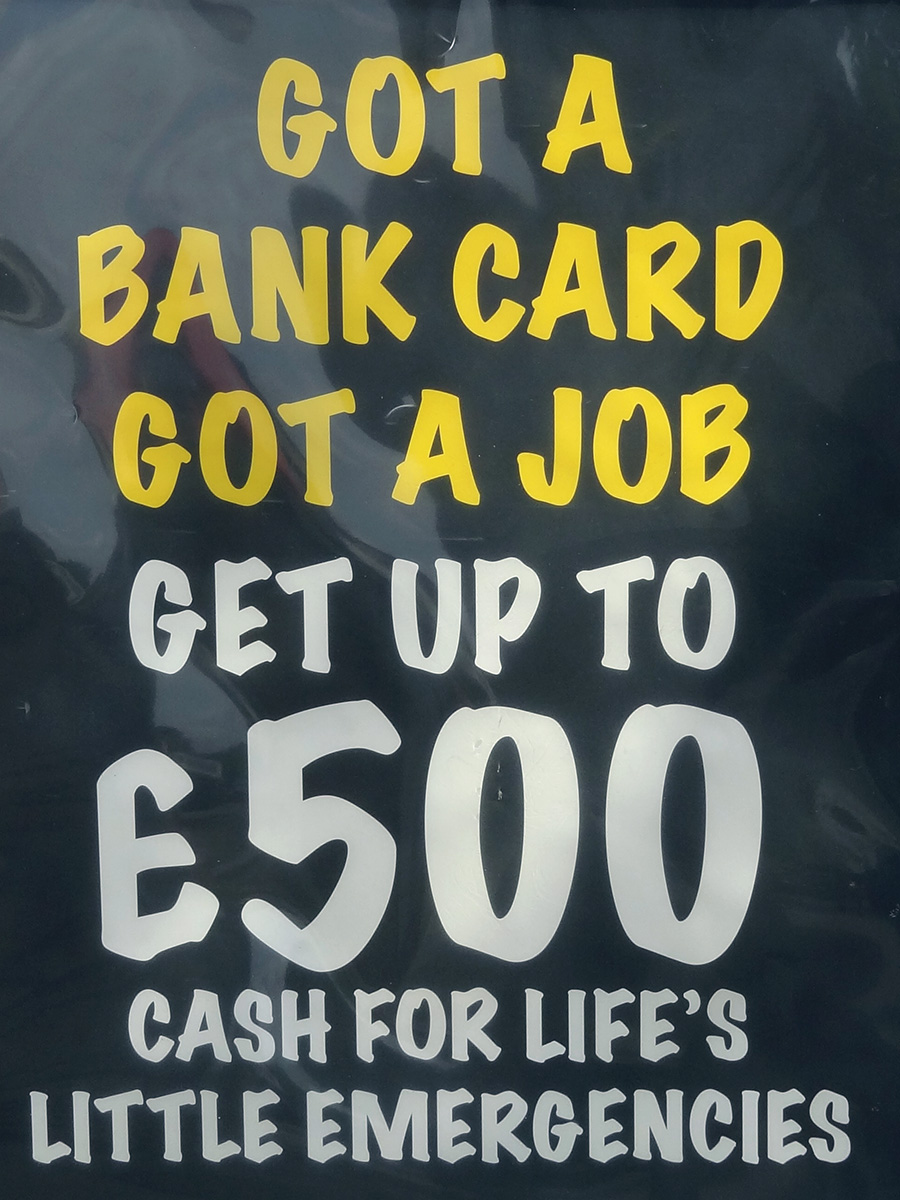 In an apparent U-turn, the Chancellor, George Osborne, has decided to cap the interest rates and other charges on payday loans and other short-term credit. As we have seen in previous news items, the sky-high interest rates which some of the poorest people in the UK are being forced to pay on these loans have caused outrage in many quarters: see A payday enquiry and Kostas Economides and the Archbishop of Canterbury. Indeed, the payday loan industry has been referred by the OFT to the Competition Commission (CC). The CC is required to report by 26 June 2015, although it will aim to complete the investigation in a shorter period.
 Indeed, the Chancellor has criticised the Labour Party’s proposal to freeze gas and electricity prices for 20 months if it wins the next election, arguing that the energy companies will simply get around the freeze by substantially raising their prices before and after the 20 months.