 Throughout October we saw widespread strikes, from bins to the post and airline flights to buses – and it’s not yet over. (See article The Winter of Discontent: the sequel?) Last November, BA cut the number of cabin crew members, despite strike action, which delayed hundreds of flights. This issue has yet to be resolved and over the weekend, there were further talks to try to reach some agreement. However, no truce was reached and so further strikes are now expected. Indeed, the Unite union announced the results of another ballot of cabin crew, showing even larger support for strike action.
However, BA is not the only airline facing strike action. Some 4000 pilots at Lufthansa, a German airline, called a four-day strike, following disputes over job security. This has led to thousands of flights being cancelled and thousands of passengers left stranded. Although the strike was suspended after one day, the dispute is not settled.
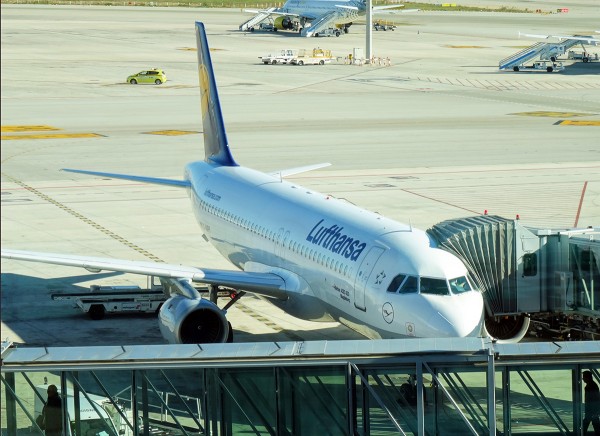 The stimulus for this action appears to date back to the huge turnover that Lufthansa made in 2007, with pilots feeling they should have a share in this success, along with its recent purchase of Austrian Airlines and the need to turn this into a profitable enterprise. The Lufthansa pilots are concerned that foreign pilots will be brought in to replace them in order to reduce costs. The airline fears that this strike could cost them about £21.9 million per day. With both sides unwilling to yield, it looks as though many passengers may find themselves stranded for a bit longer.
Articles
Questions
- How effective is the strike action by Lufthansa and BA likely to be? Which factors affect this?
- With a huge turnover in 2007, why were pay cuts at Lufthansa felt to be necessary by the company?
- How would wages be determined in the airline industry without trade unions? Illustrate this on a diagram and use that to explain why some workers get paid more than others.
- On your diagram of wage determination, now illustrate the effects of a trade union entering the market. How are wages and the equilibrium level of employment affected?
- Other than striking, what other options do workers and unions have?
- If strike action is costly to BA and Lufthansa, why don’t they simply agree to the unions’ demands?
Is this a problem you find when you go shopping? Maybe that’s because the shop that sells it has closed. A report by the Local Data Company has revealed that one in eight shops stand empty on Britain’s high streets, after the recession saw vacancies shoot up by 24% in the second half of 2009. The number of empty town-centre shops climbed to 17,880 in the second half of 2009, equivalent to 12% of the 149,000 shops covered by the research.
Margate in Kent and Wolverhampton in the Midlands were two of the worst-hit areas, where vacant shops stood at 27% and 24% respectively. Take a stroll down a high street in almost any city or town in the UK and you are bound to see ‘Shop for let’. We’ve seen Woolworths and Borders close down and Threshers’ parent company collapse. But these stores have largely remained empty.
Empty houses have also been a problem as the number of repossessions increases. Statistics show an average of 126 people a day were thrown out of their homes in 2009. What is the explanation behind this?
An obvious answer is the recession. As shops felt the strain of low demand, some were simply unable to cope and they shut down as a result. At the same time, new firms were reluctant to take the risk and enter the market during an economic downturn – and who can blame them?
However, are there other reasons why Britain’s high streets are seeing more and more empty shops? The following articles look at the reshaping of our high streets and some of the explanations behind it.
Empty Shops
Shops ‘empty due to recession’ The Press Association (11/2/10)
UK recession has left one in eight shops empty Telegraph, Graham Ruddick (11/2/10)
Bradford second worse for empty shop premises Telegraph and Argus, Will Kilner (11/2/10)
25% of town shops now empty Express and Star (11/2/10)
British town centres in crisis, conference told Reuters, Sinead Cruise (10/2/10)
Empty shop numbers continue to rise in UK Property Week, Laura Chesters (10/2/10)
Empty shops caused by more than recession Startups (12/2/10)
Empty Homes
Buy-to-let: Landlords blow as tenants struggle to pay Telegraph (11/2/10)
Housing Minister says repossession is the ‘best thing’ for homeowners Telegraph, Myra Butterworth (11/2/10)
Home repossessions at highest since 1995 This is Money (11/2/10)
Questions
- What are the main factors behind the high number of empty shops? Use a demand and supply diagram to illustrate these factors.
- In the Startups Article, the BRC Director says: “High street shops are often battling big bills for business rates and rents, parking and access difficulties, as well as failure to manage and invest in the area.” Illustrate this on a diagram and explain how this effect has contributed to empty shops.
- To what extent is more internet shopping the main cause of the problem? Why is it cheaper to run a business via the internet than on a high street?
- Why have some cities and towns been more affected than others?
- Is there a link between empty shops and repossessions?
- What more could the government and local councils do to try to encourage businesses to set up on the high street?
Kraft was seeking to take over Cadbury since September 2009, (see Cadbury: Chocolate all change and A Krafty approach to Cadbury). But the Cadbury board had rejected previous bids as being too low. The September bid, for example, was valued at £10.2bn. On 19 January 2010, however, after heated negotiations the board accepted the latest offer by Kraft valued at £11.5bn ($19bn).
But is the deal good news? Or will what is sweet for senior management and the financial institutions which brokered the deal be dark bitter news for the main stakeholders – consumers, workers and shareholders? The following articles explore the issues.
Cadbury battle ends with midnight handshake Financial Times, Lina Saigol (19/1/10)
Cadbury takeover: a crafty bit of business or an overpriced confection? Telegraph, Jonathan Sibun (20/1/10)
Cadbury’s sweet City deal leaves a bitter taste in Bournville Guardian, Heather Stewart and Nick Mathiason (19/1/10)
Thousands of Cadbury jobs under threat as Kraft swallows a British icon (including video) Times Online, Helen Nugent and Catherine Boyle (20/1/10)
Cadbury deal ‘the price of globalisation’ Financial Times, Jenny Wiggins and Jonathan Guthrie (19/1/10)
 Cadbury sale ‘right thing to do’ FT video (19/1/10)
Bitterness as Kraft wins Cadbury Independent, Nick Clark (20/1/10)
The winners: Management duo in line for bumper pay packet from takeover deal Independent, Nick Clark (20/1/10)
Kraft came hunting in the only country that would sell – Britain Independent, James Moore (20/1/10)
Kraft’s takeover leaves a bitter taste in the mouth Telegraph, Tracy Corrigan (19/1/10)
A sweet deal – or a takeover that is hard to swallow? Independent, Hamish McRae (20/1/10)
Cadbury: banks are the real winners BBC News blogs: Peston’s Picks, Robert Peston (20/1/10)
Warren Buffett blasts Kraft’s takeover of Cadbury Guardian, Graeme Wearden (20/1/10)
Cadbury says job cuts inevitable after Kraft takeover (including videos) BBC News (19/1/10)
Cadbury and the open market theory: they’d better be right Guardian blog, Michael White (20/1/10)
The Business: Bonus season and the Cadbury takeover Guardian podcast, Aditya Chakrabortty
How did Quakers conquer the British sweet shop? BBC News Magazine, Peter Jackson (20/1/10)
Why Kraft must keep organic cacao farmers sweet Guardian blog, Craig Sams (20/1/10)
Questions
- What were the incentives for the Cadbury board to accept the proposed offer by Kraft?
- Do such incentives lead to the efficient operation of markets?
- Explain what is meant by ‘competition for corporate control’. To what extent is such competition in the interests of consumers?
- What economies or diseconomies of scale are likely to result from the takeover? What will determine the extent to which changes in costs are passed on to the consumer?
- How will the following stakeholders fare from the takeover, both in the short run and in the long run: (a) consumers; (b) workers; (c) shareholders?
- Examine Warren Buffet’s arguments for rejecting the deal.
The most popular sport in the world: football. What else?! Huge games and salaries to match. But is it really as glamorous as we think? We may see some top players receiving a salary per week that most people can’t hope to come close to in a year, but players at Portsmouth have had to go without their wages on three occasions, as the club entered financial strife. It is these high salaries that prevent many clubs from breaking even, let alone making a profit. Whilst a lack of salary to footballers is a rare occurence, the football industry isn’t the money-churning machine that it appears to be.
We’re used to seeing full stadia and fans decked out in their club’s regalia, so surely football clubs are awash with money? But things aren’t so rosy. Research published by the Centre for the International Business of Sport at Coventry University in 2008 revealed that clubs in the top four tiers of English football between the 2001/2 and 2005/6 seasons made an aggregated loss of more than £1bn. In addition, 56 clubs in the English leagues went bankrupt between the Insolvency Act’s introduction in 1986 and June 2008.
We’ve seen a number of buyouts of clubs in recent years by extremely wealthy families. The Glazer family bought Manchester United in 2005, yet this buyout and many others are heavily leveraged and servicing their debts is now proving a problem. Whilst some clubs publish annual profits, it doesn’t mean they are without debt. Manchester United, defending champions of the English football league, earned profits of £48.2 million in the 2008/9 season, but its debts are estimated at around £700 million. The club received a loan of £509.5 million and had to pay £41.9 million in interest.
The owners of Chelsea and Manchester City have recently converted £340 million and £304.9 million of loans into equity respectively. Financiers, however, say this is simply “moving money from their left pocket to the right”. Manchester City reported a massive loss of £92.6 million for the 2008/9 financial year. Unfortunately for them, these figures ignore outlays since May 2009 for Carlos Tevez, Kolo Toure and Emmanuel Adebayor. Portsmouth’s £7 million share of TV revenue has been diverted directly to other clubs to whom they owe money for transfers.
So, how much of a money-maker is football? Well stadia are still full and it’s certainly growing in popularity in Asia. Premier teams are now appreciating how much money can be made out there by selling television rights. However, in 2008 the FA chairman Lord Triesman still estimated that English football debts stood at £3bn. With all this debt, are there any positives? Just one – at least it’s less than the UK’s public debt!
Abu-Dhabi family reduce debt for Manchester City Campden FB (7/1/10)
Manchester City post massive loss BBC News (6/1/10)
What a waste of money – the Premier League’s best paid flops Guardian, Jamie Jackson (10/1/10)
Portsmouth players still not paid as Premier League expresses concern at crisis Telegraph, Paul Kelso (6/1/10)
Paying by the rules The Lawyer, Adam Plainer (11/1/10)
Jacob unimpressed by fan protests Press Association (11/1/09)
Cardiff City to face winding up order BBC Sport (8/1/10)
Debt swap is ‘window dressing’ The Independent, Nick Clark (7/1/10)
Manchester United aim to raise £500m in bond sale in bid to reduce mounting debt Telegraph, Mark Ogden (11/1/10)
Chelsea debt wiped off by Roman Abramovich but club still record loss Telegraph (30/12/09)
Manchester United to raise £500m BBC News (11/1/10)
Cristiano Ronaldo saves Man-Utd – Again Sky News (11/1/10)
Tony Fernandes and David Sullivan vie for control of West Ham Telegraph, Jason Burt (16/1/10)
One thing at Manchester United isn’t going downhill – their debt Guardian, David Conn (6/1/10)
Premier League looks to cash in on Asia BBC News, Guy de Launey (29/12/09)
Questions
- Why do footballers receive such high wages? Illustrate why wages in the Premier League are so much higher than those received by players in non-league teams. What’s the key factor?
- What is debt swapping?
- In the Independent article: ‘Dept swap is Window dressing’, what does it mean by (a) window dressing and (b) debt swap is ‘moving money from their left pocket to the right’?
- How can a club such as Manchester United record a profit, but have substantial debts?
- What is leveraging and why is it a problem for some football teams?
- How will an issue of bonds enable a football club to refinance its debt?
- What opportunities does Asia present to English football?
The UK section of the North Sea used to be sufficient to supply all of the country’s gas requirements, but now some has to be imported from countries such as Norway. With the cold weather, the usage of gas has increased to record levels and there are now concerns for future supplies, especially if the cold weather returns.
However, the National Grid has said that there isn’t a problem, despite a glitch with a Norwegian gas supply. Gas supplies from various sources have been increased to deal with this record demand. There have been calls for Britain to build more gas storage facilities and the National Grid did issue ‘gas balancing alerts’, asking power firms and other large industries to cut back on their gas consumption. There are suggestions that even if supplies of gas aren’t a problem at the moment, we could see serious shortages in a few years.
Following growing demand for gas supplies, wholesale prices rose, but they did fall again when supplies were increased. Prices of household bills could be affected in the future, but for now, it’s too soon to tell. However, rising prices could spell further trouble for ours and other economies suffering from extreme weather on top of a financial crisis. Economic recovery could be put in jeopardy.
This fear of gas shortages and security of supply has led environmental and business groups to argue that Britain needs to diversify its energy supplies and become less dependent on foreign exports. This issue fits in with the latest developments in new investment in wind turbines.
Who knew that something as beautiful as snow could cause so much trouble and provide so much economic analysis!
National Grid warns of UK gas shortage Guardian, David Teather (5/1/10)
Is the United Kingdom facing a natural gas shortage The Oil Drum (9/1/10)
Wind farms: Generating power and jobs? BBC News (8/1/10)
Gas rationing in -22C Britain increases fears of energy crisis Mail Online, Martina Lees (8/1/10)
Gas usage hits new high in UK cold snap BBC News (8/1/10)
Energy fears over gas and kerosene shortages Scotsman (6/1/10)
Gas shortages highlights firms’ exposure to energy security risks Business Green, Tom Young (8/1/10)
Uh-oh: the return of $3 gas CNN Money, Paul R La Monica (7/1/10)
Natural gas prices seen rising with winter shortages Global Times, Chen Xiaomin (4/1/10)
Gas demand hits record on Thursday Reuters (8/1/10)
Gas demand in UK hits another highBBC News, Hugh Pym (7/1/10)
Questions
- Illustrate the effects in the gas market of increasing demand and the resulting shortages. Then show the effects of increasing the supplies of gas. How is equilibrium achieved when there is a shortage in the market?
- Why did energy prices increase and then fall?
- To what extent should the government have been able to forecast this higher demand? Should better contingency plans have been in place?
- The article from CNN Money looks at the effect of rising prices of oil and energy and how this is likely to affect consumer spending. Why could rising prices of these commodities adversely affect economic recovery?
- What is an ‘interruptible contract’ and how useful have they been in dealing with these gas shortages?
- Why has this gas shortage presented environmental groups with an opportunity to promote renewable energy supplies? Think about economic interdependence.
- What alternatives are there to our current gas sources? Are they realistic alternatives?