 Footballers in the English Premier League are some of the most highly paid workers in the world. With unique talents and skills and hence a limited supply of labour, together with an insatiable appetite from the British public for football, we would expect to see high wages and a market ripe for investment, with high returns on offer. But, is this case?
The article below is by Linda Yueh, the Chief Business Correspondent for BBC News, and she has looked into the football, asking why on earth buy a football club? Despite the success of the English Premier League in drawing fans, TV and commercial revenues, many teams find it difficult to break even and investing in a team is unlikely to yield much of a return (if any!). Yet, we still see successful businesspeople, especially from abroad, purchasing English football teams.
Many club owners have hugely profitable ventures in other markets and historically only invest their money when they see an opportunity for a high return. But, not in the case of football. A return is unlikely and yet they still invest. So, with positive returns unlikely, what is it about this market that attracts investors? The article by Linda Yueh considers this question.
Article
Why on earth buy a football club? BBC News, Linda Yueh (27/2/14)
Report
Annual Review of Football Finance – Highlights Deloitte, Sports Business Group June 2013
Questions
- How can the returns to investment be measured?
- How can a company’s operating profit be calculated?
- Using a labour market diagram, explain why footballers are paid such a high wage.
- Is it monetary or non-monetary factors that seem to explain why businessmen invest in football clubs?
- Why are English football clubs typically unprofitable? Should they be?
- Which factors can explain the growing financial inequality between clubs in the Premier League and in the divisions below? Is there an argument for government involvement to regulate football?
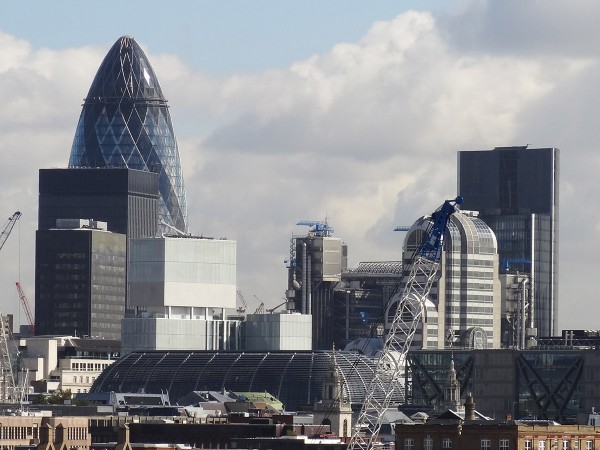 While much of the UK is struggling to recover from recession, the London economy is growing strongly. This is reflected in strong investment, a growth in jobs and rapidly rising house prices.
There are considerable external economies of scale for businesses locating in London. There is a pool of trained labour and complementary companies providing inputs and services are located in close proximity. Firms create positive externalities to the benefit of other firms in the same industry or allied industries.
London is a magnet for entrepreneurs and highly qualified people. Innovative ideas and business opportunities flow from both business dealings and social interactions. As Boris Johnson says in the podcast, “It’s like a cyclotron on bright people… People who meet each other and spark off each other, and that’s when you get the explosion of innovation.”
 Then there is a regional multiplier effect. As the London economy grows, so people move to London, thereby increasing consumption and stimulating further production and further employment. Firms may choose to relocate to London to take advantage of its buoyant economy. There is also an accelerator effect as a booming London encourages increased investment in the capital, further stimulating economic growth.
But the movement of labour and capital to London can dampen recovery in other parts of the economy and create a growing divide between London and other parts of the UK, such as the north of England.
The podcast examines ‘agglomeration‘ in London and how company success breeds success of other companies. It also looks at some of the downsides.
Podcast
Boris Johnson: London is cyclotron on bright people BBC Today Programme, Evan Davis (3/3/14)
Articles
London will always win over the rest of the UK The Telegraph, Alwyn Turner (2/3/14)
Evan Davis’s Mind The Gap – the view from Manchester The Guardian, Helen Pidd (4/3/14)
London incubating a new economy London Evening Standard, Phil Cooper (Founder of Kippsy.com) (10/2/14)
Reports and data
London Analysis, Small and Large Firms in London, 2001 to 2012 ONS (8/8/13)
Regional Labour Market Statistics, February 2014 ONS (19/2/14)
London Indicators from Labour Market Statistics (11 Excel worksheets) ONS (19/2/14)
Annual Business Survey, 2011 Regional Results ONS (25/7/13)
Economies of agglomeration Wikipedia
Questions
- Distinguish between internal and external economies of scale.
- Why is London such an attractive location for companies?
- Are there any external diseconomies of scale from locating in London?
- In what ways does the expansion of London (a) help and (b) hinder growth in the rest of the UK?
- Examine the labour statistics (in the links above) for London and the rest of the UK and describe and explain the differences.
 Business performance is always affected by the economy and we can always look at the economic theory to explain why profits rise and fall. Some companies prosper during recession, whereas others decline and the key is to understand the economics behind the data. This blog takes a look at the performance of a variety of companies and asks you to think about the economic theory behind it.
The world of betting has grown significantly and the profits of companies in this market, while certainly linked to economic performance, is also dependent on sport results. Paddy Power has announced pre-tax profits of €141m for 2013, an increase from €139.2m, despite sporting results causing profit performance to fall. On the part of football clubs, Liverpool FC saw a loss emerge for the 2012-2013 financial year, whereas Newcastle’s profits rose by 900% to £9.9m. What factors can explain the vastly different performance (off and on the pitch) of these two clubs?
In the USA, Radio Shack has been forced to close 1100 stores. This is, in part, as a response to a change in the way we are shopping. More and more consumers are purchasing goods online and Radio Shack is therefore experiencing growing competition from online retailers. Sales fell by 10% last year and even during the fourth quarter sales continued to decline.
Companies based in the largest economy in Europe have also experienced declines in performance, showing that a strong performing country doesn’t imply the same for companies operating in it. RWE, Germany’s biggest energy provider, has not made a loss since 1949. However, in 2013, this company posted its first annual loss in over 60 years: a loss of £2.28bn. With energy being in constant demand and criticism being levelled at UK energy providers for the high profits they’re making, the economics behind these data is important.
In better news for a company, Thorntons has boasted a significant increase in pre-tax profits, with much of this due to strong trading in the months leading up to Christmas and a sensible business strategy, involving selling more in supermarkets. Thorntons has cut its number of stores, but its profitable position has been saved by a good business strategy and this is going to lead to significant investment by the company.
Another strong performance was recorded by Berkshire Hathaway, an investment firm run by Warren Buffett. The company made a profit of £11.6bn in 2013, a significant increase on its 2012 performance. It is the insurance, rail and energy parts of the business that have contributed to the big increase in profits.
These are just some recent examples of data on business performance and your job is to think about the economic theory that can be used to explain the varying performance of different companies.
Liverpool announce annual loss of £50m in new club accounts Guardian, David Conn (4/3/14)
Thorntons makes biggest manufacturing investment for 25 years Telegraph, Natalie Thomas (3/3/14)
Thorntons cashes in on the snowman Independent, Simon Neville (3/3/14)
Warren Buffett’s Berkshire Hathaway sees record profit BBC News (2/3/14)
Newcastle says ‘player trading’ helped increase profits to £9.9m BBC Sport (25/2/14)
RWE posts first annual net loss for over 60 years BBC News (4/3/14)
UK among RWE woes as it posts first annual loss since 1949 The Telegraph, Denise Roland (4/3/14)
Germany’s RWE slides into €2.8bn net loss for 2013 Financial Times, Jeevan Vasagar (4/3/14)
John Menzies profits hit by drop in magazine sales BBC News (4/3/14)
Fresnillo profits drop as gold prices and production falls The Telegraph, Olivia Goldhill (4/3/14)
Glencore 2013 profit rises 20% as copper production gains Bloomberg, Jesse Riseborough (4/3/14)
Questions
- In each of the cases above, explain the economic theory that can be used to explain the performance of the respective company.
- To what extent is a change in the market structure of an industry a contributing factor to the change in company performance?
- To what extent do you think a company’s performance is dependent on the performance of the economy in which it operates?
- Are the profits of a company a good measure of success? What else could be used?
 The UK energy industry (electricity and gas) is an oligopoly. There are six large suppliers: the ‘Big Six’. These are British Gas (Centrica, UK), EDF Energy (EDF, France), E.ON UK (E.ON, Germany), npower (RWE, Germany), Scottish Power (Iberdrola, Spain) and SSE (SSE Group, UK). The Big Six supply around 73% of the total UK market and around 90% of the domestic market.
Energy suppliers buy wholesale gas and electricity and sell it to customers. The industry has a considerable degree of vertical integration, with the energy suppliers also being involved in both generation and local distribution (long-distance distribution through the familiar pylons is by National Grid). There is also considerable horizontal integration, with energy suppliers supplying both electricity and gas and offering ‘dual-fuel’ deals, whereby customers get a discount by buying both fuels from the same supplier.
Smaller suppliers have complained about substantial barriers to entry in the industry. In particular, they normally have to buy wholesale from one of the Big Six. Lack of transparency concerning their costs and internal transfer prices by the Big Six has led to suspicions that they are charging more to independent suppliers than to themselves.
 Under new regulations announced by Ofgem, the industry regulator, the Big Six will have to post the prices at which they will trade wholesale power two years in advance and must trade fairly with independent suppliers or face financial penalties. In addition, ‘a range of measures will make the annual statements of the large companies more robust, useful and accessible.’ According to the Ofgem Press Release:
From 31 March new rules come into force meaning the six largest suppliers and the largest independent generators will have to trade fairly with independent suppliers in the wholesale market, or face financial penalties. The six largest suppliers will also have to publish the price at which they will trade wholesale power up to two years in advance. These prices must be published daily in two one-hour windows, giving independent suppliers and generators the opportunity and products they need to trade and compete effectively.
But will these measures be enough to break down the barriers to entry in the industry and make the market genuinely competitive? The following articles look at the issue.
Articles
Boost for small energy firms as Big Six are ordered to trade fairly on wholesale markets or face multi-million pound fines This is Money, Rachel Rickard Straus (26/2/14)
 Energy firms told to trade fairly with smaller rivals BBC News, Rachel Fletcher (26/2/14)
Ofgem ramps up scrutiny of Big Six accounts The Telegraph, Denise Roland (26/2/14)
‘Big six’ told to trade fairly – will it make a difference? Channel 4 News, Emma Maxwell (26/2/14)
Energy regulator Ofgem forces trading rules on ‘big six’ suppliers Financial Times, Andy Sharman (26/2/14)
Information
Ofgem tears down barriers to competition to bear down as hard as possible on energy prices Ofgem Press Release (26/2/14)
The energy market explained Energy UK
Gas Ofgem
Electricity Ofgem
Energy in the United Kingdom Wikipedia
Big Six Energy Suppliers (UK) Wikipedia
Questions
- Describe the structure of the UK energy industry.
- What are the barriers to the entry of new energy suppliers and generators in the UK?
- To what extent is vertical integration in the electricity generation and supply industry in the interests of consumers?
- To what extent is horizontal integration in the electricity and gas markets in the interests of consumers?
- How will requiring the six largest energy suppliers to post their wholesale prices for the next 24 months increase competition in the energy market?
- Is greater transparency about the revenues, costs and profits of energy suppliers likely to make the market more competitive?
- Identify and discuss other measures which Ofgem could introduce to make the energy market more competitive.
 I am an avid tennis fan and have spent many nights and in the last 10 days had many early mornings (3am), where I have been glued to the television, watching in particular Rafael Nadal in the Australian Open. Tennis is one of the biggest sports worldwide and generates huge amounts of revenue through ticket sales, clothing and other accessories, sponsorship, television rights and many other avenues. When I came across the BBC article linked below, I thought it would make an excellent blog!
There are many aspects of tennis (and of every other sport) that can be analysed from a Business and Economics stance. With the cost of living having increased faster than wages, real disposable income for many households is at an all-time low. Furthermore, we have so many choices today in terms of what we do – the entertainment industry has never been so diverse. This means that every form of entertainment, be it sport, music, cinema, books or computer games, is in competition. And then within each of these categories, there’s further competition: do you go to the football or the tennis? Do you save up for one big event and go to nothing else, or watch the big event on TV and instead go to several other smaller events? Tennis is therefore competing in a highly competitive sporting market and a wider entertainment market. The ATP Executive Chairman and President said:
We’ve all got to understand the demands on people’s discretionary income are huge, they are being pulled in loads of different avenues – entertainment options of film, music, sport – so we just need to make sure that our market share remains and hopefully grows as well.
As we know from economic analysis, product differentiation and advertising are key and tennis is currently in a particularly great era when it comes to drawing in the fans, with four global superstars.
However, tennis and all sports are about more than just bringing in the fans to the live events. Sponsorship deals are highly lucrative for players and, in this case, for the ATP and WTA tennis tours. It is lucrative sponsorship deals which create prize money worth fighting for, which help to draw in the best players and this, in turn, helps to draw in the fans and the TV companies.
 With technological development, all sports are accessible by wider audiences and tennis is making the most of the fast growth in digital media. Looking at the packaging of tour events and how best to generate revenues through TV rights is a key part of strategic development for the ATP. It goes a long way to showing how even one of the world’s most successful sporting tours is always looking at ways to innovate and adapt to changing economic and social times. Tennis is certainly a sport that has exploited all the opportunities it has had and, through successful advertising, well-organised events and fantastic players, it has created a formidable product, which can compete with any other entertainment product out there. As evidence, the following fact was observed in the Telegraph article:
A 1400 megawatt spike – equivalent to 550,000 kettles being boiled – was recorded at around 9.20pm on that day [6/7/08] as Nadal lifted the trophy. The surge is seen as an indicator of millions viewing the final and then rushing to the kitchen after it is over. The national grid felt a bigger surge after the Nadal victory even than at half time during the same year’s Champions League final between Manchester United and Chelsea.
Tennis top guns driving ATP revenues BBC News, Bill Wilson (20/1/14)
The top 20 sporting moments of the noughties: The 2008 Wimbledon Final The Telegraph, Mark Hodgkinson (14/12/09)
The global tennis industry in numbers BBC News (22/1/14)
Questions
- How does tennis generate its revenue?
- In which market structure would you place the sport of tennis?
- What are the key features of the ATP tour which have allowed it to become so successful? Can other sports benefit from exploiting similar things?
- How has technological development created more opportunities for tennis to generate increased revenues?
- Can game theory be applied to tennis and, if so, in what ways?
- Why does sponsorship of the ATP tour play such an important role in the business of tennis?
- How important is (a) product differentiation and (b) advertising in sport?
 Footballers in the English Premier League are some of the most highly paid workers in the world. With unique talents and skills and hence a limited supply of labour, together with an insatiable appetite from the British public for football, we would expect to see high wages and a market ripe for investment, with high returns on offer. But, is this case?