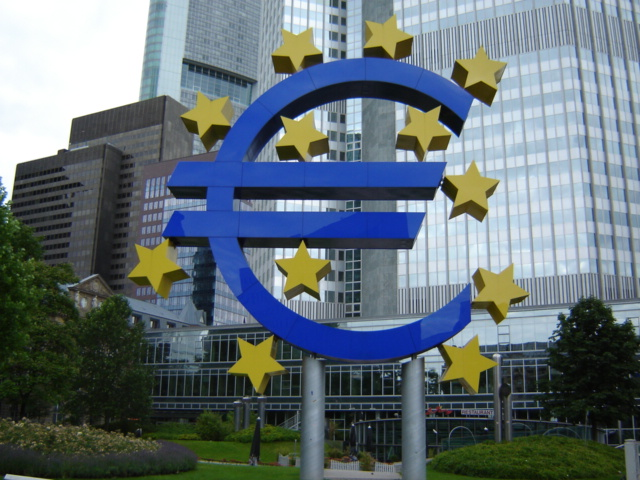
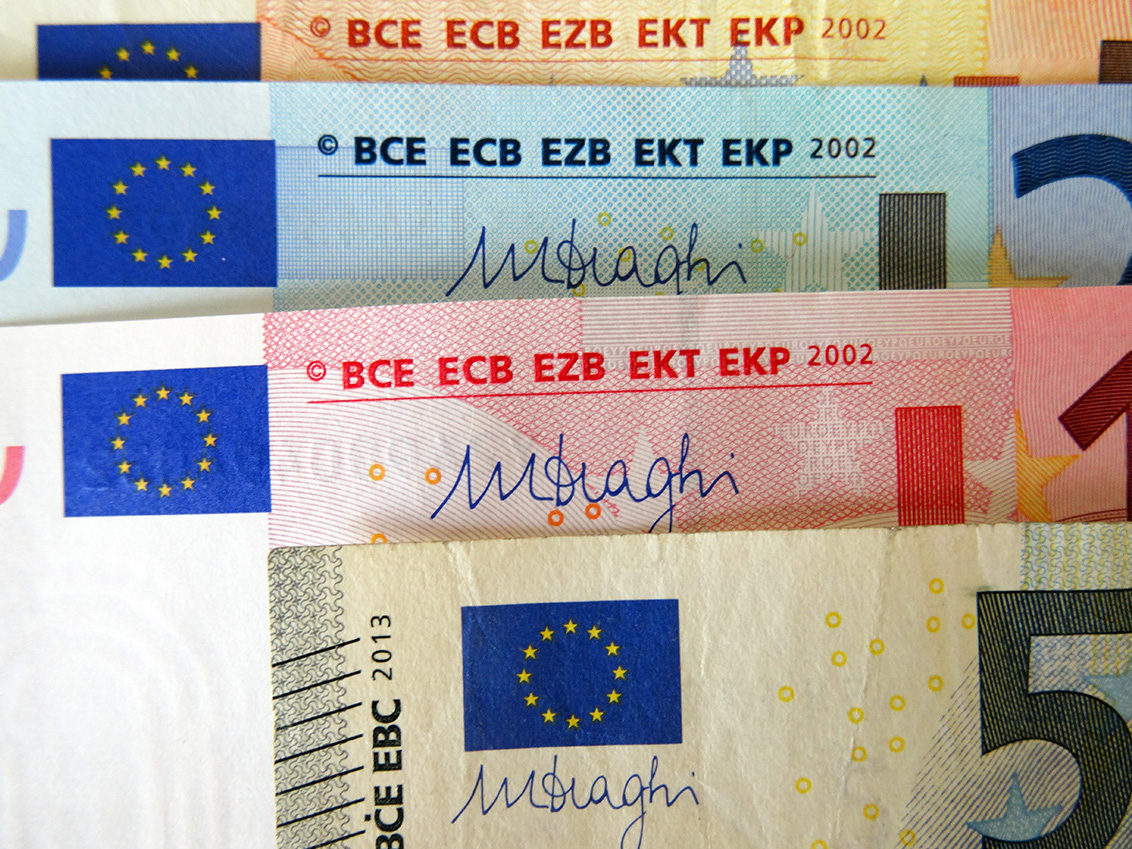
 Mario Draghi, the ECB President, has indicated that the ECB is prepared to engage in further monetary stimulus. This is because of continuing weaknesses in the global economy and in particular in emerging markets.
Although the ECB at its meeting in Malta on 22 October decided to keep both interest rates and asset purchases (€60 billion per month) at current levels, Mario Draghi stated at the press conference that, at its next meeting on December 3rd, the ECB would be prepared to cut interest rates and re-examine the size, composition and duration of its quantitative easing programme. He stopped short, however, of saying that interest rates would definitely be cut or quantitative easing definitely increased. He said the following:
“The Governing Council has been closely monitoring incoming information since our meeting in early September. While euro area domestic demand remains resilient, concerns over growth prospects in emerging markets and possible repercussions for the economy from developments in financial and commodity markets continue to signal downside risks to the outlook for growth and inflation. Most notably, the strength and persistence of the factors that are currently  slowing the return of inflation to levels below, but close to, 2% in the medium term require thorough analysis.
In this context, the degree of monetary policy accommodation will need to be re-examined at our December monetary policy meeting, when the new Eurosystem staff macroeconomic projections will be available. The Governing Council is willing and able to act by using all the instruments available within its mandate if warranted in order to maintain an appropriate degree of monetary accommodation.”
Mario Draghi also argued that monetary policy should be supported by fiscal policy and structural policies (mirroring Japan’s three arrows). Structural policies should include actions to improve the business environment, including the provision of an adequate public infrastructure. This is vital to “increase productive investment, boost job creation and raise productivity”.
As far as fiscal policies are concerned, these “should support the economic recovery, while remaining in compliance with the EU’s fiscal rules”. In other words, fiscal policy should be expansionary, while staying within the limits set by the Stability and Growth Pact.
His words had immediate effects in markets. Eurozone government bond yields dropped to record lows and the euro depreciated 3% against the US dollar over the following 24 hours.
Webcasts
 ECB Press Conference on YouTube, Mario Draghi (22/10/15)
Draghi reloads bazooka FT Markets, Ferdinando Guigliano (22/10/15)
Articles
Mario Draghi: ECB prepared to cut interest rates and expand QE The Guardian, Heather Stewart (22/10/15)
Draghi signals ECB ready to extend QE Financial Times, Claire Jones and Elaine Moore (22/10/15)
Dovish Mario Draghi sends bond yields to new lows Financial Times, Katie Martin (23/10/15)
What Draghi Said on QE, Policy Outlook, Global Risks and Inflation Bloomberg, Deborah Hyde (22/10/15)
ECB set to ‘re-examine’ stimulus policy at next meeting BBC News (22/10/15)
The global economy warrants a big dose of caution The Guardian, Larry Elliott (25/10/15)
ECB Press Conference
Introductory statement to the press conference (with Q&A) ECB, Mario Draghi (President of the ECB), Vítor Constâncio (Vice-President of the ECB) (22/10/15)
Questions
- Why is the ECB considering further expansionary monetary policy?
- What monetary measures can a central bank use to stimulate aggregate demand?
- Explain the effects of Mario Draghi’s announcement on bond and foreign exchange markets.
- What are the objectives of ECB monetary policy according to the its mandate?
- Should the ECB consider using quantitative easing to provide direct funding for infrastructure projects?
- What constraints does the EU’s Stability and Growth Pact impose on eurozone countries?
- What are the arguments for and against (a) the Bank of England and (b) the US Federal Reserve engaging in further QE?
- If the ECB does engage in an expanded QE programme, what will determine its effectiveness?
 The International Monetary Fund has just published its six-monthly World Economic Outlook (WEO). The publication assesses the state of the global economy and forecasts economic growth and other indicators over the next few years. So what is this latest edition predicting?
Well, once again the IMF had to adjust its global economic growth forecasts down from those made six months ago, which in turn were lower than those made a year ago. As Larry Elliott comments in the Guardian article linked below:
Every year, economists at the fund predict that recovery is about to move up a gear, and every year they are disappointed. The IMF has over-estimated global growth by one percentage point a year on average for the past four years.
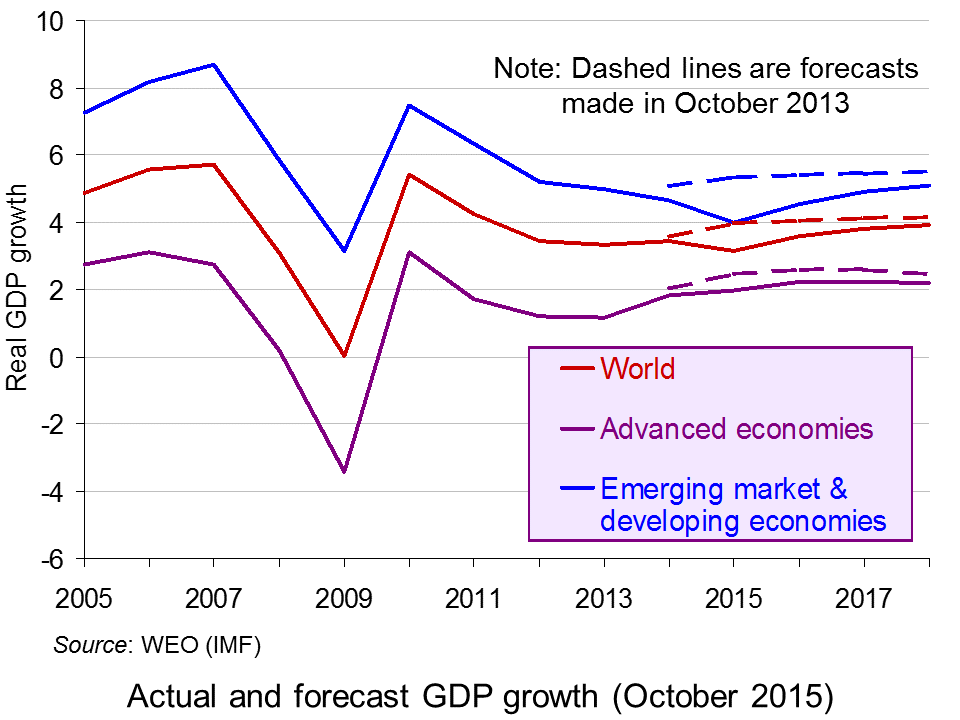
In this latest edition, the IMF is predicting that growth in 2015 will be slightly higher in developed countries than in 2014 (2.0% compared with 1.8%), but will continue to slow for the fifth year in emerging market and developing countries (4.0% in 2015 compared with 4.6% in 2014 and 7.5% in 2010).
In an environment of declining commodity prices, reduced capital flows to emerging markets and pressure on their currencies, and increasing financial market volatility, downside risks to the outlook have risen, particularly for emerging market and developing economies.
So what is the cause of this sluggish growth in developed countries and lower growth in developing countries? Is lower long-term growth the new norm? Or is this a cyclical effect – albeit protracted – with the world economy set to resume its pre-financial-crisis growth rates eventually?
 To achieve faster economic growth in the longer term, potential national output must grow more rapidly. This can be achieved by a combination of more rapid technological progress and higher investment in both physical and human capital. But in the short term, aggregate demand must expand sufficiently rapidly. Higher short-term growth will encourage higher investment, which in turn will encourage faster growth in potential national output.
But aggregate demand remains subdued. Many countries are battling to cut budget deficits, and lending to the private sector is being constrained by banks still seeking to repair their balance sheets. Slowing growth in China and other emerging economies is dampening demand for raw materials and this is impacting on primary exporting countries, which are faced with lower exports and lower commodity prices.
Quantitative easing and rock bottom interest rates have helped somewhat to offset these adverse effects on aggregate demand, but as the USA and UK come closer to raising interest rates, so this could dampen global demand further and cause capital to flow from developing countries to the USA in search of higher interest rates. This will put downward pressure on developing countries’ exchange rates, which, while making their exports more competitive, will make it harder for them to finance dollar-denominated debt.
As we have seen, long-term growth depends on growth in potential output, but productivity growth has been slower since the financial crisis. As the Foreword to the report states:
The ongoing experience of slow productivity growth suggests that long-run potential output growth may have fallen broadly across economies.  Persistently low investment helps explain limited labour productivity and wage gains, although the joint productivity of all factors of production, not just labour, has also been slow. Low aggregate demand is one factor that discourages investment, as the last World Economic Outlook report showed. Slow expected potential growth itself dampens aggregate demand, further limiting investment, in a vicious circle.
But is this lower growth in potential output entirely the result of lower demand? And will the effect be permanent? Is it a form of hysteresis, with the effect persisting even when the initial causes have disappeared? Or will advances in technology, especially in the fields of robotics, nanotechnology and bioengineering, allow potential growth to resume once confidence returns?
Which brings us back to the short and medium terms. What can be done by governments to stimulate sustained recovery? The IMF proposes a focus on productive infrastructure investment, which will increase both aggregate demand and aggregate supply, and also structural reforms. At the same time, loose monetary policy should continue for some time – certainly as long as the current era of falling commodity prices, low inflation and sluggish growth in demand persists.
Articles
Uncertainty, Complex Forces Weigh on Global Growth IMF Survey Magazine (6/10/15)
A worried IMF is starting to scratch its head The Guardian, Larry Elliott (6/10/15)
Storm clouds gather over global economy as world struggles to shake off crisis The Telegraph, Szu Ping Chan (6/10/15)
Five charts that explain what’s going on in a miserable global economy right now The Telegraph, Mehreen Khan (6/10/15)
IMF warns on worst global growth since financial crisis Financial Times, Chris Giles (6/10/15)
Global economic slowdown in six steps Financial Times, Chris Giles (6/10/15)
IMF Downgrades Global Economic Outlook Again Wall Street Journal, Ian Talley (6/10/15)
WEO publications
World Economic Outlook, October 2015: Adjusting to Lower Commodity Prices IMF (6/10/15)
Global Growth Slows Further, IMF’s latest World Economic Outlook IMF Podcast, Maurice Obstfeld (6/10/15)
Transcript of the World Economic Outlook Press Conference IMF (6/10/15)
World Economic Outlook Database IMF (October 2015 edition)
Questions
- Look at the forecasts made in the WEO October editions of 2007, 2010 and 2012 for economic growth two years ahead and compare them with the actual growth experienced. How do you explain the differences?
- Why is forecasting even two years ahead fraught with difficulties?
- What factors would cause a rise in (a) potential output; (b) potential growth?
- What is the relationship between actual and potential economic growth?
- Explain what is meant by hysteresis. Why may recessions have a permanent negative effect, not only on trend productivity levels, but on trend productivity growth?
- What are the current downside risks to the global economy?
- Why have commodity prices fallen? Who gains and who loses from lower commodity prices? Does it matter if falling commodity prices in commodity importing countries result in negative inflation?
- To what extent can exchange rate depreciation help commodity exporting countries?
- What is meant by the output gap? How have IMF estimates of the size of the output gap changed and what is the implication of this for actual and potential economic growth?
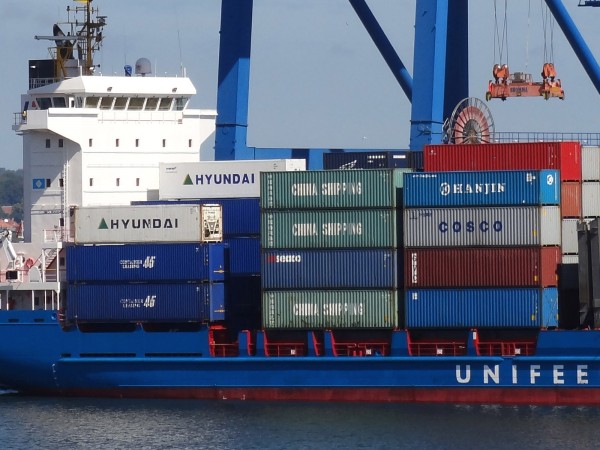 The UK’s balance on trade continues to be sharply in deficit. At the same time, both manufacturing and overall production are still well below their pre-crisis levels. What is more, with a sterling exchange rate that has appreciated substantially over recent months, UK exports are at an increasing price disadvantage. The hoped-for re-balancing of the economy from debt-financed consumption to investment and exports has not occurred. Investment in the UK remains low relative to that in other major economies (see).
But other developments in the global economy are working in the UK’s favour.
Manufacturing globally is becoming more capital intensive, which reduces the comparative advantage of developing countries with low labour costs.
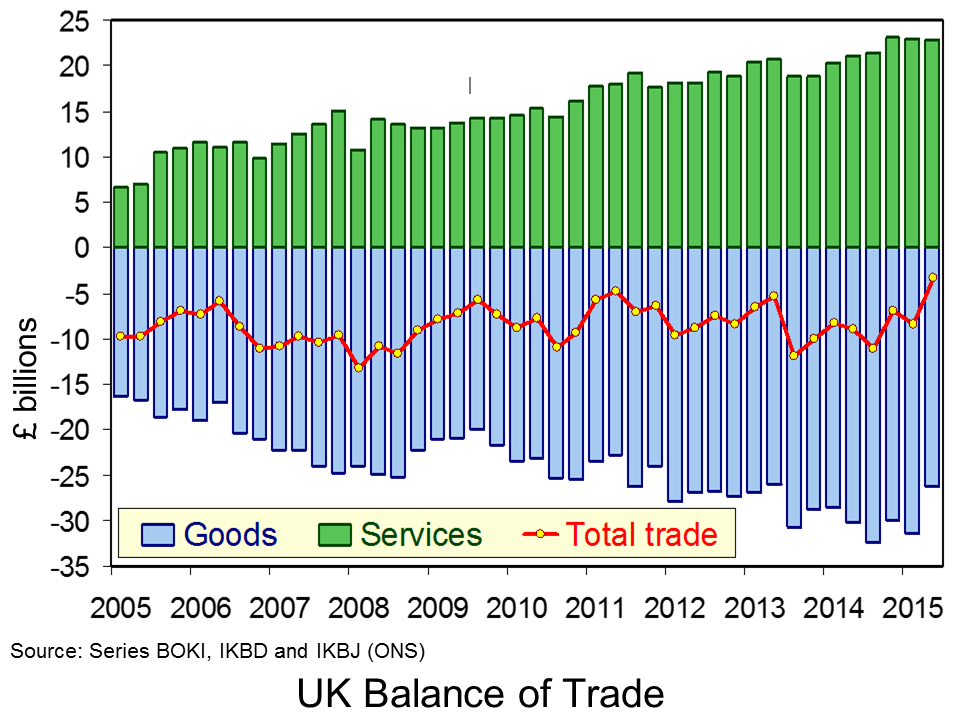 At the same time, the dividing line between manufacturing and services is becoming more blurred. Manufacturers in developing countries may still produce parts, such as chips or engines, but the design, marketing and sales of the products may take place in developed countries, such as the UK. Indeed, as products become more sophisticated, an increasing amount of value added may occur in developed countries.
The UK may be particularly well-placed in this regard. It can provide many high-end services in IT, business support and financial services to international manufacturers. It may have a comparative advantage in idea-intensive production.
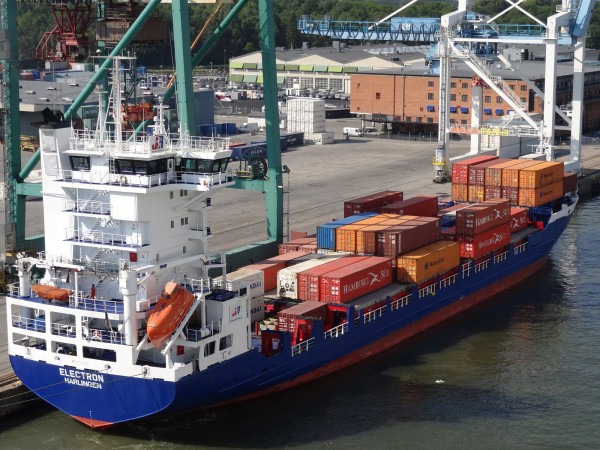 Finally with a higher exchange rate, the UK’s terms of trade have been improving. The downside is that it makes UK exports more expensive in foreign currency terms, but it also makes commodity prices cheaper, which have already fallen in dollar terms, and also the prices of imported component parts. This helps offset the effect of the appreciation of the exchange rate on exports.
The following article by Jeremy Warner considers whether, despite its poor performance in traditional manufacturing, the UK might have hit an economic ‘sweet spot’ in its trade position.
Article
Unbalanced but lucky, Britain hits an economic sweet spot The Telegraph, Jeremy Warner (8/9/15)
Data
UK Trade (Excel file) ONS (9/9/15)
(See, for example, Worksheet 1. You can search for longer series using Google advanced search, putting www.ons.gov.uk in the ‘site or domaine’ box and searching for a particular series, using the series identifier found at the top of each column in the Excel file, such as BOKI for balance on trade in goods.)
Exchange rate data Bank of England Statistical Interactive Database
Questions
- Explain the difference between the balance on trade, the balance on trade in goods and the balance of payments on current account.
- Why has the UK not experienced a re-balancing of the economy as hope for by the Chancellor of the Exchequer, amongst others?
- What is meant by the ‘terms of trade’?
- What would cause an ‘improvement’ in the terms of trade?
- Are the UK’s terms of trade likely to move in the UK’s favour in the coming months? Explain.
- What current factors are mitigating against a recovery of UK manufacturing exports?
- Is de-industrialisation necessarily a ‘bad thing’?
- Does the development of new capital-intensive technologies in manufacturing mean that the UK could become a net exporter of manufactures? Explain why or why not.
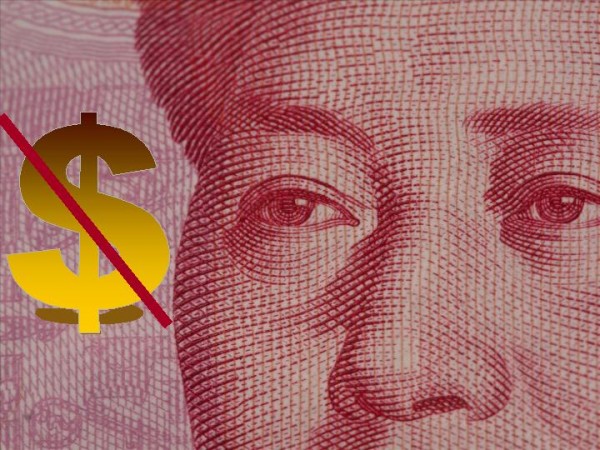 China has a key role in the global economy. Recording double digit growth for a number of years and posting impressive export figures, China’s has been an economy on an upward trajectory. But its growth has been slowing and this might spell trouble for the global economy, as was discussed in the following blog. For many, China is the pendulum and the direction it moves in will have a big influence on many other countries.
There are some suggestions that China’s rapid growth has been somewhat artificial, in particular following the financial crisis, where we saw massive investment by state-owner enterprises, banks and local government. This has led to a severe imbalance within the Chinese economy, with high levels of debt. One of the key factors that has enabled China to grow so quickly has been strong exports. China has typically had a large current account surplus, often balanced by large current account deficits in many Western countries.
The exchange rate is a key component in keeping strong export growth and the devaluation of the Chinese currency in August (see What a devalued yuan means to the rest of the world) is perhaps a suggestion that export growth in China is lower than desired. Devaluing the currency will boost the competitiveness of Chinese exports and this in turn may lead to a growth in the current account surplus, which had fallen quite significantly from around 10% to 2%.
The problem is that China is currently imbalanced and this is likely to create problems around the world. With globalisation, the free movement of capital and people, deflation in the West and falling world asset prices, the situation in China is crucial. Although you will find many articles about China and blogs on this site about its devaluation, its growth and policy, the BBC News article below considers the conflicts that exist between three key economic objectives:
1. currency stability
2. the free movement of capital
3. independent monetary policy
and the need for some international co-operation and co-ordination to enable China’s economy to return to internal and external balance.
China’s impossible trinity BBC News, Duncan Weldon (8/9/15)
Questions
- What is meant by internal balance?
- What is external balance?
- Would you suggest that China is suffering from an imbalanced economy? If so, which type of imbalance and why is this a problem for China and for the world economy?
- The article refers to the trilemma. Why can an country not achieve all 3 parts of the trilemma? You should explain why each combination of 2 aspects is possible, but why the third is problematic.
- Use a diagram to explain why a fall in the exchange rate will boost the competitiveness of exports and why this can create economic growth.
- Why is a devalued Chinese currency bad news for the rest of the world?
- How could international co-operation and co-ordination help China?
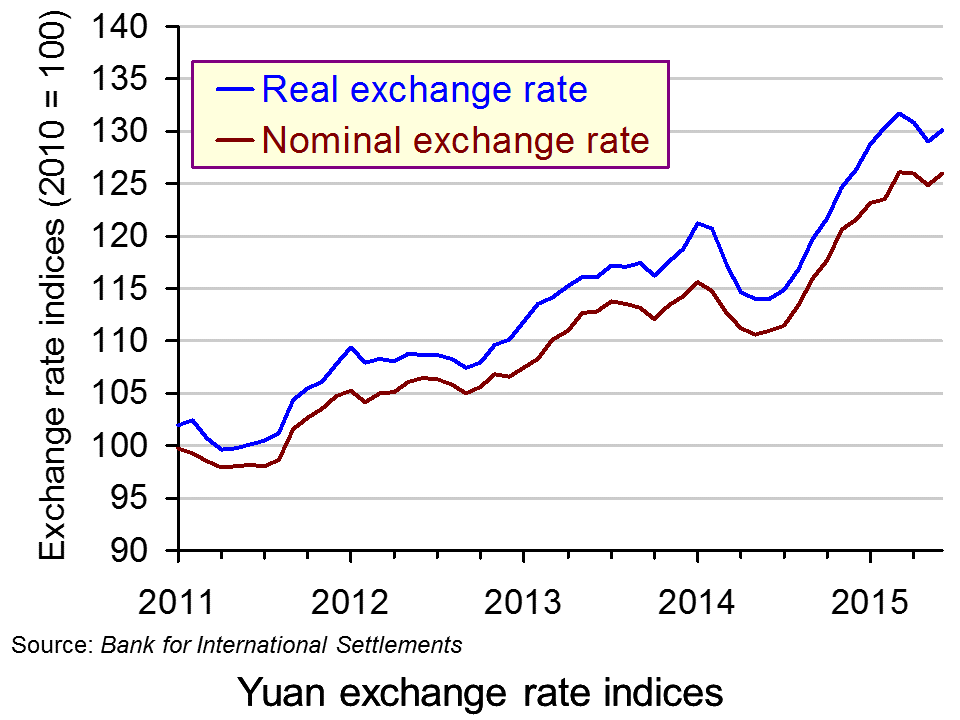
On August 11th, China devalued its currency, the yuan, by 1.9%. The next day it devalued it by a further 1.6% and on the next day by a further 1.1%. Even though the total devaluation was relatively small, especially given a much bigger revaluation over the previous three years (see chart below), traders in world markets greeted the news with considerable pessimism. Stock markets around the world fell. For example, the US Dow Jones was down by 1.1%, the FTSE 100 was down by 2.5% and the German DAX by 5.8%.
There are three major concerns of investors about the devaluation. The first is that a weaker yuan will make other countries’ exports more expensive in China, thereby making it harder to export to China. At the same time Chinese imports into the rest of the world will be cheaper, thereby making it harder for domestic producers to compete with Chinese imports.
 The second is that cheaper Chinese imports will put downward pressure on prices at a time when inflation rates in the major economies are already below target rates. The fear of deflation has not gone away and this further deflationary twist will intensify such fears and possibly dampen demand.
The third is that the devaluation is taken as a sign that the Chinese authorities are worried about a slowing Chinese economy and are using the devaluation to boost Chinese exports. The rapidly expanding Chinese economy has been one of the major motors of the global economy in recent years and hence a slowing Chinese economy is cause for serious concern at a time when the global economy is still only very slowly recovering from the shock of the financial crisis of 2007–8
But just how worried should the rest of the world be about the falling yuan? And will it continue to fall, or could this be seen as a ‘one-off’ correction? What effect will it have on the macroeconomic policies of the USA, the eurozone and other major countries/regions? The following articles analyse Chinese policy towards its currency and the implications for the rest of the world.
China weakens yuan for a third straight day on Thursday CNBC, Nyshka Chandran (13/8/15)
Markets reel as investors fear worst of Chinese slowdown is yet to come The Telegraph, Peter Spence (12/8/15)
China cannot risk the global chaos of currency devaluation The Telegraph, Ambrose Evans-Pritchard (12/8/15)
Beware a China crisis that could crash down on us all The Telegraph, Liam Halligan (15/8/15)
The curious case of China’s currency The Economist, Buttonwood’s notebook (11/8/15)
China’s yuan currency falls for a second day BBC News (12/8/15)
China slowdown forces devaluation BBC News, Robert Peston (11/8/15)
What the yuan devaluation means around the world BBC News, Lerato Mbele, Daniel Gallas and Yogita Limaye (12/8/15)
China allows yuan currency to drop for third day BBC News, various reporters (13/8/15)
The Guardian view on global currencies: it’s the economy, stupid The Guardian, Editorial (14/8/15)
China’s currency gambit and Labour’s debate about quantitative easing: old and new ways to cope with economic crisis The Guardian, Paul Mason (16/8/15)
Questions
- By what percentages have the nominal and real yuan exchange rate indices appreciated since the beginning of 2011? Use data from the Bank for International Settlements.
- Explain the difference between nominal and real exchange rate indices.
- Compare the changes in the yuan exchange rate indices with that of the yuan/dollar exchange rate (see Bank of England Interactive Database). Explain the difference.
- How is the yuan exchange rate with other currencies determined?
- How have the Chinese authorities engineered a devaluation of the yuan? To what extent could it be described as a ‘depreciation’ rather than a ‘devaluation’?
- Why have world stock markets reacted so negatively to the devaluation?
- Why, in global terms, is the devaluation described as deflationary?
- How much should the rest of the world be worried by the devaluation of the yuan?
- Explain the statement by Robert Peston that ‘Beijing has done the monetary tightening that arguably the US economy needs’.
- Comment on the following statement by Stephen King of HSBC (see the second Telegraph article below): ‘The world economy is sailing across the ocean without any lifeboats to use in case of emergency.’
 Mario Draghi, the ECB President, has indicated that the ECB is prepared to engage in further monetary stimulus. This is because of continuing weaknesses in the global economy and in particular in emerging markets.