 The eurozone has been suffering from deflation: that is, negative inflation. But, the latest data show an increase in the rate of inflation in April from 0% to 0.3%. This is still a very low rate, with a return to deflation remaining a possibility (though perhaps unlikely); but certainly an improvement.
The eurozone economy has been stagnant for some time but the actions of the European Central Bank (ECB) finally appear to be working. Prices across the eurozone have risen, including services up by 1.3%, food and drink up by 1.2% and energy prices, albeit still falling, but at a slower rate. All of this has helped to push the annual inflation rate above 0%. For many, this increase was bigger than expected. Howard Archer, Chief European Economist at HIS Global Insight said:
“Renewed dips into deflation for the eurozone are looking increasingly unlikely with the risks diluted by a firming in oil prices from their January lows, the weakness of the euro and improved eurozone economic activity.”
Economic policy in the eurozone has focused on stimulating the economy, with interest rates remaining low and a €1.1 trillion bond-buying programme by the ECB. But, why is deflation such a concern? We know that one of the main macroeconomic objectives of a nation is low and stable inflation. If prices are low (or even falling) is it really as bad as economists and policy-makers suggest?
The problem of deflation occurs when people expect prices to continue falling and thus delay spending on durables, hoping to get the products cheaper later on. As such, consumption falls and this puts downward pressure on aggregate demand. This decision by consumers to put off spending will cause aggregate demand to shift to the left, thus pushing national income down, creating higher unemployment and adding to problems of economic stagnation. If this expectation continues, then so will the inward shifts in AD. In the eurozone, this has been a key problem, but it now appears that aggregate demand has stopped falling and is now slowly recovering, together with the economy.
 It is important to note how interdependent all aspects of an economy are. The euro responded as news of better inflation data emerged, together with expectations of a Greek deal being reached. Enrique Diaz-Alvarez, chief risk officer at Ebury said:
“The move [rise in euro] got going with the big upside surprise in eurozone inflation data — especially core inflation, which bounced up from 0.6 per cent to 0.9 per cent. This is exactly what the ECB wants to see, as it is proof that QE is having the desired effect and removes the threat of deflation in the eurozone from the foreseeable future.”
One of the key factors that has kept inflation down in the eurozone (and also the UK) is falling oil prices. It is for this reason that many have been suggesting that this type of deflation is not bad deflation. With oil prices recovering, the general price level will also recover and so economies will follow suit. The following articles consider the fortunes of the eurozone.
Eurozone inflation shouldn’t shift ECB’s QE focus Wall Street Journal, Richard Barley (2/6/15)
Eurozone deflation threat recedes Financial Times, Claire Jones (2/6/15)
Eurozone inflation rate rises to 0.3% in May BBC News (2/6/15)
Eurozone back to inflation as May prices beat forecast Reuters, Jan Strupczewski (2/6/15)
Boost for ECB as Eurozone prices turn positive in May Guardian, Phillip Inman (2/6/15)
Eurozone inflation higher than expected due to quantitative easing International Business Times, Bauke Schram (2/6/15)
Euro lifted by Greek deal hopes and firmer inflation data Financial Times, Roger Blitz and Michael Hunter (2/6/15)
Questions
- What is the difference between the 0.3% and 0.9% figures quoted for inflation in the eurozone?
- What is deflation and why is it such a concern?
- Illustrate the impact of falling consumer demand in an AD/AS diagram.
- How has the ECB’s QE policy helped to tackle the problem of deflation? Do you think that this programme needs to continue or now the economy has begun to improve, should the programme end?
- To what extent is the economic stagnation in the eurozone a cause for concern to countries such as the UK and USA? Explain your answer.
- Why has the euro risen, following news of this positive inflation data?
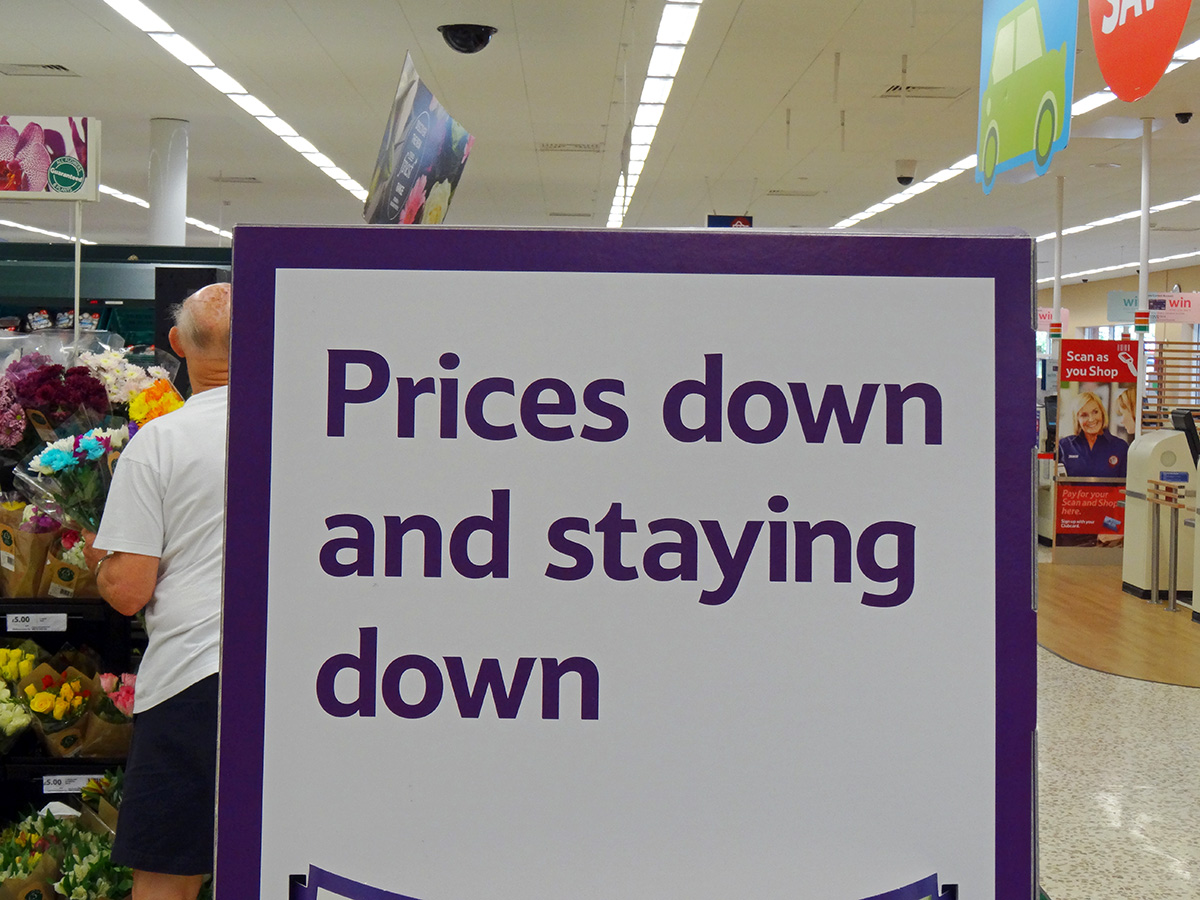
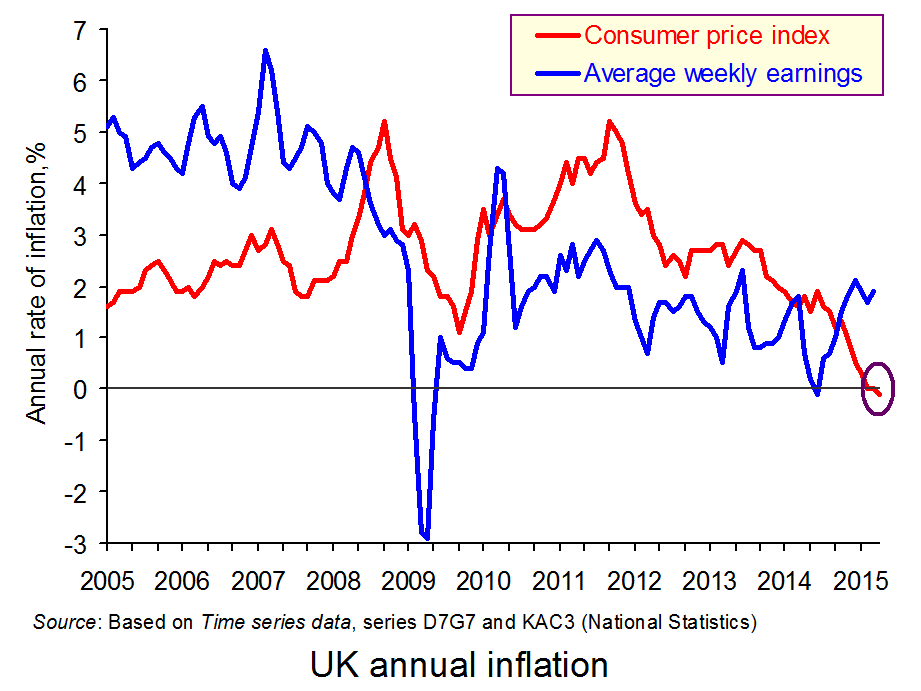
 The CPI index fell by 0.1% in the 12 months to April 2015. This is partly the result of lower air and sea fares, as the upward ‘blip’ in these fares at Easter last year was not present in mid-April this year as Easter fell outside the period when the statistics are collected. What is more significant is that fuel, commodity and retail food prices have fallen over the past 12 months, and the exchange rate has risen, especially against the euro.
But how do we define what’s happened and how significant is it? It might seem highly significant as it’s the first time in 55 years that the CPI has fallen over a 12-month period. In fact, the effect is likely to be temporary, as fuel prices are now rising again and commodity prices generally are beginning to rise too. What is more, the pound seems to have peaked against the euro. Thus although aggregate demand remains relatively dampened, the main causes of falling prices and potential rises in the coming months are largely to be found on the cost side. This then brings us on to the definition of a falling CPI.
 A falling CPI over a 12-month period can be defined as negative inflation. This is unambiguous. But is this ‘deflation’? The problem with the term ‘deflation’ is that it is ambiguous. On the one hand it can be defined simply as negative inflation. In that case, by definition, the UK has experienced deflation. But on the other, it is used to describe a situation of persistent falling prices as a result of declining aggregate demand.
If an economy suffers from deflation in this second sense, the problem can be very serious. Persistent falling prices are likely to discourage consumers from spending on durables (such as fridges, TVs, cars and furniture) and firms from buying capital equipment. After all, why buy an item now if, by waiting, you can get it cheaper later on? This mentality of waiting to spend leads to falling aggregate demand and hence falling output. It also leads to even lower prices. In other words deflation can get worse: a deflationary spiral.
If we define deflation in this second, much more serious sense, then the UK is not suffering deflation – merely temporary negative inflation. In fact, with prices now falling (slightly) and wages rising at around 2% per year, there should be an increase in aggregate demand, which will help to drive the recovery.
Videos
 Should Britain Panic Over Negative Inflation? Sky News, Ed Conway (20/5/15)
UK inflation negative for first time since 1960; BoE says temporary Reuters, Andy Bruce and William Schomberg (19/5/15)
UK inflation negative for the first time since 1960 CNBC, Dhara Ranasinghe (19/5/15)
Articles
UK inflation rate turns negative BBC News (19/5/15)
Why there’s little to fear as the spectre of deflation descends on UK The Telegraph, Szu Ping Chan (19/5/15)
UK inflation turns negative The Guardian, Katie Allen (19/5/15)
Is the UK in the early stages of deflation? The Guardian, Larry Elliott (19/5/15)
Is the UK in deflation or negative inflation? Q&A The Guardian, Katie Allen and Patrick Collinson (19/5/15)
Market View: Economists unconcerned on temporary deflation FT Adviser, Peter Walker (19/5/15)
Questions
- Is negative inflation ever a ‘bad thing’?
- Explain the movement in UK inflation rates over the past five years.
- How do changes in exchange rates impact on (a) inflation; (b) aggregate demand? Does it depend on what caused the changes in exchange rates in the first place?
- Why is the current period of negative inflation likely to be short-lived?
- Would you describe the negative inflation as negative cost-push inflation?
- What factors could change that might make negative inflation more persistent and raise the spectre of deflation (in its bad sense)?
- If inflation remains persistently below 2%, what can the Bank of England do, given current interest rates, to bring inflation back to the 2% target?
- What is meant by ‘core inflation’ and what has been happening to it in recent months?
- What global factors are likely to have (a) an upward; (b) a downward effect on UK inflation?
 Insolvencies in England and Wales have fallen to their lowest level since 2005, official records show. The Insolvency Service indicates that bankruptcy, individual voluntary arrangements and debt relief orders have fallen, with the largest and worst form of bankruptcy falling by 22.5 per cent compared to the same period in 2014. There has also been a fall in corporate insolvencies back to pre-crisis levels.
The British economy is recovering and despite an increase in consumer borrowing of £1.2 billion from February to March, which is the biggest since the onset of the credit crunch, the number of people in financial difficulty and living beyond their means has fallen. However, there are also suggestions that the number could begin to creep up in the future and we are still seeing a divide between the north and south of England in terms of the number of insolvencies.
There are many factors that could explain such a decline in insolvencies. Perhaps it is the growth in wages, in part due the recovery of the economy, which has enabled more people to forgo borrowing or enabled them to repay any loan more comfortably. Lower inflation has helped to reduce the cost of living, thereby increasing the available income to repay any loans. Interest rates have also remained low, thus cutting the cost of borrowing and the repayments due.
But, another factor may simply be that lending is now more closely regulated. Prior to the financial crisis, huge amounts of money were being lent out, often to those who had no chance of making the repayments. More stringent affordability checks by lenders may have a large part to play in reducing the number of insolvencies. President of R3, the insolvency practitioner body, Phillip Sykes said:
“It may be too early to draw conclusions but demand could be falling as a result of low interest rates, low inflation and tighter regulation. This trend is worth watching.”
Mark Sands, from Baker Tilly added to this, noting that fewer people were now in financial difficulty.
“As well as this, we are seeing lower levels of personal debt and fewer people borrowing outside of their means due to more stringent affordability checks by creditors.”
Whatever the main reason behind the data, it is certainly a positive indicator, perhaps of economic recovery, or that at least some have learned the lessons of the financial crisis. The following articles consider this topic.
Personal insolvencies fall to 10-year low Financial Times, James Pickford (1/5/15)
Personal insolvencies at lowest level since 2005 BBC News (29/4/15)
Personal insolvencies drop to lowest level in a decade The Guardian, Press Association (29/4/15)
Corporate insolvencies at lowest level since 2007 The Telegraph, Elizabeth Anderson (30/4/15)
Interview: R3 President Phillip Sykes Accountancy Age, Richard Crump (1/5/15)
North-South gap widens in personal insolvencies Independent, Ben Chu (27/4/15)
Insolvency rates show ‘stark’ north-south divide Financial Times, James Pickford (27/4/15)
Questions
- What is meant by insolvency?
- There are many factors that might explain why the number of insolvencies has fallen. Explain the economic theory behind a lower inflation rate and why this might have contributed to fewer insolvencies.
- How might lower interest rates affect both the number of personal and corporate insolvencies?
- Why has there been a growth in the north-south divide in terms of the number of insolvencies?
- Do you think this data does suggest that lessons have been learned from the Credit Crunch?
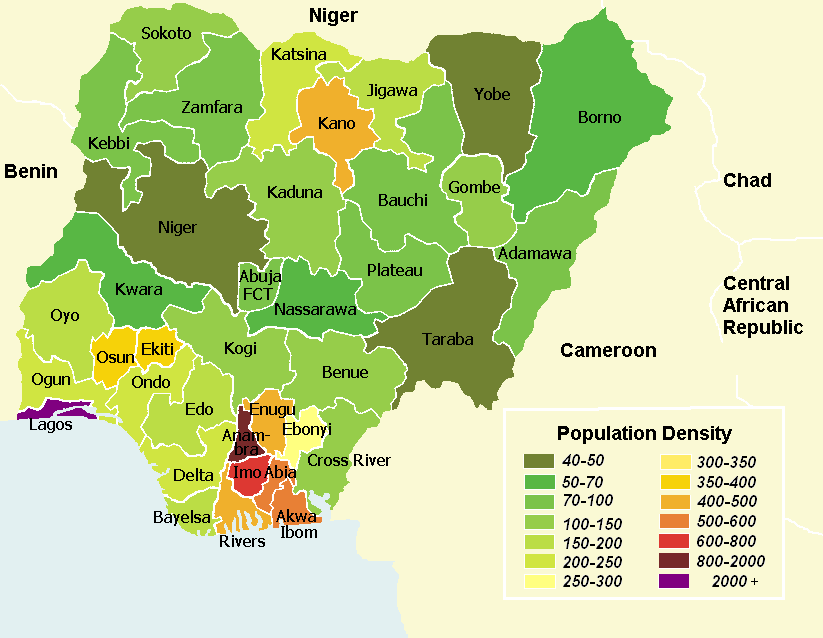
 A new group of economies, known as MINT, are seen as strong current and future emerging markets. We’ve had the BRICS (Brazil, Russia, India, China and South Africa) and now we have the MINTs (Mexico, Indonesia, Nigeria and Turkey).
In 2014, Nigeria became Africa’s fastest growing nation. A large part of Nigeria’s success has to do with growth in some of its key industries.
Nigerian’s reliance on the oil and gas industry created an attractive economy for further development and it now has high growth in a diverse range of sectors, including mobile phones, champagne, private jets and ‘Nollywood’. Despite the uncertainty and political unrest caused by Boko Haram, Nigeria is attracting a significant amount of Foreign Direct Investment (FDI) in a range of sectors, indicating its growing diversity and attractiveness to some of the world’s largest multinational companies.
Boko Haram has certainly had a dampening effect on Nigeria’s growth, as has the lower oil price, but this may create opportunities for further diversification. Furthermore there are concerns about how the wealth of the nation is concentrated, given that poverty is still prevalent across the country. However, Nigeria is certainly emerging as a success story of Africa and surely the question that will be asked is will other African nations follow suit?
The following article from BBC News considers the Nigerian economy.
Nigeria’s ‘champagne’ economy bucks Boko Haram effect BBC News, Vishala Sri-Pathma (27/3/15)
Questions
- Is a falling oil price necessarily bad for the Nigerian economy?
- Explain why Boko Haram is likely to have a dampening effect on economic growth in Nigeria.
- Do you think other African nations will be able to replicate the success of Nigeria? Which factors may prevent this?
- If the number of millionaires is increasing significantly, but poverty is persisting, does this tell us anything about what is happening to inequality in Nigeria?
- Is is possible to reduce inequality in Nigeria while maintaining economic growth? Might it even be posible for greater equality to be a driver of economic growth?
- The Nigerian currency is weakening. What has caused this and why may this be a cause for concern?
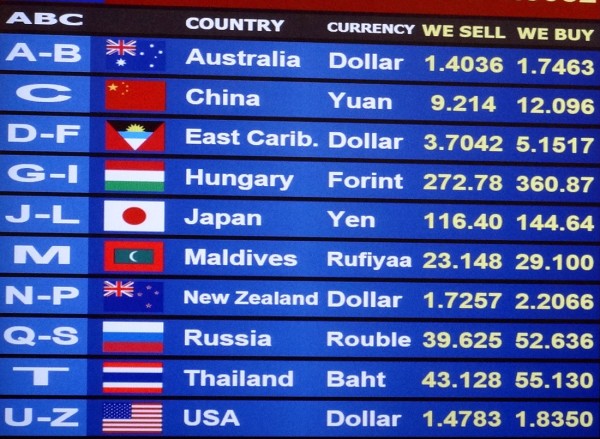 With an election approaching in the UK, uncertainty is a term we will hear frequently over the next few weeks. Until we know which party or parties will be in power and hence which policies will be implemented, planning anything is difficult. This is just one of the factors that has caused the British pound sterling to fall last week by 2% to an almost five year low against the dollar.
In the last election, uncertainty also prevailed and continued even after the election before the Coalition was formed. Given how close this election appears to be at present, another Coalition may have to be formed and this is adding to the current election uncertainty. A currency strategist at Standard Bank said:
“A $1.40 level for sterling/dollar is certainly not out of reach if the election aftermath turns ugly”
With such uncertainty, investors are refraining from putting their money into the UK and this has contributed towards the deprecation of the British pound against the dollar.
Another factor adding to this downward pressure on the pound is the latest data on industrial output. Although economic growth figures for the UK in 2014 were very positive, there are some suggestions that 2015 will not be as good as expected, though still a strong performance. The first quarter data will not be available until just before the election, but data from the ONS on industrial output shows very minimal growth at just 0.1% from January to February. Chris Williams at Markit said:
“Clearly this all bodes ill for economic growth in the opening quarter of the year. It’s now looking like the economy slowed, and possibly quite markedly, compared to the 0.6% expansion seen in the closing quarter of 2014 … The trend should improve in March, however, according to survey data.”
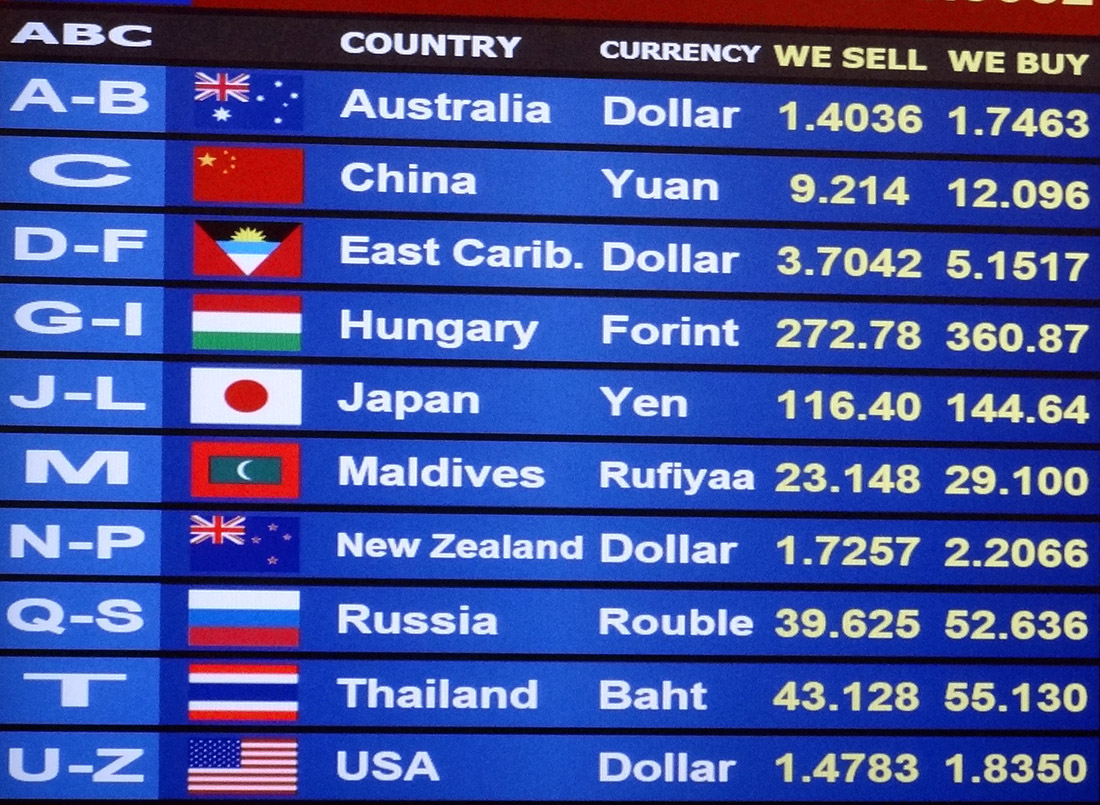
These two factors have combined to push the pound down, with investors preferring to hold their money in dollars, despite the weak US unemployment data. However, it is not only against the dollar that we must consider sterling’s performance. Against the euro, it has performed better, rising by 1.5%. Whether this is positive for the UK or very negative for the Eurozone is another question. The following articles consider the performance of the British pound.
Sterling falls to five-year low Financial Times, Neil Dennis (10/4/15)
Sterling plummets to five year low as economic slowdown looms The Telegraph, Mehreen Khan (10/4/15)
Pound at five-year low against dollar on weak output BBC News (10/4/15)
Sterling falls after Bank of England’s Haldane says even chances of rate cut or rise Reuters (10/4/15)
Pound falls to five-year low as volatility jumps before election Bloomberg, Anooja Debnath and David Goodman (11/4/15)
Pound falls to a five-year low against the dollar as polls suggest election will create economic uncertainty Mail Online, Matt Chorley (10/4/15)
Questions
- Draw a diagram illustrating the way in which the $/£ exchange rate is determined.
- Explain why the election is causing economic uncertainty in the UK.
- How would uncertainty affect the demand and supply of sterling and hence the exchange rate?
- US job data is worse than expected. Shouldn’t this have caused the dollar to depreciate against the pound and not appreciate?
- Industrial output data for the UK economy is lower than expected. What has caused this?
- Why does slower growth in industrial output cause the exchange rate to depreciate?
- In order to keep the UK’s inflation rate on target, Haldane has said that we could expect a cut or rise in interest rates and policy should be prepared for both. How has this affected the exchange rate?
- Are there any advantages of having a lower pound?
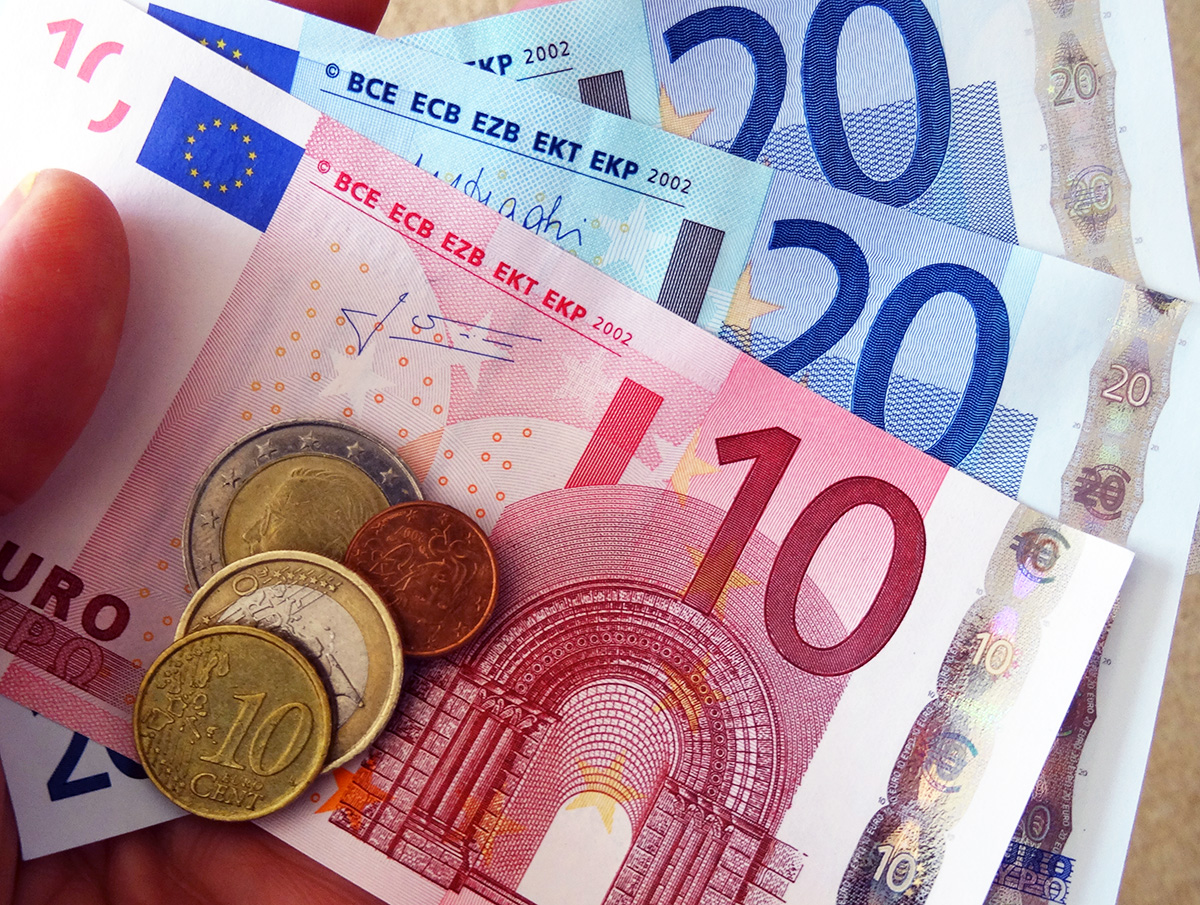 It is important to note how interdependent all aspects of an economy are. The euro responded as news of better inflation data emerged, together with expectations of a Greek deal being reached. Enrique Diaz-Alvarez, chief risk officer at Ebury said: