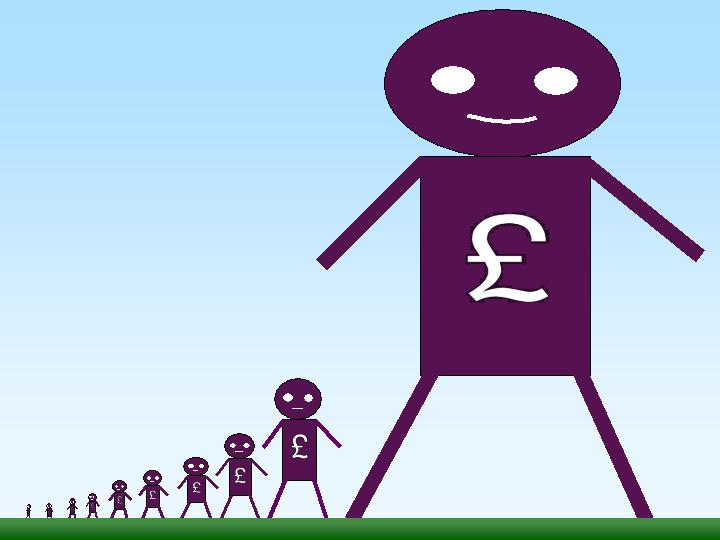
 According to the Sunday Times Rich List, the combined wealth of Britain’s 1000 richest people grew by nearly 4.7% last year to £414 billion (after growing by 18% in 2010).
This is in stark contrast to average households, who saw their real incomes decline by 1.9% in 2011. As the Guardian article below says:
The Rich Listers are not merely the 1%, but the 0.01%, and this fanfared celebration of their assets feels like a celebration of things that nobody feels like celebrating: bankers’ bonuses, complex corporate tax-avoidance structures, the stifling grip of aristocratic family wealth.
So why are the rich getting richer and what are the implications for society and the economy? Watch and read the following webcasts and articles and then see if you can answer the questions below.
Webcasts
 Rich List shows how super-wealthy have dodged recession (or) Channel 4 News (29/4/12)
Sunday Times Rich List: Wealthy getting richer BBC News, Ben Thompson (29/4/12)
Articles
Britain’s richest see fortunes rise to record high Reuters, Tim Castle (29/4/12)
Sunday Times Rich List shows rich recover wealth twice as fast Myfinances.co.uk, Ben Salisbury (29/4/12)
Sunday Times Rich List suggests UK’s wealthiest defy recession BBC News (28/4/12)
Sunday Times Rich List 2012: Wealth of richest grows to record levels The Telegraph, Patrick Sawer (28/4/12)
The Not-So-Rich-Any-More List Guardian, Oliver Burkeman and Patrick Kingsley (27/4/12)
Sunday Times Rich List ITV News (29/4/12)
Data
Distribution of Personal Wealth HMRC
The effects of taxes and benefits on household income ONS (19/5/11)
Household Quarterly Release 2011 Q4 – Real household actual income and expenditure per head ONS
Questions
- Distinguish between stocks and flows. Which of the following are stocks and which are flows: income, wealth, savings, saving, expenditure, possessions?
- If the combined wealth of the 1000 wealthiest people increased in 2011, does this imply that their incomes rose? Explain.
- Why have the super rich got richer, while average incomes in the country have fallen?
- What are the costs and benefits to society (other than the super rich) of the super rich becoming richer?
- Distinguish between the income and substitution effects of an increase in income of the wealthy. Which is likely to be larger and why?
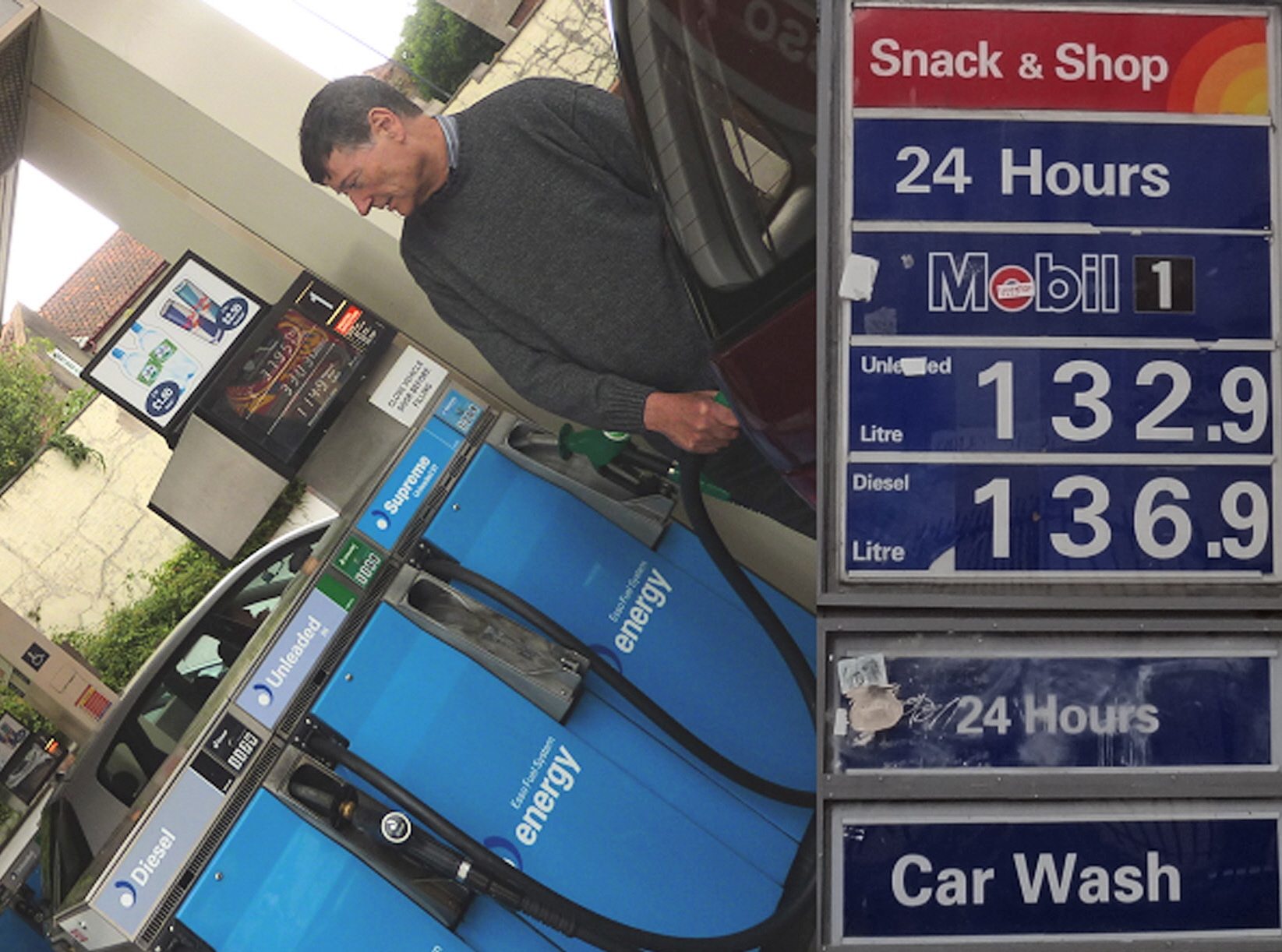
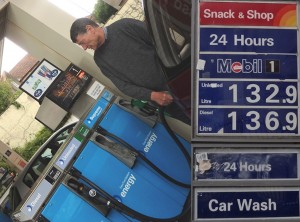 One problem for motorists at the moment is the cost of petrol, where prices have reached over 1.37p on average, as we considered in the blog It’s fuelling anger. However, another problem could soon materialise and that is no petrol. Back in 2000, there was massive disruption to the public with a fuel blockade and a similar thing could occur, following the ‘yes’ vote by fuel tank drivers in favour of strike action.
Over the past few years, strikes have occurred across a variety of industries and if this one did happen with no contingency plan in place, disruption would be significant to both private individuals and companies. Drivers from Unite (the trade union) supply over 90% of fuel to UK garages and so any strike could lead to the closure of up to 7,900 stations.
However, the government has begun to consider the worst case scenario, if talks do not work with plans to begin training army drivers. There are concerns that without these plans in place, disruption across the country may occur with supermarkets, garages and airports all facing fuel shortages. Those who have a job that relies on travel, or even those who simply use their cars or buses to get to work will also feel the effects. Other problems within the emergency services could also emerge, but the government has assured the public that their fuel would be prioritised. The following articles consider this issue.
Fuel strike drivers vote yes in row over conditions BBC News (26/3/12)
Plan for fuel strike, says Downing Street Financial Times, George Parker (27/3/12)
Talks urged to avert fuel tanker strike Independent, Andrew Woodcock and David Mercer (27/3/12)
Ed Miliband: Fuel strike must be avoided at all costs Telegraph, James Hall (27/3/12)
All striking tanker drivers want is responsible minimum standards Guardian, Len McCluskey (27/3/12)
Questions
- If a trade union bargains for higher wages, what is the likely effect on employment and unemployment?
- How might strike action by tankers affect businesses?
- Are there likely to be any adverse long term effects if strike action does occur over Easter?
- How could strike action affect a firm’s costs of production? Think in particular about those who rely on travel as part of the business.
- What other options are there to trade unions, besides striking? Assess the effectiveness of each of the options.
- If a shortage of petrol emerged, what would you expect to happen to its market price?
 Since Labour’s historic pledge to eliminate child poverty in a generation, poverty data has been at the forefront of political debates. The recession has created unemployment and has moved more people below the poverty line, at the same time as causing rising inequality
The causes of poverty are diverse and a recent government commissioned report has drawn attention to just one of the key factors that is pushing more families into poverty – energy bills.
Fuel poverty has become more of a concern with the cost of household bills rising and this has led to calls for more money to be invested in cutting energy bills. Fuel poverty has been redefined by Professor John Hills, the author of the report, to focus on those households with a low income and also with relatively high energy bills.
Fuel poverty is undoubtedly concerning from a moral point of view – indeed, knowing that some families are unable to afford to heat their homes causes disutility for others. However, there are also wider economic implications. If families are unable to provide heating, this may adversely affect their children’s ability to learn and complete their homework, thus negatively affecting their productivity today and arguable causing further problems in their future. While this may have little effect today, the cumulative effect on economic productivity could be substantial in the long run. Inefficiency for the macroeconomy is therefore a problem, as a child’s productive potential will not be fully realized. Furthermore, there are also health concerns, as the government notes – fuel poverty is linked to 2,700 deaths per year. Again, this creates a blight on society, but it also poses economic problems, not least due to the strain on the NHS.
Fuel poverty has long been identified as a problem that needs addressing and as the Secretary of State for Energy and Climate Change said:
‘Fuel poverty is a serious national problem and this government remains committed to doing all it can to tackle it and make sure that the help available reaches those who need it most.’
Action is already taking place to insulate the poorest homes, as a means of cutting their energy bills and the government’s ‘Warm Homes Discount’ aims to provide help to the lowest income households in paying their bills. However, there are concerns that more households will move into fuel poverty, as this new definition doesn’t include those slightly wealthier households who still have high bills or the poorer households with relatively low bills. With the economy still in a vulnerable state, the latest data showing further rises in unemployment and household bills becoming increasingly expensive, the issue of fuel poverty is unlikely to disappear any time soon. The following articles consider this issue.
Fuel poverty seen for 3 million households by 2016 Reuters (16/3/12)
Fuel poverty to rise to 8.5m, report warns (including video) BBC News, Damian Kahya (15/3/12)
Nine million will live in ‘fuel poverty’ in the next four years Independent, Simon Read (16/3/12)
Fuel poverty to rise sharply Telegraph, James Hall (16/3/12)
Call for urgent action on fuel poverty Financial Times, Sarah Neville (15/3/12)
Fuel poverty worse than estimated The Press Association (15/3/12)
3 million fuel-poor households by 2016, report claims Guardian, Mark King and Zammy Fairhurst (15/3/12)
Questions
- What are the causes of poverty?
- How has the definition of fuel poverty changed? Is the change a good one? Think about the equity and efficiency of such a change.
- The BBC News article says that government measures to alleviate fuel poverty could be regressive. What is meant by this and why could this be the case?
- What are the economic consequences of fuel poverty?
- We can estimate poverty by looking at the poverty headcount or the poverty gap. What is the difference between these two measures? Which one is a more accurate measure of poverty?
- Are there any other actions that you think would be effective in alleviating fuel poverty? Would they be cost effective?
- Why does Age UK fear ‘the current proposals to improve energy efficiency through the Green Deal and energy obligation schemes are a woefully inadequate response to one of the most serious issues facing our country today’?
 Advertising is a costly venture, but for firms in a highly competitive market it can be essential for success. During the recession, many firms had to make a variety of cut backs and reduced advertising for many was one of the key areas to go.
However, one of the leading advertising companies – WPP – has posted significant profits this year, which are up by some 18.5%, reaching £1.008bn. According to Sir Martin Sorrell, a key factor in this success is that many firms, whilst not looking to increase their market share, have felt the need to continue advertising, simply to maintain their existing market share. This has become especially important in growing markets, as competition has become more and more intense.
This new is not only good for the company in question, but also for the UK economy, as the firm has said that it will be moving its headquarters back from Ireland to the UK. This is assuming that legislation is passed concerning the taxation of profits earned abroad. If this relocation does go ahead, it could mean the creation of many more jobs in the UK and a boost to tax revenues, both of which are crucial for the UK economy. As Sir Martin Sorrell said:
‘I am delighted to say that the last remaining issues I think have been removed subject to legislation being introduced in Parliament. We will be coming back subject to shareholder approval’.
WPP believes growth throughout 2012 will be high, due to events such as the Olympics and the US Presidential elections, together with its strength in emerging economies. At the moment, this all looks like good new for the UK and oh how it’s needed!
WPP profit up ahead of 2012 Olympics boost Reuters (1/3/12)
WPP’s Martin Sorrell says he is likely to move HQ back to London Guardian, Mark Sweney (1/3/12)
Olympics, Election to boost WPP Wall Street Journal, Kathy Gordon (1/3/12)
WPP breaks £1bn profit barrier Guardian, Mark Sweney (1/3/12)
WPP boosts dividend after strong year Financial Times, Tim Bradshaw and Mark Wembridge (1/3/12)
WPP profits reach record in 2011 BBC News (1/3/12)
Questions
- What is market share and how can it be calculated?.
- What is the purpose of advertising. Using a supply and demand diagram, illustrate the effect the advertising should have. Think about the position and the shape of the curves.
- Why is advertising an area that did see cut backs throughout the recession?
- Do you think that advertising is more important for firms in growing markets? Explain your answer.
- Why did WPP relocate to Ireland and what may bring it back to the UK?
- How have WPP’s dividend payments been affected by this latest profit information?
- During a recession, competition tends to become more intense. Why is this and what role does advertising play?
 With the fall of communism in eastern Europe between 1989 and 1991, many hailed this as the victory of capitalism.
Even China, which is still governed by the Chinese Communist Party, has embraced the market and accepted growing levels of private ownership of capital. It is only one or two countries, such as North Korea and Cuba, that could be described as communist in the way the term was used to describe the centrally planned economies of eastern Europe before 1990.
But whilst market capitalism seemed to have emerged as the superior system in the 1990s, may are now questioning whether the market capitalism we have today is fit for the 21st century. Today much of the world’s capital in the hands of big business, with financial institutions holding a large proportion of shares in such companies. And the gap between rich and poor is ever widening
The market system of today, is very different from that of 100 years ago. In fact, as John Kay agues in his article “Let’s talk about the market economy” below, it would be wrong to describe it as ‘capitalism’ in the sense the term was used in the debates of the 19th and early 20th centuries. Nonetheless, the term is still used and generally refers to the market system we now have. And it is a market system that many see as failing and unfit for purpose. It is a system that coincided with the bubble of the 1990s and early 2000s, the credit crunch of 2007–9 and the recession of 2008/9, now seeming to return as a double-dip recession
 With the political and business leaders of the world meeting at the World Economic Forum at Davos in Switzerland on 25–29 January 2012, a central theme of the forum has been the future of capitalism and whether it’s fit for the 21st century.
Is there a fairer and more compassionate capitalism that can be fostered? This has been a stated objective of all three political parties in the UK recently. Can we avoid another crisis of capitalism as seen in the late 2000s and which still continues today? What is the role of government in regulating the market system? Does the whole capitalist system need restructuring?
It’s becoming increasingly clear that we need to talk about capitalism. The following webcasts and articles do just that.
Webcasts and podcasts
Davos 2012 – TIME Davos Debate on Capitalism< World Economic Forum (25/01/12)
Can capitalism be ‘responsible’? BBC Newsnight, Paul Mason (19/01/12)
Capitalism ‘nothing to do with responsibility’ BBC Newsnight, Eric Hobsbawm (19/01/12)
Are there alternatives to capitalism? BBC Newsnight, Danny Finkelstein, Tristram Hunt and Julie Meyer (19/01/12)
America Beyond Capitalism The Real News on YouTube, Gar Alperovitz (27/12/11)
The future of capitalism CNBC, Warren Buffett and Bill Gates (12/11/09)
Capitalism Hits the Fan (excerpt) YouTube, Richard Wolff (2/1/12)
Panel Discussion “20 years after – Future of capitalism in CEE” Erste Group on YouTube, Andreas Treichl, Janusz Kulik, Jacques Chauvet, and media Adrian Sarbu (24/2/11)
The Future of Capitalism: Constructive Competition or Chaos? YouTube, Nathan Goetting, Tony Nelson, Craig Meurlin and Judd Bruce Bettinghaus (24/1/11)
Capitalism in Crisis Financial Times, Various videos (24/1/11)
Bill Gates: Capitalism a ‘phenomenal system’ BBC Today Programme, Bill Gates talks to Evan Davis (25/1/12)
Capitalism (See also) BBC The Bottom Line, Evan Davis and guests (28/1/12)
Articles
Meddle with the market at your peril Financial Times, Alan Greenspan (25/1/12)
The world’s hunger for public goods Financial Times, Martin Wolf (24/1/12)
When capitalism and corporate self-interest collide JohnKay.com, John Kay (25/1/12)
Let’s talk about the market economy JohnKay.com, John Kay (11/1/12)
A real market economy ensures that greed is good JohnKay.com, John Kay (18/1/12)
Seven ways to fix the system’s flaws Financial Times, Martin Wolf (22/1/12)
To the barricades, British defenders of open markets! The Economist, Bagehot’s Notebook (26/1/12)
Community reaction to doubts about capitalism in Davos CBC News (26/1/12)
Capitalism saw off USSR, now it needs to change or die The National (UAE), Frank Kane (26/1/12)
Words won’t change capitalism. So be daring and do something Observer, Will Hutton (22/1/12)
A political economy fit for purpose: what the UK could learn from Germany Our Kingdom, Alex Keynes (20/1/12)
Debate on State Capitalism The Economist (24/1/12)
Questions
- How has the nature of capitalism changed over recent decades?
- Can capitalism be made more ‘caring’ and, if so, how?
- What do you understand by the term a ‘fair allocation of resources’? Is capitalism fair? Can it be made fairer and, if so, what are the costs of making it so?
- Can greed ever be good?
- How does the ‘Anglo-Saxon’ model of capitalism differ from the European model?
- What do you understand by the term ‘crony capitalism’? Is crony capitalism on the increase?
- John Kay states that “Modern titans derive their authority and influence from their position in a hierarchy, not their ownership of capital.” Explain what this means and what its implications are for making capitalism meet social goals.
- In what ways can governments control markets? Have these instruments and their effectiveness changed in effectiveness over time?
- What are the costs and benefits to society of the increasing globalisation of capital?
- To what extent was the financial crisis and credit crunch the result of a flawed capitalist system and to what extent was it a failure of government intervention?
- Why is it important for the success of capitalism that companies should be allowed to fail? Consider whether this should also apply to banks. How is the concept of moral hazard relevant to your answer?