For many people, internet access is something we take for granted and if you can’t afford to connect, you might be seen to be in relative poverty. Whilst you can afford food, clothes, housing etc, other goods and services are increasingly being seen as necessities. Everyone should be able to afford a mobile phone, a television, the internet. These are all factors that contribute towards a feeling of social inclusion, which is something the government has promoted since its election in 1997.
Although internet access is the norm for most people, in the UK our internet speeds are actually significantly slower than those in other industrialised countries. All this could be about to change, with Labour’s proposal for a 50p monthly tax on households’ landlines to fund super-fast broadband across the country. However, this plan has been condemned by some influential MPs, who argue that the tax is regressive.
“We believe that a 50 pence levy placed on fixed telecommunication lines is an ill-directed charge. It will place a disproportionate cost on a majority who will not, or are unable to, reap the benefits of that charge.”
More important, they argue, is to make sure that everyone has internet access, rather than that everyone has fast access, which is not needed at the moment. When there is a demand for high-speed access from the masses, the market will provide it. However, the government argues that high-speed access is crucial to our economic growth, as it allows access to huge social, economic and health benefits. On the other hand, could such a tax reduce growth, by limiting technological innovation? The Conservatives have promised that if elected, they will scrap this broadband levy and instead aim to fund high-speed internet access by providing ‘BT’s rivals with regulatory incentives to roll out new telecoms networks’. This highly contentious issue is discussed in the articles below.
The Broadband tax: dead in the water? BBC News, Rory Cellan-Jones (23/2/10)
Broadband tax plan condemned Press Association (23/2/10)
Social tariff users need to be made aware of broadband tax exemption Broadband Expert (17/2/10)
Broadband tax could dissuade technology innovation Broadband (27/1/10)
Tories pledge rise in broadband speed Financial Times, Andrew Parker and Ben Fenton (9/2/10)
Fast broadband: an election issue? BBC News, Rory Cellan-Jones (3/2/10)
Questions
- What will be the effect of a tax on landlines? Illustrate this on a diagram and think about who will be affected. What type of tax does it represent: direct, indirect, specific, ad-valorem, etc?
- Is the tax fair? Why is it argued to be regressive?
- How will the Conservative party’s aim to provide regulatory incentives to BT’s rivals allow them to provide high-speed internet access? Is their solution better than Labour’s proposal?
- Why might the provision of high-speed internet access (a) stimulate economic growth and (b) constrain economic growth?
- Use a growth model to illustrate the importance of technological progress in achieving high levels of economic growth.
- How will a tax affect households? Consider the impact on income and consumption and hence on aggregate demand.
 Throughout October we saw widespread strikes, from bins to the post and airline flights to buses – and it’s not yet over. (See article The Winter of Discontent: the sequel?) Last November, BA cut the number of cabin crew members, despite strike action, which delayed hundreds of flights. This issue has yet to be resolved and over the weekend, there were further talks to try to reach some agreement. However, no truce was reached and so further strikes are now expected. Indeed, the Unite union announced the results of another ballot of cabin crew, showing even larger support for strike action.
However, BA is not the only airline facing strike action. Some 4000 pilots at Lufthansa, a German airline, called a four-day strike, following disputes over job security. This has led to thousands of flights being cancelled and thousands of passengers left stranded. Although the strike was suspended after one day, the dispute is not settled.
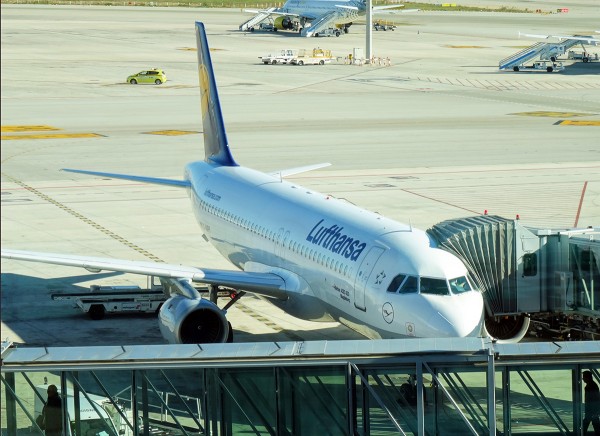 The stimulus for this action appears to date back to the huge turnover that Lufthansa made in 2007, with pilots feeling they should have a share in this success, along with its recent purchase of Austrian Airlines and the need to turn this into a profitable enterprise. The Lufthansa pilots are concerned that foreign pilots will be brought in to replace them in order to reduce costs. The airline fears that this strike could cost them about £21.9 million per day. With both sides unwilling to yield, it looks as though many passengers may find themselves stranded for a bit longer.
Articles
Questions
- How effective is the strike action by Lufthansa and BA likely to be? Which factors affect this?
- With a huge turnover in 2007, why were pay cuts at Lufthansa felt to be necessary by the company?
- How would wages be determined in the airline industry without trade unions? Illustrate this on a diagram and use that to explain why some workers get paid more than others.
- On your diagram of wage determination, now illustrate the effects of a trade union entering the market. How are wages and the equilibrium level of employment affected?
- Other than striking, what other options do workers and unions have?
- If strike action is costly to BA and Lufthansa, why don’t they simply agree to the unions’ demands?
In 2008, the UK government set up a National Equality Panel to investigate inequality. “The Panel was asked to investigate the relationships between the distributions of various kinds of economic outcome on the one hand and people’s characteristics and circumstances on the other.” The panel delivered its report, An Anatomy of Economic Inequality in the UK, in January 2010. It “addresses questions such as how far up or down do people from different backgrounds typically come in the distributions of earnings, income or wealth?”
The aspects of inequality examined include: educational outcomes, employment status, wages and other sources of income (such as benefits) both for the individual and the household, and wealth. “In our main report, we present information on the distributions of these outcomes for the population as a whole. Where possible we indicate how they have changed in the last decade or more, and how the UK compares with other industrialised countries. But our main focus is on the position of different social groups within the distributions of each outcome.”
A major influence on people’s income was the income, wealth and class of their parents since these affected education, peer groups and a whole range of other life chances. This made it virtually impossible to achieve equality of opportunity.
The report also looks at policy implications. These include not just the redistribution of incomes, but also the more fundamental issue of how to create equality of opportunity. “The challenge that our report puts down to all political parties is how do you create a level playing field when there are such large differences between the resources that different people have available to them.”
So what has happened to inequality? What explanations can be offered? And what can be done to lessen inequality? The following articles look at the findings of the report and offer their own judgements and analysis.
Rich-poor divide ‘wider than 40 years ago’ BBC News (27/1/10)
The Big Question: Why has the equality gap widened even through the years of plenty? Independent, Sarah Cassidy (28/1/10)
UK is one of world’s most ‘unequal’ societies Irish Times, Mark Hennessy (28/1/10)
Unequal Britain: richest 10% are now 100 times better off than the poorest Guardian, Amelia Gentleman and Hélène Mulholland (27/1/10)
No equality in opportunity Guardian, Phillip Blond and John Milbank (27/1/10)
Has the wealth gap really widened? Guardian, Tom Clark (27/1/10)
Inequality in a meritocracy Financial Times, Christopher Caldwell (29/1/10)
Who wants equality if it means equal poverty? (including video) Times Online, Antonia Senior (29/1/10)
A Major miracle on equality Public Finance, Richard Reeves (29/1/10)
UK one of the worlds most unequal societies; report says The Sikh Times (29/1/10)
Only policies, not posturing, will bring down inequality Independent (28/1/10)
The Report
The full 457-page report can be accessed here.
A 44-page summary of the report can be accessed here.
A 6-page executive summary can be accessed here.
Click here for the charts and tables from the report.
Another good source of information on the distribution of income is the Annual Survey of Hours and Earnings published by the Office for National Statistics.
Questions
- How can we measure inequality?
- Outline the findings of the report.
- Why is inequality so high in the UK and why has it continued to deepen?
- Have tax credits helped to reduce inequality?
- To what extent are greater equality and faster economic growth compatible economic objectives? How are incentives relevant to your answer?
- What specific policies could be adopted to give greater equality of opportunity? Identify the opportunity costs of such policies.
The most popular sport in the world: football. What else?! Huge games and salaries to match. But is it really as glamorous as we think? We may see some top players receiving a salary per week that most people can’t hope to come close to in a year, but players at Portsmouth have had to go without their wages on three occasions, as the club entered financial strife. It is these high salaries that prevent many clubs from breaking even, let alone making a profit. Whilst a lack of salary to footballers is a rare occurence, the football industry isn’t the money-churning machine that it appears to be.
We’re used to seeing full stadia and fans decked out in their club’s regalia, so surely football clubs are awash with money? But things aren’t so rosy. Research published by the Centre for the International Business of Sport at Coventry University in 2008 revealed that clubs in the top four tiers of English football between the 2001/2 and 2005/6 seasons made an aggregated loss of more than £1bn. In addition, 56 clubs in the English leagues went bankrupt between the Insolvency Act’s introduction in 1986 and June 2008.
We’ve seen a number of buyouts of clubs in recent years by extremely wealthy families. The Glazer family bought Manchester United in 2005, yet this buyout and many others are heavily leveraged and servicing their debts is now proving a problem. Whilst some clubs publish annual profits, it doesn’t mean they are without debt. Manchester United, defending champions of the English football league, earned profits of £48.2 million in the 2008/9 season, but its debts are estimated at around £700 million. The club received a loan of £509.5 million and had to pay £41.9 million in interest.
The owners of Chelsea and Manchester City have recently converted £340 million and £304.9 million of loans into equity respectively. Financiers, however, say this is simply “moving money from their left pocket to the right”. Manchester City reported a massive loss of £92.6 million for the 2008/9 financial year. Unfortunately for them, these figures ignore outlays since May 2009 for Carlos Tevez, Kolo Toure and Emmanuel Adebayor. Portsmouth’s £7 million share of TV revenue has been diverted directly to other clubs to whom they owe money for transfers.
So, how much of a money-maker is football? Well stadia are still full and it’s certainly growing in popularity in Asia. Premier teams are now appreciating how much money can be made out there by selling television rights. However, in 2008 the FA chairman Lord Triesman still estimated that English football debts stood at £3bn. With all this debt, are there any positives? Just one – at least it’s less than the UK’s public debt!
Abu-Dhabi family reduce debt for Manchester City Campden FB (7/1/10)
Manchester City post massive loss BBC News (6/1/10)
What a waste of money – the Premier League’s best paid flops Guardian, Jamie Jackson (10/1/10)
Portsmouth players still not paid as Premier League expresses concern at crisis Telegraph, Paul Kelso (6/1/10)
Paying by the rules The Lawyer, Adam Plainer (11/1/10)
Jacob unimpressed by fan protests Press Association (11/1/09)
Cardiff City to face winding up order BBC Sport (8/1/10)
Debt swap is ‘window dressing’ The Independent, Nick Clark (7/1/10)
Manchester United aim to raise £500m in bond sale in bid to reduce mounting debt Telegraph, Mark Ogden (11/1/10)
Chelsea debt wiped off by Roman Abramovich but club still record loss Telegraph (30/12/09)
Manchester United to raise £500m BBC News (11/1/10)
Cristiano Ronaldo saves Man-Utd – Again Sky News (11/1/10)
Tony Fernandes and David Sullivan vie for control of West Ham Telegraph, Jason Burt (16/1/10)
One thing at Manchester United isn’t going downhill – their debt Guardian, David Conn (6/1/10)
Premier League looks to cash in on Asia BBC News, Guy de Launey (29/12/09)
Questions
- Why do footballers receive such high wages? Illustrate why wages in the Premier League are so much higher than those received by players in non-league teams. What’s the key factor?
- What is debt swapping?
- In the Independent article: ‘Dept swap is Window dressing’, what does it mean by (a) window dressing and (b) debt swap is ‘moving money from their left pocket to the right’?
- How can a club such as Manchester United record a profit, but have substantial debts?
- What is leveraging and why is it a problem for some football teams?
- How will an issue of bonds enable a football club to refinance its debt?
- What opportunities does Asia present to English football?
With banks around the world revealing massive profits and huge bonuses, governments are getting increasingly uneasy that their bailouts have lined the pockets of bank executives. Not surprisingly voters are demanding that bankers should not be rewarded for their reckless behaviour. After all, it was taxpayers’ money that prevented many banks going bankrupt during the credit crunch.
Banks, of course, seek to justify the bonuses. If you don’t pay large bonuses, they maintain, then senior staff will leave and profits will suffer. It’s nothing to do with ‘morality’, they claim. It’s the market. ‘If you don’t pay the market rate, then executives will leave and take higher-paid jobs elsewhere.’
So are governments calling this bluff? In his pre-Budget report in December, the UK’s Chancellor of the Exchequer, Alistair Darling, announced a 50% tax on bank bonuses over £25,000. This was followed by an announcement by Nicholas Sarkozy that the French government would impose a similar 50% tax on bonuses over €27,500.
Then in mid January, President Obama proposed a tax on financial institutions with balance sheets above $50 billion. This would be levied at a rate of 0.15 percent of certain assets. But this was not a tax on bank bonuses, as favoured by the British and French governments, nor a tax on financial transactions – a type of Tobin tax – as favoured by Angela Merkel (see Tobin or not Tobin: the tax proposal that keeps reappearing). Nevertheless, it was another way of recouping for the taxpayer some of the money used to rescue banks and prevent a banking collapse.
So is this payback time for bankers, or will it simply be bank shareholders that suffer? And why can banks pay such large bonuses in the face of so much public hostility? The following articles explore the issues.
To leave or not to leave: the supertax question Financial Times, Patrick Jenkins and Kate Burgess (9/1/10)
French tax to raise €360m Financial Times, Scheherazade Daneshkhu and Ben Hall (13/1/10)
Oversized bank bonuses: classic case of overcharging The Business Times (Singapore), Anthony Rowley (15/1/10)
Obama vows to recoup ‘every dime’ taxpayers lent banks Belfast Telegraph (15/1/10)
Obama outlines $117bn bank levy (including video) BBC News (14/1/10)
Obama lays out his proposal to tax big US banks Sydney Morning Herald, Jackie Calmes (16/1/10)
Obama’s bank tax will only work if there’s a master plan in place Telegraph, Tracy Corrigan (14/1/10)
Turning the tables The Economist (14/1/10)
Obama’s bigger rod for banks BBC News, Peston’s Picks, Robert Peston (14/1/10)
Will Obama’s tax go global? BBC News, Peston’s Picks, Robert Peston (15/1/10)
Darling: I won’t do an Obama and tax the banks Scotsman, Eddie Barnes (16/1/10)
Obama tax is only the beginning of the banking Blitz Telegraph, Edmund Conway (15/1/10)
Bank taxes edge closer to the real target Guardian, Dan Roberts (15/1/10)
Questions
- Compare the incentive effects on bankers of the British, French and US measures discussed in the articles.
- Why does the ‘market’ result in high bank bonuses? Where does economic power lie in the market?
- Assume that you hold shares in Bank A. Would you welcome (a) high bonuses for executives of Bank A; (b) a tax on bank bonuses; (c) a ceiling on bank bonuses; (d) a tax on certain bank assets? Explain.
- What insights can game theory provide for the likely success in clawing back bank bonuses without doing damage to the economy?
- Consider whether Obama’s tax will “go global”.
