 When we think about suppliers and retailers working together, we usually imagine negotiations over things like the price a retailer pays for products, the quantities ordered, or delivery schedules. However, some suppliers do much more than simply supplying products. In fact, suppliers to many supermarkets also advise them on which brands to stock, how much shelf space each brand should get, and which products to promote. In this role, known as a ‘category captain’, a supplier can influence not only its own products but also those of its competitors within a specific category of products.
For example, if Red Bull were acting as a category captain in the energy drinks category for a supermarket like Tesco, it could also advise on where its competitor, Monster Energy, appears on the shelves, or even whether it appears at all!
Sounds problematic? Arrangements like these are an example of vertical relationships between suppliers and retailers, something economists often study. Like other vertical arrangements, such as exclusive dealing, they can have both benefits and drawbacks. For example, while a category captain can result in efficiency gains, allow for a more organised category of products and improve consumer choice, it also raises questions when the supplier giving the advice also competes with the products it is advising on.
 That is exactly what the European Commission (EC), the EU’s competition authority, began examining in November 2025, when it opened an investigation into potential anticompetitive conduct by Red Bull.
One of the key concerns is whether Red Bull used its role as a category captain to disadvantage competing energy drink brands.
Category management is common … but novel for enforcement
The practice of appointing a category captain is not new. Many large supermarkets appoint category captains from major consumer goods suppliers. For example, firms such as Kraft Foods and Procter & Gamble have long taken on category management roles in a range of consumer-packaged goods categories.
However, despite how common these arrangements are in retail, this is the first time the EC has formally investigated whether a supplier has misused its category management role to limit or disadvantage competing products, and it has said it will treat the case as a priority.
How Red Bull could be disadvantaging competitors
 According to the Commission, Red Bull appears to hold a dominant position in the wholesale supply of branded energy drinks, at least in The Netherlands. In competition policy, a firm which holds a dominant position has a special responsibility to ensure that its actions do not unfairly restrict competition. Regulators are investigating whether the company abused this position by offering financial or non-financial incentives and/or leveraging its role as a category captain to disadvantage competing energy drinks sold in larger can sizes.
At an extreme, a category captain could advise a supermarket to stop selling a competitor’s product entirely, effectively excluding the brand from the shelves and potentially reducing consumer choice.
But there are also more subtle ways Red Bull could disadvantage its competitors. Insights from behavioural economics suggest that the placement of products on shelves can strongly influence what consumers notice and buy. By reducing the visibility of rival energy drinks, for example, products in less prominent locations are less likely to be purchased and are therefore disadvantaged.
These practices matter for consumers as well as competitors. By limiting which products are stocked or how prominently they are displayed, dominant suppliers could reduce choice and potentially keep prices higher.
Growing scrutiny of category management?
 Competition authorities seem to be paying closer attention to how suppliers influence the management of product categories in retail stores. In April 2025, the Belgian Competition Authority fined three large pharmaceutical companies more than €11 million for co-ordinating the placement of over-the-counter medicines in pharmacies. The companies had created shelf layouts that favoured their own products, disadvantaged competing brands, and monitored whether pharmacies followed the plans.
Thus far there have not been many European cases related to category management.
Why the Red Bull case matters
The Red Bull investigation is the first EC case focusing specifically on the potential misuse of category management by a dominant supplier. There is currently little guidance on how these arrangements should be assessed under competition law, meaning the case could set an important precedent.
If the Commission concludes that category management was used strategically to disadvantage competitors, Red Bull could be found to have abused its dominant position under EU competition rules. Such a decision could reshape supplier–retailer relationships across Europe.
Articles
Questions
- Beyond prices, how might dominant suppliers influencing shelf space affect competition and consumer choice?
- How might category captain arrangements affect barriers to entry?
- What are the potential efficiencies of supplier-led category management, and what are the possible anti-competitive effects?
- What guidelines or safeguards could regulators provide to ensure category captains deliver the potential efficiencies without harming competition?
 The enforcement of Article 102 of the Treaty on the Functioning of the European Union (TFEU) by the European Commission (EC) tends to focus on exclusionary abuses by firms with significant market power. Exclusionary abuses are actions that limit or prevent competition, as opposed to exploitative abuses that directly harm the consumer, such as charging high prices.
The treatment of exclusionary abuses has evolved over time. Initially, the approach towards enforcement was form-based (i.e. the nature of the abuses), but this changed when the EC produced new guidelines in 2009 which signalled a move to a more effects-based approach.
The EC plans to produce a new set of guidelines in 2025 and published a draft version in August 2024 as part of the consultation process with businesses and other stakeholders. These draft guidelines indicate a partial shift back to a form-based approach. Any moves in this direction made by the EC are likely to influence both national-level competition authorities and the courts.
The form-based approach to policy enforcement
A form-based approach to the enforcement of Article 102 assumes that certain types of business conduct are inherently anti-competitive except in very exceptional circumstances. In other words, there is a presumption that the characteristics or form of the behaviour mean that it must have a negative impact on competition and consumer welfare in virtually all real-world cases.
With a form-based approach to enforcement there is no requirement for the authorities to carry out detailed case-specific analyses of business conduct as part of an investigation. This had been the approach adopted by the EC before 2009. It is possible, however, that the same form of business conduct could have anti-competitive effects in some market situations but pro-competitive effects in others. The EC was criticised for not making enough allowance for the chances of this happening.
The effects-based approach to policy enforcement
 In response to this criticism the European Union published a new set of guidelines in 2009 which signalled that the enforcement of Article 102 was moving to a more effects-based approach. The effects-based approach uses economic analysis to assess the impact of a dominant firm’s conduct on a case-by-case basis. Context-specific evidence is examined by the competition authorities to see if the behaviour effectively excludes rival businesses from the market that are just as efficient as the dominant firm.
The use of economics in this effects-based approach gradually increased over time. Initially, the analysis was predominately based on theoretical arguments, but increasingly cases included sophisticated analysis of market-specific evidence using econometric models and market simulations. This, however, led to the following issues.
- The increasing use of complex economic analysis makes it more difficult to meet the evidentiary standards of the courts and prove a case. As the effects-based approach places a greater burden on the competition authorities to meet these evidentiary standards (i.e. provide evidence of case-specific anti-competitive effects of the conduct) it disproportionality affects their ability to prove cases.
- Businesses with significant market power are more likely to make large profits and so have access to greater resources than government-funded competition authorities. Therefore, they will be able to employ more economic consultants with the relevant technical expertise to (a) carry out the analysis and (b) communicate the findings effectively in a court case
This led to concerns that the competition authorities were losing cases where there was strong evidence of exclusionary conduct by the dominant firm.
In response to these concerns, the EC announced in 2023 that it would be revising its 2009 guidelines to improve enforcement of Article 102.
The draft guidelines
The draft guidelines published in August 2024 split different types of potentially anti-competitive conduct by dominant firms into three categories.
The first category includes types of conduct where there is a strong presumption of anti-competitive effects: i.e. the sole purpose of the business behaviour is to restrict competition. These types of conduct are referred to as a ‘naked restriction’ and the documentation provides the following three examples:
- making payments to customers (typically other businesses) on the condition that they cancel or postpone the launch of a product that uses inputs produced by the dominant firm’s rivals;
- threatening to withdraw discounts offered to suppliers unless they agree to supply the dominant firm’s product in place of a similar product produced by a rival firm;
- actively dismantling infrastructure used by a rival firm.
The guidelines indicate a form-based approach will be taken when investigating these types of conduct as the EC will not have to provide any case-specific evidence of anti-competitive effects. A business under investigation can challenge the presumption of anti-competitive effects with appropriate evidence, but the guidelines make it clear that this would only succeed in exceptional circumstances. In other words, it is highly unlikely that the conduct could ever be justified on pro-competitive grounds.
 The second category of anti-competitive conduct includes actions that are also presumed to have a negative impact on competition. The presumption, however, is not as strong as with naked restrictions, so firms have a better chance of proving pro-competitive effects.
There is a form-based element towards this second category of conduct as the EC will not have to provide any initial case specific evidence of anti-competitive effects. But, if a business under investigation does submit evidence to challenge the presumption of anti-competitive effects, the EC must demonstrate that (a) it has fully assessed this evidence and (b) the evidence is insufficient to prove that the conduct does have pro-competitive effects. As part of this process, the EC can provide its own case-specific evidence. Therefore, for this second category of conduct, the initial burden of proof effectively shifts from the competition authority to the firm under investigation, making it more of a form-based approach. However, if the firm uses relevant evidence to appeal its case, the burden shifts back to the competition authority and becomes a more effects-based approach.
The third category includes types of conduct where the EC must initially provide case-specific evidence that it reduces competition. For this category of conduct, the approach towards enforcement remains the same as in the 2009 guidelines and an effects-based approach is adopted.
It will be interesting to see the extent to which the final guidelines (a) follow the approach outlined in the draft guidance and (b) influence the enforcement of Article 102 by the EC and other national-level competition authorities.
Articles
Questions
- What exactly does it mean if a firm has ‘significant’ market power?
- What methods do competitions authorities use to assess whether a firm has a dominant market position?
- Explain the difference between conduct by dominant firm that is (a) an exploitative abuse of its market power and (b) an exclusionary abuse of its market power.
- Explain why a form-based approach towards the enforcement of competition policy is more likely to lead to Type 1 errors (false positives), whereas an effects-based approach is more likely to lead to Type 2 errors (false negatives).
- Provide some examples of exclusionary abuses that are not considered to be naked restrictions.
- Competition policy guidance documents commonly refer to ‘competition on the merits’. What is the precise meaning of this term?
 In April 2015 the European Commission (EC) opened a formal investigation into the behaviour of Google in the market for smartphones and tablets. On the 20th April Google was sent a preliminary judgment (referred to formally as a Statement of Objections) in which it was accused of abusing its dominant market position. The European Commissioner argued that the case was similar to the famous and protracted investigation into the conduct of Microsoft.
In the early 2000s Microsoft had a dominant position in the market for desktop operating systems. It has been estimated that 97% of all computing devices at the time used Microsoft Windows. This market power attracted the attention of the EC who accused the company of using its dominance in the operating systems market to restrict competition in complementary markets for software such internet browsers and media players. This led to a complex legal battle between the two parties.
Windows is proprietory software and computer manufacturers have to pay Microsoft a licence fee to install it on their machines. Before the rulings by the EC, Microsoft could make a licence for Windows conditional on other Microsoft software such as Internet Explorer and Media Player being pre-installed. This is known as bundling and in this case the EC came to the conclusion that it restricted competition. The European Commissioner, Margrethe Vestager recently stated that
“If Microsoft’s media player was already there when you bought a PC, it would be hard to persuade people to even try an alternative, so innovators would be at a big disadvantage”
Microsoft lost most of its competition battles with the EC and had to pay a total of €2.2 billion in various fines. It was also forced to change its conduct. For example, the EC instructed Microsoft to provide its users with a choice of internet browsers.
The marketplace for operating systems has gone through some significant changes since the early 2000s. By 2016 Microsoft’s market share had fallen to 26 per cent. One of the major reasons for this decline has been the increasing popularity of smartphones and tablets.
Google’s Android operating system dominates the mobile market with a market share of over 80 per cent. However, the economics of the Android operating system are very different from those of Windows. Unlike Windows, Android is an example of ‘open-source software’. This means that, rather than having to obtain a licence fee, mobile handset or tablet manufacturers can freely install Android on their devices and are not obliged to pre-install other Google software – both Amazon and Nokia have done this. ,
Another major difference is that it is relatively straightforward for rival firms to develop software that can run on Android. Microsoft was accused of making it very difficult for rival software companies to develop products that would run smoothly on the Windows operating system.
It would appear far easier for rival firms to compete with Google than it ever was with Microsoft when it had a dominant market position. It might therefore seem surprising that the EC has accused Google of abusing its dominant market position.
Rather than any restrictions surrounding the licencing conditions for the operating system the EC’s objections to Google’s behaviour focus on its licencing conditions for other proprietary software products it provides. In particular, the EC has focused on the Google Play Store.

The pre-installation of the Google Play Store is seen as vital to the commercial success of any Android phone. Google Play Store was launched in 2012 and brought three previously separate services together – Android Market, Google Music and Google eBookstore. It is the official app store for all users of a device with an Android operating system. It has been argued that a mobile phone store would not stock an Android phone unless it had Google Play Store pre-installed because it is so highly valued by customers.
Therefore it is vital for Android smartphone and tablet manufacturers to obtain a licence for the Play Store. The conditions for obtaining a licence are outlined in the Mobile Application Distribution Agreement. This specifies that a number of other Google apps must also be pre-installed on the device in order for a licence to be granted for the Play Store. These apps include Gmail, Google Chrome, Google Drive, Google Hangouts, Google Maps, Google Search and YouTube. The manufacturer is free to install any other non-google apps.
The EC has specifically objected to the condition that Google Search has to be installed and set as the default search engine. It is concerned that this that will make it very difficult for other search services to compete with Google because (1) manufacturers will have limited incentives to pre-install any competing search engines and (2) consumers will have less incentive to download competing search engines.
The EC has also expressed concerns that the pre-installation of Google Chrome as the mobile browser will also have a negative impact on competition and innovation in this market.
Companies are given 12 weeks to respond after they have received a preliminary judgment. If they do not accept the objections, then the EC will take several months to come to a final ruling and suggest some appropriate remedies. In this case, the most likely remedy is the removal of the licence conditions for the Google Play Store. If Google appeals the ECs decision to the General Court of the EU, it could take years until a final judgment is made.
Murad Ahmed, the European Technology Correspondent at the Financial Times commented that
“One lesson Google might want to learn from Microsoft’s example is while it fights the EU watchdog it is not overtaken by a less distracted competitor.”
Articles
Europe v Google: how Android became a battleground The Guardian (20/4/16)
EU accuses Google of using Android to skew market against rivals The Guardian (20/4/16)
Google faces EU charge over Android ‘abuse of dominance’ BBC News (20/4/16)
Google hit with EU competition charges for ‘abusing’ dominant position with Android Independent (20/4/16)
Everything you need to know about Google and its EU battle The Telegraph (20/4/16)
Questions
- Draw a diagram to compare and contrast the price and quantity in a competitive market with a situation where a firm has market dominance. Clearly state any assumptions you have made in the analysis.
- What factors does the EC consider when judging if a firm has a dominant position in the market?
- This blog has focused on one aspect of Google’s behaviour/conduct that has raised concerns with the EC. What other elements of Google’s conduct has the European Commission objected to?
- Explain the difference between pure and mixed bundling.
- What impact does bundling have on consumer welfare?
 The proposed $100 billion takeover of SABMiller by AB InBev is the third largest in history. It provides a good example of how the UK Panel on Takeovers and Mergers operates.
Economics textbooks often discuss competition authorities such as the Competition and Markets Authority but they rarely mention the UK Panel on Takeovers and Mergers (The Panel).The Panel is an independent body that was established in 1968. It has up to 35 members who all have professional expertise on the subject of takeovers i.e. they are usually employees of or have been seconded from (i) law and accountancy firms (ii) corporate brokers (iii) investment banks.
The Panel’s main responsibility is to implement the City Code on Takeovers and Mergers. This code sets out a number of ground-rules that companies must follow if they are involved in a merger or takeover. These rules became statutory in 2006 following the Companies Act of that year. The following objectives underpin the code:
|
|
| • |
To ensure that the shareholders of the target company in a proposed takeover are treated fairly and are given the opportunity to make an informed decision about the relative merits of the takeover. |
| • |
To ensure that the whole takeover/merger process operates in a structured and systematic manner. |
The Panel does not make any judgements on the commercial case for the takeover or merger. This is left to the management and shareholders of the companies involved. It also does not get involved with competition issues such as whether the newly established firm would have significant market power. These decisions in the UK are left to the Competition and Markets Authority. If the merger has a European element/dimension to it then it is investigated by the European Commission.
The rules that made up the code remained largely unchanged from 1968 until some important changes were made in September 2011. This followed the controversial takeover of Cadbury by the US food company Kraft. Kraft had first announced its intention to make an offer to acquire Cadbury in September 2009 but a deal was not agreed by the management of Cadbury until January 2010. Concerns were expressed at the time that this long and protracted takeover had made it very difficult for Cadbury to run its business effectively because of the uncertainty it created. It was also argued that the rules gave the acquiring company a significant tactical advantage in the takeover process and made it too easy for them to succeed.
One important change is that a targeted company must publicly announce the name of any companies that have made an approach about a possible deal. This announcement then activates a 28 day bid deadline period known as ‘pusu’ which stands for ‘put up’ (the money: i.e. make a formal bid) or ‘shut up’ (and walk away). This means that if the potential acquirer has not made a formal bid by the end of this 28-day period it is prohibited from making a bid for another 6 months. A request can be made to the Takeover Panel for an extension to this initial 28-day period, but this can only be done with the agreement of the target company.
Therefore SABMiller was obliged to announce on 15th September 2015 that
“Anheuser-Busch InBev SA/NV (AB InBev) has informed SABMiller that it intends to make a proposal to acquire SABMiller. No proposal has yet been received and the Board of SABMiller has no further details about the terms of any such proposal.”
The timing of this announcement made 14th October the official deadline by which AB InBev had to make a formal offer. After rejecting five bids, an offer of £44 a share by AB InBev was agreed in principle by the SABMiller management team on 13th October. 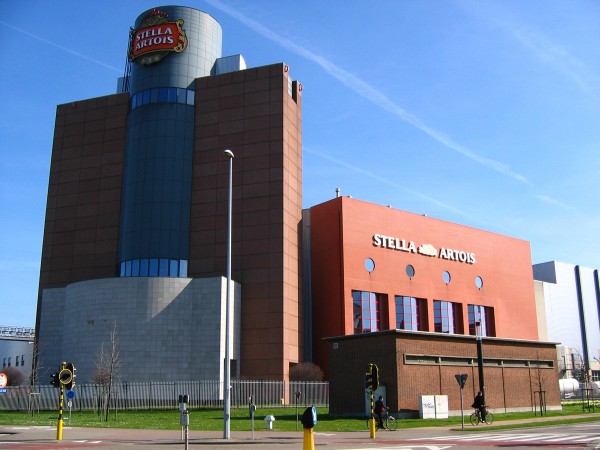 Given the size and complexity of the deal (i.e. AB InBev is financing the deal by borrowing over $70 billion from 21 different banks), an initial two-week extension until 28th October was granted by the Takeover Panel. This could only have been granted with the agreement of SABMiller. Another one-week extension was agreed and then, on 4th November, SABMiller management made the following announcement.
“In order to allow SABMiller and AB InBev to finalise their discussions and satisfy the pre-conditions to the announcement of a formal transaction, the board of SABMiller has requested that the Panel on Takeovers and Mergers further extends the relevant deadline until 5pm November 11, 2015.”
One major issue has been the potential impact of the takeover on the level of competition in the US market. AB InBev and SABMiller already have market shares of 46% and 27% respectively. SABMiller’s strong presence in this market is a result of its joint venture, MillerCoors, with Molson Coors. One reason behind the last request for an extension is to grant enough time for a deal to be finalised for the sale of SABMiller’s 58% stake in MillerCoors to Molson Coors. Without this sale the US competition authorities would not approve the takeover.
Most observers believe that it will take a year for the deal to be completed and it will be interesting to chart its progress over the next 12 months.
Postscript: AB InBev announced on 11th November that it had made a formal offer of £71 billion to acquire SABMiller and SABMiller’s share in MillerCoors had been sold to Molson Coors for $12 billion.
SABMiller to seek another Takeover Panel extension for AB InBev takeover The Telegraph, Ben Martin (04/11/15)
AB InBev and SABMiller allay concerns about 68bn MegaBrew deal The Telegraph, Ben Martin (28/10/15)
AB InBev, SABMiller extend takeover deadline to Nov.4 Reuters, Philip Blenkinsop (28/10/15)
SABMiller agrees AB Inbev takeover deal of £68bn The Guardian, Sean Farrell (13/10/15)
SABMiller is AB Inbev’s toughest takeover yet. It may not be its last The Economist (14/10/15)
Brewery Battle: AB Inbev and the Craft Beer Challenge BBC News, Peter Shadbolt (13/10/15)
Beer Giants AB Inbev and SABMiller Agree Takeover Terms BBC News (13/10/15)
Questions
- The proposed takeover of SABMiller by AB InBev would be the third largest in history. What are the two biggest deals?
- The European Commission investigates ‘large’ mergers that have an ‘EU dimension’. On what basis does the European Commission judge if a merger is large or has an EU dimension?
- On what basis are mergers judged by the Competition and Markets Authority in the UK?
- What is a ‘virtual bid’ period? How did the ‘pusu’ bid deadline operate before the changes were introduced in 2011?
- Pfizer’s bid for Astrazeneca did not succeed in May 2014. Some people blamed the collapse of the deal on the 28-day ‘pusu’ deadline and rule 2.5 (i) of the code. What is rule 2.5 (i) and how did it contribute towards the failure of this deal?
 Since the late 1990s the European Commission (EC) has been concerned with trying to prevent Microsoft from abusing its dominant position. As described previously on this site, in the latest instalment last week Microsoft was fined for accidentally failing to adhere to an earlier commitment automatically to allow Windows users a choice of web browser.
This is the first case of fines being imposed for failure to comply with commitments required by the EC. In part because of Microsoft’s compliance, the fine imposed was well below the maximum level it could have been. However, it still means that Microsoft has now in total contributed enough to the EC’s coffers to cover the competition department’s budget for over 20 years.
Commitments appear to be increasingly the EC’s preferred solution for resolving competition disputes, especially in the rapidly changing IT sector (see for example Google and e-books). In contrast to a lengthy litigation process, in theory such commitments can quickly fix the problem and increase competition. The EC hopes that the fine imposed on Microsoft will send clear signals to firms that agreed upon commitments must be adhered to. However, this case also highlights that behavioural commitments require close monitoring by the competition authorities. As one industry consultant argues:
While it’s highly likely that it was a technical mistake that broke the browser choice facility the fact that it remained broken for 14 months raises significant questions about Microsoft’s ability and willingness to comply with the voluntary agreement with the EU.
At the same time the situation also raises concerns over the EU’s ability to actually monitor the outcomes of antitrust agreements.
Microsoft offers web browser choice to IE users BBC News (19/02/10)
Microsoft faces hefty EU fine The Guardian (06/03/13)
Microsoft fined €561m for ‘browser choice’ error The Guardian, Charles Arthur (06/03/13)
Questions
- Why is it essential that competition disputes in the IT sector are quickly resolved?
- What are the problems with monitoring company behaviour in this sector?
- What are the pros and cons of agreeing commitments rather than litigation for competition law infringements?
- How might Microsoft respond to this latest fine from the EC?