 On 5 and 6 April, there was a conference on conscious capitalism in San Francisco. In January, a new book, Conscious Capitalism: Liberating the Heroic Spirit of Business, by John Mackey and Rajendra Sisodia, was published. Many in the business world are enthusiastic about this seemingly new approach to business, which focuses on broader social, environmental and ethical goals, rather than simple profit maximisation.
As the Washington Times review linked to below states:
“Conscious Capitalism” promotes a business culture that embodies “trust, accountability, caring, transparency, integrity, loyalty and egalitarianism.” The management ideal of “Conscious Capitalism” contains four key elements of “decentralization, empowerment, innovation and collaboration.” Above all, this exemplary form of business practice relies on careful attention to four tenets: higher purpose and core values, stakeholder integration, conscious leadership and conscious culture and management.
 So how realistic is this vision of caring capitalism? There may be a few inspiring businesspeople, truly committed to improving the interests of the various stakeholders of their business and society more generally, but could it become a model for business in general? And if so, does this require education, monitoring and regulation? Or can a libertarian approach to business generate an environment where conscious and caring capitalists flourish and succeed better than those with a more narrow focus on profit?
The following videos and articles discuss conscious capitalism and the arguments of those, such as John Mackey, founder and co-CEO of Whole Food Market, who advocate it.
Webcasts
 Conscious capitalism The Economist, John Mackey (15/3/13)
Conscious Capitalism: Heroes of the Business World Conscious capitalism, April in San Francisco (5/4/13)
It’s Not Corporate Social Responsibility Conscious capitalism, John Mackey (Jan 13)
Articles, reviews and information
Conscious Capitalism: Creating a New Paradigm for Business Whole Planet Foundation, John Mackey
Companies that Practice “Conscious Capitalism” Perform 10x Better Harvard Business Review, Tony Schwartz (4/4/13)
4 Ways to Become a (More) Conscious Capitalist Inc., Francesca Louise Fenzi (8/4/13)
The New Management Paradigm & John Mackey’s Whole Foods Forbes, Steve Denning (5/1/13)
Book Review: ‘Conscious Capitalism’ Washington Times, Anthony j. Sadar (20/3/13)
Book Review: Whole Foods Co-CEO John Mackey’s Conscious Capitalism Huffington Post, Christine Bader (28/1/13)
Chicken Soup for a Davos Soul Wall Street Journal, Alan Murray (16/1/13)
Conscious business Wikipedia
Questions
- What are the features of conscious capitalism?
- Do firms “get the shareholders they deserve”?
- How might firms that are not pursuing conscious capitalism be persuaded to become more conscious and more caring?
- How does conscious capitalism differ from corporate social responsibility?
- What would you understand by “conscious consumers”? How might their behaviour differ from other consumers?
- Why might firms engaging in conscious capitalism become more profitable than firms that have a simple aim of profit maximisation?
- What reforms, both internal within a firm and in the legal environment, does John Mackey advocate? Do you agree with his suggestions? What else do you suggest?
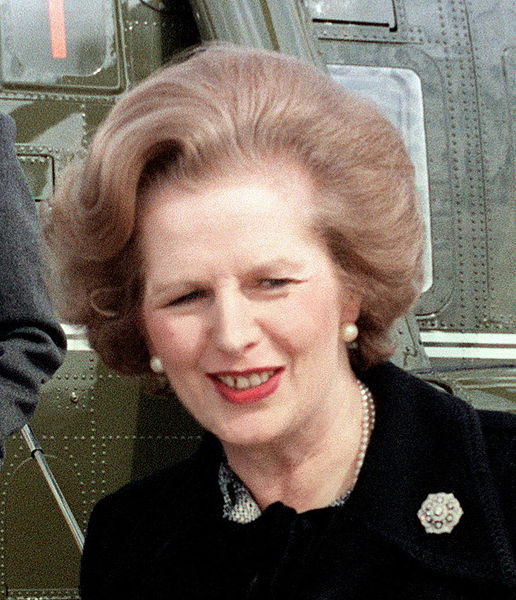 Much has been written on Margaret Thatcher following her death at the age of 87 on April 8. But getting a calm assessment of both her time in office and her legacy is not easy. And it’s clear why: she created both stronger loyalty and stronger opposition than any other UK Prime Minister.
As economists, however, we should try to be as dispassionate as possible in assessing the effects of policies. There is always a normative question of the relative desirability of different economic outcomes – and you will have your own views on the relative importance of objectives such as economic growth, greater equality and greater social cohesion – but to determine cause and effect, or at least correlation, requires a careful examination of the evidence. Also, drawing lessons for future policy requires a careful modelling of the economy and the effects of changing economic variables.
The following articles have been selected from the hundreds that have appeared in the press in the past few days. Whilst they cannot be claimed to be totally ‘objective’, taken together they give a good overview of her economic policies and her economic legacy.
You may well have been surprised by the amount of coverage of her death and at the fervour of her supporters and critics. But this bears witness to the huge effect she had on both the political scene and on the UK economy – for good or bad.
Articles
Margaret Thatcher’s timeline: From Grantham to the House of Lords, via Arthur Scargill and the Falklands War Independent (8/4/13)
Overhauls Are Still Felt, Debated Decades Later Wall Street Journal, Charles Forelle (9/4/13)
Margaret Thatcher’s Four Ages of Monetary Policy EconoMonitor, David Smith (10/4/13)
How Mrs Thatcher smashed the Keynesian consensus The Economist (9/4/13)
Margaret Thatcher: The economy now and then BBC News, Stephanie Flanders (10/4/13)
Did Margaret Thatcher transform Britain’s economy for better or worse? The Guardian, Larry Elliott (8/4/13)
A look back at Margaret Thatcher’s economic record Washington Post, Dylan Matthews (8/4/13)
Margaret Thatcher’s legacy for business and economics—the world weighs in Quartz, Gwynn Guilford (8/4/13)
Data
Economic Data freely available online The Economics Network, see especially sites 1, 2, 3, 6 and 9
Questions
- Summarise the macroeconomic policies followed by the Thatcher government from 1979 to 1990.
- Chart economic growth, unemployment and inflation over Margaret Thatcher’s time in office. How does the performance of each of these indicators compare with the period from 1990 to 2007 and from 2008 to the present day?
- What is meant by ‘monetarism’? Did the Thatcher government follow pure monetarist policies?
- What is meant by the ‘Big Bang’ as applied to the financial sector in 1986? Assess the long-term consequences of the Big Bang.
- What elements of ‘Thatcherism’ were retained by the Labour government from 1997 to 2010?
- To what extent can the current Coalition government be described as ‘Thatcherite’?
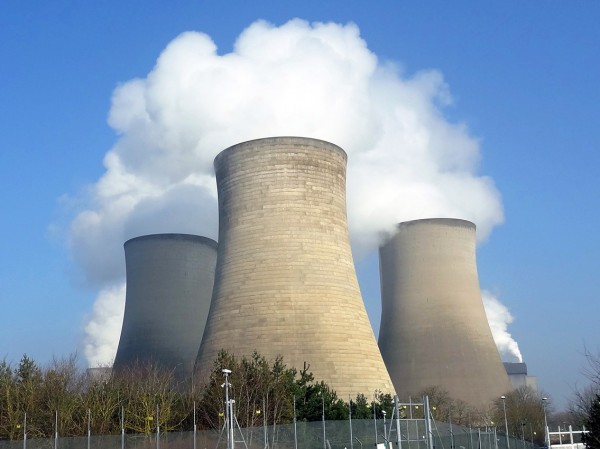 The UK economy faces a growing problem of energy supplies as energy demand continues to rise and as old power stations come to the end of their lives. In fact some 10% of the UK’s electricity generation capacity will be shut down this month.
Energy prices have risen substantially over the past few years and are set to rise further. Partly this is the result of rising global gas prices.
In 2012, the response to soaring gas prices was to cut gas’s share of generation from 39.9% per cent to 27.5%. Coal’s share of generation increased from 29.5% to 39.3%, its highest share since 1996 (see The Department of Energy and Climate Change’s Energy trends section 5: electricity). But with old coal-fired power stations closing down and with the need to produce a greater proportion of energy from renewables, this trend cannot continue.
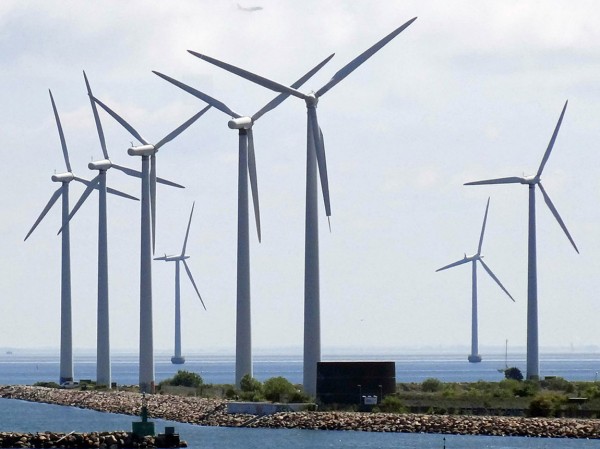 But new renewable sources, such as wind and solar, take a time to construct. New nuclear takes much longer (see the News Item, Going nuclear). And electricity from these low-carbon sources, after taking construction costs into account, is much more expensive to produce than electricity from coal-fired power stations.
So how will the change in balance between demand and supply affect prices and the security of supply in the coming years. Will we all have to get used to paying much more for electricity? Do we increasingly run the risk of the lights going out? The following video explores these issues.
Webcast
UK may face power shortages as 10% of energy supply is shut down BBC News, Joe Lynam (4/4/13)
Data
Electricity Statistics Department of Energy & Climate Change
Quarterly energy prices Department of Energy & Climate Change
Questions
- What factors have led to a rise in electricity prices over the past few years? Distinguish between demand-side and supply-side factors and illustrate your arguments with a diagram.
- Are there likely to be power cuts in the coming years as a result of demand exceeding supply?
- What determines the price elasticity of demand for electricity?
- What measures can governments adopt to influence the demand for electricity? Will these affect the position and/or slope of the demand curve?
- Why have electricity prices fallen in the USA? Could the UK experience falling electricity prices for similar reasons in a few years’ time?
- In what ways could the government take into account the externalities from power generation and consumption in its policies towards the energy sector?
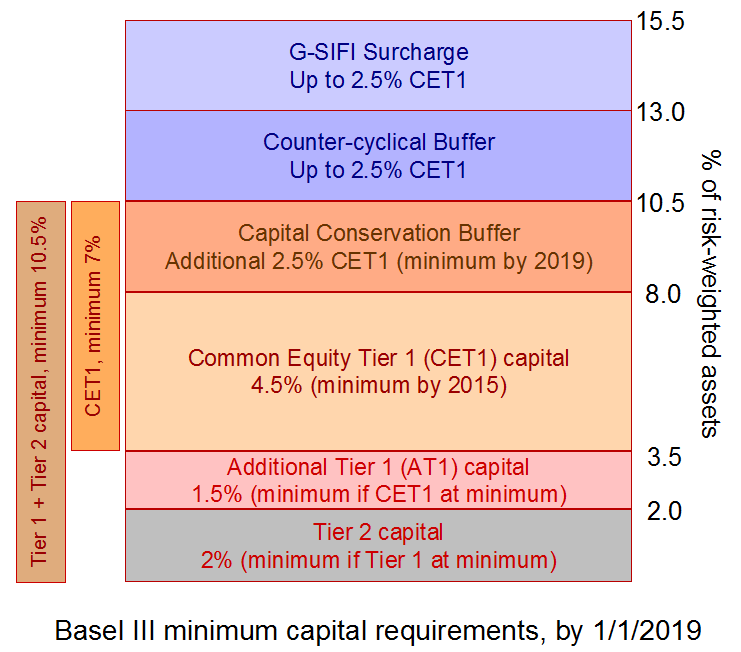
 Following the banking crisis of 2007/8 a new set of international banking regulations was agreed in 2010 by the Basel Committee on Banking Supervision. The purpose was to strengthen banks’ capital base. Under ‘Basel III’, banks would be required, in stages, to meet specific minimum capital adequacy ratios: i.e. minimum ratios of capital to (risk-weighted) assets. The full regulations would come into force by 2019. These are shown in the chart below.
The new Financial Policy Committee of the Bank of England has judged that some UK banks have insufficient ‘common equity tier 1 capital’. This is defined as ordinary shares in the bank plus the bank’s reserves. According to the Bank of England:
… the immediate objective should be to achieve a common equity tier 1 capital ratio, based on Basel III definitions and, after the required adjustments, of at least 7% of risk-weighted assets by end 2013. Some banks, even after the adjustments described above, have capital ratios in excess of 7%; for those that do not, the aggregate capital shortfall at end 2012 was around £25 billion.
Thus the banking system in the UK is being required, by the end of 2013, to meet the 7% ratio. This could be done, either by increasing the amount of capital or by reducing the amount of assets. The Bank of England is keen for banks not to reduce assets, which would imply a reduction in lending. Similarly, it does not want banks to increase reserves at the expense of lending. Either action could push the economy back into recession. Rather the Bank of England wants banks to raise more capital. But that requires sufficient confidence by investors.
 And the end of this year is not the end of the process. After that, further increases in capital will be required, so that by 2019 banks are fully compliant with Basel III. All this will make it difficult for certain banks to raise enough capital from investors. As far as RBS and the Lloyds Banking Group are concerned, this will make the prospect of privatising them more difficult. But that is what the government eventually wants. It does not want the taxpayer to have to find the extra capital. Re-capitalising the banks, or at least some of them, may prove difficult.
The following articles look at the implications of the FPC judgement and whether strengthening the banks will strengthen or weaken the rest of the economy.
Articles
Financial policy committee identifies £25bn capital shortfall in UK banks The Guardian, Jill Treanor (27/3/13)
Banks Told To Raise Capital By Financial Policy Committee To Cushion Against A Crisis Huffington Post (27/3/13)
UK banks’ £25bn shortfall: positive for banks, negative for BoE credibility, Sid Verma (27/3/13)
Doubts over Bank of England’s £25bn confidence game The Telegraph, Harry Wilson (27/3/13)
Bank of England tells banks to raise £25bn BBC News (27/3/13)
Q&A: Basel rules on bank capital – who cares? Laurence Knight (13/9/10)
U.K. Banks Seen Avoiding Share Sales After BOE Capital Review Bloomberg Businessweek, Gavin Finch and Howard Mustoe (27/3/13)
Banks Cut Basel III Shortfall by $215 Billion in Mid-2012 Bloomberg (19/3/13)
Will strengthening banks weaken the economy? BBC News, Robert Peston (27/3/13)
Bank of England News Release
Financial Policy Committee statement from its policy meeting, 19 March 2013 Bank of England (27/3/13)
Questions
- Explain the individual parts of the chart.
- What do you understand by risk-weighted assets?
- Distinguish between capital adequacy ratios and liquidity ratios.
- What could the banks do to increase their capital adequacy ratios? Compare the desirability of each method.
- If all banks around the world were Basel III compliant, would this make another global banking crisis impossible?
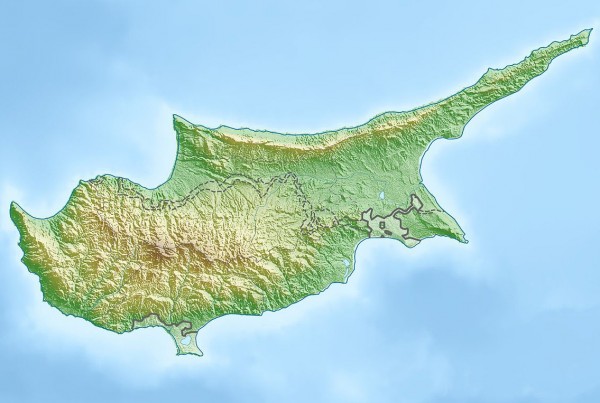 After a week of turmoil in Cyprus (see the News item Ochi, ochi, ochi) a deal has been struck between Cyprus, the EU and the IMF over a €10bn bailout for the island’s banking system. But while the deal may bring the immediate crisis to an end, the Cypriot economy could face years of austerity and depression. And there remain questions over whether the deal sends the wrong message to depositors in banks in other eurozone countries whose banking systems are under pressure.
Unlike the original EU proposal, the deal will not impose a levy on deposits under €100,000, much to the relief of small and medium depositors. But individuals and businesses with deposits over €100,000 in the two main troubled banks (Laiki and the Bank of Cyprus) will face losses that could be as high as 40%. The precise size will become clear in the coming days.
The troubled second largest bank, Laiki (Popular) Bank, will be split into a ‘good’ and a ‘bad’ bank. The assets and liabilities of the good part will be taken over by the largest bank, the Bank of Cyprus. Thus people’s accounts under €100,000 will be moved from one to the other. The ‘bad’ part will include deposits over €100,000 and bonds. Holders of these could lose a substantial proportion of their value.
 Many businesses will be hard hit and may be forced to close. This could have serious adverse multiplier effects on the economy. These effects will be aggravated by the fiscal austerity measures which are also part of the deal. The measures are also likely to discourage further inward investment, again pushing the economy further into recession.
And then there are the broader effects on the eurozone. The direct effect of a decline in the Cypriot economy would be tiny; the Cypriot economy accounts for a mere 0.2% of eurozone GDP. Also the effect on small savers in other eurozone countries is also likely to be limited, as people will probably be reassured that savings under €100,000 have remained protected, even in an economy as troubled as Cyprus.
But some commentators argue that the effect on large depositors in other troubled eurozone countries, such as Portugal, Spain, Greece and Italy, could be much more serious. Would people with large balances in these countries prefer to move their money to, say, Germany, or even out of the eurozone altogether? There is clearly disagreement over this last point as you will see from the articles below.
Webcasts and Podcasts
Cyprus agrees bailout with eurozone ministers The Guardian (25/3/13)
Cyprus bailout: Deal reached in Eurogroup talks BBC News (25/3/13)
‘Disaster avoided’ as Cyprus agrees EU bailout deal Euronews (25/3/13)
Cyprus saved from bankruptcy Channel 4 News on YouTube, Faisal Islam (25/3/13)
What are the implications of the Cyprus deal? BBC Radio 4 Today Programme, Stephanie Flanders (25/3/13)
Cyprus bailout deal: Russia riled but Germany relieved BBC News, Steve Rosenberg in Moscow and Stephen Evans in Berlin (25/3/13)
Cyprus bailout deal ‘durable’ says IMF chief BBC News, Christine Lagarde (25/3/13)
Cyprus Bailout Deal Raises Questions: Lombardi Bloomberg, Domenico Lombardi (25/3/13)
Minister Michalis Sarris: Cyprus paying ‘tremendous cost’ BBC Radio 4 Today Programme, Michalis Sarris (26/3/13)
Articles
Last-minute Cyprus deal to close bank, force losses Reuters, Jan Strupczewski and Annika Breidthardt (25/3/13)
Cyprus strikes last-minute EU bailout deal The Guardian, Ian Traynor (25/3/13)
‘There is no future here in Cyprus’ The Telegraph, Nick Squires (25/3/13)
Back from the brink: EU ministers approve €10bn bailout deal at 11th-hour to save Cyprus Independent, Charlotte McDonald-Gibson and Majid Mohamed (25/3/13)
Cyprus bailout: Deal reached in Eurogroup talks BBC News (25/3/13)
Q&A: Cyprus deal BBC News (25/3/13)
The rescue of Cyprus won’t feel like one to its people BBC News, Robert Peston (25/3/13)
Lessons of Cyprus BBC News, Stephanie Flanders (25/3/13)
Cyprus bailout: Dijsselbloem remarks alarm markets BBC News (25/3/13)
Cyprus saved – but at what cost? The Guardian, Helena Smith (25/3/13)
Cyprus bail-out: savers will be raided to save euro in future crisis, says eurozone chief The Telegraph, Bruno Waterfield (25/3/13)
Cyprus’s banks have been tamed – are Malta and Luxembourg next? The Guardian, Ian Traynor (25/3/13)
Lehman lessons weigh on Cyprus talks but 1920s slump must not be ignored The Guardian, Larry Elliott (24/3/13)
Questions
- Explain what is meant by ‘moral hazard’. What moral hazards are implicit in the deal that has been struck with Cyprus?
- How does the size of the banking system in Cyprus as a proportion of GDP differ from that in other troubled eurozone countries? How does this affect the ‘contagion’ argument?
- Does the experience of Iceland and its troubled banks suggest that the Cypriot problem has nothing to do with its being in the eurozone?
- What options are open to the Cypriot government to stimulate the economy and prevent a severe recession? How realistic are these options (if any)?
- What are the likely implications of the deal for the economic relationships (as opposed to the political ones) between Cyprus and Russia and between the eurozone and Russia?
- Are there any similarities in the relationships between the weak and strong eurozone countries today and those between Germany and other countries in the 1920s and 30s?
 On 5 and 6 April, there was a conference on conscious capitalism in San Francisco. In January, a new book, Conscious Capitalism: Liberating the Heroic Spirit of Business, by John Mackey and Rajendra Sisodia, was published. Many in the business world are enthusiastic about this seemingly new approach to business, which focuses on broader social, environmental and ethical goals, rather than simple profit maximisation.
 So how realistic is this vision of caring capitalism? There may be a few inspiring businesspeople, truly committed to improving the interests of the various stakeholders of their business and society more generally, but could it become a model for business in general? And if so, does this require education, monitoring and regulation? Or can a libertarian approach to business generate an environment where conscious and caring capitalists flourish and succeed better than those with a more narrow focus on profit?