 The technology sector is highly complex and is led by Apple. However, as the tablet market is continuing to grow, it is becoming increasingly competitive with other firms such as Samsung gaining market share. Although both firms sell many products, it is the growing tablet market which is one of the keys to their continued growth.
Tablet PCs have seen a growth in the final quarter of 2012 to a high of 52.5 million units, according to IDC. Although Apple, leading the market, has seen a growth in its sales, its market share has declined to 43.6%. Over the same period, Samsung has increased its market share from 7.3% to 15.1%. While it is still a huge margin behind Apple in the tablet PC market, Samsung’s increase in sales from 2.2 million to 7.9 million is impressive and if such a trend were to continue, it would certainly cause Apple to take note.
 It’s not just these two firms trying to take advantage of this growing industry. Microsoft has recently launched a new tablet PC and although its reception was less than spectacular, it is expected that Microsoft will become a key competitor in the long run. There are many factors driving the growth in this market and the war over market share is surely only just beginning. The chart shows the 75.3% growth in sales in just one year. (Click here for a PowerPoint of the chart.)
A Research Director at IDC said:
We expected a very strong fourth quarter, and the market didn’t disappoint…New product launches from the category’s top vendors, as well as new entrant Microsoft, led to a surge in consumer interest and very robust shipments totals during the holiday season’
Apple has been so dominant in this sector that other companies until recently have had little success in gaining market share. However, with companies such as Samsung and ASUS now making in-roads, competition is likely to become fierce. There are already concerns that Apple’s best days are behind it and its share price reflects this. People are now less willing to pay a premium price for an Apple product, as the innovations of its competitors have now caught up with those of the leading brand name. The following articles consider this growing market.
Samsung gain tablet market share as Apple lead narrows BBC News (1/2/13)
Apple snatches US lead from Samsung Financial Times, Tim Bradshaw (1/2/13)
Apple revenues miss expectations despite high sales figures BBC News (24/1/13)
Samsung eats into Apple sales in the tablet market Mirror, Ruki Sayid (1/2/13)
MacWorld’s Apple celebration opens amid fears of tech giant’s decline Guardian, Rory Carroll (31/1/13)
Samsung’s tablet sales soar as Apple’s grip on market loosens Daily News and Analysis, Richard Blagden (2/2/13)
Samsung takes a nibble out of Apple’s tablet lead InfoWorld, Ted Samson(31/1/13)
Tablet Sales up 75% as Samsung and Asus Gain on Apple Interational Business Times, Edward Smith (31/1/13)
Questions
- Which factors are behind this exceptional growth in the tablet PC market?
- Using the Boston matrix, where do you think tablet PCs fit in terms of market size and market growth?
- Where would you place this market in terms of the product life cycle?
- What does the product life cycle say about the degree of competition, the impact on pricing on profits etc. in the phase that you placed the tablet PC market in your answer to question 3?
- Why have Apple’s shares fallen recently? Do you think this will be the new trend?
- Microsoft’s new tablet didn’t attract huge sales. What explanation was given for this? Use a diagram to help answer this question.
- Tablet PCs are relatively expensive, yet sales of them have increased significantly over the past few years. What explanation is there for this, given that we have been (and still are) in tough financial times?
 Previous posts on this blog have discussed key principles of thinking like an economist and also whether this always makes sense. Highly relevant for this question, on her excellent Economists do it with models blog, Jodi Beggs has recently highlighted the fact that the cognitive costs of obtaining the information required to make decisions in this way can sometimes be excessive.
As an example she cites this scenario from the Cheap talk blog:
“You are planning a nice dinner and are shopping for the necessary groceries. After having already passed the green onions you are reminded that you actually need green onions upon discovering exactly that vegetable, in a bunch, bagged, and apparently abandoned by another shopper. Do you grab the bag before you or turn around and go out of your way to select your own bunch?”
I won’t go through the details of the 12 steps (see the above link) taken to infer from where the onions were abandoned that they were either:
“the best onions in the store and therefore poisoned, or they are worse than some onions back in the big pile but then those are poisoned.”
Based on this inference, the conclusion is that you should go for a take-away instead! As Beggs suggests, the level of effort undertaken to make a decision should depend upon the likelihood that this results in a more informed choice. In the above example this is highly questionable! She then provides the following example suggesting that when you obtain cash back in a store it is much better to ask for the money in small denomination notes. Whilst on face value this again seems like a strange conclusion, the economic logic provided suggests that it may be a much more rational decision than in the onion example.
Article
Just for fun: reasons not to data an economist (thanks guys)…Economists do it with models, Jodi Beggs (25/10/12)
Questions
- Can you provide some examples of decisions where the cognitive costs of obtaining relevant information is very high?
- In these examples, would this information typically result in a better decision?
- What might be the opportunity cost of shopping in the manner described in the article?
- Explain how a rational economic actor should evaluate whether to obtain more information in order to facilitate making a decision.
- The article above suggests that there are a number of benefits from requesting small denomination notes, but what might be the costs involved in this strategy?
Original post
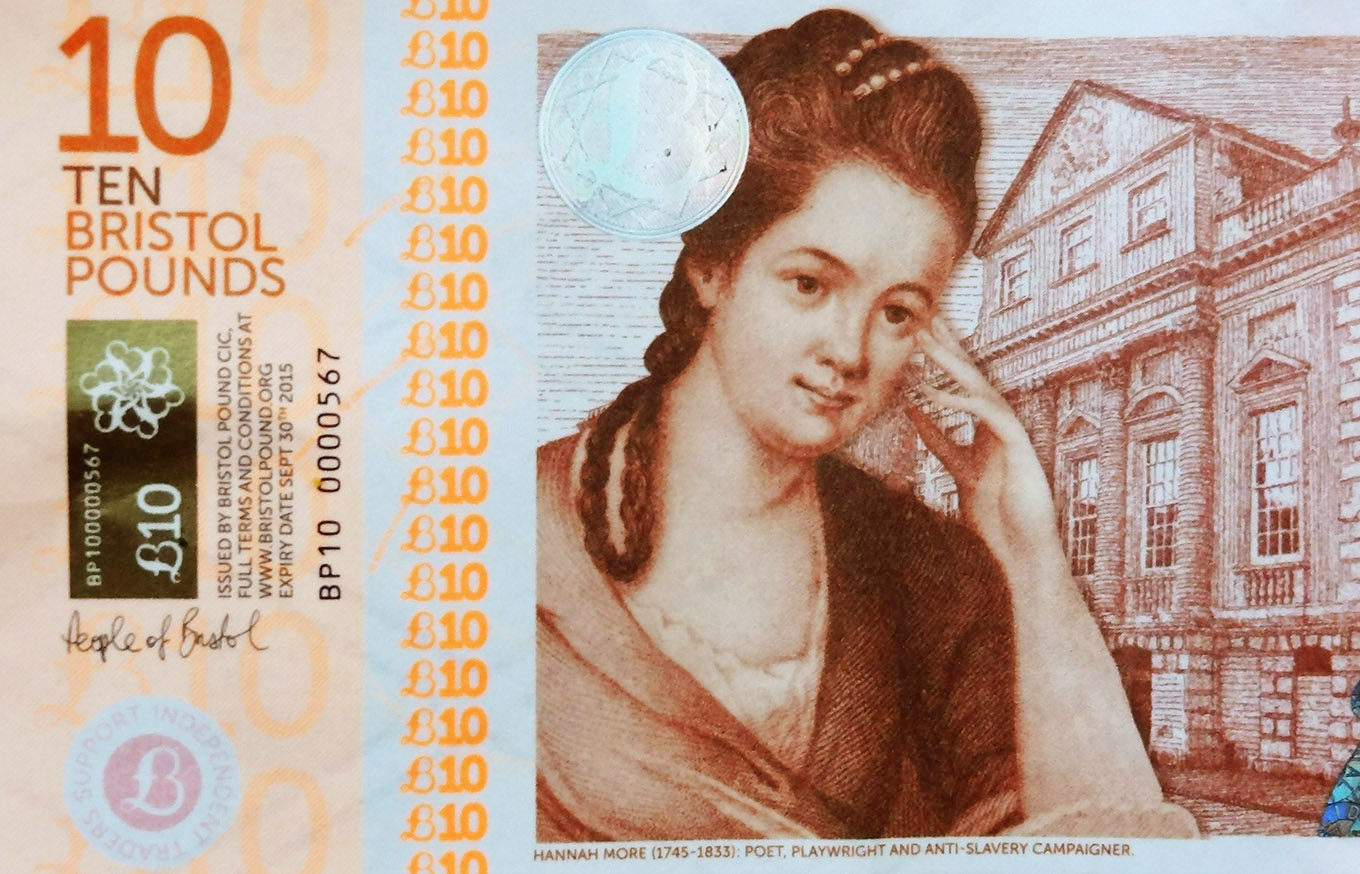
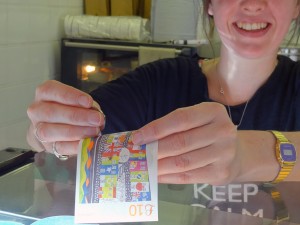
As a resident of Bristol it is with considerable interest that I’m following the development of the Bristol pound, due for launch in September 2012. One Bristol pound will be worth one pound sterling.
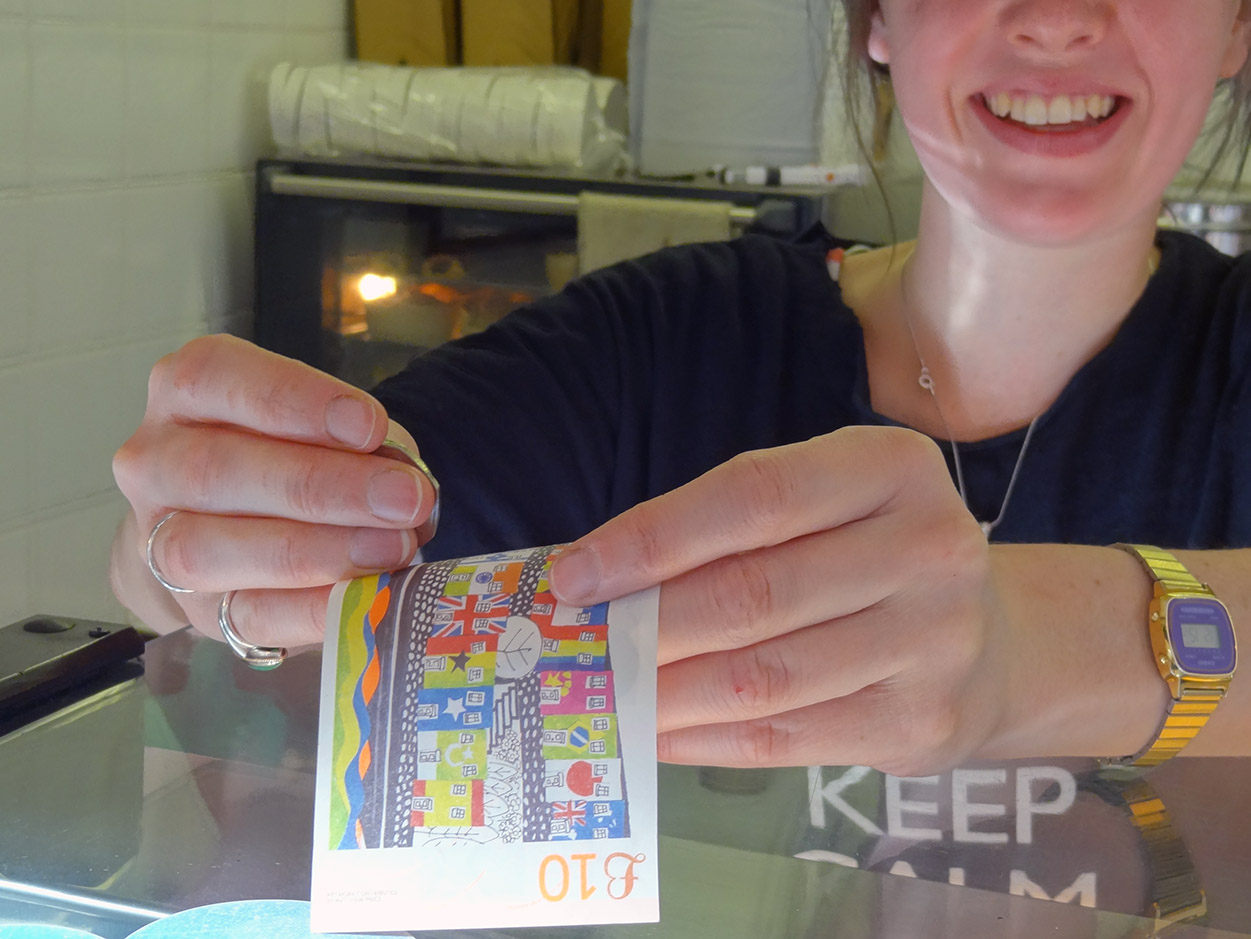
The new currency will be issued in denominations of £1, £5, £10 and £20 and there is a local competition to design the notes. Participating local traders will open accounts with Bristol Credit Union, which will administer the scheme. It has FSA backing and so all deposits will be guaranteed up to £85,000.
 The idea of a local currency is not new. There are already local currencies in Stroud in Gloucestershire, Totnes in Devon, Lewes in East Sussex and Brixton in south London. The Bristol scheme, however, is the first to be introduced on a city-wide scale. The administrators are keen that use of the currency should be as easy as possible; people will be able to open accounts with Bristol Credit Union, pay bills online and pay shopkeepers by mobile phone text message (a system used in many countries, but not in the UK).
As the money has to be spent locally, the aim is to help local business, of which more han 100 have already signed up to the scheme. Bristol has a large number of independent traders – in fact, the road where I live is off the Gloucester Road, which has the largest number of independent traders on one street in the UK. The organisers of the Bristol pound are determined to preserve the diversity of shops and prevent Bristol from becoming a ‘clone town’, with high streets full of chain stores.
 But how likely is the scheme to encourage people to shop in independent shops and deal with local traders? Will the scheme take off, or will it fizzle out? What are its downsides?
Update
The Bristol pound was duly launched on September 19 and there has been much local interest. The later videos and articles below look at reactions to the new currency and at its chances of success in driving local business.
Videos and webcasts
 The town printing its own currency [Stroud] BBC News, Tim Muffett (22/3/10)
Brixton launches its own currency BBC News (17/9/09)
Local currency BBC Politics Show (30/3/09)
Local currency for Lewes BBC News, Rob Pittam (13/5/08)
The Totnes Pound transitionculture.org on YouTube, Clive Ardagh (21/1/09)
Local Currencies – Replacing Scarcity with Trust Peak Moment on YouTube, Francis Ayley (8/2/07)
Videos and webcasts: update
 Bristol Pound Launches ITV News, West, Tanya Mercer (19/9/12)
Can Bristol Pound boost local trade? BBC News, West, Jon Kay (19/9/12)
The Bristol Pound BristolPound on YouTube, Chris Sunderland (11/6/12)
Bristol Pound feature on BBC1 Inside Out BBC One in the West on YouTube, Dave Harvey (30/6/12)
Bristol Pound launched to keep trade in the city BBC News, Dave Harvey (19/9/12)
Bristol pound launched to boost local businesses BBC Radio 5 Live, Ciaran Mundy (19/9/12)
Articles
The Bristol Pound set to become a flagship for local enterprise The Random Fact, Thomas Foss (7/2/12)
What is the point of local currency? The Telegraph, Rosie Murray-West (7/2/12)
The Bristol pound: will it save the (local) economy? Management Today, Emma Haslett (6/2/12)
‘Bristol Pound’ currency to boost independent traders BBC News Bristol, Dave Harvey (6/2/12)
We don’t want to be part of ‘clone town Britain’: City launches its own currency to keep money local Mail Online, Tom Kelly (6/2/12)
British Town Prepares To Launch Its Own Currency — Here’s How That’s Going To End Business Insider, Macro Man (7/2/12)
They don’t just shop local in Totnes – they have their very own currency Independent, Rob Sharp (1/5/08)
Articles: update
Bristol banks on alternative pound to safeguard independent retailers Guardian, Steven Morris (21/9/12)
Bristol launches city’s local currency The Telegraph, Rachel Cooper (19/9/12)
The Bristol Pound is launched to help independent retailers Independent, Rob Hastings (20/9/12)
Banknotes, local currencies and central bank objectives Bank of England Quarterly Bulletin (Q4/2013)
Bristol Pound official site
Bristol Pound: Our City, Our Money Bristol Pound
Questions
- What are the advantages of having a local currency?
- What are the dangers in operating a local currency?
- What steps can be taken to avoid the dangers?
- Can Bristol pounds be ‘created’ by Bristol Credit Union? Could the process be inflationary?
- What market failures are there in the pattern of shops in towns and cities? To what extent is the growth of supermarkets in towns and the growth of out-of-town shopping malls a result of market failures or simply of consumer preferences?
- Are local currencies only for idealists?
- What benefits are there for shoppers in Bristol of using Bristol pounds?
 Many of you reading this will be embarking on an economics degree. During your studies you’ll be developing the skills that economists bring to observing and analysing the world around us and considering the policy options to achieve various social and economic objectives. You’ll be learning how to become an ‘economic detective’ and to do ‘forensic economics’.
Identifying the nature of economic problems; collecting and examining the evidence; using the economist’s ‘toolkit’ of concepts and ideas to make sense of the evidence; looking for explanations; constructing hypotheses and theories; considering what can be done to tackle the problems and prevent them occurring in the future – these are the sorts of things you will be doing; and they involve detective work.
The podcast below looks at the methods of Sherlock Holmes. These are the sorts of methods successful economists use. John Gray identifies three types of reasoning. The first two are probably familiar to you, or soon will be.
1. Induction involves looking at evidence and then using it to construct general theories. So, for example, if you observe on many occasions that when the prices of various goods rise, the quantity demanded falls, you can then hypothesise that whenever the price of a good rises, the quantity demanded will fall; in other words, you induce that price and quantity demanded are inversely related – that demand curves are downward sloping. This is known as the ‘Law of demand’. Induction, of course, is only as good as the evidence. Nevertheless, inductive methods are logical and it can be demonstrated how the theories follow from the evidence.
2. Deduction involves using theories to draw conclusions about specific cases. So, for example, you could use the law of demand to deduce that when the price of a specific good rises, the quantity demanded of that good will fall. You would also assume that nothing else had changed that could influence the demand for the good. In other words, you assume ‘ceteris paribus‘ or ‘other things being equal’. As long as you have not made any logical errors, deduction is foolproof. As John Gray puts it:
Deduction is infallible as long as the premises are true, while induction yields probabilities that can always be falsified by events
But there is a third type of reasoning and this is where the true economic detective comes in. This is known as ‘abduction’. This is the type of logic that is used when evidence is thin or where there are lots of scraps of seemingly contradictory evidence. And this is the type of logic employed so successfully by Sherlock Holmes.
 3. Abduction involves making informed guesses or estimates from limited evidence. It is using the scraps of evidence as clues as to what might be really going on. It is how many initial hypotheses are formed. Then the researcher (or detective) will use the clues to search for more evidence that can be used for induction that will yield a more robust theory. The clues may lead to a false trail, but sometimes they may allow the researcher to develop a new theory or amend an existing one. A good researcher will be alert to clues; to seeing patterns in details that might previously have been dismissed or gone unnoticed.
Before the banking crisis of 2007/8 and the subsequent credit crunch and recession in the developed world, many economists were picking up clues and trying to use them to develop a theory of systemic risk in financial markets. They were using the skills of an economic detective to try to discover not only what was currently going on but also what might be the consequences for the future. Some used abduction successfully to predict the impending crisis; most did not.
If you are embarking on an economics degree and will possibly go on to a career as an economist, then part of your training will be as a detective. With good detective skills – looking for clues, seeing connections, identifying what more evidence is required and where to find it, and then using it to provide explanations and policy prescriptions – you could make a very successful and sought-after economist. Being a good economist is not just about learning theories and techniques, although this is vitally important; it’s also about being imaginative and thinking ‘outside the box’. Good luck!
Podcast
Sherlock Holmes and the Romance of Reason BBC: A Point of View, John Gray (17/8/12) (Click here for a transcript.)
Articles and information
Detective work: forensic economics Business:Life, Tim Harford (2/5/12)
The Search for 100 Million Missing Women Slate, Stephen J. Dubner and Steven D. Levitt (24/5/05)
Abduction Stanford Encyclopedia of Philosophy, Igor Douven (9/2/11)
Abductive reasoning Wikipedia
Questions
- Explain the difference between induction and abduction.
- Identify the various ‘threshold concepts’ in economics. Does an understanding of these concepts help an economist do better detective work?
- How might forensic economics be used for crime fighting?
- Why might elegant and sophisticated economic theory be dangerous in the ‘messy’ and statistically ‘noisy’ real world?
- In trying to establish an explanation for “100 Million Missing Women”, what use was made of abduction, induction and deduction?
 A recent article on this blog discussed the likelihood that we will soon move to a cashless society. It is therefore interesting to consider the implications that this might have for consumer behaviour. We might expect the form of payment to make no difference to a rational consumer. However, there is considerable evidence to suggest that this is not the case.
One reason why people appear to spend more freely on credit cards is payment decoupling – you get utility from the item purchased before you pay the cost. However, more recent evidence suggests that this is not the only relevant factor. It appears that the degree of transparency of the payment method also has an effect. Psychologists quoted in the above article conclude from their experimental evidence that:
Payment modes differ in the transparency with which individuals can feel the outflow of money. ….with cash being the most transparent payment mode.
This effect also appears to make people spend cash less freely.
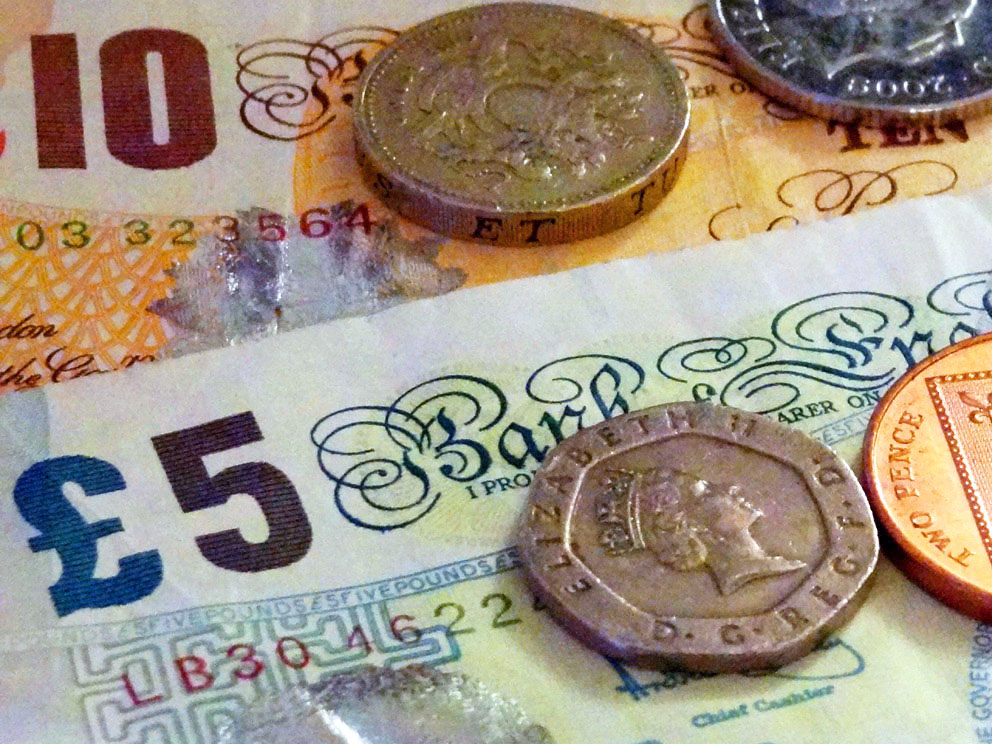 The author of the above article spent some time experimenting with trying to make all his purchases using cash. He found that by doing so, he was able to reduce his spending by about 10%. However, this seems likely to become harder to do in the future and, as the article concludes, it is already difficult to purchase some items with cash.
Article
Why does foreign money seem like play money? Science Codex (04/06/07)
Questions
- What type of products is it already difficult to purchase with cash?
- How did the psychologists test the transparency of payment methods?
- Do you think the consumer behaviour described above is likely to persist in the long-run?
- Might firms be able to take advantage of the consumers behave described above?
- Do you think the transparency of foreign currencies is the main reason why people spend more when they are abroad?