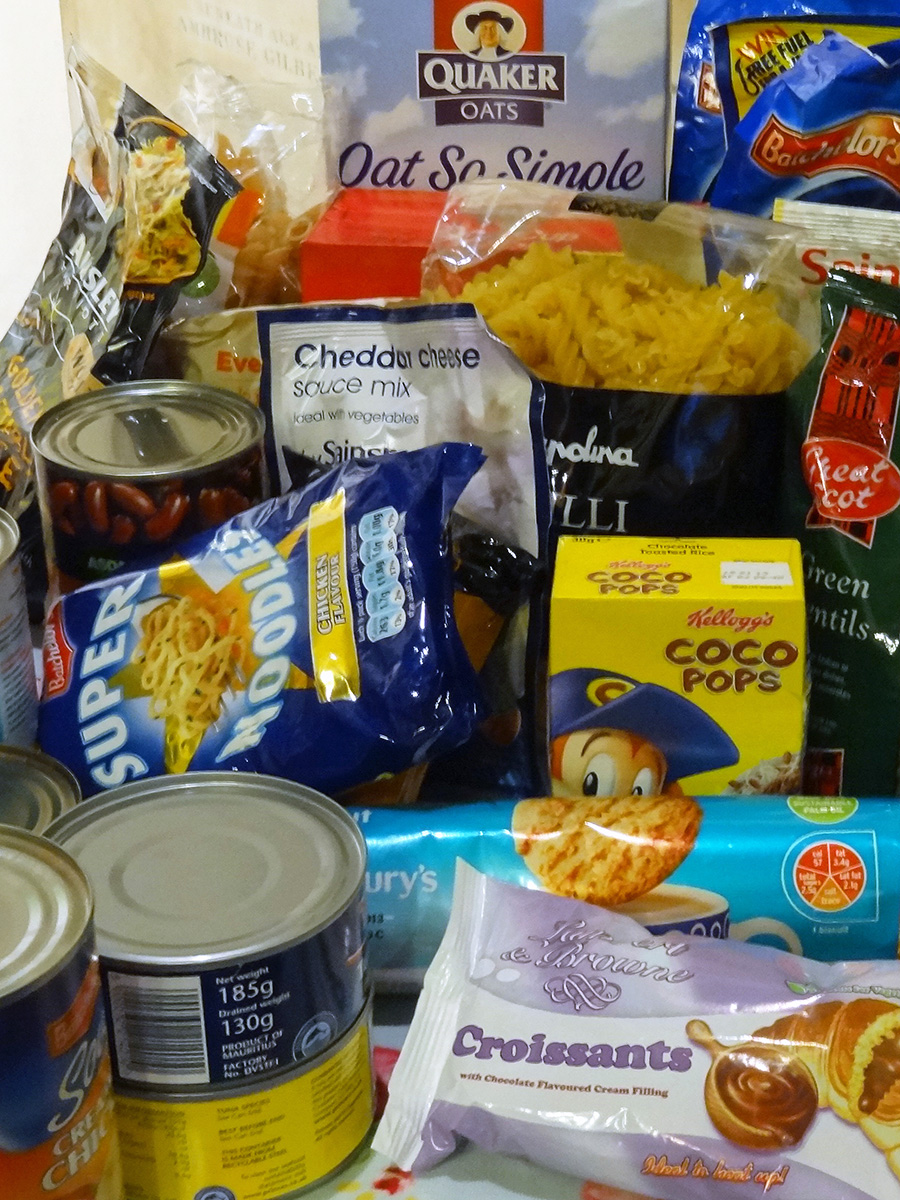
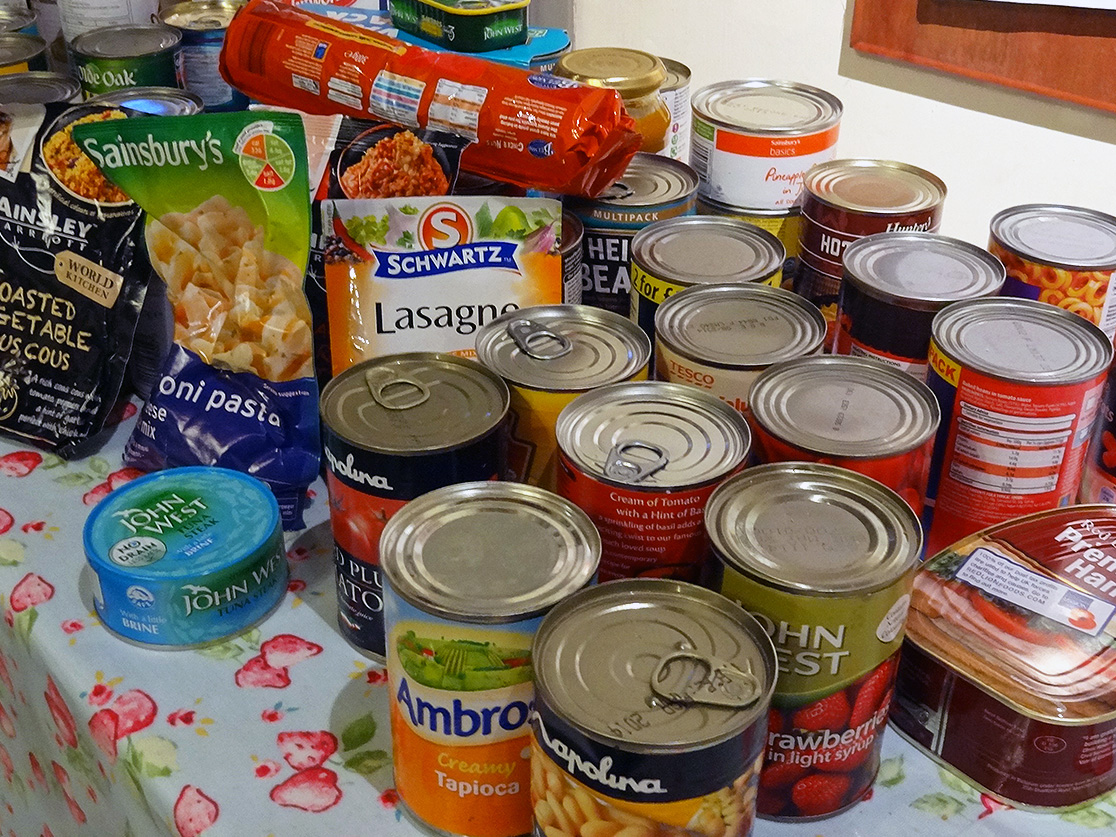
 More and more food banks are opening every week across the developed world. In the UK alone, there are over 250 food banks. These are run by volunteers and provide food and other basic provisions to those who struggle to feed themselves and their children. The food is donated by people or sometimes supermarkets. Some food banks receive financial help from local authorities.
According to the Trussell Trust, which runs many food banks in the UK, “In 2011-12 food banks fed 128,687 people nationwide, 100% more than the previous year.” But why, in mixed economies, where the State is expected to provide benefits to the poor, do so many people have to resort to food handouts?

Partly the problem is a cut in benefits – a response of many countries to rising public-sector deficits; partly it’s delays in receiving benefits or the complexities in claiming; partly it’s because some people have had their benefits suspended because of a change in their circumstances or changes in the conditions for claiming benefits; partly it’s the inability of people to afford to feed their families properly in times of rising food and energy prices and rising rents, where incomes are not rising in line with the personal rates of inflation that poor households experience; partly it’s the sky-high interest rates that many poor people, often deep in debt, have to pay to continue obtaining credit – often from ‘payday loan companies’ or ‘doorstep lenders’; partly it’s the inability of many poor people to find work which pays enough to feed their families and pay all their other bills.
Food poverty is a real and growing problem. But are food banks the answer? The following videos and articles look at the issues.
Webcasts
UK
 Growing demand for food banks in Britain BBC Newsnight, Paul Mason (5/9/12)
Children will go hungry warn Bristol food banks This is Bristol, (2/7/12)
Children going hungry ITV News (16/10/12)
Food bank: We need more food to feed UK’s hungry The Telegraph, Gregg Morgan (27/9/12)
Food banks help struggling London families BBC News (21/6/12)
Europe
EU food aid to dry up by 2014? France 24 (16/10/12)
Spain
Food banks squeezed in Spain Euronews (3/11/12)
USA
As donations dwindle, food banks are feeling the pinch Komo News, Elisa Jaffe (28/9/12)
Articles
UK
Breadline Britain: councils fund food banks to plug holes in welfare state The Guardian, Patrick Butler (21/8/12)
Councils to invest in food banks LocalGov, Dominic Browne (22/8/12)
The growing demand for food banks in breadline Britain BBC News, Paul Mason (4/9/12)
Food banks: ‘I had no-one else to turn to’ BBC News (4/9/12)
Poorest starved of dignity as charity food parcels double in just two years Daily Record (4/9/12)
More and more banking on generosity to others for food South Wales Evening Post (13/11/12)
USA
Northern Illinois Food Bank Kicks Off Hunger Action Month St. Charles Patch, Rick Nagel (1/9/12)
Australia
More families get help as food becomes discretionary spend Sydney Morning Herald (21/8/12)
Information
How a foodbank works The Trussell Trust
Questions
- Why do so many people find themselves trapped in food poverty?
- What factors are likely to lead to an increase in food poverty in the coming months?
- Should the government subsidise food banks?
- Discuss ways of tackling the problem of poor families being trapped in debt and having to pay very high interest rates.
- Is rent control a good means of tackling poverty?
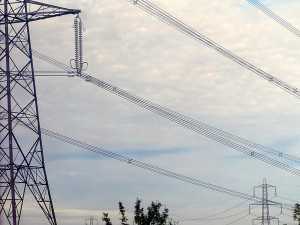 Since Labour’s historic pledge to eliminate child poverty in a generation, poverty data has been at the forefront of political debates. The recession has created unemployment and has moved more people below the poverty line, at the same time as causing rising inequality
The causes of poverty are diverse and a recent government commissioned report has drawn attention to just one of the key factors that is pushing more families into poverty – energy bills.
Fuel poverty has become more of a concern with the cost of household bills rising and this has led to calls for more money to be invested in cutting energy bills. Fuel poverty has been redefined by Professor John Hills, the author of the report, to focus on those households with a low income and also with relatively high energy bills.
Fuel poverty is undoubtedly concerning from a moral point of view – indeed, knowing that some families are unable to afford to heat their homes causes disutility for others. However, there are also wider economic implications. If families are unable to provide heating, this may adversely affect their children’s ability to learn and complete their homework, thus negatively affecting their productivity today and arguable causing further problems in their future. While this may have little effect today, the cumulative effect on economic productivity could be substantial in the long run. Inefficiency for the macroeconomy is therefore a problem, as a child’s productive potential will not be fully realized. Furthermore, there are also health concerns, as the government notes – fuel poverty is linked to 2,700 deaths per year. Again, this creates a blight on society, but it also poses economic problems, not least due to the strain on the NHS.
Fuel poverty has long been identified as a problem that needs addressing and as the Secretary of State for Energy and Climate Change said:
‘Fuel poverty is a serious national problem and this government remains committed to doing all it can to tackle it and make sure that the help available reaches those who need it most.’
Action is already taking place to insulate the poorest homes, as a means of cutting their energy bills and the government’s ‘Warm Homes Discount’ aims to provide help to the lowest income households in paying their bills. However, there are concerns that more households will move into fuel poverty, as this new definition doesn’t include those slightly wealthier households who still have high bills or the poorer households with relatively low bills. With the economy still in a vulnerable state, the latest data showing further rises in unemployment and household bills becoming increasingly expensive, the issue of fuel poverty is unlikely to disappear any time soon. The following articles consider this issue.
Fuel poverty seen for 3 million households by 2016 Reuters (16/3/12)
Fuel poverty to rise to 8.5m, report warns (including video) BBC News, Damian Kahya (15/3/12)
Nine million will live in ‘fuel poverty’ in the next four years Independent, Simon Read (16/3/12)
Fuel poverty to rise sharply Telegraph, James Hall (16/3/12)
Call for urgent action on fuel poverty Financial Times, Sarah Neville (15/3/12)
Fuel poverty worse than estimated The Press Association (15/3/12)
3 million fuel-poor households by 2016, report claims Guardian, Mark King and Zammy Fairhurst (15/3/12)
Questions
- What are the causes of poverty?
- How has the definition of fuel poverty changed? Is the change a good one? Think about the equity and efficiency of such a change.
- The BBC News article says that government measures to alleviate fuel poverty could be regressive. What is meant by this and why could this be the case?
- What are the economic consequences of fuel poverty?
- We can estimate poverty by looking at the poverty headcount or the poverty gap. What is the difference between these two measures? Which one is a more accurate measure of poverty?
- Are there any other actions that you think would be effective in alleviating fuel poverty? Would they be cost effective?
- Why does Age UK fear ‘the current proposals to improve energy efficiency through the Green Deal and energy obligation schemes are a woefully inadequate response to one of the most serious issues facing our country today’?
 What will be the effect of raising tax allowances – the threshold at which people start paying income tax? The Coalition government in the UK has a policy of raising the threshold to £10,000 by 2015/16. As a step on this road, the present plan is to raise the threshold from £7475 in 2011/12 to £8105 in 2012/13. The Liberal Democrats, however, are urging the Chancellor to raise allowances more quickly.
The government maintains that raising the personal allowance is progressive – that it will give relatively more help to the poor. New research by the Institute for Fiscal Studies, however, casts doubt on this claim. The IFS demonstrates that the benefits will be unevenly distributed, with the greatest benefits going to middle-income families where more than one person works but where no-one earns the higher tax rate. The poorest people – those earning below the threshold – will gain nothing at all.
Read the following articles and the IFS report and establish just who would benefit by a rise in the tax threshold and whether or not the move could be described at ‘progressive’.
Articles
Tax move ‘benefits better-off’ Independent, Joe Churcher (9/3/12)
Raising tax threshold would benefit rich more than poor, says IFS MyFinances.co.uk (11/3/12)
Rise in income tax threshold would help the rich Financial Times, Vanessa Houlder (9/3/12)
Budget 2012: raising the personal tax allowance threshold isn’t fair Guardian blog, Heather Stewart (9/3/12)
IFS report
A £10,000 personal allowance: who would benefit, and would it boost the economy? IFS, James Browne (March 2012)
Questions
- Define the term ‘progressive tax’.
- For what reasons might raising the personal tax allowance (a) be progressive; (b) not be progressive?
- How does eliminating child benefit for any families where either parent earns the higher tax rate affect the progressiveness of raising income tax thresholds?
- What additional measures could be taken to ensure that raising tax thresholds was progressive across the whole income range and for all households?
 Child Benefit is a universal benefit, which means it is awarded on the basis of having a certain contingency (a child!) and not on the basis of a contributions record or an income test. It is for this latter reason that the equity and efficiency of child benefit has come into question.
Is it really equitable or a good use of money for a family earning £200,000 per year to receive child benefit of £20.30 per week for the first child and £13.40 each week for every subsequent child? Do these families really need the money, or would it be better spent on education, healthcare etc? This question became even more pertinent with the growing budget deficit facing the UK and the Coalition’s policy of cutting the deficit and hence cutting government expenditure.
Child benefit was one of the benefits targeted by the Coalition. It would be removed from higher rate tax payers. Those earning more than £44,000 would no longer be eligible to receive it. For some this seems like a good policy – the benefit is being targeted at those who need it most – it is becoming more vertically efficient. However, for others this presents a problem, not least because it looks at individual income and not family income. If there is a 2 parent household, with each parent earning, say, £40,000 then total household income is £80,000. Yet, this family is still eligible to receive child benefit, as neither of their incomes exceed £44,000. However, a 2 parent household, where one person works and earns £45,000 and the other only works part time and earns £5,000 would not receive child benefit, despite their total household income being only £50,000. This policy, unsurprisingly, faced criticisms of inequity and that middle income households would be the ones who saw their income squeezed and were made significantly worse off.
Amid these criticisms, David Cameron has admitted that there is an issue with the threshold and those facing the cliff edge of becoming a higher rate tax payer and losing the benefit. The Chancellor is unlikely to be in favour of any significant changes that will reduce the projected £2.5bn savings the policy will make. Although the policy still looks set to go ahead, following the Coalition’s defeat in the House of Lords concerning cuts to welfare and Cameron’s desire to retain the loyalty of Conservative supporters, we may still see some revisions to the initial proposal. The following articles consider this highly charged issue.
Webcasts
Child benefit cut will go ahead, says Osborne BBC News (13/1/12)
George Osborne: child benefit plans will go ahead The Telegraph, Robert Winnett (9/5/11)
Child benefit cut to hit 1.5 million families, says IFS BBC News (13/1/12)
Articles
Osborne sticks to child benefit cut The Press Association (13/1/12)
Middle-class parents could keep their child benefit after all Independent, Andrew Grice (13/1/12)
Welfare payment cap poses ‘real risks to children’s rights’ Guardian, Randeep Ramesh (11/1/12)
Universal child benefit has had its day Mail Online, Janice Atkinson-Small (13/1/12)
Questions
- What is the difference between a benefit such as income support and child benefit?
- Define the terms horizontal and vertical efficiency and horizontal and vertical equity.
- To what extent does child benefit (as a universal benefit) conform with your definitions above? Would the new means tested child benefit meet the objectives of horizontal and vertical efficiency and horizontal and vertical equity any better?
- Why are middle-income families and women likely to be the most affected by the proposed changes to child benefit?
- Why is there a growing pressure on the Coalition government to rethink the proposal?
- If child benefit is removed from higher rate tax payers, should other benefits be changed to compensate some families for their losses?
Divided we stand is the title of a new report by the Organisation for Economic Co-operation and Development (OECD). Its sub-title is “Why inequality keeps rising”. The report shows how the gulf between rich and poor has widened in most countries, both developed and developing. As the introduction states:
In the three decades prior to the recent economic downturn, wage gaps widened and household income inequality increased in a large majority of OECD countries. This occurred even when countries were going through a period of sustained economic and employment growth.
The report analyses the major underlying forces behind these developments. Its conclusion is that inequality looks set to continue widening, especially with the worldwide economic slowdown and rise in unemployment. However, the report says that “there is nothing inevitable about growing inequalities. Globalisation and technological changes offer opportunities but also raise challenges that can be tackled with effective and well-targeted policies.”
So just what is the extent of inequality? How has it changed over time? And what can be done to reduce inequality? The webcast produced by the OECD to accompany the report looks at the problem, and the report and articles look at what can be done about it.
Webcast
Record inequality between rich and poor OECD (5/12/11)
Articles
Governments need will to fix growing inequality Times Colonist (Canada), Paul Willcocks (8/12/11)
Capitalism defies the laws of gravity Sydney Morning Herald, (7/12/11)
UK pay gap rises faster than any rich nation – OECD The Telegraph, (5/12/11)
The Income Inequality Boom: It’s Real and It’s Everywhere The Atlantic, Derek Thompson (6/12/11)
Income inequality growing faster in UK than any other rich country, says OECD Guardian, Randeep Ramesh (5/12/11)
OECD inequality report: how do different countries compare? Guardian datablog (5/12/11)
Inequality in Britain: faring badly in an unfair world Guardian (5/12/11)
OECD calls time on trickle-down theory Financial Times, Nicholas Timmins (5/12/11)
Wage inequality ‘getting worse’ in leading economies BBC News, Adam Fleming (5/12/11)
OECD Report and Documents
Governments must tackle record gap between rich and poor, says OECD OECD Press Release (5/12/11)
Divided we Stand: Why Inequality Keeps Rising – Introduction by Angel Gurría, OECD Secretary-General, at Press Conference OECD (5/12/11)
Divided we Stand: Why Inequality Keeps Rising – 4-Page Summary of Report (5/12/11)
An Overview of Growing Income Inequalities in OECD Countries: Main Findings OECD (5/12/11)
Questions
- Why may inequality be seen as a ‘bad thing’ for society as a whole and not just the poor?
- Does it matter for the poor if rich people’s incomes grow at a greater rate than those of the poor so long as the incomes of the poor do indeed grow?
- Explain what is meant by the Gini coefficient. What has happened to the Gini coefficient over the past few years across the world?
- Are there any common explanatory features in the economies of those countries where income inequality is growing rapidly? Similarly, are there any common explanatory features in the economies of those countries where income inequality is not growing, or growing only very slowly?
- What are the causes of rising inequality?
- Identify policies that can be adopted to tackle growing inequality.
- What problems arise from policies to reduce inequality by (a) reducing inequalities in disposable income; (b) providing more free services to all, such as healthcare and education? How might these problems be mitigated?
 More and more food banks are opening every week across the developed world. In the UK alone, there are over 250 food banks. These are run by volunteers and provide food and other basic provisions to those who struggle to feed themselves and their children. The food is donated by people or sometimes supermarkets. Some food banks receive financial help from local authorities.