 In an apparent U-turn, the Chancellor, George Osborne, has decided to cap the interest rates and other charges on payday loans and other short-term credit. As we have seen in previous news items, the sky-high interest rates which some of the poorest people in the UK are being forced to pay on these loans have caused outrage in many quarters: see A payday enquiry and Kostas Economides and the Archbishop of Canterbury. Indeed, the payday loan industry has been referred by the OFT to the Competition Commission (CC). The CC is required to report by 26 June 2015, although it will aim to complete the investigation in a shorter period.
It was becoming increasingly clear, however, that the government would not wait until the CC reports. It has been under intense pressure to take action. But the announcement on 25 November 2013 that the government would cap the costs of payday loans took many people by surprise. In fact, the new body, the Financial Conduct Authority, which is due to start regulating the industry in April 2014, only a month ago said that capping was very intrusive, arguing that it could make it harder for many people to borrow and push them into the hands of loan sharks. According to paragraph 6.71 of its consultation paper, Detailed proposals for the FCA regime for consumer credit:
The benefits of a total cost of credit cap has been looked at by the Personal Finance Research Centre at the University of Bristol. This report highlighted that 17 EU member states have some form of price restriction. Their research was ambiguous, on the one hand suggesting possible improved lending criteria and risk assessments. On the other, prices may drift towards a cap, which could lead to prices increasing or lead to a significant reduction in lenders exercising forbearance. Neither of these latter outcomes would be beneficial for consumers. Clearly this is a very intrusive proposition and to ensure we fully understand the implications we have committed to undertake further research once we begin regulating credit firms and therefore have access to regulatory data.
The government announcement has raised questions of how imperfections in markets should be dealt with. Many on the centre right argue that price controls should not be used as they can further distort the market.  Indeed, the Chancellor has criticised the Labour Party’s proposal to freeze gas and electricity prices for 20 months if it wins the next election, arguing that the energy companies will simply get around the freeze by substantially raising their prices before and after the 20 months.
Instead, those on the centre right argue that intervention should aim to make markets more competitive. In other words, you should attempt not to replace markets, but to make them work better.
So what is the reasoning of the government in capping payday loan charges? Does it feel that, in this case, there is no other way? Or is the reasoning political? Does it feel that this is the most electorally advantageous way of answering the critics of the payday loan industry?
Webcasts and podcasts
 Payday Loans To Be Capped By Government Sky News (25/11/13)
New law to cap cost of payday loans BBC News, Robert Hall (25/11/13)
Osborne: ‘Overall cost’ of payday loans to be capped BBC Today Programme (25/11/13)
George Osborne announces cap on payday loan charges amid concerns ITV News (25/11/13)
Articles
UK to cap payday lenders’ interest charges Reuters, Steve Slater, Paul Sandle, Kate Holton and William James (25/11/13)
Capping payday loans: from light touch to strong arm Channel 4 News, Faisal Islam (25/11/13)
Payday loans: New law to cap costs BBC News (25/11/13)
Payday loan ‘risk to mortgage applications’ BBC News (26/11/13)
Q&A: Payday loans BBC News (25/11/13)
George Osborne is playing social democratic catch-up on payday loans The Guardian, Larry Elliott (25/11/13_
Payday loans cap: George Osborne caves in following intervention led by Archbishop of Canterbury Independent, Oliver Wright (25/11/13)
The principle, the practice and the politics of fixing payday loan prices: why? And why now? Conservative Home, Mark Wallace (25/11/13)
George Osborne and the risky politics of chutzpah New Statesman, Rafael Behr (26/11/13)
Chancellor too quick off the mark on payday lending cap The Telegraph, James Quinn (25/11/13)
Crap and courage of convictions: the political problem with Osborne’s payday loan plan Spectator, Isabel Hardman (26/11/13)
Payday loan calculator
Payday loan calculator: how monthly interest can spiral BBC Consumer (7/11/13)
Questions
- What types of market failing exist in the payday loan industry?
- What types of controls of the industry are being proposed by George Osborne?
- What is the experience of Australia in introducing such controls?
- What alternative forms of intervention could be used to tackle the market imperfections in the industry?
- What were the proposals of the FCA? (See paragraph 6.6 in its document, Detailed proposals for the FCA regime for consumer credit.)
- According to a representative example on Wonga’s website, a loan of £150 for 18 days would result in charges of £33.49 (interest of £27.99 and a fee of £5.50). This would equate to an annual APR of 5853%. Explain how this APR is calculated.
- The proposal is to allow a relatively large upfront fee and to cap interest rates at a relatively low level, such as 4% per month, as is the case in Australia. Explain the following comment about this in the Faisal Islam article above: “The upfront fee, in theory, should change the behavioural finance of consumers around taking the loan in the first place (there are ways around this though). So this is an intervention based not on lack of competition, but asymmetries of information in consumer finance.”
- Comment on the following statement by Mark Wallace in the Conservative Home article above: “If overpriced payday loans should be capped, why not overpriced DVDs, sandwiches or, er, energy bills?”
- Compare the relative advantages and disadvantages of George Osborne’s proposal with that of Justin Welby, the Archbishop of Canterbury (see the news item, Kostas Economides and the Archbishop of Canterbury).
 No matter the product or service, price is always a key factor and never more so than in tough economic times. In most cases, prices are allowed to be determined by the forces of demand and supply, which gives the equilibrium price. However, in some cases, the government may choose to intervene with a price control, for example rent controls and the national minimum wage. Another market where there is also regulation is the airline industry and the Civil Aviation Authority have recently been criticized by Heathrow Airport for its price control plan.
Whenever we go on holiday, the price we pay for an airline ticket will depend in part on the airport we are taking off from and landing at, as they will charge the airline for landing fees, security, terminals etc.  Heathrow airport had proposed that annual rises to its tariffs charged to airlines would increase by 4.6% above RPI inflation. However, this plan has been rejected by the CAA, which has said that the annual tariff rise between 2014 and 2018 should not be above the RPI. Though Heathrow are criticizing the CAA about this restriction, it is an improvement from the initial proposal which would have capped price rises at the RPI minus 1.3%.
Controversy has naturally been created, with the CAA arguing that such price controls are needed to keep prices down and thus benefit consumers and retain the competitiveness of Heathrow airport. But, in contrast, Heathrow has argued that such a cap will put its competitive position under pressure and will risk future investment in the UK. But this isn’t the only criticism of the CAA. Airlines aren’t happy with the ruling either, arguing that the CAA has bowed to the pressure of Heathrow. The contrasting positions of the CAA, Heathrow and airlines are evident in the following quotes, firstly from the Chairwoman of the CAA:
The proposals will put an end to over a decade of prices rising faster than inflation at Heathrow. Tackling the upward drift in Heathrow’s prices is essential to safeguard its globally competitive position. The challenge for Heathrow is to maintain high levels of customer service while reducing costs. We are confident this is possible and that our proposals create a positive climate for further capital investment, in the passenger interest.
Secondly, from Heathrow’s Chief Executive:
This proposal is the toughest Heathrow has ever faced. The CAA’s settlement could have serious and far-reaching consequences for passengers and airlines at Heathrow … We want to continue to improve Heathrow for passengers. Instead, the CAA’s proposals risk not only Heathrow’s competitive position but the attractiveness of the UK as a centre for international investment. We will now carefully consider our investment plans before responding fully to the CAA.
And finally from the IAG Chief Executive, who said:
[The CAA] neglected its new primary statutory duty to further the interests of passengers by endorsing a settlement that allows the UK’s monopoly hub to ignore its inefficiencies and over-reward investors by imposing excessive charges … It is a bad day for customers who have been let down by the CAA.
Any price rise from the airports will be passed on to airlines and these in turn will translate into higher prices for customers. However, is there any truth to Heathrow’s claims that investment will be adversely impacted? As costs rise, profit margins and profit will fall, unless the revenue generated can increase. Price controls restrict the amount that prices can rise and thus unless demand increases by a significant margin, profits will decline. With lower profits, there will be less money for investment and arguably the service that customers face will also decline. However, the CAA suggests that Heathrow will be able to cut its costs and thus protect investment into the future, while retaining its competitive position globally by charging lower prices to airlines. This is unlikely to be the end of the journey, but for the moment, the CAA appears to have put its foot down. The following articles consider the battleground between the CAA and Heathrow.
Regulation in the passenger’s interest, support investment and driving competition The Civil Aviation Authority (3/10/13)
Passengers at Heathrow ‘face £1bn fares hike’ Independent, Matthew Beard (4/10/13)
Heathrow airport attacks regulator’s price control plan BBC News (3/10/13)
CAA proposed Heathrow charges rise in line with inflation The Telegraph, Rebecca Clancy (13/10/13)
Passengers face fare increases as Heathrow and Gatwick are allowed to up landing fees Mail Online (3/10/13)
Heathrow and airlines enraged by CAA price proposals The Telegraph, Alistair Osborne (3/10/13)
Heathrow attacks Civil Aviation Authority over airport charges Financial Times, Andrew Parker (3/10/13)
BAA considers life outside Heathrow as CAA backtracks on charges The Guardian, Gwyn Topham (3/10/13)
Heathrow charge plan disappoints all round Wall Street Journal, Peter Evans (3/10/13)
Questions
- What is the role of a regulator?
- Explain how the price control outlined by the CAA will affect Heathrow.
- If Heathrow is unable to cut costs, what is the likely effect? Using a diagram illustrate the impact on profitability if costs (a) can be reduced and (b) cannot be reduced.
- Why are the CAA being criticised by airlines and airports?
- How will customers be affected by Heathrow’s planned price rises and the CAA’s proposal?
- ‘Regulation in the airlines industry is essential to retain competitiveness.’ Evaluate the validity of this statement.
When people take out loans they typically do so to spend and with the UK economy in its current state, many would argue that this is a good thing. The ‘payday loan’ industry took advantage of the weak economy and the squeezed households in the UK and for the past few years, we have seen constant adverts that will appeal to many households. But, is the industry as competitive as the adverts would have us believe?
An inquiry into this industry has been on-going for some time, and it has now been referred to the Competition Commission, due to ‘deep-rooted problems with the way competition works’. For some, a payday loan is a short term form of finance, but for others it has become a way of living that has led to a debt spiral. Frank McKillop, policy manager at Abcul said:
There is a clear demand for instant credit and across the country we are increasingly seeing members who have debts with multiple payday lenders and a record of rolling over debts, or going to one payday lender to clear the debt to another.
One problem identified by the OFT is that customers have found it difficult to compare costs and this has led, in some cases, to customers paying back significantly more than they originally thought. Customers being unable to repay loans will ring warning bells for many people, with no-one wanting a return to the height of the credit crunch.
The OFT has criticized payday loan companies for competing not on costs, but on the speed of approval and using certain unapproved tactics as part of their advertising. The selling point of such companies is that you can have the money in a very short time period. However, the criticism is that this leads to loans being given to those who are unable to afford them. Key credit checks are not being done and with late night texts being sent to often financially vulnerable people, it is no wonder that complaints have been received. In a statement, the OFT said:
The competitive pressure to approve loans quickly may give firms an incentive to skimp on the affordability assessment which is designed to prevent irresponsible lending and protect consumers.
[the business models of companies were] predicated on making loans which are unaffordable, leading to borrowers paying far more than expected through rollovers, additional interest and other charges.
While payday loans are legal and there are many companies offering them, it is what they are competing over, which seems to be in question. The industry itself has begun to change its practices, providing more information to customers, only allowing loans to be rolled over three times and the potential to freeze repayments if the customer gets into financial difficulty. If more stringent checks are completed and hence timing does not become the only grounds for competition, then the problems above may become less significant. With the ongoing OFT inquiry into the practices of the payday loan industry and the continuing demand for such financing, it is likely that we will see much more of both the good and the bad that it has to offer. The following articles consider the investigation.
Webcasts
Balls warns against payday loans ‘blank cheque’ BBC News (27/6/13)
Payday lender investigation could be delayed by bureaucracy Telegraph, Steve Hawkes (27/6/13)
Payday lenders to face ‘tougher restrictions’ on advertising BBC News, Simon Gompertz (1/7/13)
Payday lending rates BBC News, Julio Martino and Stella Creasy (2/7/13)
Articles
Regulator to investigate payday loan industry Financial Times, Elaine Moore and Robert Cookson (27/6/13)
Q&A: Payday loans BBC News (31/5/13)
Payday loans: reining in an industry that is a law unto itself Guardian (27/6/13)
Payday loans industry to face competition inquiry BBC News (27/6/13)
Payday loans firms face competition inquiry Sky News (27/6/13)
Payday loans market faces competition inquiry Guardian, Hilary Osborne (27/6/13)
OFT refers payday loans to Competition Commission Scotsman, Jane Bradley (27/6/13)
Five reasons why we all need to worry about payday lenders Telegraph, Emma Simon (27/6/13)
OFT documents
Payday lending compliance review Office of Fair Trading (27/6/13)
Questions
- Into which market structure would you place the payday loans industry? Make sure you justify your answer.
- What is the role of the (a) the OFT and (b) the Competition Commission? Do these authorities overlap?
- What part does advertising play in this industry?
- To what extent is the payday loan industry a possible cause of another credit crunch?
- Why has the OFT referred this industry to the Competition Commission?
- To what extent are payday loans an essential part of an economy?
 The Clean Energy Bill has been on the agenda for some time and not just in the UK. With climate change an ever growing global concern, investment in other cleaner energy sources has been essential. However, when it comes to investment in wind farms, developers have faced significant opposition. The balancing act for the government appears to be generating sufficient investment in wind farms, while minimising the negative externalities.
The phrase often thrown around with regards to wind farms, seems to be ‘not in my backyard’. That is, people recognise the need for them, but don’t want them to be built in the local areas. The reason is to do with the negative externalities. Not only are the wind farms several metres high and wide, creating a blight on the landscape, but they also create a noise, both of which impose a third party effect on the local communities. These factors, amongst others, have led to numerous protests whenever a new wind farm is suggested. The problem has been that with such challenging targets for energy, wind farms are essential and thus government regulation has been able to over-ride the protests of local communities.
However, planning guidance in the UK will now be changed to give local opposition the ability to override national energy targets. In some sense, more weight is being given to the negative externalities associated with a new wind farm. This doesn’t mean that the government is unwilling to let investment in wind farms stop. Instead, incentives are being used to try to encourage local communities to accept new wind farms. While acknowledging the existence of negative externalities, the government is perhaps trying to put a value on them. The benefits offered to local communities by developers will increase by a factor of five, thus aiming to compensate those affected accordingly. Unsurprisingly, there have been mixed opinions, summed up by Maria McCaffery, the Chief Executive of trade association RenewableUK:
Maria McCaffery, chief executive of trade association RenewableUK, said the proposals would signal the end of many planned developments and that was “disappointing”.
Developing wind farms requires a significant amount of investment to be made upfront. Adding to this cost, by following the government’s advice that we should pay substantially more into community funds for future projects, will unfortunately make some planned wind energy developments uneconomic in England.
That said, we recognise the need to ensure good practice across the industry and will continue to work with government and local authorities to benefit communities right across the country which are hosting our clean energy future.
The improved benefits package by the energy industry is expected to be in place towards the end of the year. The idea is that with greater use of wind farms, energy bills can be subsidised, thereby reducing the cost of living. Investment in wind farms (on-shore and off-shore) is essential. Current energy sources are non-renewable and as such new energy sources must be developed. However, many are focused on the short term cost and not the long term benefit that such investment will bring. The public appears to be in favour of investment in new energy sources, especially with the prospect of subsidised energy bills – but this positive outlook soon turns into protest when the developers pick ‘your back yard’ as the next site. The following articles consider this issue.
Residents to get more say over wind farms The Guardian, Fiona Harvey and Peter Walker (6/6/13)
Local communities offered more say over wind farms BBC News (6/6/13)
Locals to get veto power over wind farms The Telegraph, Robert Winnett (6/6/13)
Wind farms are a ‘complete scam’, claims the Environment Secretary who says turbines are causing ‘huge unhappiness’ Mail Online, Matt Chorley (7/6/13)
New planning guidance will make it harder to build wind farms Financial Times, Jim Pickard, Pilita Clark and Elizabeth Rigby (6/6/13)
Will more power to nimbys be the death of wind farms? Channel 4 News (6/6/13)
Locals given more ground to block wind farms Independent, Tom Bawden (6/6/13)
Questions
- What are the negative externalities associated with wind farms?
- Conduct a cost-benefit analysis as to whether a wind farm should be constructed in your local area. Which factors have you given greatest weight to?
- In question 2 above, were you concerned about the Pareto criterion or the Hicks-Kaldor criterion?
- If local communities can be compensated sufficiently, should wind farms go ahead?
- If the added cost to the development of wind farms means that some will no longer go ahead, is this efficient?
- Why is there a need to invest in new energy sources?
- To what extent is climate change a global problem requiring international (and not national) solution?
 Imagine that the team you support has made the final of a major competition or a your favourite band is playing a live concert this summer. You desperately want a ticket and are willing to pay the advertised price. They go on sale at 9.00am in the morning and you go on-line at 8.59am but unfortunately the webpage will not load. You keep pressing the refresh button but with no success. Eventually, annoyed and frustrated, you give up at 10.00am!
Tickets for sporting, musical or other live shows are initially sold by people who organise the events in two ways. They may choose to sell some or all of the tickets directly to the customer. For example you can buy tickets for a West End show from the box office in the theatre. With some football games it is still possible to buy tickets on the day at the stadium. Another approach is to sell some or all of the tickets via an authorised ticket agent. These businesses are usually members of STAR (The Society of Ticket Agents and Retailers) and the organisers of the sporting, musical or live show provide them with tickets to sell on their behalf. Some of the larger and well known agents such as Ticketmaster, Ticketline and Seetickets usually sell the tickets at face value although some booking fees are often added to the price. This initial sale of tickets by either the event organiser themselves or an agent acting on their behalf is referred to as the primary market.
For example, British Athletics sold all of its 130,000 tickets for its two day Anniversary Games on the 26th and 27th July via its authorised ticket agent in 75 minutes!! However an internet search for this event will quickly reveal that tickets are still available!! Unfortunately in most cases the advertised price will be far greater than the face value of the ticket. How is this possible? The answer is that the internet has helped a thriving secondary market for tickets to develop. The secondary market refers to situations where people who have already purchased tickets through the primary market re-sell them to other members of the public. Prior to the internet the main way of buying a ticket in the secondary market was to visit the venue on the day of the event and hunt for some-one willing to sell. However technology has dramatically reduced these transaction costs and made it much easier for potential buyers and sellers to make an exchange. For example companies such as Viagogo, Seatwave, GetMeIn and Stubhub have created websites that allow members of the public to buy and sell tickets. As Viagogo publish on their webpage:
You are buying tickets from a third party, Viagogo is not the ticket seller. Ticket prices are set by the seller and may be above or below face value.
Why does this secondary market exist? An economist would argue that it can only happen if the quantity of tickets demanded is greater than the quantity of tickets for sale at the price set by the event organiser. If this was not the case then customers would be able to buy tickets through the primary market on the day of the match, concert or show. The puzzle is to explain why prices do not rise in the primary market. If the quantity demanded of any product is greater than the quantity supplied then market forces should put upward pressure on prices. However it would appear that many of the event organisers appear to resist this incentive and consistently set prices below the level that would limit demand to the number of tickets available. This leaves an opportunity for sellers in the secondary market to sell tickets much closer to their market clearing rate. Navin Kekane, the business operations director of Stubhub, stated that
What we do is all about supply and demand, and you can sometimes find tickets at below face value.
Some of these companies in the secondary market have recently established formal partnerships with a number of English Premier League (EPL) football clubs and other major sporting bodies. For example Viagogo have signed deals with 10 EPL clubs while Stubhub have deals with 3 EPL clubs as well as Leicester Tigers and the Lawn Tennis Association.
However some observers have expressed grave reservations about the growth of the secondary market. For example Malcolm Clarke, chairman of the Football Supporters Federation, stated that
At the moment if you are fan trying to sell a spare ticket and are not authorised to do so then you face a criminal conviction, even if you sell at the face value.
But secondary ticketing exchanges, because they are authorised, are allowed to do so. Many clubs grant these agencies the right to allow the re-sale of tickets for their matches at above face value. I don’t think that can be right.
Joe Cohen, the founder of Seatwave counters that
Touts is an emotional, dehumanising word. The reality is that they are just speculators. No one likes speculators until you need something from them.
Some have called for more regulation of the secondary market. For example Sharon Hodgson, Labour MP for Washington and Sunderland West, unsuccessfully tried to get a Private Members Bill through Parliament which would have made it illegal to re-sell tickets for more than 10% above their face value.
Articles
Questions
- Give some potential advantages for a football club or sporting body of using an authorised ticket agent to sell tickets in the primary market.
- Using a demand and supply diagram explain what happens in a market if the price is continually set below its market clearing rate. Illustrate and explain how mutually beneficial trade can take place in the secondary market at prices above those in the primary market.
- Can you explain why it is less likely for a secondary market to exist for cinema tickets than a popular West End show?
- Can you think of any reasons why it might be in the interests of a profit maximising organiser of a sporting or music event to sell tickets below the market clearing rate.
- What non-price methods could be used to allocate tickets for popular events? Consider some of the advantages/disadvantages of using these non-price methods.
- Do you think it is in the interests of society to allow people to re-sell tickets at a price above their face value?
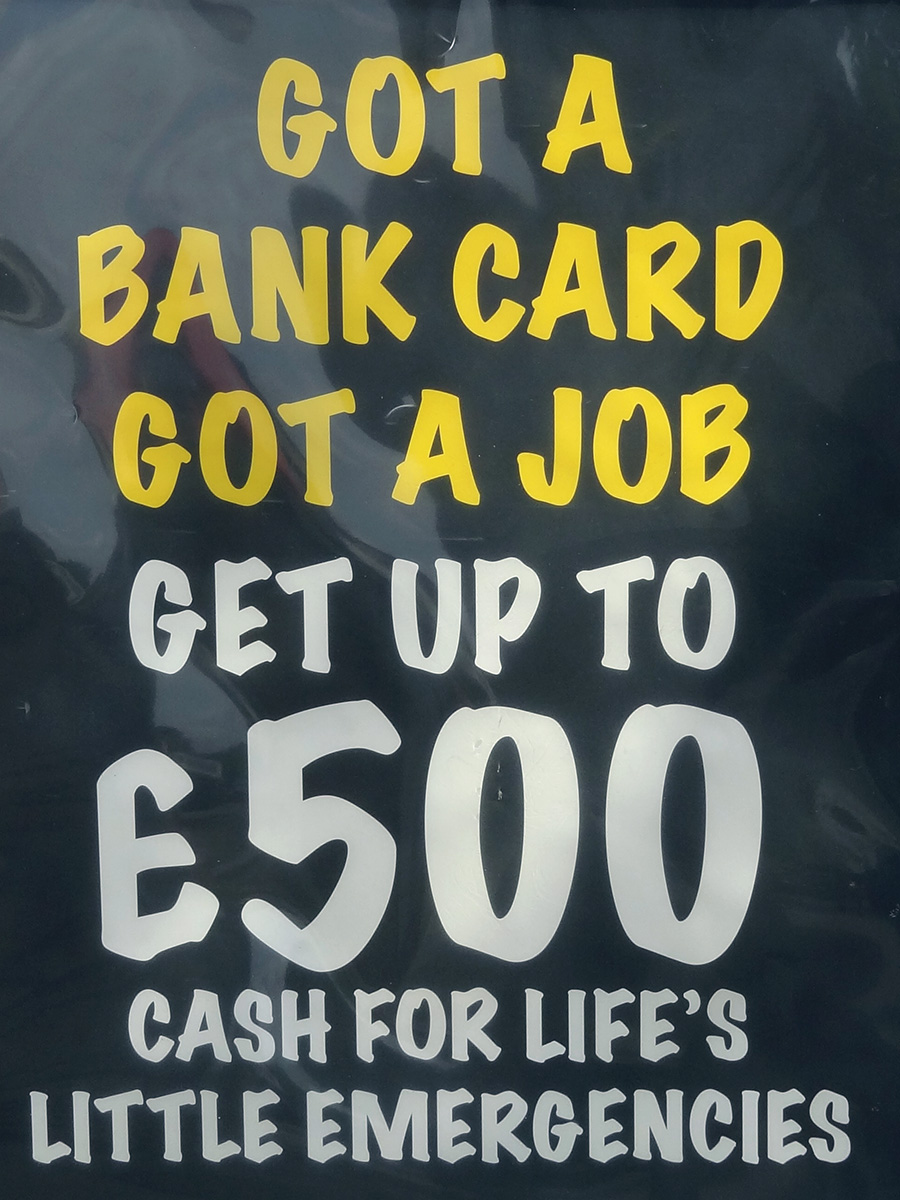 In an apparent U-turn, the Chancellor, George Osborne, has decided to cap the interest rates and other charges on payday loans and other short-term credit. As we have seen in previous news items, the sky-high interest rates which some of the poorest people in the UK are being forced to pay on these loans have caused outrage in many quarters: see A payday enquiry and Kostas Economides and the Archbishop of Canterbury. Indeed, the payday loan industry has been referred by the OFT to the Competition Commission (CC). The CC is required to report by 26 June 2015, although it will aim to complete the investigation in a shorter period.
 Indeed, the Chancellor has criticised the Labour Party’s proposal to freeze gas and electricity prices for 20 months if it wins the next election, arguing that the energy companies will simply get around the freeze by substantially raising their prices before and after the 20 months.