 As part of the Basel III round of banking regulations, representatives of the EU Parliament and member governments have agreed with the European Commission that bankers’ bonuses should be capped. The proposal is to cap them at 100% of annual salary, or 200% with the agreement of shareholders. The full Parliament will vote in May and then it will go to officials from the 27 Member States. Under a system of qualified majority voting, it is expected to be accepted, despite UK resistance.
The main arguments in favour of a cap are that it will reduce the focus of bankers on short-term gains and reduce the incentive to take excessive risks. It will also appease the anger of electorates throughout the EU over bankers getting huge bonuses, especially in the light of the recession, caused in major part by the excesses of bankers.
 The main argument against is that it will drive talented top bankers to countries outside the EU. This is a particular worry of the UK government, fearful of the effect on the City of London. There is also the criticism that it will simply drive banks into increasing basic salaries of senior executives to compensate for lower bonuses.
But it is not just the EU considering curbing bankers’ pay. The Swiss have just voted in a referendum to give shareholders the right to veto salaries and bonuses of executives of major companies. Many of these companies are banks or other financial sector organisations.
So just what will be the effect on incentives, banks’ performance and the movement of top bankers to countries without such caps? The following videos and articles explore these issues. As you will see, the topic is highly controversial and politically charged.
 Meanwhile, HSBC has revealed its 2012 results. It paid out $1.9bn in fines for money laundering and set aside a further $2.3bn for mis-selling financial products in the UK. But its underlying profits were up 18%. Bonuses were up too. The 16 top executives received an average of $4.9m each. The Chief Executive, Stuart Gulliver, received $14.1m in 2012, 33% up on 2011 (see final article below).
Webcasts and podcasts
 EU moves to cap bankers bonuses Euronews on Yahoo News (1/3/13)
EU to Curb Bank Bonuses WSJ Live (28/2/13)
Inside Story – Curbing Europe’s bank bonuses AlJazeera on YouTube (1/3/13)
Will EU bonus cap ‘damage economy’? BBC Radio 4 Today Programme (28/2/13)
Swiss back curbs on executive pay in referendum BBC News (3/3/13)
Has the HSBC scandal impacted on business? BBC News, Jeremy Howell (4/3/13)
Articles
Bonuses: the essential guide The Guardian, Simon Bowers, Jill Treanor, Fiona Walsh, Julia Finch, Patrick Collinson and Ian Traynor (28/2/13)
Q&A: EU banker bonus cap plan BBC News (28/2/13)
Outcry, and a Little Cunning, From Euro Bankers The New York Times, Landon Thomas Jr. (28/2/13)
Bank bonuses may shrink – but watch as the salaries rise The Observer, Rob Taylor (3/3/13)
Don’t cap bank bonuses, scrap them The Guardian, Deborah Hargreaves (28/2/13)
Capping banker bonuses simply avoids facing real bank problems The Telegraph, Mats Persson (2/3/13)
Pro bonus The Economist, Schumpeter column (28/2/13)
‘The most deluded measure to come from Europe since fixing the price of groceries in the Roman Empire’: Boris Johnson attacks EU banker bonus cap Independent, Gavin Cordon , Geoff Meade (28/2/13)
EU agrees to cap bankers’ bonuses BBC News (28/2/13)
Viewpoints: EU banker bonus cap BBC News (28/2/13)
Voters crack down on corporate pay packages swissinfo.ch , Urs Geiser (3/3/13)
Swiss voters seen backing executive pay curbs Reuters, Emma Thomasson (3/3/13)
Swiss referendum backs executive pay curbs BBC News (3/3/13)
Voters in Swiss referendum back curbs on executives’ pay and bonuses The Guardian, Kim Willsher and Phillip Inman (3/3/13)
Swiss vote for corporate pay curbs Financial Times, James Shotter and Alex Barker (3/3/13)
HSBC pays $4.2bn for fines and mis-selling in 2012 BBC News (4/3/13)
Questions
- How does competition, or a lack of it, in the banking industry affect senior bankers’ remuneration?
- What incentives are created by the bonus structure as it is now? Do these incentives result in desirable outcomes?
- How would you redesign the bonus system so that the incentives resulted in beneficial outcomes?
- If bonuses are capped as proposed by the EU, how would you assess the balance of advantages and disadvantages? What additional information would you need to know to make such an assessment?
- How has the relationship between banks and central banks over the past few years created a moral hazard? How could such a moral hazard be eliminated?
 The Big Four are well known: Deloitte, Ernst and Young, KPMG and PWC. They act as auditors for 90% of the UK’s stock-market listed companies. They have a very close relationship with the companies that they audit and because of this have faced criticism of not warning of the financial crisis. A further accusation is that the relationship between auditors and managers has become blurred.
In some sense, there is a problem of divorce of ownership from control. The companies that are audited by the Big Four have shareholders who are interested in profits and their dividends. But they employ managers who are responsible for the day-to-day running of the business. However, there are concerns that the auditors have become more concerned with meeting the interests of the managers and not of the shareholders. It has been suggested that the company’s management tend to ‘present their accounts in the most favourable light, whereas shareholder interests can be quite different.’ Laura Carstensen, the chair of the Audit Investigation Group said:
It is clear that there is significant dissatisfaction amongst some institutional investors with the relevance and extent of reporting in audited financial reports … management may have incentives to present their accounts in the most favourable light, whereas shareholder interests can be quite different.
 The Big Four have been criticised for limiting competition in the industry. The Competition Commission has said that companies typically stay with the same auditing firm and this acts to limit competition. One suggestion to encourage competition is to enforce rotation of Auditors. However, the Big Four have said that the market remains competitive, ‘healthy and robust’ and that any enforcement as noted above would not be in the public interest. Other, smaller auditing companies have praised the preliminary report of the Competition Commission. One firm said:
No one solution will achieve market correction, but rather a combination of tendering requirements, encouragement of transparency and dialogue between auditors, companies and investors, and reform of outdated exclusionary practices should provide a backdrop for a healthier FTSE 350 audit market.
The report is not yet final, but the future of the Big Four is somewhat uncertain, especially with the European Commission’s desire to break them up. The following articles look at this industry.
Big Four accountants reject claims over high prices and poor competition The Guardian, Josephine Moulds and David Feeney (22/2/13)
Competition Commission raps Big Four accountants BBC News (22/2/13)
Big Four’s rivals welcome audit shake-up Financial Times, Adam Jones (22/2/13)
UK’s “Big Four” accountants under fire from watchdog Reuters, Huw Jones (22/2/13)
Big Four chastised by Competition Commission The Telegraph, Helia Ebrahimi (22/2/13)
The uncompetitive culture of auditing’s big four remains undented The Guardian, Prem Sikka (23/2/13)
Big Four accountants ‘in closed club on audits’ Independent, Mark Leftly (23/2/13)
Questions
- What is the role of the Competition Commission?
- Explain with other examples the problem of the divorce of ownership from control. How might the interest of shareholders and managers differ? Can they ever be aligned?
- Is market share a good measure of the competitiveness of an industry?
- What are the benefits of competition?
- Why has the regulator suggested that the Big Four are limiting competition?
- What solutions have been proposed by the Competition Commission? Explain how they are likely to stimulate competition in this market.
 The energy sector has a history of criticism with regards to prices and practices. In the past, Ofgem have tried to make the sector more competitive, by ensuring that price comparisons are easier. At the beginning of this year, many of the big six providers announced price cuts, but within the next few weeks, we will see the reverse occurring, as energy prices begin to rise.
British Gas has announced price rises of 6% from 16th November that will affect over 8 million customers by adding approximately £80 per year to the annual dual fuel bill. Npower will also put its prices up 10 days later (8.8% for gas and 9.1% for electricity), creating higher bills for 3 million people.
In January of this year, when we saw energy prices fall, it was not solely due to Ofgem’s findings. We had a relatively mild winter, which reduced the demand for energy and this fed into lower prices. As the winter now approaches once more, demand for energy will begin to increase, feeding into prices that are now higher.
Furthermore, the energy companies have said that a range of external factors are also adding to their costs and putting increasing pressure on them to increase their charges. Npower’s Chief Commercial Officer said:
“There is never a good time to increase energy bills, particularly when so many people are working hard to make ends meet…But the costs of new statutory schemes, increases in distribution charges and the price of gas for the coming winter are all being driven up by external factors, for example government policy”
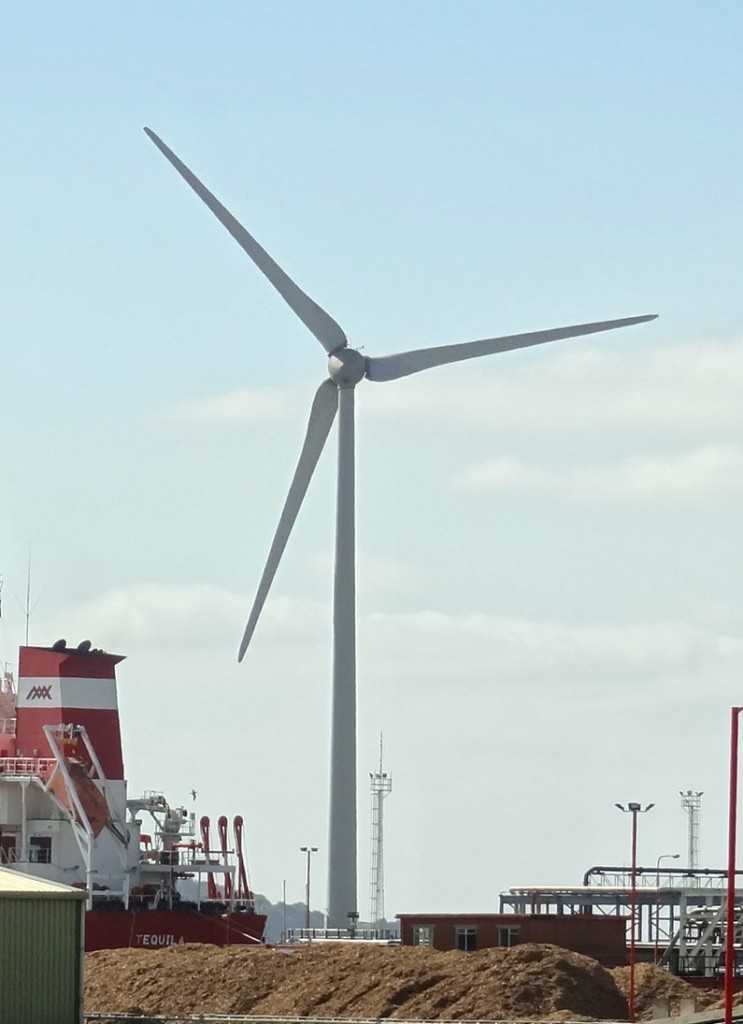 Significant investment is needed in the energy sector. Energy companies are required to set aside money for maintaining and improving the national grid and investing in renewable energy, such as wind and solar power. In order for the energy companies to fund these investments, more money must be raised and the logical method is to put up prices. However, critics are simply blaming ‘these very big lazy companies’ who are passing ‘above-inflation price rises’ onto already squeezed households.
Part of this is undoubtedly to do with the market structure of this sector. A typical oligopoly creates a market which, under certain circumstances, can be highly competitive, but because of barriers to entry that prevent new firms from entering the market may charge higher prices and be inefficient. Indeed, Ofgem has plans to reduce the power of the main energy providers by forcing them to auction off some of the electricity they generate. The aim of this is to free up the market and make it more competitive.
While only three providers have announced price rises, it is inevitable that the other three will follow. The relative increases will create incentives for consumers to switch providers, but crucial to this is an ability to understand the different tariffs on offer and lack of clarity on this has been a big criticism previously levelled at the energy sector. Indeed, half of UK customers have never switched energy providers. Perhaps this is the time to think about it, firstly as a means of saving money and secondly as a means of putting the energy companies in competition with each other. The following articles consider this market.
Energy price rises: how to switch, save and safeguard your supply The Guardian, Mark King (12/10/12)
Npower and British Gas raise energy prices (including video) BBC News (12/10/12)
Energy price rises? We’re like turkeys voting for Christmas The Telegraph, Rosie Murray-West (12/10/12)
British Gas and Npower to raise prices fuelling fears of a ‘long, cold winter’ for more households Independent
, Graeme Evans (12/10/12)Wholesale prices rise as energy costs jump Wall Street Journal, Sarah Portlock and Jeffrey Sparshott (12/10/12)
British Gas raises gas and electricity prices by 6pc The Telegraph (12/10/12)
Osborne warns energy firms over price hikes Reuters (12/10/12)
Energy price hikes to take effect from next week Independent, Simon Read(13/10/12)
Questions
- What are the main reasons influencing the recent price rises? In each case, explain whether it is a demand- or supply-side factor.
- Using your answer from question 1, illustrate the effect of it on a demand and supply diagram.
- Which features of an oligopolistic market are relevant to the energy sector. How can we use them to explain these higher prices.
- How has government policy affected the energy sector and energy prices?
- Why are customers reluctant to change energy providers? Does this further the energy company’s ability to raise prices?
- Are there any government policies that could be implemented to reduce the power of the energy companies?
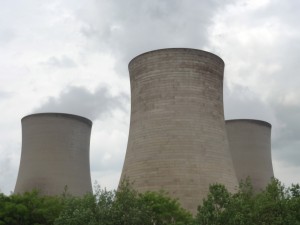 EU environmental legislation is beginning to cause problems in the UK. As it prohibits coal-fired power plants from generating power, they will be forced to close. This means that the UK will be forced to rely more on imported energy, which could lead to price rises, as energy shortages emerge.
Ofgem, the energy regulator has said that the risk of a gas shortage is likely to be at its highest in about 3 years time, as the amount of spare capacity is expected to fall from its current 14% to just 4%. Energy shortages have been a concern for some time, but the report from Ofgem indicates that the predicted time frame for these energy shortages will now be sooner than expected. Ofgem has said that the probability of a black-out has increased from 1 in 3,300 years now to 1 in 12 years by 2015.
The government, however, has said that its Energy Bill soon to be published will set out plans that will secure power supply for the UK. Part of this will be through investment, leading to new methods of generating energy. The Chief Executive of Ofgem, Alistair Buchanan said:
‘The unprecedented challenges in facing Britain’s energy industry … to attract the investment to deliver secure, sustainable and affordable energy supplies for consumers, still remain.’
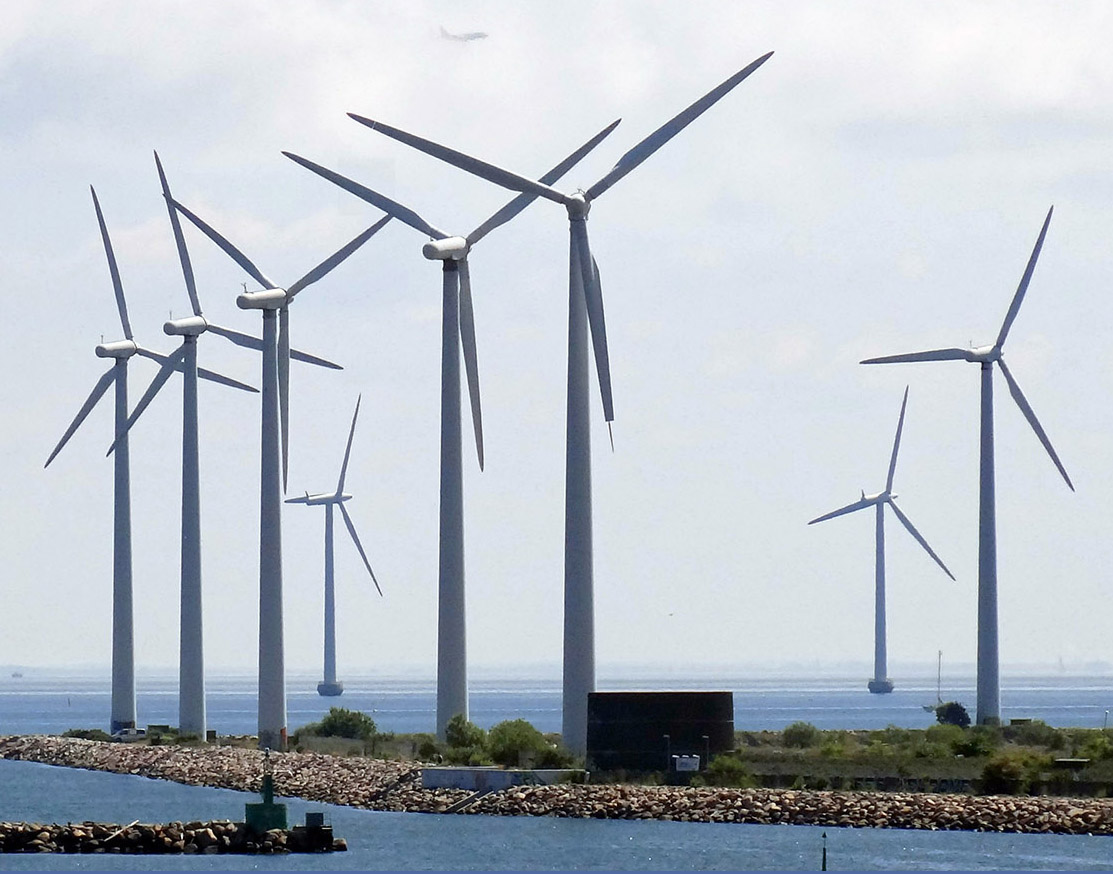
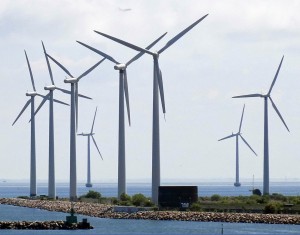 One particular area that will see growth is wind-farms: a controversial method of power supply, due to the eye-sore they present (to some eyes, at least) and the noise pollution they generate. But with spare capacity predicted to fall to 4%, they will be a much needed investment.
Perhaps of more concern for the everyday household will be the impact on energy prices. As we know, when anything is scarce, the price begins to rise. As energy shortages become more of a concern, the market mechanism will begin to push up prices. With other bills already at record highs and incomes remaining low, the average household is likely to feel the squeeze. The following articles and the Ofgem report considers this issue.
Report
Electricity Capacity Assessment Ofgem Report to Government, Ofgem (5/12/12)
Articles
Power shortage risks by 2015, Ofgem warns BBC News (5/10/12)
Britain faces risk of blackout The Telegraph (5/10/12)
Ofgem estimates tightening margins for electricity generation Reuters (5/10/12)
Electricity shortages are ‘risk’ by 2015 Sky News (5/10/12)
Future energy bills could give customers a nasty shock ITV News, Chris Choi (5/10/12)
Questions
- What is the role of Ofgem in the UK?
- Explain the way in which prices adjust as resources become more or less scarce. Use a demand and supply diagram to illustrate your answer.
- To what extent do you think the UK should be forced to close down its coal-fired plants, as a part of EU environmental legislation?
- Are there any market failures associated with the use of wind farms? Where possible, use a diagram to illustrate your answer.
- Explain why an energy shortage will lead to an increase in imports and how this in turn will affect energy prices.
- What are the government’s plans to secure energy provision in the UK? Do you think they are likely to be effective?
 In an attempt to kick start the UK housing industry, the government has proposed a series of measures to reduce regulations.
These include relaxing planning restrictions on building extensions to existing homes, shops and offices; relaxing current rules that all new housing developments should include affordable housing (which often makes little or no profit for the builders); an extra £280m for the FirstBuy scheme that provides loans to first-time buyers to raise money for a deposit; and a new “major infrastructure fast track” scheme, whereby developers of large commercial and residential projects currently stalled at local authority planning level can have their applications ‘fast tracked’ by the national Planning Inspectorate.
The government maintains that the measures will increase the flow of new houses coming onto the market by reducing ‘red tape’.

Critics maintain that the problem of the slump in house building has little to do with a lack of availability of new houses or new plots for building. Rather, it is a reflection of the recession in the economy as a whole. The solution, claim critics, is to stimulate the economy and then the new-build property market will recover along with other sectors.
The articles look at the likely success of these latest policy proposals for the property market.
Articles
David Cameron and Nick Clegg unveil plans to kick-start Britain’s ailing house building industry Independent, Oliver Wright (6/9/12)
Planning rules on extensions to be relaxed ‘to boost economy’ BBC News (6/9/12)
Q&A: Housing and planning shake-up BBC News (6/9/12)
Government plans are recipe for planning blight, says LGA BBC News (6/9/12)
Scepticism greets home improvements plan Financial Times, George Parker and Gill Plimmer (6/9/12)
Extensions and loft conversions could add nearly a quarter to the value of homes Independent, Alex Johnson (10/9/12)
Green groups condemn relaxation of house-building planning rules GreenWise (6/9/12)
Construction figures deal blow to government housebuilding plans Guardian, Philip Inman (4/9/12)
House builders sitting on 400,000 undeveloped plots of land with planning permission The Telegraph (5/9/12)
Weak demand hits building sector Independent, Jamie Grierson (4/9/12)
Free up green-belt land for new housing, says Policy Exchange Guardian, Nicholas Watt (13/9/12)
Relaxing Planning Laws Will Damage British Housing Huffington Post, Martin Roberts (7/9/12)
Will David Cameron’s planning reforms create jobs and growth? Guardian, Juliette Jowit (6/9/12)
Data
Economic Data freely available online (see site 30 for links to housing market data) Economics Network
Lending to individuals Bank of England
Questions
- Distinguish between supply-side and demand-side policy and the different types of each.
- How would you classify the types of policy proposals announced on freeing up the new-build property market in terms of your answer to question 1?
- What will determine the success of the policy measures in stimulating (a) the new-build property market; (b) the economy generally?
- What externalities are involved in relaxing the regulations on home extensions?
- If you were in power, how would you go about stimulating the property market? Would there be any downsides of your proposals?