 This rather strange question has been central to a storm that has been brewing between various celebrity chefs, including Jamie Oliver and Hugh Fearnley-Whittingstall, and the supermarkets. Supermarkets say that consumers don’t want irregular shaped vegetables, such as carrots, parsnips and potatoes. ‘Nonsense’, say their critics.
At the centre of the storm are the farmers, who find a large proportion of their vegetables are rejected by the supermarkets. And these are vegetables which are not damaged or bad – simply not of the required shape. Although these rejected vegetables have been described as ‘wonky’, in fact many are not wonky at all, but simply a little too large or too small, or too short or too long. Most of these vegetables are simply wasted – ploughed back into the ground, or at best used for animal feed.
And it’s not just shape; it’s colour too. Many producers of apples find a large proportion being rejected because they are too red or not red enough.
 But do consumers really want standardised fruit vegetables? Are the supermarkets correct? Are they responding to demand? Or are they attempting to manipulate demand?
Supermarkets claim that they are just responding to what consumers want. Their critics say that they are setting ludicrously rigid cosmetic standards which are of little concern to consumers. As Hugh Fearnley-Whittingstall states:
‘It’s only when you see the process of selection on the farm, how it has been honed and intensified, it just looks mad. There are many factory line systems where you have people looking for faults on the production line; in this system you’re looking for the good ones.
What we’re asking supermarkets to do is to relax their cosmetic standards for the vegetables that all get bagged up and sold together. It’s about slipping a few more of the not-so-perfect ones into the bag.’
In return, consumers must be prepared to let the supermarkets know that they are against these cosmetic standards and are perfectly happy to buy slightly more irregular fruit and vegetables. Indeed, this is beginning to happen through social media.  The pressure group 38 degrees has already taken up the cause.
But perhaps consumers ‘voting with their feet’ is what will change supermarkets’ behaviour. With the rise of small independent greengrocers, many from Eastern Europe, there is now intense competition in the fruit and vegetables market in many towns and cities. Perhaps supermarkets will be forced to sell slightly less cosmetically ‘perfect’ produce at a lower price to meet this competition.
Videos
 Hugh’s War on Waste Episode 1 BBC on YouTube, Hugh Fearnley-Whittingstall (2/11/15)
Hugh’s War on Waste Episode 2 BBC on YouTube, Hugh Fearnley-Whittingstall (9/11/15)
Articles
Hugh Fearnley-Whittingstall rejects Morrisons’ ‘pathetic’ wonky veg trial The Guardian, Adam Vaughan (9/11/15)
Jamie Oliver leads drive to buy misshapen fruit and vegetables The Guardian, Rebecca Smithers (1/1/15)
Hugh Fearnley-Whittingstall’s war over wonky parsnips The Telegraph, Patrick Foster (30/10/15)
Asda extends ‘wonky’ fruit and veg range Resource, Edward Perchard (4/11/15)
Wearne’s last farmer shares memories and laments loss of farming community in Langport area Western Gazette, WGD Mumby (8/11/15)
Viewpoint: The rejected vegetables that aren’t even wonky BBC News Magazine (28/10/15)
Viewpoint: The supermarkets’ guilty secret about unsold food BBC News Magazine (6/11/15)
Questions
- What market failures are there is the market for fresh fruit and vegetables?
- Supermarkets are oligopsonists in the wholesale market for fruit and vegetables. What is the implication of this for (a) farmers; (b) consumers?
- Is there anything that (a) consumers and (b) the government can do to stop the waste of fruit and vegetables grown for supermarkets?
- How might supermarkets estimate the demand for fresh fruit and vegetables and its price elasticity?
- What can supermarkets do with unsold food? What incentives are there for supermarkets not to throw it away but to make good use of it?
- Could appropriate marketing persuade people to be less concerned about the appearance of fruit and vegetables? What form might this marketing take?
 The town of Kilkenny in Ireland has just hosted the sixth annual Kilkenomics festival (Nov 5–8) where economics and comedy meet. The festival brought together comedians and economists to take a look at some of the most pressing economic and social issues, such as the refugee crisis, economic recovery, banking and finance, the growth in inequality, the future of the EU, economic power, the environment and personal behaviour.
With stand-up comedians taking a sideways look at economic issues and top economists having their ideas lampooned, or lampooning them themselves, the festival provided a fun, but useful, reality check for the discipline of economics.
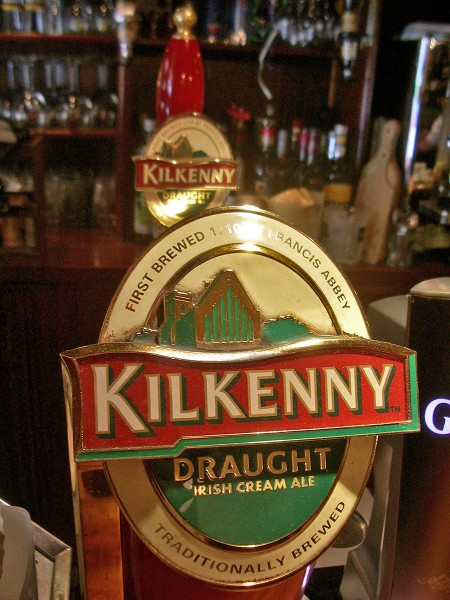 The festival attracted some major names in the field of comedy, economics, journalism and politics. Perhaps the biggest draw was the former finance minister of Greece, Yanis Varoufakis (see also), who opened the festival with a withering attack on the economic model being pursued by Greece’s creditors (the European Commission, the IMF and the ECB).
Much of the comedy was really aimed, not so much at economics and economists, but more at how politicians pursue economic policies and interpret economic models in ways that suit their own political agenda. But still there was no escape for economists. Much of the humour was directed at unrealistic assumptions and unrealistic visions of how economies function.
Thanks to JokEc for the following:
|
|
| • |
Economics is the only field in which two people can get a Nobel Prize for saying exactly the opposite thing. |
| • |
If you rearrange the letters in “ECONOMICS”, you get “COMIC NOSE”. |
| • |
Economics has got so rigorous we’ve all got rigor mortis. |
| • |
How many economists does it take to change a light bulb? |
I’ll leave you to work out the best answer to that last one – there could be many depending on the school of thought.
Videos and podcasts
Kilkenomics Promo – 2015 Kilkenomics on YouTube (23/10/15)
Kilkenomics: Highlights 1 Kilkenomics on YouTube (27/10/15)
Kilkenomics: Highlights 2 Kilkenomics on YouTube (30/10/15)
Kilkenomics 2014 BBC ‘In the Balance’ (9/11/14)
Articles
Kilkenomics launches biggest programme to date Meath Chronicle (1/10/15)
The subversive wonders of Kilkenomics – where economics meets stand-up The Spectator, Liam Halligan (15/11/14)
Guilty as charged: Irish standup festival puts economics in the dock The Guardian, Larry Elliott (8/11/15)
Ireland no paradigm of successful austerity – Varoufakis The Irish Times, Eoin Burke Kennedy (5/11/15)
Economy of sex … how much are your orgasms costing you? Irish Independent, Niamh Horan (8/11/15)
Questions
- What is it about economics that gives so much material to comedians?
- ‘The worse it gets the funnier it seems because comedy exists with tragedy.’ To what extent is this true of economics as a discipline or simply of the state of the world economists are studying at any one time?
- Should assumptions in economics always be realistic? Explain why or why not.
- For what types of reason might economists disagree?
- Make up an economics joke and test it on your fellow students. Perhaps there ought to be a vote for the funniest and a prize for the winner. What was it about the winning joke that made it the funniest?
 According to a an article in The Guardian, The best news in the world, by the president of the World Bank, Jim Yong Kim, there has been a dramatic fall in global poverty over the past two decades. The number of people in extreme poverty is projected to fall this year to below 10% of global population for the first time. This has been made possible, he claims, by unprecedented economic growth, especially in China.
But this raises three questions.
The first is whether, in the face of falling growth rates, progress in poverty reduction can be maintained.
The second is whether the World Bank is measuring extreme poverty in the right way. It is now defined as living on less than US$1.90 a day in 2011 prices – until a few weeks ago is was $1.25 in 2005 prices. As a result of this rebasing, global poverty falls from 14.5% of the world’s population (or 1011 million people) under the old method to 14.2% (or 987 million) under the new.
The third question is whether countries can improve their data collection so that a truer estimate of poverty can be made.
As far as the first question is concerned, Kim states that to stimulate growth, ‘every dollar of public spending should be scrutinised for impact. Every effort must be made to improve productivity.’ What is more, three things must happen:
|
|
| • |
Economic growth must lift all people. It must be inclusive. |
| • |
Investment in human beings is crucial – especially investing in their health and education. Malnourished and poorly educated children will never reach their full potential and countries, in turn, will fall short of their economic and social aspirations. |
| • |
We must ensure that we can provide safety nets that prevent people from falling back into poverty because of poor health, economic shocks, or natural disasters. |
As far as the second question is concerned, there are many who argue that $1.90 per day is far too low a measure of the extreme poverty threshold. It is a purchasing-power parity measure and is equivalent to what $1.90 would buy in the USA in 2011.  But, according to the Jason Hickel article linked below, ‘the US Department of Agriculture calculates that in 2011 the very minimum necessary to buy sufficient food was $5.04 per day. And that’s not taking account of other requirements for survival, such as shelter and clothing.’ Peter Edward of Newcastle University, claims Hickell, ‘calculates that in order to achieve normal human life expectancy of just over 70 years, people need roughly 2.7 to 3.9 times the existing poverty line.’
But even if living on below $1.90 a day is defined as extreme poverty, it is important not to see the problem of poverty as having been solved for people who manage to achieve an income slightly above that level.
The third question is how to improve data. There is a paucity and unreliability of data in many developing countries. According to Kim:
Our report adds that data is sparse and inconsistent across the region and globally. Some 29 countries around the world had no poverty data from 2002 to 2011, so they could not track their progress. Another 28 had just one survey that collected poverty data during that time.
This is a situation that must change to improve the world’s ability to tackle poverty. In fact, we can’t accomplish our goal if we do not have enough information to know whether people are actually lifting themselves out of poverty. For that we need to address huge data gaps. We need robust data.
Articles
The best news in the world: we have made real progress towards ending extreme poverty The Guardian, Jim Yong Kim (3/11/15)
Could you live on $1.90 a day? That’s the international poverty line The Guardian, Jason Hickel (1/11/15)
Making international trade work for the world’s poorest The Guardian, Jim Yong Kim and Roberto Azevêdo (30/6/15)
Global Poverty Will Hit New Low This Year, World Bank Says Huffington Post, Lydia O’Connor (23/10/15)
The international poverty line has just been raised to $1.90 a day, but global poverty is basically unchanged. How is that even possible? World Bank blogs, Francisco Ferreira, Dean Mitchell Jolliffe and Espen Beer Prydz (4/10/2015)
Why Didn’t the World Bank Make Reducing Inequality One of Its Goals? World Bank blogs, Jaime Saavedra-Chanduvi (23/9/13)
$1.90 Per Day: What Does it Say? Institute for New Economic Thinking, Rahul Lahoti and Sanjay Reddy (6/10/15)
Reports and papers
The Role of Trade in Ending Poverty WTO and World Bank (2015)
Poverty in a Rising Africa World Bank (1/10/15)
Ending extreme poverty and sharing prosperity: progress and policies World Bank, Marcio Cruz, James Foster, Bryce Quillin and Philip Schellekens (October 2015)
Questions
- Explain how the World Bank calculates the extreme poverty line.
- Why, if the line has risen from $1.25 per day to $1.90 per day, has the number of people recorded as being in extreme poverty fallen as a result?
- Why has the number of people in extreme poverty been rising over the years and yet the percentage of people in extreme poverty been falling?
- What policies can be adopted to tackle poverty? Discuss their practicality?
- Are reduced poverty and increased economic growth consistent policy goals? (See the blog post Inequality and economic growth.)
- What are the inadequacies of using income per day (albeit in ppp terms) as a measure of the degree of poverty? What other indicators of poverty could be used and how suitable would they be?
- How could international trade be made to work for the world’s poorest?
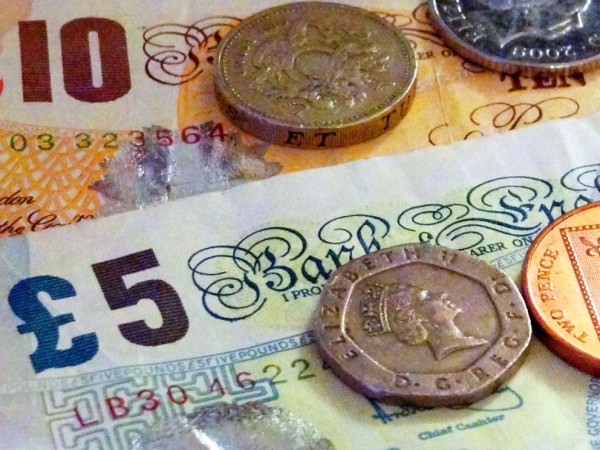 In a recent post, we looked at the rising number of people being paid less than the (voluntary) living wage. The Living Wage Foundation has just published the latest annual update to the living wage. This brings it to £9.40 per hour in London and £8.25 outside London – well above the statutory National Minimum Wage of £6.70 for those aged 21 and over. Even when employers are required to pay at least the so-called National Living Wage (NLW) of £7.20 per hour from April 2016 to those aged 25 and over, the NLW will still be well below the living wage.
Read the earlier post and then answer the questions in the light of the new living wage rates and the new linked articles.
Articles
Living wage rate increased by 40p an hour BBC News (2/11/15)
London ‘living wage’ rises to £9.40 an hour Financial Times, Sarah O’Connor (2/11/15)
Living Wage now £8.25 across the UK and £9.40 in London Independent, Jon Stone (2/11/15)
Special report: The Living Wage and its impact on workers and businesses Manchester Evening News, Adam Jupp (2/11/15)
Living Wage: Number Of Employers Paying It Doubles In A Year, While Six Million Workers Still Go Without Huffington Post, Jack Sommers (2/11/15)
Living wage rate increases announced as campaigners call for more businesses to go beyond legal minimums Living Wage Foundation (30/10/15)
Data and Reports
Estimates of employee jobs paid less than the living wage in London and other parts of the UK ONS (12/10/15)
Annual Survey of Hours and Earnings ONS
Living wage rates: the calculation Living Wage Foundation
National Minimum Wage rates GOV.UK
Questions
- By referring to the Living Wage Foundation site, explain how the living wage is calculated. If you were defining the living wage, would you define it in this way? Explain.
- Distinguish between low pay and poverty. Does pay give a good indication of poverty?
- For what reasons has the number of jobs paying below the living wage increased? Does marginal productivty theory provide an explanation?
- Is it best to base statutory minimum wages on median earnings, mean earnings or the cost of living? Explain.
- If more 6 million jobs pay below the living wage, does this mean that 6 million people, more than 6 million people or fewer than 6 million people receive average hourly wages below the living wage? Explain.
- For what reasons might firms volunteer to pay the living wage to their employees? Is doing so consistent with the aim of profit maximisation?
- Why are more women than men paid wage rates below the living wage?
- Why does the proportion of people being paid the living wage vary from one part of the UK to another? Is this likely to be purely a reflection of differences in the cost of living?
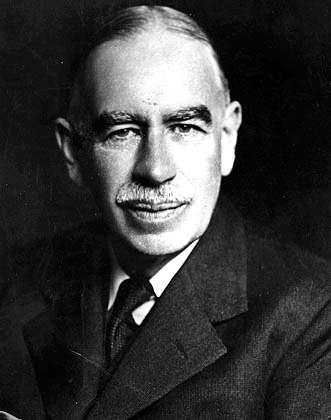 Here are two thought-provoking articles from The Guardian. They look at macroeconomic policy failures and at the likely consequences.
In first article, Larry Elliott, the Guardian’s Economics Editor, argues that Keynesian expansionary fiscal and monetary policy by the USA has allowed it to achieve much more rapid recovery than Europe, which, by contrast, has chosen to follow fiscal austerity policies and only recently mildly expansionary monetary policy through a belated QE programme.
In the UK, the recovery has been more significant than in the eurozone because of the expansionary monetary policies pursued by the Bank of England in its quantitative easing programme. ‘And when it came to fiscal policy, George Osborne quietly abandoned his original deficit reduction targets when the deleterious impact of an over-aggressive austerity strategy became apparent.’
So, according to Larry Elliott, Europe should ease up on austerity and governments should invest more though increased borrowing.
‘This is textbook Keynesian stuff. Unemployment is high, which means businesses are reluctant to invest. The lack of investment means that demand for new loans is weak. The weakness of demand for loans means that driving down the cost of borrowing through QE will have little impact. Therefore, it is up to the state to break into the vicious circle by investing itself, something it can do cheaply and – because there are so many people unemployed and businesses working well below full capacity – without the risk of inflation.’
In the second article, Paul Mason, the Economics Editor at Channel 4 News, points to the large increases in both public- and private- sector  debt since 2007, despite the recession. Such debt, he argues, is becoming unsustainable and hence the world could be on the cusp of another crash.
Mason quotes from the Bank for International Settlements Quarterly Review September 2015 – media briefing. In this briefing, Claudio Borio,
Head of the Monetary & Economic Department, argues that:
‘Since at least 2009, domestic vulnerabilities have developed in several emerging market economies (EMEs), including some of the largest, and to a lesser extent even in some advanced economies, notably commodity exporters. In particular, these countries have exhibited signs of a build-up of financial imbalances, in the form of outsize credit booms alongside strong increases in asset prices, especially property prices, supported by unusually easy global liquidity conditions. It is the coincidence of the reversal of these booms with external vulnerabilities that should be watched most closely.’
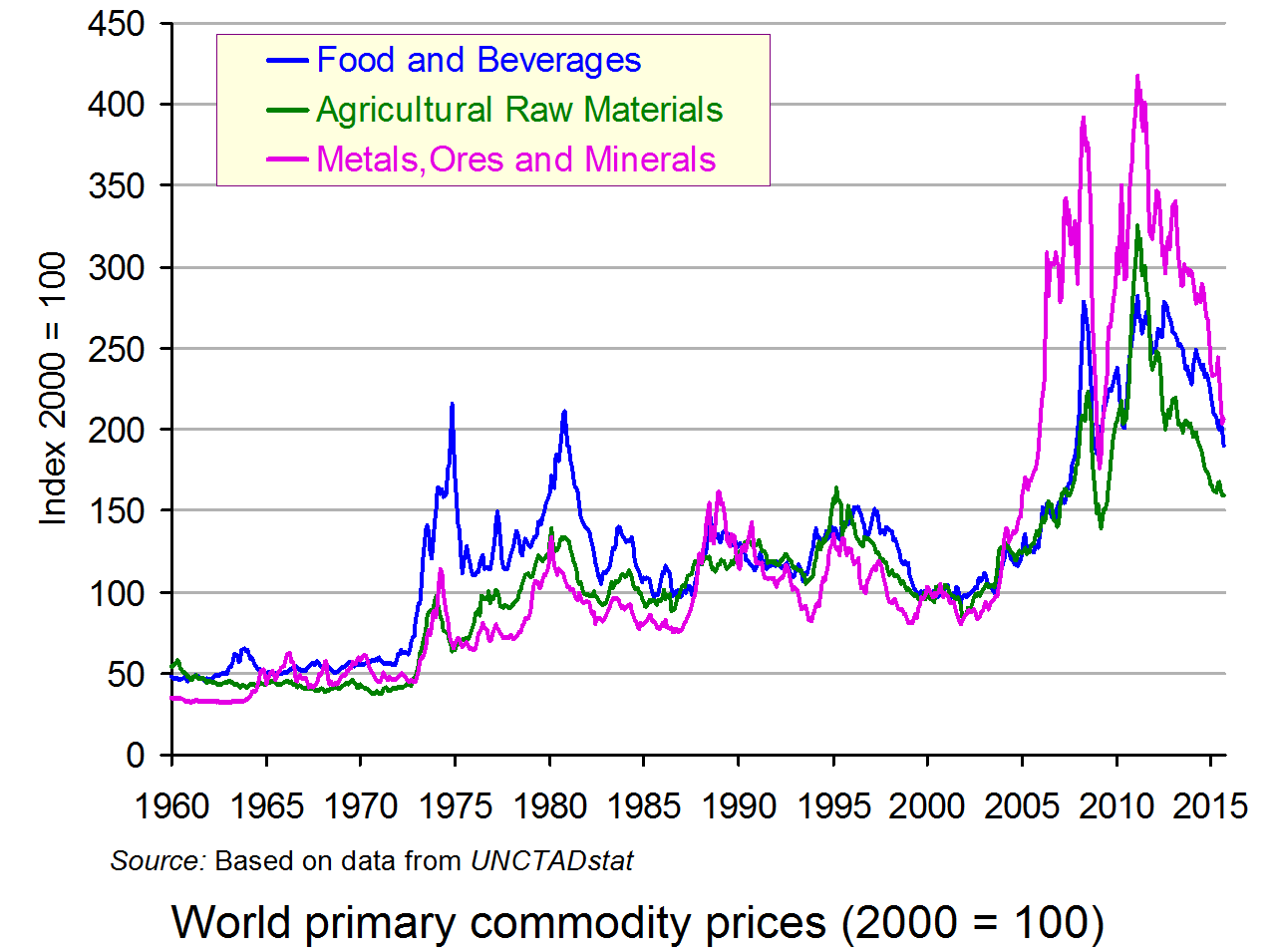 We have already seen a fall in commodity prices, reflecting the underlying lack of demand, and large fluctuations in stock markets. The Chinese economy is slowing markedly, as are several other EMEs, and Europe and Japan are struggling to recover, despite their QE programmes. The USA is no longer engaging in QE and there are growing worries about a US slowdown as growth in the rest of the world slows. Mason, quoting the BIS briefing, states that:
‘In short, as the BIS economists put it, this is “a world in which debt levels are too high, productivity growth too weak and financial risks too threatening”. It’s impossible to extrapolate from all this the date the crash will happen, or the form it will take. All we know is there is a mismatch between rising credit, falling growth, trade and prices, and a febrile financial market, which, at present, keeps switchback riding as money flows from one sector, or geographic region, to another.’
So should there be more expansionary policy, or should rising debt levels be reduced by tighter monetary policy? Read the articles and then consider the questions.
I told you so. Obama right and Europe wrong about way out of Great Recession The Guardian, Larry Elliott (1/11/15)
Apocalypse now: has the next giant financial crash already begun? The Guardian, Paul Mason (1/11/15)
Questions
- To what extent do the two articles (a) agree and (b) disagree?
- How might a neo-liberal economist reply to the argument that what is needed is more expansionary fiscal and monetary policies?
- What is the transmission mechanism whereby quantitative easing affects real output? Is it a reliable mechanism for policymakers?
- What would make a financial crash less likely? Is this something that governments or central banks can influence?
- Why has productivity growth been so low in many countries? What would increase it?
 This rather strange question has been central to a storm that has been brewing between various celebrity chefs, including Jamie Oliver and Hugh Fearnley-Whittingstall, and the supermarkets. Supermarkets say that consumers don’t want irregular shaped vegetables, such as carrots, parsnips and potatoes. ‘Nonsense’, say their critics.
 The pressure group 38 degrees has already taken up the cause.