 Many of the major industries in Australia are oligopolies/oligopsonies. Examples include banking, telecoms, supermarkets, insurance and iron ore. The dominant firms in these markets have been accused of exploiting their market power, both in charging high prices to consumers and driving down the prices paid to suppliers. The result, it is claimed, is that they have been making excessive profits.
But things may be changing. With the rise of online trading, barriers to entry in these markets have been falling. Many of the new entrants are established firms in other countries and hence already have economies of scale.
The first article below examines the challenge to established oligopolists in Australia.
Articles and blogs
The death of the oligopoly: Australia’s incumbents face new rivals Financial Review (Australia), Michael Smith (21/4/15)
Australian Oligopolies The Grapevine, Adam Dimech (27/12/14)
Paper
Breaking up Australia’s oligopolies Ashurst Australia (14/8/13)
Questions
- Find out which are the major firms in Australia in the five industries identified above. What is their market share and how has this been changing?
- What barriers to entry exist in each of these industries in Australia? To what extent have they been declining?
- What can new entrants do to overcome the barriers to entry?
- What technological developments allow other companies to challenge Foxtel’s pay television monopoly?
- To what extent are developments in the supermarket industry in Australia similar to those in the UK?
- To what extent does Australia benefit from increased globalisation?
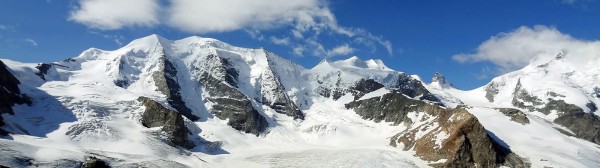
The World Economic Forum has been holding its annual meeting in the up-market Swiss ski resort of Davos. Many of the world’s richest and most powerful people attend these meetings, including political leaders, business leaders and representatives of various interest groups.
This year, one of the major topics has been the growth in inequality across the globe and how to reverse it. According to a report by Oxfam, Wealth: Having it all and wanting more:
The richest 1 per cent have seen their share of global wealth increase from 44 per cent in 2009 to 48 per cent in 2014 and at this rate will be more than 50 per cent in 2016. Members of this global elite had an average wealth of $2.7m per adult in 2014.
Of the remaining 52 per cent of global wealth, almost all (46 per cent) is owned by the rest of the richest fifth of the world’s population. The other 80 per cent share just 5.5 per cent and had an average wealth of $3851 per adult – that’s 1/700th of the average wealth of the 1 per cent.
Currently, the richest 85 people in the world have the same amount of wealth as the poorest 50% of the world’s population. It might seem odd that those with the wealth are talking about the problem of inequality.  Indeed, some of those 85 richest people were at the conference: a conference that boasts extremely luxurious conditions. What is more, many delegates flew into the conference in private jets (at least 850 jets) to discuss not just poverty but also climate change!
Yet if the problem of global inequality is to be tackled, much of the power to do so lies in the hands of these rich and powerful people. They are largely the ones who will have to implement policies that will help to raise living standards of the poor.
But why should they want to? Part of the reason is a genuine concern to address the issues of increasingly divided societies. But part is the growing evidence that greater inequality reduces economic growth by reducing the development of skills of the lower income groups and reducing social mobility. We discussed this topic in the blog, Inequality and economic growth.
So what policies could be adopted to tackle the problem. Oxfam identifies a seven-point plan:
|
|
| • |
Clamp down on tax dodging by corporations and rich individuals; |
| • |
Invest in universal, free public services such as health and education; |
| • |
Share the tax burden fairly, shifting taxation from labour and consumption towards capital and wealth; |
| • |
Introduce minimum wages and move towards a living wage for all workers; |
| • |
Ensure adequate safety-nets for the poorest, including a minimum income guarantee; |
| • |
Introduce equal pay legislation and promote economic policies to give women a fair deal; |
| • |
Agree a global goal to tackle inequality. |
But how realistic are these policies? Is it really in the interests of governments to reduce inequality? Indeed, some of the policies that have been adopted since 2008, such as bailing out the banks and quantitative easing, have had the effect of worsening inequality. QE drives up asset prices, particularly bond, share and property prices. This has provided a windfall to the rich: the more of such assets you own, the greater the absolute gain.
The following videos and articles look at the problem of growing inequality and how realistic it is to expect leaders to do anything significant about it.
Videos and podcasts
 Income inequality is ‘brake on growth’, Oxfam chief warns Davos France 24, Winnie Byanyima (22/1/15)
Davos dilemma: Can the 1% cure income inequality? Yahoo Finance, Lizzie O’Leary and Shawna Ohm (21/1/15)
Richest 1% ‘Will Own Half The World’s Wealth By 2016’ ITN on YouTube, Sarah Kerr (19/1/15)
The Price of Inequality BBC Radio 4, Robert Peston (3/2/15 and 10/2/15)
Articles
Richest 1% will own more than all the rest by 2016 Oxfam blogs, Jon Slater (19/1/15)
Global tax system can cut inequality The Scotsman, Jamie Livingstone (23/1/15)
A new framework for a new age Financial Times, Tony Elumelu (23/1/15)
The global elite in Davos must give the world a pay rise New Statesman, Frances O’Grady (22/1/15)
New Oxfam report says half of global wealth held by the 1% The Guardian, Larry Elliott and Ed Pilkington (19/1/15)
Davos is starting to get it – inequality is the root cause of stagnation The Guardian, Larry Elliott (25/1/15)
Inequality isn’t inevitable, it’s engineered. That’s how the 1% have taken over The Guardian, Suzanne Moore (19/1/15)
Why extreme inequality hurts the rich BBC News, Robert Peston (19/1/15)
Eurozone stimulus ‘reinforces inequality’, warns Soros BBC News, Joe Miller (22/1/15)
Hot topic for the 1 percent at Davos: Inequality CNBC, Lawrence Delevingne (21/1/15)
Global inequality: The wrong yardstick The Economist (24/1/15)
A Richer World (a compendium of articles) BBC News (27/1/15)
Data
OECD Income Distribution Database: Gini, poverty, income, Methods and Concepts OECD
The effects of taxes and benefits on household income ONS
Questions
- Why has inequality increased in most countries in recent years?
- For what reasons might it be difficult to measure the distribution of wealth?
- Which gives a better indication of differences in living standards: the distribution of wealth or the distribution of income?
- Discuss the benefits and costs of using the tax system to redistribute (a) income and (b) wealth from rich to poor
- Go through each of the seven policies advocated by Oxfam and consider how practical they are and what possible objections to them might be raised by political leaders.
- Why is tax avoidance/tax evasion by multinational companies difficult to tackle?
- Does universal access to education provide the key to reducing income inequality within and between countries?
 On my commute to work on the 6th May, I happened to listen to a programme on BBC radio 4, which provided some fascinating discussion on a variety of economic issues. Technological change is constant and unstoppable and the consequences of it are likely to be both good and bad.
In this programme some top economists, including Joseph Stiglitz offer their analysis of the impact of technology and how the future might look, by considering a range of factors, such as youth unemployment, the productivity of labour, education, pensions and inequality. The benefits of new technology can be seen as endless, but the impact on inequality and how the benefits of technology are being distributed is a concern for many people. The best introduction to the programme and its content is simply to reproduce the description provided by BBC radio 4.
The baby boom generation came of age when it was accepted knowledge that innovation and productivity would always lead to higher standards of living. The generations which followed assumed this truth would continue into the future indefinitely. With the crash of 2008 the upward mobility the middle classes assumed was their right evaporated, and it is unlikely to return.
Martin Wolf, chief economics commentator of the Financial Times, asks how the work force of the future will be changed by the advancements of technologies. How should governments respond to a jobs market which is hollowing out opportunities for traditional educated professions and how will rewards for innovation and income for labour be distributed without creating a society plagued by endemic inequality?
We will speak with optimists and pessimists on both sides of the argument to find out how the repercussions of these changes will affect the way we all live now and well into the future.
It is well worth listening to and provides some interesting insights as to what the future might look like, as the inevitable technological change continues. The link for the programme is below.
The future is not what it used to be BBC Radio 4 (6/5/14)
Questions
- What are the expected costs and benefits of technological change?
- Which factors are discussed as being the main obstacles to upwards mobility? Why have these become more prevalent in recent decades?
- Using a diagram, explain how technology can improve economic growth. To what extent is the multiplier effect important here?
- How is technology expected to affect the labour market? Use a diagram to help your explanation and make sure you consider both sides of the argument.
- What is meant by the idea that the benefits of new technology are likely to be felt in the long run?
- How important is education in creating equal opportunities?
- What is meant by secular stagnation? Is it seen as being a problem?
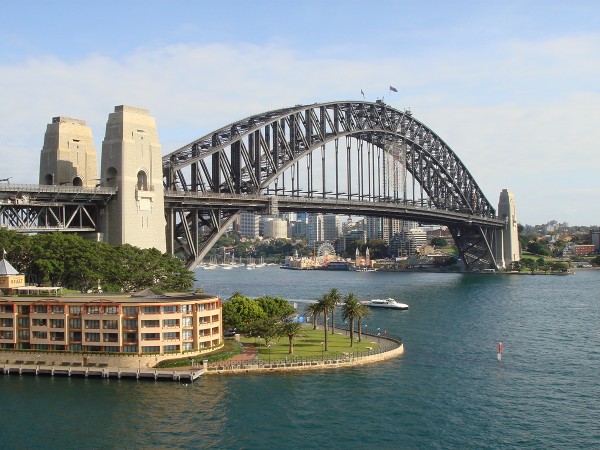 Finance ministers and central bank officials of the G20 countries are meeting in Sydney from 20 to 23 February. Business leaders from these countries are also attending and have separate meetings.
Amongst the usual discussions at such meetings about how to achieve greater global economic stability and faster and sustained economic growth, there are other more specific agenda issues. At the Sydney meeting these include a roundtable discussion to identify practical solutions to lift infrastructure investment. They also include discussions on how to clamp down on tax avoidance through means such as transfer pricing.
The G20 meetings of finance and business leaders take place annually. There are also annual summits of heads of government (the next being in Brisbane in November 2014).
The G20 was formed in 1999 to extend the work of the G8 developed countries to include other major developed and developing countries plus the EU. In 2008/9 it played a significant role in helping devise policies to tackle the banking crisis and combat the subsequent recession. At the time there was a common purpose, which made devising common policies easier.
Since then, the importance of the G20 has waned. Partly this is because of the divergent problems and issues between members and hence the difficulty of reaching agreements. Partly it is because, to be effective, it needs to remain small but, to be inclusive, it needs to extend beyond the current 20 members. Indeed there has been considerable resentment from many countries outside the G20 that their views are not being represented. Some representatives from non-G20 countries attend meetings on an informal basis.
The following articles discuss the role of the G20 and whether it is fit for purpose.
Articles
Janet Yellen vs. the world: The issues at the G20 finance summit Globe and Mail (Canada), Iain Marlow (20/2/14)
Turning ideas into action at the G20 Business Spectator (Australia), Mike Callaghan (21/2/14)
Boosting infrastructure investment can prove G20’s value to the world The Conversation, Andrew Elek (20/2/14)
Can the G20 ever realise its potential? The Conversation, Mark Beeson (21/2/14)
G20 has failed to fulfil its promise of collaboration amid hostility The Guardian, Larry Elliott (20/2/14)
Official G20 site
G20 Priorities G20
Australia 2014 G20
News G20
Questions
- Which countries are members of the G20? Compile a list of those countries you feel ought to be members of such an organisation.
- What are the arguments for and against increasing the membership of the G20 (or decreasing it)?
- Why is Janet Yellen, Chair of the US Federal Reserve, likely to be at odds with leaders from other G20 countries, especially those from developing countries?
- Why have the tensions between G20 members increased in recent months?
- Discuss possible reforms to the IMF and the G20’s role in promoting such reforms.
- What insights can game theory provide in understanding the difficulties in reaching binding agreements at G20 meetings? Are these difficulties greater at G20 than at G8 meetings?
- Should the G20 be scrapped?
 World leaders are meeting at the World Economic Forum in Davos, in the Swiss Alps. This annual conference is an opportunity for politicans, economists and businesspeople from around the world to discuss the state of the world economy and to consider policy options.
To coincide with the conference, the BBC’s Newsnight has produced the following slide show, which presents some economic facts about the world economy. The slide show provides no commentary and there is no commentary either in this blog – just some questions for you to ponder.
Using the economics you’ve learned so far, try answering these questions, which focus on the reasons for the patterns in the figures, the likely future patterns and the policy implications.
Slide show
Davos: 22 facts people should know BBC Newsnight (23/1/14)
Data
For additional international data to help you answer the questions, see:
Economic Data freely available online Economics Network
Questions
- Go through each of the slides in the Newsnight presentation and select the ones of most interest to you. Then, as an economist, provide an explanation for them.
- Identify some patterns over time in the statistics. Then project forward 20 years and discuss whether the patterns are likely to have changed and, if so, why.
- What policies could governments adopt to reverse any undesirable trends you have identified? How likely are these policies to be implemented and how successful are they likely to be?
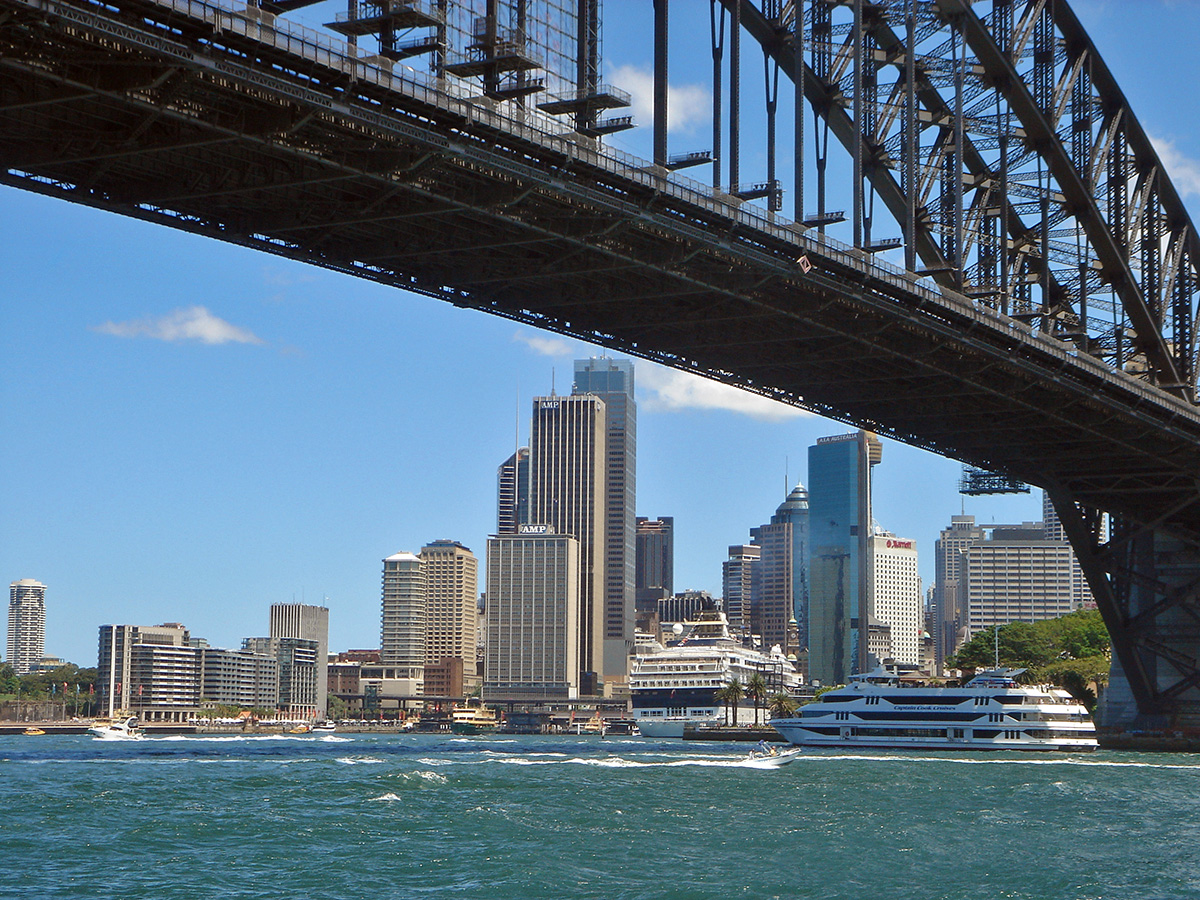 Many of the major industries in Australia are oligopolies/oligopsonies. Examples include banking, telecoms, supermarkets, insurance and iron ore. The dominant firms in these markets have been accused of exploiting their market power, both in charging high prices to consumers and driving down the prices paid to suppliers. The result, it is claimed, is that they have been making excessive profits.