 Economists use game theory to understand decision making where the outcome for an economic actor – individual, firm, government, etc. – depends on the actions and reactions of other actors. It models how rational actors make optimal decisions based on their expectations about such actions and reactions of competitors. Sometimes these expectations will be based on considerable knowledge; sometimes they will be based on hunch or the degree of optimism or pessimism.
Perhaps the most famous game is the prisoners’ dilemma. This is where two or more firms (or people) independently attempt to choose the best strategy, thinking about how their rivals are likely to react. But they end up in a worse position than if they had co-operated in the first place. For example, if a firm is considering cutting price, it would gain market share if the other firm does not cut price; in such a scenario it is likely to gain by cutting price. If, however, the other firm is expected to cut its price, the first firm will have to cut price itself to avoid losing market share; in this scenario it will also cut price. Assuming the other firm reasons the same, the outcome is likely to be a price war, with both firms losing profit. However, if they both colluded to maintain prices or even raise them (assuming they can evade any legal restrictions on collusion), they will both gain.
 Another example is the game of chicken. This is where two or more actors engage in brinkmanship, hoping that the other actor(s) will give in first. Take the above example of a price war. Assume that two firms are engaging in price cutting. They know that this will damage their short-term profit. But each hopes that the other will give up first and may then be willing to collude or, better still, be driven out of business. If either firm thinks it can win the game, it will reason that short-term pain is justified by long-term gain.
The war in Iran
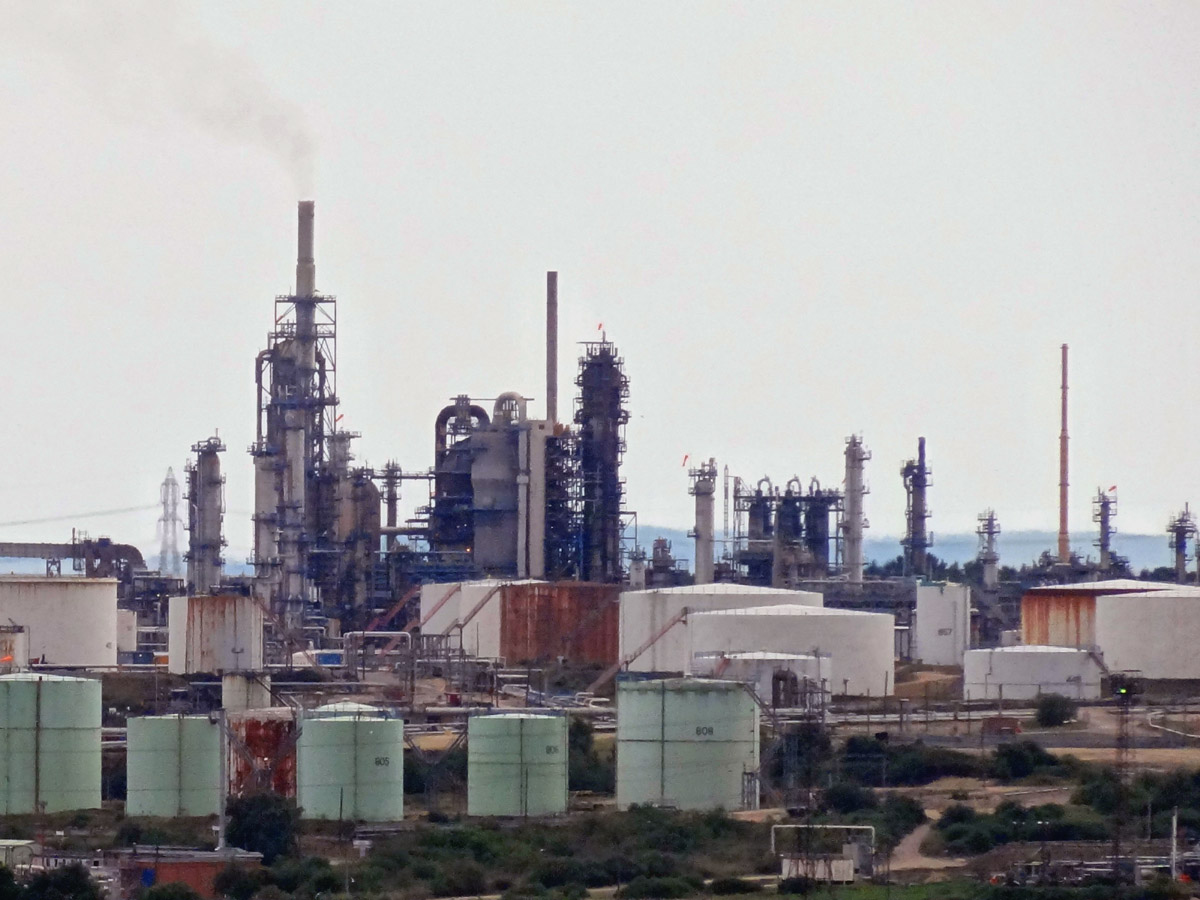
 A game of chicken is currently being ‘played’ by the USA and Iran. Iran is blocking the Strait of Hormuz; the USA is blockading Iranian ports, preventing ships from arriving or leaving. Both policies inflict economic pain. Blocking the Strait of Hormuz has driven up oil and gas prices and the prices of many other products exported through the Strait – products such as fertilisers, plastics, petrochemicals, sulphur, methanol and helium.
Each side hopes that the economic pain inflicted on the other will cause it to give up first.
But the game is ‘asymmetric’: the costs of continuing the blockades are different for each side and thus the pressures on each side to concede differ. For Iran, the blockade of its ports is massively curtailing its exports and is doing huge damage to its economy, already battered by bombing. But the war has so far seemed to allow the Iranian authorities to tighten their political grip and they may be prepared to play the ‘long game’ by rallying the Iranian population against the US and Israeli assault. The authorities may calculate that the Iranian people will be prepared to endure greater hardship for some time.
The USA is facing a much lower economic cost. Much of the hardship from the effective closure of the Strait of Hormuz is being borne by other countries. Energy and fertiliser shortages and the resulting rise in price of these critical inputs threaten a humanitarian disaster in some of the poorest countries. Harvests will be down, as will GDP; food prices will soar. There will be widespread economic hardship across Africa and much of Asia, particularly in those countries struggling with existing high debt burdens.
 But for Donald Trump and his administration, those costs are likely to be seen as important only in so far as they affect the USA. However, oil prices are determined in international markets and, despite the US economy gaining from higher oil prices as the USA is a net exporter, the price of fuel to the US consumer has risen substantially. Petrol prices in the USA have risen some 45% since the start of the war and jet fuel prices have doubled, driving up air fares. With the prices of other key products, such as medicines, clothing and electronics increasing too, US inflation is now rising – aggravated by the effects of the tariffs on many products. These costs matter to the US consumer and, with mid-term elections approaching and with Donald Trump’s approval rate plummeting, the USA is likely to be more sensitive to short-term economic costs than Iran.
But the USA poses a much greater military threat to Iran than vice versa and this is seen in the USA as a major advantage in this high-stakes game of chicken. But the Iranian authorities’ willingness to endure further military strikes for what they see as long-term gain, may make them unlikely to concede first.
Podcast and video
Articles
- Chicken
Stanford University, Janet Chen, Su-I Lu and Dan Vekhter
- Who will blink first as the Iran war hits the world economy?
CNN, Nic Robertson (23/4/26)
- Game theory explains why the US’s goals in Iran keep changing
New Scientist, Petros Sekeris (21/4/26)
- The Islamabad Game: From Lose-Lose to Win-Win in the Iran War
Times of Israeil, Vincent James Hoope (28/4/26)
- Deadly game they’re playing: Why Iran, Israel, and the US can’t stop escalating
The Business Standard, Bangladesh, Mohammad Omar Farooq (29/4/26)
- The Middle East’s game of chicken
Funds Global MENA, Raphael Olszyna-Marzys (27/4/26)
- The Strait of Hormuz shows how everything is now about leverage
The Conversation, Renaud Foucart (22/4/26)
Questions
- Explain the prisoners’ dilemma game and explain what is meant by the Nash equilibrium in the game.
- What is the Nash equilibrium of a game of chicken?
- Explain the asymmetries in the ‘game’ being ‘played’ by the USA, Israel and Iran?
- What other actors are there in the ‘game’ and do they play any significant role?
- How important is information and understanding held by the USA, Israeli and Iran about the likely consequences of their actions?
- What can mediators, such as Pakistan, do to de-escalate the situation?
- What are the likely long-term costs to the global economy if the blocking of the Strait of Hormuz persists for a number of months?
 Imagine a situation where you are thinking of buying a good and so you go to an e-commerce marketplace such as Amazon, eBay, Etsy or Onbuy. How confident are you about the quality of the different brands/makes that are listed for sale on these digital platforms? How do you choose which product to buy? Is the decision strongly influenced by customer reviews and rating?
When a customer is choosing what to buy it raises an interesting question: to what extent can the true quality of the different goods/services be observed at the time of purchase? Although perfect observability is highly unlikely, the level of consumer information about a product’s true quality will vary between different types of transaction.
For example, when consumers can physically inspect and test/try a product in a shop, it can help them to make more accurate judgements about its quality and condition. This poses a problem for online sellers of high-quality versions of a good. Without the ability to inspect the item physically, consumers may be unsure about its characteristics. They may worry that the online description provided by the seller deliberately misrepresents the true quality of the item.
Consumers may have other concerns about the general reliability of online sellers. For example, in comparison to buying the product from a physical store, consumers may worry that:
- They will have to wait longer to receive the good. In many cases, when consumers purchase a product from a high-street store, they can walk away with the item and start using it straight away. When purchasing on line, they may end up waiting weeks or even longer before the product is finally delivered.
- It will be more difficult to return the product and get a refund.
- They are more likely to come across fraudulent sellers who have set-up a fake website.
This greater level of uncertainty about the true characteristics of the product and the general reliability of the seller will have a negative impact on consumers’ willingness to pay for all goods. This impact is likely to be particularly strong for high-quality versions of a product. If consumers’ willingness to pay falls below the reservation price of many sellers of high-quality goods, then the market could suffer from adverse selection and market failure.
Are there any within-market arrangements that could help deal with this issue? One possibility is for sellers to signal the quality of their products by posting consumer ratings and reviews. If consumers see that a product has many positive ratings, then this will increase their confidence in the quality of the product and so increase their willingness to pay. This could then reduce both levels of asymmetric information and the chances of adverse selection occurring in the market,
There is survey evidence that many people do read consumer reviews when choosing products on line and are heavily influenced by the ratings.
The problem of fake reviews
 However, when consumers look at these reviews can they be sure that they reflect consumers’ honest opinions and/or actual experience of using the good or service? Firms may have an incentive to manipulate and post fake reviews. For example, they could:
- Deliberately fail to display negative reviews on their website while claiming that all reviews are published.
- Use internet bots to post thousands of automated reviews.
- Take positive reviews from competitors’ websites and post them on their own website.
- Pay some customers and/or employees to write and post 5-star reviews on their own website.
- Pay some customers and/or employees to write and post 1-star reviews on their competitors’ websites.
- Set up a website that they claim is independent and use it to provide positive endorsements of their own products.
If the benefits of this type of behaviour outweigh the costs, then we would expect to see fake reviews posted on websites. If their use becomes widespread, then the value of posting genuine reviews will fall. The market may then settle into what economists call a ‘pooling equilibrium’.
What evidence do we have on the posting of fake reviews? Given their nature, it is difficult to collect reliable data and there are large variations in the reported figures. One recent study found evidence of fake reviews being purchased and posted for approximately 1500 products on Amazon.
Can consumers screen reviews and identify those that are more likely to be fake? The following are some tell-tale signs.
- Products that receive a large number of very positive reviews over a short period (i.e. a few days). There are then long periods before the product receives another large number of positive reviews.
- A high percentage of 5-star reviews. Two, three and four start reviews are more likely to be genuine.
- Reviews that specifically mention a rival firm’s products.
- Reviewers who have given very high ratings to large number of different products over a short period of time.
- Reviews that include photos/videos.
Competition authorities around the world have been investigating the issue and the Competition and Markets Authority has announced plans to introduce new laws that make the purchasing and posting of fake reviews illegal.
Articles
Questions
- Outline different types of asymmetric information and explain the difference between adverse selection and moral hazard.
- Using a diagram, explain the impact of uncertainty over the quality of a good on consumers’ willingness to pay.
- Will consumers always face greater uncertainty over quality when purchasing goods on line rather than visiting the high street? Discuss your answer making reference to some specific examples.
- Using diagrams, explain how a market for high-quality versions of a good might collapse if there is asymmetric information. Using price elasticity of supply, explain the circumstances when the market is more likely to collapse.
- Discuss some of the benefits and costs for a firm of purchasing and posting fake reviews.
 Most real-world markets are a long way from the perfect information setting assumed in perfectly competitive markets. Many industries therefore rely heavily on word of mouth to increase demand. This is especially true in the digital age where information can spread extremely rapidly and many websites encourage consumer ratings and reviews. Here, information becomes more and more valuable as it is shared with other people.
However, the economist Joshua Gans has suggested that traditional business models are not well suited to fully exploiting the benefits of the sharing of information. This is because, whilst enthusiastic consumers spread the word, the seller has traditionally acted as a gate-keeper, maintaining complete control over who obtains the product. The problem is that this creates a friction which can dampen momentum for the product from building.
In contrast, Gans describes a novel alternative strategy that was used by the band the XX when they released their second album earlier this year. As is becoming more and more common, the band premiered the album as an online stream. However, what was unique about the XX’s approach was that they gave the stream to a single superfan. They hoped that this chosen fan would initiate the spreading of the stream amongst other fans. After a worrying delay in which he enjoyed his monopoly ownership, this is what he eventually did. Just 24 hours later the stream had been player millions of times and the site crashed under the burden.
Of course, one reason why suppliers may need close control is to be able to charge for the product. If the sharing information must involve giving something away for free, it typically makes no commercial sense. However, Gans also points out that recommendations are more credible if the information has been costly to obtain. Otherwise, it may simply be cheap talk and therefore carry little value.
The balancing act for suppliers is therefore to introduce a hurdle cost in obtaining the information whilst trying to ensure that, once it has been passed on, the recipient encounters as little friction as possible in making use of it. Gans suggests that alternative business models can be developed which achieve this balance. If these can profitably encourage the sharing of information a win-win situation for sellers and buyers is created.
Furthermore, Gans is experimenting with selling his new book about sharing information under an example of one such model. Having bought the e-book for $4.99 you will find a coupon at the back which you can pass on to a friend or family member which allows them to buy their own copy of the book for a mere $0.99. However, as he points out, there is a potential danger to this strategy:
“All my readers could form a collective and potentially buy one copy for $4.99 and then a million for $0.99.”
He has said that he plans to be report back on how the book has sold on his blog at a later date, so it will be interesting to see whether or not the experiment was successful.
The folly of replicating the physical world HBR Blog Network, Joshua Gans (17/11/10)
A shared pricing experiment for my book Digitopoly, Joshua Gans (05/10/12)
Information wants to be…..shared O’Reilly Tools of Change for Publishing, Joe Wikert (16/10/12)
Questions
- Why will the problems described above not arise in the model of perfect competition?
- What type of industries are most likely to rely on word of mouth?
- In what type of industries is the friction described above most likely to happen?
- Describe the dangers with the strategy Gans is adopting for selling his book?
- Explain whether you think these dangers are likely to arise in practice.
- How might the business model be modified to avoid these dangers?
 No market is perfect and when the market mechanism fails to deliver an efficient allocation of resources, we say the market fails and hence there is justification for some government intervention. From a monopolist dominating an industry to a manufacturing firm pumping out pollution, there are countless examples of market failure.
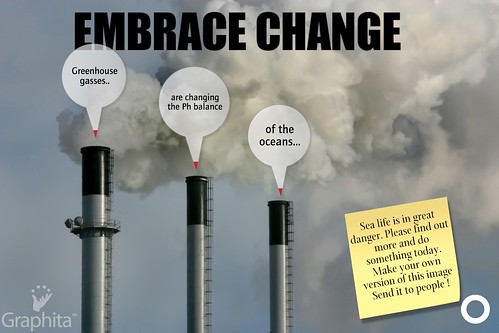
The Guardian is creating a guide to climate change, covering areas from politics to economics. The problem of climate change has been well documented and this blog considers a particular issue – the case for climate change or the environment as a market failure. In many cases just one market failure can be identified, for example an externality or a missing market. However, one of the key problems with climate change is that there are several market failures: externalities in the form of pollution from greenhouse gases; poor information; minimal incentives; the problem of the environment as a common resource and the immobility of factors of production, to name a few. Each contributes towards a misallocation of resources and prevents the welfare of society from being maximised.
 When a market fails, intervention is justified and economists argue for a variety of policies to tackle the above failures. In a first-best world, there is only one market failure to tackle, but in the case of the environment, policy must be designed carefully to take into account the fact that there are numerous failings of the free market. Second-best solutions are needed. Furthermore, as the problem of climate change will be felt by everyone, whether in a developed or a developing country, international attention is needed. The two articles below are part of the Guardian’s ultimate climate change guide and consider a huge range of economic issues relating to the problem of environmental market failure.
Why do economists describe climate change as a ‘market failure’? Guardian, Grantham Research Institute and Dunca Clark (21/5/12)
What is the economic cost of climate change? Guardian (16/2/11)
Questions
- What is meant by market failure?
- What are the market failures associated with the environment and climate change? In each case, explain how the issue causes an inefficient allocation of resources and thus causes the market to fail? You may find diagrams useful!
- What is meant by the first-best and second-best world?
- What does a second-best solution aim to do?
- Using diagrams to help your explanation, show how a tax on pollution will have an effect in a first best world, where the only market failure is a negative externality and in a second best world, where the firm in question is also a monopolist.
- What solutions are there to the problem of climate change? How effective are they likely to be?
- Does the need to tackle climate change require international co-operation? Can you use game theory to help your explanation?!
There has always been relatively widespread agreement that the best method to produce and finance education is via the government. Education is such a key service, with huge positive externalities, but information is far from perfect. If left to the individual, many would perhaps choose not to send their children to school. Whether it be because they lack the necessary information, they don’t value education or they need the money their child could earn by going out to work – perhaps they put the welfare of the whole family unit above the welfare of one child. However, with such large external benefits, the government intervenes by making education compulsory and goes a step further in many countries and provides and finances it too.
However, is this the right way to provide education? People like choice and the ability to exercise their consumer sovereignty. The more competition there is, the more of an incentive firms have to provide consumers with the best deal, in terms of quality, efficiency and hence price. We see this every day when we buy most goods. Many car salesrooms to visit – all the dealerships trying to offer us a better deal. Innovation in all industries – one phone is developed, only to be trumped by a slightly better one. This is only one of the many benefits of competition. Yet, education sectors are largely monopolies, run by the government. Many countries have a small private sector and there is substantial evidence to suggest that education standards in it are significantly higher. Research from Harvard University academics, covering 220,000 teenagers, suggests that competition from private schools improves achievement for all students. Martin West said:
“The more competition the state schools face for students, the stronger their incentive to perform at high levels…Our results suggest that students in state-run schools profit nearly as much from increased private school competition as do a nation’s students as a whole.”
The study concluded that an increase in the percentage of private school pupils made the education system more competitive and therefore more efficient, with an overall improvement in education standards. With so much evidence in favour of competition in other markets in addition to the above study, what makes education so different?
Or is it different? Should there be more competition in this sector – many economists, including Milton Friedman, say yes. He proposed a voucher scheme, whereby parents were given a voucher to cover the cost of sending their child to school. However, the parents could decide which school they sent their child to – a private one or a state run school. This meant that schools were in direct competition with each other to attract parents, their children and hence their money. Voucher schemes have been trialed in several places, most prominently in Sweden, where the independent sector has significantly expanded and results have improved. Is this a good policy? Should it be expanded and implemented in countries such as the UK and US? The following articles consider this.
Articles
School Competition rescues kids: the government’s virtual monopoly over K-12 education has failed Hawaii Reporter, John Stossel (30/10/11)
Private schools boosts national exam results Guardian, Jessica Shepherd (15/9/10)
Can the private sector play a helpful role in education? Osiris (10/8/11)
Voucher critics are misleading the public Tribune Review, TribLive, Joy Pullmann (30/10/11)
Vouchers beat status quo The Times Tribune (29/10/11)
Why are we allowing kids to be held hostage by a government monopoly? Fox News, John Stossel (26/10/11)
Free Schools – freedom to privatise education The Socialist (26/10/11)
Anyone noticed the Tories are ‘nationalising’ schools? Guardian, Mike Baker (17/10/11)
Publications
School Choice works: The case of Sweden Milton & Rose D Friedman Foundation, Frederick Bergstrom and Mikael Sandstrom (December 2002)
Questions
- What are the general benefits of competition?
- How does competition in the education market improve efficiency and hence exam results? Think about results in the private sector.
- What is the idea of a voucher scheme? How do you think it will affect the efficiency of the sector?
- What do you think would happen to equity in if a scheme such as the voucher programme was implemented in the UK?
- How do you think UK families would react to the introduction of a voucher scheme?
- What other policies have been implemented in the UK to create more competition in the education sector? To what extent have they been effective?
 Is Trump playing chicken with Iran?