 Wes Streeting and Andy Burnham are seeking to become UK Prime Minister in a challenge to Keir Starmer. They have both responded to an essay by Tony Blair, former Labour Prime Minister, where he argued that current Labour policies were holding back business. But the essay never mentioned inequality. According to Burnham and Streeting, inequality and the related issue of poverty are fundamental to the crises facing society in western democracies. Countries’ economic success is typically measured in terms of growth in GDP. But when the benefits of growth go largely to those at the top of the income scale, while people on lower incomes struggle to make ends meet, this feeds resentment. Populist politicians stoke such resentment and offer simplistic solutions, such as protectionism, blaming outsiders and promising a return to better times.
But just what has happened to inequality over recent years and has poverty deepened? How are inequality and poverty affecting people’s lives and what is the impact on the economy? And what policies should governments follow to tackle the problem?
Income inequality
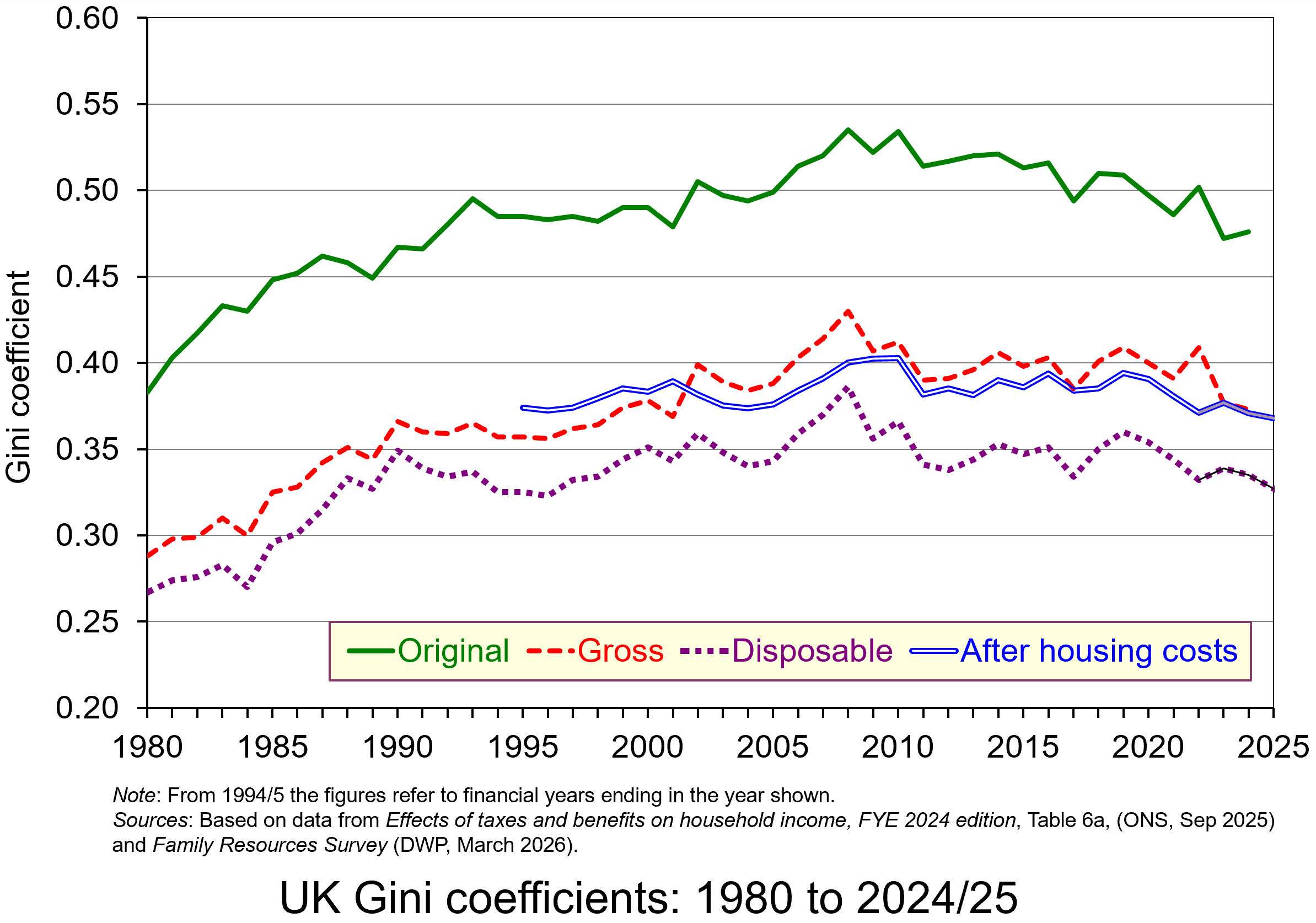 The chart shows UK inequality as given by the Gini coefficient, where 1 represents complete inequality, with one person earning the whole of national income and 0 represents perfect equality, with everyone earning the same. The higher the figure, therefore, the greater the inequality. As you can see, inequality is greatest when looking at original income – that is, income before taxes and benefits. Gross income includes benefits, and disposable income is income after both benefits and taxes. You can see that both benefits and taxes reduce inequality. When we take housing costs into account with the disposable income measure, however, inequality increases.
The chart shows that income inequality rose until the early 2000s, since when there have been only slight changes, although there has been a small decline recently.
The UK has higher income inequality than most high-income countries, although it is not as high as in the USA. It is sixth most unequal of the 38 OECD countries and the most unequal OECD member in Europe.
Globally, in 2025, the top 10% of the world’s population earned 53% of global income, while the bottom half earned just 8%. The reports listed below provide data and analysis on UK and global inequality.
Wealth inequality
 When we turn to wealth, inequality in the UK is even greater. The richest 10% of households hold around 41% of wealth, while the poorest 50% hold just under 10%. The Gini coefficient is around 0.6. This has been drive by a rise in property and share prices and the system of inheritance whereby family wealth can accumulate over the generations.
Globally, the top 10% of the world’s population held 75% of global wealth in 2025, whereas the bottom 50% held just 2%. And a tiny group of people – the top 0.001% of the adult population (about 56,000 individuals) – held about 6% of global wealth, up from 4% in 1995. Such extreme wealth inequality has thus increased.
Inequality and poverty
 There is no single measure of poverty. It could be measured in terms of basic needs. Here poverty would be where a person is unable to afford basic food, shelter, heating and lighting, clothing, footwear and basic toiletries. Normally, however, it is measured in relative terms. A typical measure, and one used by the Joseph Rowntree Foundation, is based on a proportion of median income. Poverty is defined as income below 60% of the median income, with deep poverty below 50% and very deep poverty below 40%.
In 2023/24, 14.2 million people were in poverty (20% of the population), of whom around 4.5 million were children. Of the 14.2 million, 6.8 million people (nearly half) were in very deep poverty,
 Causes of poverty include one or more of the following: low skills or education, low pay, unemployment, inadequate benefits or a benefit system that is confusing or difficult to access, chronic sickness, disability, unavailability or cost of suitable housing, discrimination, a breakdown of personal relationships, substance abuse, abuse from others, a criminal record. Once in poverty, it becomes difficult to escape as people become deskilled, demotivated and judged by society.
But even if people are not earning less than 60% of median income, they can still struggle to escape inequality. Many people have low skills; many routine jobs are being replaced by automation or AI; many graduates face high debts; people struggle to get on the housing ladder; the rising cost of basic items dampens real incomes, especially of the low paid; people may face discrimination of various sorts; people do not have an option of joining a union in their workplace; people may have a large number of dependants.
The policy agenda
If inequality rises up the political agenda in the UK, especially with a potential leadership race in the Labour party, what might politicians focus on? The government has already done the following:
- It has raised the minimum wage (the ‘National Living Wage’) substantially from £10.42 in 2023/24 to £11.44 in 2024/25, to £12.21 in 2025/26 and lowered the age limit from 23 to 21. There have been larger percentage rises for 18–20 year-olds and those under 18.
- The two-child limit to the child benefit element in Universal Credit has been scrapped and so now parents are eligible for benefits for all children.
- The Employment Rights Act has ended exploitative zero-hour contracts by providing rights to guaranteed hours.
- It has expanded free school meal entitlements.
- It has capped Universal Credit debt deductions at 15% of increased incomes (down from 25%) to help the poorest households retain more of their monthly income.
- It has expanded free school meals and made more money available for free nursery place.
- Landlords can no longer evict tenants for no reason; they must have a valid reason such as wanting to sell the property or severe rent arrears.
- Landlords cannot increase rents more than once per year and tenants can appeal excessive or above-market rent increases to an independent tribunal.
But despite these policy measures, many claim that they will do too little to tackle inequality and poverty. Some on the left argue that taxes on property and other forms of wealth will be required to tackle wealth inequality. Others argue that more emphasis on education and training is necessary to provide workers with the skills to earn more in the labour market. Others argue for greater expenditure on public services.
Generally, however, measures to tackle inequality and poverty require government expenditure, which must be funded. This is why many on the centre left argue that economic growth is a necessary condition for any significant redistribution. It is, they argue, the best way of providing the tax revenue to fund redistribution.
Incentives and disincentives
 Many on the right argue that redistributing incomes through higher taxes and benefits will act as a disincentive to work and to invest. As we argue in Essentials of Economics, higher income taxes could discourage people from working and investing; higher wealth taxes could discourage people from saving and investing.
The key to analysing these arguments is to distinguish between the income effect and the substitution effect of raising taxes. Raising income tax does two things.
- It reduces disposable incomes. People therefore are encouraged to work more in an attempt to maintain their consumption of goods and services. This is the income effect. ‘I have to work more to make up for the higher taxes’, a person might say.
- It reduces the opportunity cost of leisure. Since higher income taxes reduce take-home pay, an extra hour taken in leisure now involves a smaller sacrifice in consumption. Thus people may substitute leisure for consumption, and work less. This is called the substitution effect. ‘What is the point of doing overtime’, another person might say, ‘if so much of the overtime pay is going in taxes?’
The relative size of the income and substitution effects is likely to differ for different types of people. For example, the income effect is likely to dominate for those people with a substantial proportion of long-term commitments, such as those with families, with mortgages and other debts. They may feel forced to work more to maintain their disposable income. Clearly for such people, higher taxes are not a disincentive to work. The income effect is also likely to be relatively large for people on higher incomes, for whom an increase in tax rates represents a substantial cut in income.
The substitution effect is likely to dominate for those with few commitments: those whose families have left home, the single, and second income earners in families where that second income is not relied on for ‘essential’ consumption. A rise in tax rates for these people is likely to encourage them to work less.
Although high income earners may work more when there is a tax rise, they may still be discouraged by a steeply progressive tax structure. If they have to pay very high marginal rates of tax, it may simply not be worth their while seeking promotion or working harder.
What those on the centre and left argue is that tackling inequality and poverty requires more than just changing the tax and benefits system. What is required is policies that encourage greater upward social mobility, greater social cohesion and greater expenditure on infrastructure that will support the poor, such as greater expenditure on education and training, on support for very young children, on preventative healthcare, on social housing and on local public transport.
Articles
- Burnham and Streeting accuse Blair of ignoring inequality as they hit back at ex-PM
BBC News, Brian Wheeler and Richard Wheeler (27/5/26)
- Streeting and Burnham accuse Blair of failing to confront inequality in Labour criticism
The Guardian, Jessica Elgot (27/5/26)
- Alan Milburn is right, a young generation has been betrayed. Forget Tony Blair: we must attend to this
The Guardian, Polly Toynbee (28/5/26)
- Blair wants to leave our future to the markets. I believe democracy can still shape our lives for the better
The Guardian, Wes Streeting (27/5/26)
- New evidence on international inequality of opportunity – how does the UK rank?
The Sutton Trust, Opinion, Esme Lillywhite (25/9/25)
- Sorry, comrade Burnham. Inequality is a good thing
Telegraph on archive.today, Luke Johnson (29/5/26)
- Why America’s rich keep getting richer
CNN, David Goldman (29/5/26)
- Concern about inequality is not mere envy
LSE blogs, David Lay Williams (13/1/26)
- Are new technologies fuelling wage inequality? Evidence from Spain
LSE blogs, Raquel Sebastián, Pedro Salas-Rojo, Juan César Palomino and Juan Gabriel Rodríguez (24/3/26)
- 56,000 people own three times more wealth than half of humanity
LSE blogs, Ricardo Gómez-Carrera (12/5/26)
- The broad economic impact of inequality
Harvard Institute for Business in Global Society, Drew Keller and Susan Milligan (8/7/25)
- The New Inequality
Substack, Paul Krugman (31/5/26)
- Global Justice Report: the World Inequality Lab maps a path to €5,000-a-month average incomes for all countries within +1.8°C of warming
World Inequality Lab (4/6/26)
- ‘An equal and habitable world is possible’: academics set out sweeping vision for planetary survival
The Guardian, Jonathan Watts (4/6/26)
Reports
- Living standards, poverty and inequality in the UK
Institute for Fiscal Studies (26/3/26)
- Are fewer people living in poverty than previously thought?
Institute for Fiscal Studies, Jed Michael, Sam Ray-Chaudhuri and Tom Wernham (26/3/26)
- Income inequality in the UK
House of Commons Library, Brigid Francis-Devine (14/5/26)
- The Scale of Economic Inequality in the UK
Equality Trust
- Causes of inequality
Equality Trust
- UK Poverty 2026
Joseph Rowntree Foundation (27/1/26)
- Households Below Average Income: An analysis of the UK income distribution: FYE 1995 to FYE 2025
Department for Work & Pensions (26/3/26)
- Household income inequality, UK: financial year ending 2024
ONS (2/5/25)
- Unequal Chances: Children and economic inequality
UNICEF Innocenti (May 2026)
- To Have and Have Not – How to Bridge the Gap in Opportunities
OECD (22/9/25)
- World Inequality Report 2026
World Inequality Lab, Lucas Chance, Ricardo Gómez-Carrera (Lead Author), Rowaida Moshrif and Thomas Piketty
- The Global Justice Report
World Inequality Lab, L Chance, C Mohren, R Moshrif, M Odersky, T Piketty, A Somanchi, et al (4/6/26)
Data
Questions
- Is the UK becoming more or less equal? Does the answer depend on how inequality is measured?
- Is the world becoming more or less equal?
- Summarise the arguments against redistributing incomes from the rich to the poor.
- Summarise the arguments in favour of redistributing incomes from the rich to the poor.
- Explain the income and substitution effects of making income tax more progressive.
- How is the greater adoption of AI likely to affect income distribution?
- How does social mobility affect income distribution? What measures can be adopted to increase social mobility?
- Compare the relative merits and problems of raising income taxes, wealth taxes and expenditure taxes as means of redistributing incomes more equally.
 In this post we focus on three aspects of poverty around the world. The first is the definition of poverty. Is it an absolute or a relative concept? Does its definition change as the world develops. The second is the extent of poverty. Is the problem getting worse as inequality deepens, or are the numbers (absolutely or proportionately) getting smaller despite increased inequality? The third is policy to tackle the problem. What can be done and is being done? What answers are being given by policymakers in different parts of the world?
As far as the measurement of poverty is concerned, the simplest distinction is between absolute and relative poverty. Absolute poverty could be measured as income below a certain real level deemed necessary to achieve a particular standard of living. This could be specified in terms of sufficient income to have adequate food, shelter, clothing and leisure time, and adequate access to healthcare, clean water, sanitation, education, etc. An obvious problem here is what is considered ‘adequate’, as this is partly culturally determined and will also depend on physical and geographical features, such as climate.
The World Bank defines extreme absolute poverty as living on under $1.90 per day in purchasing-power parity terms. However, even after adjusting for purchasing power, what is considered the poverty threshold differs enormously from country to country. As the Wikipedia entry states:
Each nation has its own threshold for absolute poverty line; in the United States, for example, the absolute poverty line was US$15.15 per day in 2010 (US$22,000 per year for a family of four), while in India it was US$1.0 per day and in China the absolute poverty line was US$0.55 per day, each on PPP basis in 2010.
Relative poverty is normally taken to mean when a person’s income falls below a certain percentage of the mean or median. Thus in richer countries, for a given percentage, the poverty threshold would be at a higher absolute income.  In the EU, people in relative poverty are defined as those with disposable income (after monetary benefits) less than 60% of the median.
Both approaches focus on consumption. Other approaches include social and cultural exclusion as dimensions of poverty.
What is clear is that poverty has a number of definitions. One problem with this is that politicians can focus on whatever definition suits them. Thus in the UK, with relatively high levels of employment, but often at low wages and only part-time employment, the Conservative government has redefined poverty as where no-one in a family is in work. Yet many working families have very low levels of income, considerably below 60% of the median.
The second aspect of poverty is its extent and whether it is growing. According to the United Nations, globally ‘extreme poverty rates have been cut by more than half since 1990. While this is a remarkable achievement, one in five people in developing regions still live on less than $1.25 a day, and there are millions more who make little more than this daily amount, plus many people risk slipping back into poverty.’
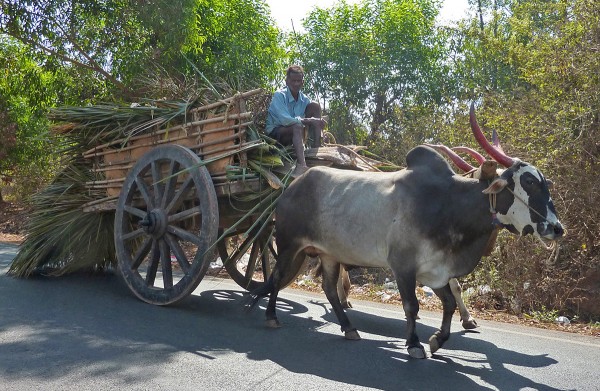 Despite this progress, in many countries extreme poverty is increasing. And in others, although the number in extreme poverty may be declining, it is still high and inequality is increasing so that more people are living only just above the extreme poverty line. The articles look at dimensions of poverty in different countries.
For example, the first The Conversation article argues that the financial crisis of 2008–09 led to a substantial increase in poverty across the European continent.
The impoverishment of Greece, Italy, Cyprus, Spain and Portugal has been so severe that these southern European countries, taken together, had higher levels of poverty and deprivation than many of the former Communist nations that joined the European Union in 2004.
The third aspect is how to tackle the problem of poverty. There are three broad policy approaches.
The first is the use of cash transfers, such as unemployment benefits. The second is providing free or subsidised goods and services, such as healthcare or education. The ability of a country to support the poor in either of these ways depends on its tax base. Also, clearly, it depends on its priorities. There is also the issue of incentives. Do benefits encourage or discourage the recipients from seeking work? This depends on the design of the system. For example, if childcare is subsidised, this may both aid poor parents and also encourage parents responsible for looking after young children to seek work.
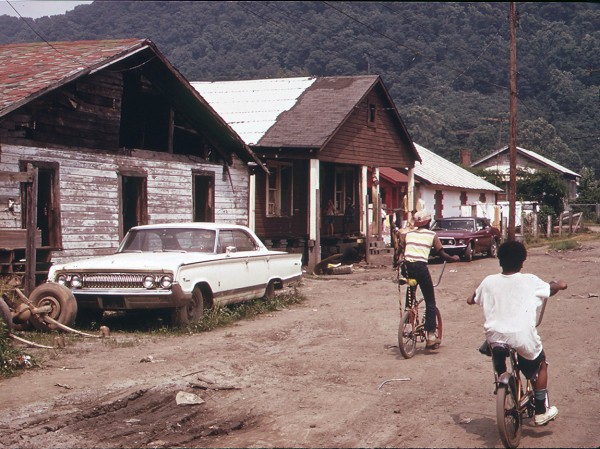 The third is to attempt to improve the earning power of the poor. This may in part be by the second approach of improving education, training and health. But it may also involve removing restrictions to employment, say by making various forms of discrimination illegal. It may also involve increasing land rights. In many developing countries land is very unequally distributed; redistribution to the poor can make a substantial contribution to relieving poverty. Another approach is to encourage agencies which supply microfinance for poor people wishing to set up their own small business.
The articles below look at a number of dimensions of poverty: its measurement, its extent and its alleviation. They look at the problem from the perspective of different countries. It is interesting to see to what extent the problems and solutions they identify are country-specific or general.
Articles
Extreme poverty affects 1 in 8 globally Buenos Aires Herald (20/7/16)
How poverty has radically shifted across Europe in the last decade The Conversation, Rod Hick (20/7/16)
The economics of poverty The Tribune of India, S Subramanian (22/7/16)
Poverty Chains and Global Capitalism. Towards a Global Process of Impoverishment Global Research (Canada), Benjamin Selwyn (20/7/16)
Asia’s cost of prosperity The Nation, Karl Wilson (24/7/16)
Private rental sector is the ‘new home of poverty’ in the UK The Guardian, Brian Robson (20/7/16)
Challenges in maintaining progress against global poverty Vox, Martin Ravallion (23/12/15)
California, sixth largest economy in the world, has highest poverty rate in US wsws.org, Marc Wells (22/7/16)
How gross inequality and crushed hopes have fed the rise of Donald Trump The Conversation, Nick Fischer (21/7/16)
Information
Sustainable Development Goals – Goal 1: End poverty in all its forms everywhere United Nations
Children of the Recession: Innocenti Report Card 12 UNICEF, Gonzalo Fanjul (September 2014)
Listings on Poverty Joseph Rowntree Foundation
Poverty The World Bank
Hunger and World Poverty Poverty.com
Questions
- Distinguish between absolute and relative poverty. Give examples of specific measures of each and the extent to which they capture the complex nature of the problem.
- Discuss the appropriateness of the seven measures of poverty used in the first The Conversation article.
- How did the financial crisis affect the proportion of people living in poverty? Explain.
- What is the relationship between poverty and inequality? Does a more unequal society imply that there will be a greater proportion of people living in poverty?
- How has international poverty changed in recent years? What explanations can you give?
- What are the advantages and disadvantages of using income per head as a measure of poverty, whether absolute or relative?
- Why is poverty so high in (a) the USA as a whole; (b) California specifically?
- How does globalisation affect poverty?
- Are adverse environmental consequences an inevitable result of reducing poverty in developing countries?
- Is freer trade likely to increase or decrease poverty? Explain
 Pressure has been growing in the UK for people to be paid no less than a living wage. The Living Wage Foundation claims that this should be £8.55 per hour in London and £7.45 in the rest of the UK. The current minimum wage is £6.19.
There has been considerable support for a living wage across the political spectrum. Ed Miliband, the Labour leader, has stated that a Labour government would ensure that government employees were paid at least the living wage and that government contracts would go only to firms paying living wages. Other firms that paid less could be ‘named and shamed’. The living wage has also been supported by Boris Johnson, Conservative Mayor of London. The Prime Minister said that a living wage is ‘an idea whose time has come’, although many Conservatives oppose the idea.
The hourly living wage rate is calculated annually by the Centre for Research in Social Policy and is based on the basic cost of living. The London rate is calculated by the Greater London Authority.
Advocates of people being paid at least the living wage argue that not only would this help to reduce poverty, it would also help to reduce absenteeism and increase productivity by improving motivation and the quality of people’s work.
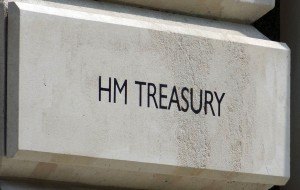 It would also bring in additional revenue to the government. According to a report by the Institute for Public Policy Research and the Resolution Foundation, if everyone were paid at least a living wage, this would increase the earnings of the low paid by some £6.5bn per year. Of this, some £3.6bn would go to the government in the form of higher income tax and national insurance payments and reduced spending on benefits and tax credits. Of this £6.5bn, an extra £1.3 billion would be paid to public-sector workers, leaving the Treasury with a net gain of £2.3bn.
But what would be the effect on employment? Would some firms be forced to reduce their workforce and by how much? Or would the boost to aggregate demand from extra consumer spending more than offset this and lead to a rise in employment?. The following articles look at the possible effects.
Articles
Living wage for all workers would boost taxes and GDP Independent, Nigel Morris (28/12/12)
Living wage could save £2bn – think tank research BBC News (28/12/12)
‘Living wage’ would save money, says study Financial Times, Helen Warrell (28/12/12)
Why the Resolution Foundation and IPPR can go boil their heads Adam Smith Institute, Tim Worstall (30/12/12)
Living wage for public servants moves a step closer The Observer,
Yvonne Roberts and Toby Helm (15/12/12/)
Living wage: Ed Miliband pledge over government contracts BBC News (5/11/12)
‘London Living Wage’ increased to £8.55 by mayor BBC News (5/11/12)
Q&A: The living wage BBC News (5/11/12)
Scrooges in UK firms must pay a Living Wage This is Money, John Sentamu (23/12/12)
Report
What price a living wage? IPPR and The Resolution Foundation, Matthew Pennycook (May 2012)
Questions
- How would you set about determining what the living wage rate should be?
- Distinguish between absolute and relative poverty. Would people being paid below a living wage be best described as absolute or relative poverty (or both or neither)?
- What do you understand by the term ‘efficiency wage’? How is this concept relevant to the debate about the effects of firms paying a living wage?
- Under what circumstances would raising the statutory minimum wage rate to the living wage rate result in increased unemployment? How is the wage elasticity of demand for labour relevant to your answer and how would this elasticity be affected by all firms having to pay at least the living wage rate?
- What would be the macroeconomic effects of all workers being paid at least the living wage rate? What would determine the magnitude of these effects?
Throughout 2009/10, a new millionaire was created in Brazil every 10 minutes – not bad for a developing country! Despite the global recession, Brazil has managed growth of almost 5% and is set to overtake both the UK and France to become the world’s 5th largest economy. Brazil will hold the next World Cup and the Olympic games after London, bringing it further recognition as a global power. It has the third largest aircraft manufacturing industry in the world and is even doing its bit to tackle climate change, with 50% of its cars running on bio-fuels. It exports more meat than any other country and is looking to become an energy power. With falling unemployment, a buoyant economy, growing confidence, fantastic beaches and 6 millionaires created every hour, Brazil looks like the perfect place to live.
However, that is just one side of the story. Brazil is still a country with deep poverty – approximately 60 million people. The slums, or favelas, are home to 1 million people in Rio alone, where unemployment is high and drug wars common. There has been a concerted effort to reduce the drug trafficking business, but this has only created more unemployment. There is little sanitation, poor electricity and minimal chance of escape. Neighbourhoods need rebuilding, and despite high growth and arguably the most popular president in the world (Lula da Silva), there are calls for political, social, taxation and labour market reforms. This cycle of poverty and the equality gap needs addressing before the Brazilian economy can really be considered a global power.
Webcasts and podcasts
 Will Brazil’s economy keep growing? BBC News, Matt Frei (27/5/10)
Brazil’s bid to be ‘world’s breadbasket’ BBC World News America, Paulo Cabral (26/5/10)
Tackling Brazil’s poverty BBC World News America, Gary Duffy (28/5/10)
Brazil’s development spurs economic quality hopes BBC World News America, Matt Frei (27/5/10)
Brazil’s air industry takes off BBC World News America, Paolo Cabral (24/5/10)
‘Our growth quality is better than China’ BBC World News America, Marcelo Neri (25/5/10)
Brazilian economy poised to overtake UK’s BBC News Today, Matt Frei (27/5/10)
Data
Economic data Banco Central do Brasil
Brazil Economy EconomyWatch
Brazil CIA World Factbook
Brazil Geognos
Brazil data World Bank
Questions
- What are the main causes of (a) inequality and (b) poverty in an economy? What is the difference between these concepts?
- How does the government subsidised housing programme aim to help low income households. Use a diagram to illustrate the effect.
- What policies can be used to reduce the equality gap?
- Are those living in the favelas in absolute poverty? How do we distinguish between absolute and relative poverty? Is it the same across the world?
- What are the adverse effects of fast growth in Brazil?